Fact-Check the Vaccine Claims
Fact-Check the Vaccine Claims
The vaccine debate keeps getting dragged back into the spotlight, and the cost is not abstract. When high-profile political claims blur the line between policy criticism and medical misinformation, the fallout hits real people: parents trying to make decisions, clinicians trying to answer questions, and public health systems already fighting fatigue. The latest vaccine fact-check matters because it exposes a familiar pattern: selective anecdotes, stripped-down data, and confident language that sounds persuasive until you look closer. That is the danger. The story is not just about one statement being wrong or incomplete. It is about how misinformation scales, how it erodes trust, and how quickly bad framing can become public belief. If you care about health, science, or even basic media literacy, this is where skepticism becomes a survival skill.
- High-profile vaccine claims often rely on selective facts, not full context.
- The biggest risk is not just misinformation – it is confusion that weakens trust in public health.
- Reading
vaccine fact-checkcoverage well means watching for omitted timelines, mixed terms, and false comparisons. - Strong health reporting should explain what evidence says, what it does not say, and why that distinction matters.
Why this vaccine fact-check matters now
Vaccine misinformation is not a niche internet problem anymore. It is part of the mainstream political and cultural conversation, which makes every misleading claim more damaging. A polished sound bite can travel faster than a correction, especially when it taps into fear about safety, government power, or personal autonomy. That is why a good vaccine fact-check is more than a correction. It is a stress test for the way we consume health information.
The core issue is not whether debate should exist. It should. Public confidence in vaccines, mandates, and pharmaceutical institutions deserves scrutiny. But skepticism is not the same as distortion. When a claim collapses multiple issues into one dramatic narrative, it can sound legitimate while quietly breaking the evidence chain. The result is a muddled public conversation where the loudest voice, not the strongest data, wins the day.
“The most effective misinformation rarely sounds absurd. It sounds simplified.”
What the claim gets wrong
The strongest reason to interrogate vaccine claims is that they often depend on a few recurring tricks. First, they cherry-pick timing. A health event follows a vaccine, and the claim implies causation without proving it. Second, they blur categories. A statement about one vaccine, one age group, or one country gets generalized into a sweeping indictment of vaccines as a whole. Third, they lean on emotionally charged anecdotes that are impossible to verify at scale.
A responsible vaccine fact-check separates those layers. It asks whether the claim is about safety, efficacy, policy, rollout logistics, or broader mistrust. It then checks whether the evidence actually supports the leap being made. That matters because health debates often sound similar at first glance but require different standards of proof. A policy disagreement is not the same as a safety claim. A rare adverse event is not the same as a population-wide risk. And a correlation is not a conclusion.
Look for the missing denominator
One of the simplest ways to spot weak vaccine arguments is to ask: out of how many? Individual stories can be heartbreaking, but they do not explain frequency. Without denominators, risk is impossible to judge. A reported side effect among millions can mean something very different from a spike in cases among a small subgroup. Good reporting restores scale.
Watch the language swaps
Misleading claims often depend on terms that sound interchangeable but are not. “Injury,” “reaction,” “effect,” and “risk” are not synonyms. Neither are “mandate,” “recommendation,” and “requirement.” Once those words get swapped around, the argument can drift far from the evidence. That is why editorial precision is not pedantry. It is the whole point.
How to read a vaccine fact-check like a pro
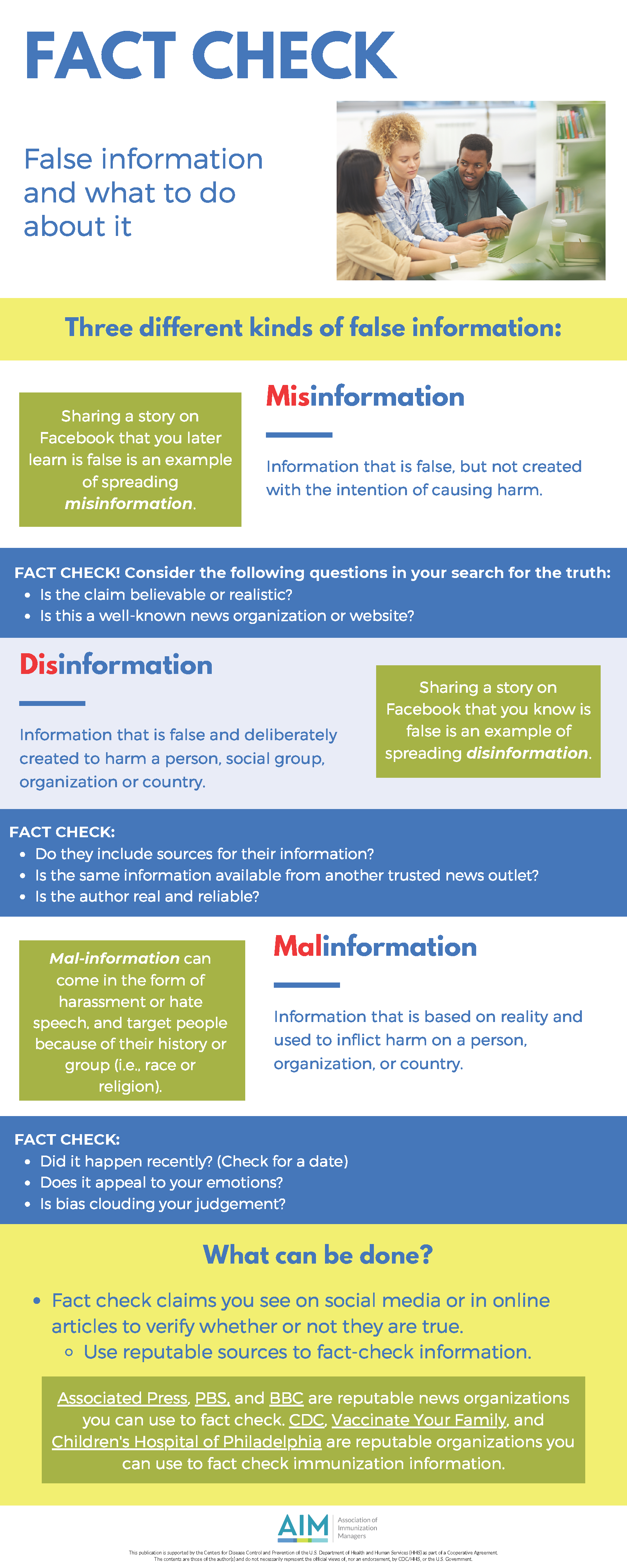
If you are trying to make sense of a heated vaccine headline, the best move is to slow the story down. Ask what is being claimed, what kind of evidence is offered, and what is missing. A strong fact-check should do that work for you, but readers still need a framework. The following checklist can help separate legitimate concern from rhetorical smoke.
- Check the scope: Is the claim about one vaccine, one population, or all vaccines?
- Check the time frame: Does the evidence span weeks, months, or years?
- Check the source type: Is it a controlled study, a passive report, or a personal account?
- Check the comparison: Is the speaker comparing unlike situations as if they are the same?
- Check the conclusion: Does the evidence actually support the political or medical leap being made?
That checklist sounds basic, but that is exactly why it works. Misinformation usually succeeds when people do not have a repeatable method for pushing back. Once you train yourself to slow down, the overconfident claim starts to look weaker. And once a claim looks weaker, it stops dominating the conversation.
Use primary definitions, not social media summaries
Health debates get warped when people rely on reposted summaries instead of original definitions. A vaccine efficacy claim, for instance, is not the same thing as a claim about absolute protection. Likewise, emergency authorization is not identical to full approval, even though those distinctions are regularly flattened in political arguments. Precision changes interpretation.
When you encounter a heated claim, look for the original wording of the medical term being discussed. If the language has been translated into meme form, chances are the nuance is gone too.
Why politicians keep winning with vaccine confusion
There is a hard truth here: confusion is politically useful. If an audience is unsure whom to trust, then any confident messenger can gain traction. Vaccine politics thrives in that environment because the subject combines science, identity, and institutional distrust. That is a potent mix. It is also why corrections alone often fail. Facts matter, but facts delivered after the emotional frame has been set are playing catch-up.
This is where the media ecosystem bears some responsibility. Too often, coverage treats a claim and a correction as symmetrical, as if both have the same cultural weight. They do not. One can spread instantly. The other has to explain itself. That asymmetry is why a well-made vaccine fact-check should not just say what is false. It should show how the falsehood was constructed.
“Corrections work best when they expose the mechanism of the lie, not just the lie itself.”
The broader health stakes
The impact of vaccine misinformation goes well beyond one policy fight or one election cycle. It shapes whether communities trust pediatric guidance, whether adults keep up with boosters, and whether outbreaks get contained quickly. Once people begin to treat all medical advice as suspect, the damage spreads. Preventive care becomes harder to deliver. Public health messaging becomes harder to hear. Even routine conversations in clinics become more contentious.
This is why a vaccine debate should never be reduced to partisanship alone. The scientific questions are real. So are the ethical questions around autonomy and mandate policy. But those issues can only be debated honestly when the underlying facts are clear. Otherwise, the public is not having a disagreement. It is being fed a fog.
What experts want readers to remember
Public health experts usually come back to the same principle: the risk of misinformation is cumulative. One misleading claim may not change behavior overnight. But repeated false framing can reshape perceptions until hesitation feels rational. That is how trust breaks. Not all at once, but gradually, through repetition and emotional reinforcement.
That is also why readers should resist the urge to treat every controversial health post as equally credible. A good rule is simple: if the claim sounds like it explains everything with one dramatic cause, it probably leaves out too much.
The future of vaccine reporting
The next phase of vaccine coverage will likely be even more challenging. AI-generated misinformation, influencer-driven health content, and hyper-targeted political messaging are making it easier to package dubious claims in polished language. That means the role of fact-checking is expanding. It is no longer just about verdicts. It is about media literacy, context, and speed.
For editors and readers alike, the best defense is a blend of skepticism and humility. Skepticism keeps you from swallowing the first version of the story. Humility keeps you from pretending the answer is always simple. That combination is rare, but it is exactly what health reporting needs. A vaccine fact-check is not only about assigning truth. It is about teaching people how truth gets obscured in the first place.
And that is the larger lesson. Public trust does not collapse because everyone suddenly stops believing science. It collapses when people stop believing they can tell the difference between careful evidence and confident noise. The best fact-checks do more than correct the record. They help rebuild that difference.
The information provided in this article is for general informational purposes only. While we strive for accuracy, we make no guarantees about the completeness or reliability of the content. Always verify important information through official or multiple sources before making decisions.