Gaza Tent Camp Strike Demands Global Attention
Gaza Tent Camp Strike Demands Global Attention
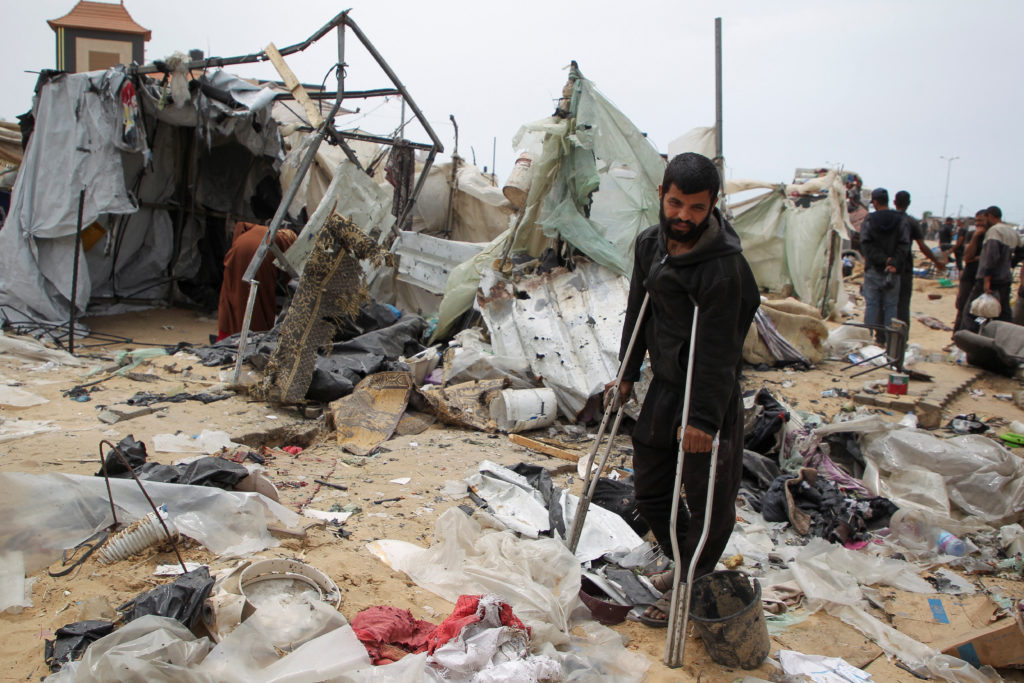
The latest Gaza tent camp strike is more than another grim headline. It is a brutal reminder that civilians displaced by war are still living under immediate threat, even inside makeshift shelters that should represent the bare minimum of safety. When a tent camp in Gaza City is hit and several Palestinians are reported killed, the story is not only about one attack – it is about the collapsing boundary between frontline combat and civilian refuge. For policymakers, aid groups, and anyone tracking the conflict, this moment sharpens urgent questions: where can displaced families go, what protections actually exist, and how much longer can global outrage remain disconnected from meaningful action? The human toll is immediate, but the strategic and political consequences are widening fast.
- Several Palestinians were reportedly killed in an Israeli attack on a tent camp in Gaza City.
- Displacement is no longer a buffer: makeshift shelters are increasingly exposed to direct danger.
- The Gaza tent camp strike intensifies scrutiny of civilian protection and wartime accountability.
- Humanitarian pressure is rising as safe zones, aid access, and emergency response capacity continue to erode.
- Why it matters: attacks on shelters deepen the political, legal, and moral crisis surrounding the war.
Why the Gaza tent camp strike hits differently
There is a reason incidents like this break through even in a conflict saturated with violence. A tent camp is not military infrastructure in the public imagination. It signals displacement, exhaustion, and the absence of alternatives. Families in these camps are often there because they have already fled bombardment, lost homes, or been pushed by evacuation orders into increasingly crowded areas.
That reality gives the Gaza tent camp strike unusual symbolic and political force. It tells civilians that movement does not necessarily equal safety. It tells relief agencies that emergency shelter may no longer function as even a temporary layer of protection. And it tells outside governments that calls for restraint have not translated into a durable system for shielding noncombatants.
When tents become targets or are caught in the line of fire, the basic architecture of civilian survival starts to collapse.
That collapse matters not only morally but operationally. Once displaced people stop believing any location is safer than another, panic spreads, aid delivery becomes harder, and public health risks accelerate inside overcrowded camps.
What this attack reveals about the conflict now
At this stage of the war, attacks affecting displaced civilians are no longer isolated anomalies. They are part of a larger pattern in which dense urban fighting, repeated displacement, and constrained humanitarian access combine into a persistent civilian emergency. The strike on a Gaza City tent camp underlines three realities.
Civilian protection mechanisms are failing
International humanitarian law is built around principles such as distinction, proportionality, and precaution. Those terms can sound abstract, but their practical meaning is simple: armed forces must distinguish between military targets and civilians, avoid excessive civilian harm relative to military advantage, and take steps to reduce foreseeable risks. When a camp of displaced people is struck, the immediate public question is whether those safeguards were adequate, observed, or possible under current conditions.
This is where the debate gets sharper. Modern urban warfare is often defended as operationally complex, especially where militants may embed within civilian areas. But complexity does not erase obligation. If anything, it raises the burden for caution.
Displacement in Gaza has become recursive
Many Palestinian families have been displaced multiple times. They move from one area to another, often with little notice, carrying only essentials, then settle in temporary shelters that may themselves become exposed to attack. A tent camp is supposed to be a stopgap. In Gaza, it has become part of a cycle.
That cycle has long-term consequences. Temporary camps are not designed for sustained habitation. Access to clean water, sanitation, electricity, and medical care is limited even before a strike occurs. After an attack, those weak systems can break down further.
Information warfare now shapes the aftermath
Every major strike today unfolds in parallel across newsrooms, government briefings, activist networks, and social platforms. Casualty reports, targeting claims, battlefield justifications, and legal arguments all compete for legitimacy. That does not reduce the importance of verified facts – it increases it. In incidents involving civilian shelters, the speed of narrative formation can influence diplomatic responses almost as much as the event itself.
The first casualty figures create urgency. The later investigations shape accountability. Both matter.
Why this matters beyond the immediate tragedy
The obvious answer is the human one: several people are reported dead, families are shattered, and survivors are forced to navigate trauma in conditions already defined by deprivation. But the broader significance runs deeper.
First, attacks on displacement sites can alter international political pressure. Governments that have tried to balance support for Israel with concern over civilian harm face rising difficulty when images of destroyed tents and dead civilians dominate the news cycle. Public opinion can move faster than diplomatic language, and elected leaders eventually feel that gap.
Second, incidents like the Gaza tent camp strike increase pressure on legal and institutional scrutiny. Calls for independent review, war conduct assessments, and documentation of civilian harm tend to intensify when shelters are hit. That does not guarantee consequences, but it raises the cost of inaction.
Third, the humanitarian system itself becomes less functional. Aid groups depend on predictable access routes, communication chains, and the assumption that shelter locations can be meaningfully supported. When camps are repeatedly endangered, agencies face impossible trade-offs between concentration of services and concentration of risk.
This is the central paradox of Gaza right now: the places designed to collect and protect the displaced can also become sites of acute vulnerability.
How the strike reframes the debate on safe zones
The phrase safe zone has always carried more political weight than legal precision. In public discourse, it implies a place where civilians can gather with lower risk. In practice, such zones are only as credible as the military behavior around them, the clarity of communication to civilians, and the resources available to sustain life there.
The latest strike puts that credibility under pressure. If displaced people are directed, implicitly or explicitly, toward certain areas and then remain vulnerable there, trust erodes fast. That erosion is not just emotional. It affects compliance with future evacuation instructions, complicates relief logistics, and fuels accusations that civilian movement is being managed without meaningful protection.
What a real protection framework would require
- Clear, consistent communication about areas of heightened risk.
- Verifiable deconfliction measures for humanitarian and displacement sites.
- Reliable aid corridors for food, medicine, and emergency response teams.
- Independent monitoring to document incidents involving civilian shelters.
- Rapid medical access after strikes to reduce preventable deaths.
Without those elements, the language of protection starts to sound performative.
What comes next after a Gaza tent camp strike
The near-term sequence is predictable, even if the justice is not. Casualty reports emerge. Officials issue statements. Media organizations seek verification. Humanitarian groups warn of escalating danger. Diplomats call for restraint, investigation, or both. Then the next strike risks displacing the story before accountability has time to catch up.
That cycle is exactly why this moment deserves sustained attention. The attack is not only a discrete event. It is evidence of structural failure inside a war zone where civilians have dwindling options and diminishing protection.
There are also larger strategic implications. Repeated incidents involving civilian casualties can reshape alliance politics, affect military support debates, and deepen international isolation. Even where governments remain formally aligned, domestic backlash can harden. Images from tent camps are especially potent because they strip away the abstraction of military terminology and return the debate to first principles: who is being protected, who is exposed, and whether the conduct of war is staying within defensible limits.
The harder question the world keeps postponing
The most uncomfortable reality exposed by the Gaza tent camp strike is that humanitarian concern and strategic tolerance have been coexisting for too long. World leaders express alarm, aid agencies plead for access, and the death toll continues to grow. The distance between condemnation and consequence remains the defining feature of the international response.
That gap matters because it teaches all parties something. It teaches civilians that outrage may not produce safety. It teaches armed actors that pressure can be survivable. And it teaches observers that repeated tragedy can become normalized if it is processed only as recurring content instead of a policy failure.
Normalization is its own kind of danger. Once attacks on shelters are absorbed as expected background noise, the threshold for meaningful intervention rises even higher.
What readers should watch now
- Updated casualty figures: early numbers often shift as rescue and identification continue.
- Official targeting explanations: these will shape the legal and political debate.
- Humanitarian access changes: watch whether aid agencies gain or lose movement capacity after the strike.
- Diplomatic reaction: the intensity of international response can signal whether this incident becomes a turning point or another absorbed outrage.
- Independent documentation efforts: these are critical for any future accountability process.
For now, the core truth is brutally simple. A tent camp in Gaza City, a place associated with displacement and survival, has become the scene of more death. That should not be easy to absorb, and it should not be easy to move past. The victims of this attack are not just part of a casualty ledger. They are the clearest possible evidence that for many civilians in Gaza, there is still no reliable concept of refuge.
The information provided in this article is for general informational purposes only. While we strive for accuracy, we make no guarantees about the completeness or reliability of the content. Always verify important information through official or multiple sources before making decisions.