Gene Editing Breakthrough Redraws Disease Research
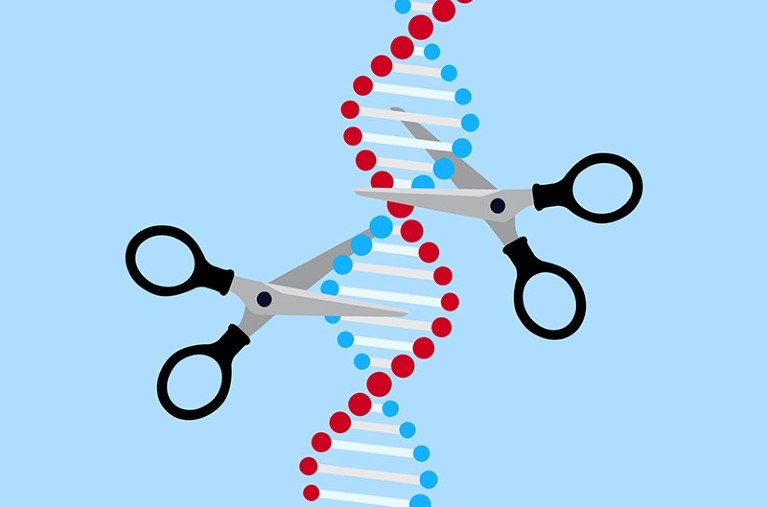
Gene Editing Breakthrough Redraws Disease Research
A new gene editing breakthrough is not just another lab milestone – it is a signal that biomedical research is entering a faster, more programmable era. For years, scientists have been stuck between what they wanted to test and what their tools could reliably change inside living cells. That bottleneck matters because every delay in modeling a disease, validating a drug target, or engineering a therapy slows the path from discovery to treatment. The latest research highlighted by ScienceDaily points to a maturing field where editing genomes is becoming more precise, scalable, and useful for answering hard biological questions. The excitement is real, but so is the need for caution. Better editing tools can accelerate cures, but they also demand stronger standards for safety, reproducibility, and responsible use.
- The core advance: Researchers report progress that could make
gene editingmore effective for studying disease and cellular function. - Why it matters: More reliable editing can improve disease models, drug screening, and precision medicine workflows.
- The strategic shift: Biology is moving from observation toward controlled, programmable experimentation.
- The caveat: Safety, off-target effects, delivery, and ethics remain central barriers before clinical impact scales.
Why This Gene Editing Breakthrough Matters Now
The modern life sciences stack increasingly looks like a technology platform. Researchers combine CRISPR, single-cell analysis, high-throughput sequencing, machine learning, and automated lab systems to interrogate biology at a depth that was unrealistic a decade ago. A gene editing breakthrough matters because it upgrades one of the most important layers in that stack: the ability to make targeted biological changes and observe what happens next.
That sounds straightforward, but it is a profound shift. Traditional genetics often depended on rare natural mutations or slow breeding strategies. Modern editing allows scientists to introduce, remove, or modify genetic instructions with far more control. When the tools become more accurate and easier to scale, researchers can build cleaner disease models, test more hypotheses, and move faster from correlation to causation.
Key insight: The real power of next-generation
gene editingis not just fixing genes. It is creating a faster feedback loop between biological theory and experimental proof.
The Deep Dive Into Programmable Biology
The source report fits into a larger scientific arc: biology is becoming programmable. That does not mean cells are simple machines. They are messy, adaptive, and context-dependent. But it does mean researchers are gaining a more sophisticated toolkit for making precise interventions inside living systems.
From Cutting DNA to Rewriting Cellular Behavior
Early public attention around CRISPR-Cas9 focused on its ability to cut DNA at targeted sites. That was revolutionary, but cutting is only one part of the story. The field has since expanded toward methods that can edit individual bases, regulate gene expression, alter epigenetic states, or perturb many genes at once. Each layer adds a new way to ask biological questions.
For disease research, that matters because many conditions are not caused by a single broken gene. Cancer, neurodegeneration, autoimmune disorders, metabolic disease, and developmental syndromes can involve networks of genes, cell types, and environmental triggers. A stronger editing system gives researchers a way to dissect those networks rather than guess at them from noisy data.
The Disease Model Problem
One of biomedicine’s biggest hidden problems is model quality. A treatment can look promising in a dish and fail in people because the model did not accurately represent the disease. If a new editing approach helps scientists create cells or organisms that more faithfully mimic human biology, it could reduce wasted effort across the drug development pipeline.
Better models can also reveal mechanisms that are invisible in bulk experiments. For example, researchers may use edited cells to compare how a mutation behaves in one cell type versus another, or how a genetic variant changes response to a drug. Those details are essential for precision medicine, where the goal is not simply to treat a disease label but to treat a specific biological profile.
Gene Editing Breakthrough and the Drug Discovery Pipeline
The pharmaceutical industry has a brutal math problem. Drug discovery is expensive, slow, and failure-prone. Many compounds fail because the target was wrong, the biology was misunderstood, or safety problems appeared late. More reliable gene editing can help attack that problem early.
In practical terms, researchers can use editing tools to knock out suspected disease genes, introduce patient-like mutations, or screen large sets of genetic changes against drug candidates. If a compound only works when a specific pathway is altered, that becomes valuable information for patient selection and trial design.
- Target validation: Editing can test whether changing a gene actually changes disease behavior.
- Resistance mapping: Scientists can identify mutations that might make therapies stop working.
- Toxicity signals: Edited cells can reveal whether a therapeutic strategy disrupts essential biological functions.
- Patient stratification: Genetic models can help match therapies to the people most likely to benefit.
Pro Tip for biotech teams: The value of a new editing platform is not just editing efficiency. Look for reproducibility, cell-type performance, scalability, delivery compatibility, and clean downstream readouts.
The Safety Question Still Dominates
The hype cycle around gene editing often jumps too quickly from lab success to medical transformation. That leap is risky. Editing tools can cause unintended changes, including off-target effects, structural variants, unexpected immune responses, or altered cell behavior. Even a technically elegant edit must be evaluated in the full biological context.
Delivery remains another major constraint. Editing a cell in a controlled lab setting is different from delivering molecular machinery to the right tissue inside a patient, at the right dose, for the right duration. Some therapeutic approaches edit cells outside the body and return them to the patient. Others aim to edit directly inside the body. Each route brings different safety and regulatory challenges.
The hard truth: The next era of
gene editingwill be judged less by whether scientists can make edits and more by whether they can prove those edits are safe, durable, and clinically meaningful.
What Comes Next for Gene Editing Breakthrough Research
The next frontier is integration. A single editing advance is powerful, but its real impact emerges when paired with better measurement. Expect more studies that combine gene editing with single-cell sequencing, spatial biology, organoids, and AI-assisted analysis. Together, these tools can show not only whether an edit works, but how it changes cellular states across time and tissue context.
AI Will Become the Design Layer
As editing experiments scale, design complexity rises. Researchers must choose targets, guide sequences, experimental controls, cell types, and readouts. AI systems are increasingly useful for predicting which edits are likely to work, which may create unwanted effects, and how to interpret large experimental datasets. That does not replace human expertise, but it changes the pace and scope of discovery.
Regulation Will Need to Keep Up
Scientific capability is moving faster than public policy. Regulators will need to distinguish between research use, agricultural applications, ex vivo therapies, in vivo therapies, and heritable edits. These categories carry very different risk profiles. The more accessible editing becomes, the more important governance becomes.
That includes standards for data transparency, informed consent, long-term monitoring, and equitable access. A future where only wealthy patients or elite institutions benefit from genomic medicine would deepen existing health disparities. The technology may be cutting-edge, but the ethical questions are old and urgent.
Why This Matters Beyond the Lab
For patients, the promise is obvious: faster paths to therapies for diseases that have long resisted conventional drug development. For researchers, the appeal is experimental clarity. For investors and biotech companies, the opportunity is platform leverage – tools that can generate many programs instead of one product. For society, the stakes are broader: who controls the ability to rewrite biology, and under what rules?
The latest gene editing breakthrough should be read as part of a bigger transition. We are moving from sequencing genomes to functionally testing them, from cataloging mutations to engineering models, from broad treatments to molecularly targeted interventions. That transition will not happen evenly, and it will not be free of setbacks. But the direction is unmistakable.
The Bottom Line
Gene editing is entering its platform era. The most important breakthroughs will not be the flashiest claims, but the ones that make biological experiments more reliable, interpretable, and clinically relevant. If this research delivers on its promise, it could help compress the timeline between discovering a disease mechanism and testing a treatment strategy.
The challenge is to stay both ambitious and skeptical. The field needs bold experiments, but it also needs rigorous validation. It needs faster tools, but also stronger guardrails. The reward for getting that balance right could be enormous: a biomedical research system that learns faster, fails smarter, and brings better therapies closer to the people waiting for them.
The information provided in this article is for general informational purposes only. While we strive for accuracy, we make no guarantees about the completeness or reliability of the content. Always verify important information through official or multiple sources before making decisions.