Georgia Election Workers Fight Back
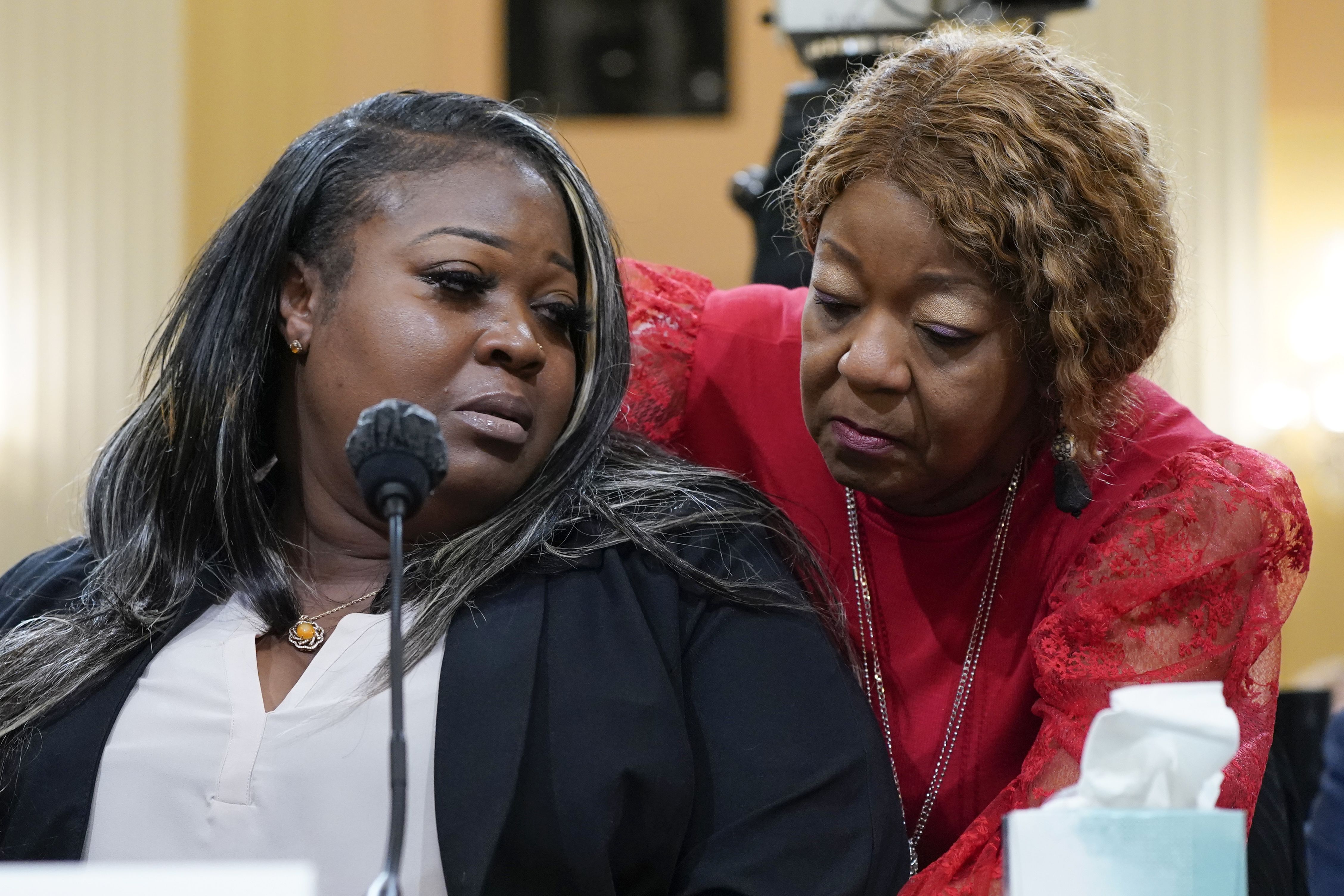
Georgia Election Workers Fight Back
The Georgia election workers story is no longer just a footnote from the 2020 vote. It has become a brutal test of whether American politics can still draw a line between rhetoric and ruin. When election misinformation escapes campaign rallies and social feeds, it does not land in the abstract. It lands on real people, with names, families, jobs, and front doors. That is why this case matters far beyond one state or one election cycle.
The bigger shift is impossible to ignore: private citizens who helped administer democracy are now central figures in the legal and political aftershocks of election denialism. If that sounds like a warning siren, it should. The treatment of these workers reveals how fragile trust in public institutions becomes when conspiracy is amplified at scale and accountability comes late.
- Georgia election workers became symbols of the human cost of election misinformation.
- The case highlights how false claims can trigger harassment, threats, and lasting reputational damage.
- It raises bigger questions about political accountability, media amplification, and the safety of election staff.
- The fallout could shape how future campaigns, courts, and election offices respond to disinformation.
Why the Georgia election workers case still hits so hard
There are plenty of political controversies that burn hot and disappear. This is not one of them. The allegations and public smears aimed at Georgia election workers became one of the clearest examples of how misinformation can turn ordinary election administration into a national target.
These were not celebrity operatives or partisan power brokers. They were local workers carrying out routine responsibilities in a system that depends on procedural trust. Once they were pulled into a disinformation narrative, that trust collapsed around them. The consequences were intensely personal: harassment campaigns, threats, public vilification, and a level of exposure that no public-facing civic worker should be forced to endure.
When falsehoods about elections are repeated often enough, the damage stops being theoretical. It becomes operational, legal, and human.
That is the key point too many political observers missed early on. Election lies are not just toxic speech in the abstract. They can disrupt staffing, chill civic participation, and make future workers think twice before showing up.
How election misinformation became a weapon
The modern misinformation machine does not need perfect evidence. It needs velocity, emotional charge, and a target. In the aftermath of the 2020 election, viral claims circulated with extraordinary speed across television, social platforms, podcasts, and political events. Once those claims named individual workers, the story ceased to be about vote counting and became a public trial without due process.
The anatomy of amplification
What happened follows a now familiar pattern. First, a dramatic accusation is made. Second, it is clipped, reposted, and discussed as if repetition itself creates credibility. Third, fact-checking arrives too slowly to stop the emotional impact. Finally, the target absorbs the consequences while institutions struggle to catch up.
That pattern matters because it is now part of the operating system of modern politics. A misleading video, an out-of-context claim, or an unsupported accusation can function like malware in the civic sphere. Once installed, it spreads through outrage loops faster than any official correction can contain.
Why election workers are uniquely vulnerable
Election staff occupy an awkward and dangerous position. They are essential to democracy, but they usually lack the public profile, legal resources, and security infrastructure of elected officials. In practical terms, that means they can be exposed to national attacks with little immediate protection.
They also perform work that is technical, procedural, and often poorly understood by the broader public. That makes them easy to mischaracterize. If a routine task is clipped out of context, many viewers will not have the baseline knowledge needed to challenge the false narrative.
Pro tip: Any democracy that wants resilient elections needs more than secure machines and accurate counts. It needs durable public literacy around how vote processing actually works.
What this reveals about accountability in politics
The central issue is not merely whether false claims were made. It is whether the political system has meaningful ways to punish or deter those claims when they inflict measurable harm. For years, many public figures operated on the assumption that inflammatory rhetoric carried little downside as long as it energized supporters.
The Georgia election workers dispute disrupts that assumption. It suggests there are circumstances where defamation, harassment, and reputational destruction cannot simply be folded into the normal rough-and-tumble of political speech.
There is a difference between contesting an election and destroying the lives of the people who administer it.
That distinction should be obvious, but recent history shows it has been dangerously blurred. If this case leaves a lasting mark, it may be because it forces institutions to clarify that line with more urgency and precision.
The legal pressure point
Cases involving election falsehoods are unusually consequential because they test how courts handle speech that is political, public, and deeply damaging. The legal system tends to move slowly, while misinformation spreads instantly. That mismatch creates a structural problem.
By the time legal accountability arrives, the targets may already have experienced threats, lost employment opportunities, required relocation, or suffered long-term trauma. In that sense, legal victory alone is not enough. It may establish accountability, but it rarely rewinds the harm.
The public pressure point
There is also a cultural question here: have voters and media ecosystems become too tolerant of unsupported election claims when they serve partisan goals? That is where the case reaches beyond the courtroom.
If audiences reward sensationalism, political actors will keep supplying it. If media figures platform explosive accusations without rigorous verification, the incentive structure remains broken. And if parties fail to police their own fringe narratives, the burden falls on individual citizens to absorb consequences they did not create.
Why this matters for the next election cycle
The next major election will not start from neutral ground. It will inherit the memory of what happened to Georgia election workers and to other officials who became targets of suspicion campaigns. That has real operational implications.
Recruitment and retention will get harder
Election administration depends on a workforce willing to handle pressure, long hours, and public scrutiny. Add personal risk, and the labor pool shrinks. Counties and states may find it harder to recruit experienced workers if the job now carries the possibility of viral defamation and threats.
That is not a small staffing issue. It is a democratic capacity issue.
Security costs will rise
Election offices may need more physical security, better threat monitoring, tighter public communication protocols, and stronger crisis response plans. Even if every ballot is counted correctly, the environment around the count has become more expensive and more volatile.
For local governments, this means budgets increasingly need to cover not just logistics but resilience. Think secure facilities, staff training, legal support, and rapid-response communications teams.
Trust will require active maintenance
Trust in elections used to be treated like a passive asset. Now it has to be built and defended continuously. Officials cannot assume process integrity will speak for itself. They need visible explanations, transparent procedures, and fast rebuttals when false claims begin circulating.
A simple communications stack can help:
Prebunking: explain common procedures before election day.Rapid response: address viral falsehoods in hours, not days.Humanization: show voters the real people doing the work.Documentation: preserve records, timelines, and verified process details.
The media lesson nobody can ignore
The case also lands squarely on the media. Newsrooms and commentators face a recurring dilemma: how do you cover explosive claims made by powerful figures without laundering misinformation into broader legitimacy?
There is no perfect formula, but there are better and worse choices. The worst choice is treating unsupported allegations as just another side of a political debate. That framing flatters spectacle and obscures evidence. The better approach is to lead with verification, name the absence of proof clearly, and center the consequences for those being targeted.
Why this matters: once misinformation is normalized by high-visibility coverage, corrections rarely travel with equal force. The first impression often becomes the permanent one.
What democracy should learn from Georgia election workers
There is a temptation to see this episode as a relic of the 2020 aftermath. That would be a mistake. The deeper lesson is that democratic systems are only as strong as the people willing to run them. If those people can be publicly identified, falsely accused, and left exposed, the system itself becomes easier to destabilize.
This is where the story stops being partisan and becomes structural. No serious republic can function if election workers are transformed into enemy figures whenever a faction dislikes an outcome. The damage compounds over time: fewer workers, lower trust, more security demands, and a public that becomes conditioned to doubt routine procedures.
Protecting election workers is not image management. It is infrastructure defense for democracy.
That framing may sound dramatic, but it is accurate. The machinery of elections includes people, not just ballots and buildings. When those people are attacked, the machinery degrades.
The bottom line on Georgia election workers
The story of Georgia election workers is ultimately about the collision between mass political storytelling and individual human vulnerability. It shows what happens when public figures make claims that travel faster than truth and hit harder than most institutions can respond.
It also presents a challenge that will outlast any single headline: whether the United States can create real deterrence against election disinformation that targets ordinary citizens. If not, future election workers will operate under a cloud of fear that no democracy should accept as normal.
The accountability question is still alive, and so is the civic one. Are election workers public servants worthy of protection, or expendable characters in a broader political narrative? The answer will shape not just reputations, but the stability of future elections themselves.
The information provided in this article is for general informational purposes only. While we strive for accuracy, we make no guarantees about the completeness or reliability of the content. Always verify important information through official or multiple sources before making decisions.