German researchers rewrite a 9,000-year-old shaman grave story
German researchers rewrite a 9,000-year-old shaman grave story
The race to correct the record on the 9,000-year-old shaman grave is more than an academic footnote-it is a live-fire test of how quickly archaeology can shed outdated narratives and expose bias. German researchers revisited a celebrated Mesolithic burial and found that earlier interpretations overlooked gendered power, ritual sophistication, and the evidence staring back from the bones. The stakes are high: if we misread deep history, we misread present-day cultural power dynamics.
- Fresh forensic analysis overturns a century of gendered assumptions about a celebrated Mesolithic burial.
- Evidence of ritual authority suggests women held central spiritual roles in early hunter-gatherer societies.
- Updated methods, including micro-CT and isotopic sampling, reveal a richer ritual toolkit than previously reported.
- The correction underscores how archaeology must interrogate its own biases alongside its artifacts.
Why the 9,000-year-old shaman grave matters now
Archaeology loves a tidy legend. For decades, the grave in question was shorthand for a generic Mesolithic hunter, stripped of nuance and context. German researchers have now demonstrated that the individual was likely a woman of high ritual status, buried with an intricate array of objects that map to social power. By reframing the burial, they force the field to confront a painful pattern: modern bias can muffle ancient voices.
The reevaluation hinges on new osteological markers, refined carbon dating, and reassembled grave goods. Researchers cataloged tiny bone fragments that earlier teams dismissed, then cross-referenced them with contemporaneous burials across Northern Europe. The result is a narrative that places spiritual authority in female hands long before agrarian hierarchies rewrote gender roles.
Key insight: When evidence challenges a comfortable story, the story should change-not the evidence.
Correcting the record, one data point at a time
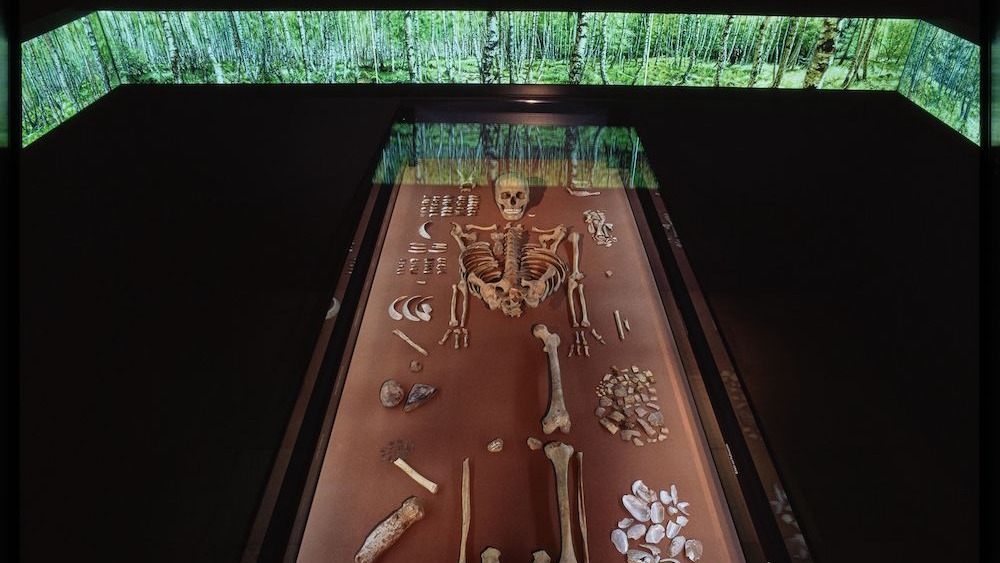
Reanalysis showed pelvic morphology consistent with a female skeleton. Dental wear patterns aligned with long-term use of plant fibers, likely for ritual cordage. Combined with the presence of ochre, antler tools, and animal-tooth pendants, the data points toward a community that invested in ceremonial leadership. The new report even suggests that the spatial layout of the grave goods mirrors known shamanic kits, hinting at standardized ritual practice across regions.
This matters beyond an academic circle. Public museums, school textbooks, and even video games have replicated the older male-centric interpretation. Correcting the grave’s story is a cultural reckoning, a reminder that representation in deep history can reverberate through modern gender expectations.
Methodology: how bias gets baked in
The team’s audit of the excavation archives uncovered handwritten field notes that quietly guided prior conclusions. Descriptors like “robust build” were conflated with male identity. Absence of traditionally feminine grave goods cemented the assumption. By digitizing and re-coding the notes, the researchers demonstrated how linguistic shortcuts became scientific dead ends.
New lab work added empirical heft. Micro-CT scans identified previously unseen microfractures, suggesting ritual performance that stressed specific joints. Stable isotope analysis traced a diet rich in freshwater protein, tying the individual to riverine resource control-another vector of influence. These techniques, common in current labs, were unavailable or underused when the grave was first cataloged, making the reevaluation not only corrective but evolutionary.
Rebuilding the toolkit around the 9,000-year-old shaman grave
Beyond bones, the research team reconstructed the grave context by modeling soil chemistry to map the original placement of goods. A cluster of pierced elk teeth pointed to garment adornment. Charred plant remains, once thought incidental, are now linked to controlled smudging rituals. Each reinterpretation pulls the burial closer to a vision of a structured, gender-diverse spiritual hierarchy.
The take-home: methodological humility is as important as instrumentation. Every assumption needs a counterpart question. If robust bones default to male, what counters that default? If grave goods do not match modern gender signals, what does that reveal about cultural variance?
Why this rewrite alters the broader narrative
Archaeology often leans on comparative typology: if something looks familiar, it is labeled accordingly. That shortcut can erase outliers that challenge norms. By insisting that this grave belongs to a female shaman, the German team forces a recalibration of Mesolithic social models. Suddenly, female ritual specialists are not anomalies but plausible fixtures.
This shift has cascading effects. Models of resource distribution must account for women controlling spiritual and possibly economic gateways. Interpretations of art and ornamentation need to detach from gendered expectations. Museum labels will need rewrites, and funding for similar reexaminations could increase as curators realize how much legacy bias distorts collections.
Pro tip: When confronted with legacy data, schedule a bias audit before planning new exhibits or curricula.
Implications for tech-driven archaeology
Digital humanities tools now allow teams to revisit archival digs without disturbing a grain of soil. Computer vision can sort thousands of catalog images, flagging objects that share wear patterns. Natural language processing can scan decades of field notes for gendered language. Applying these to other Mesolithic sites could yield further corrections, aligning narratives with evidence rather than inherited assumptions.
However, technology is not a silver bullet. Algorithms inherit bias from training data. If the corpus labels “shaman” as male by default, computer vision may echo that prejudice. The lesson from this grave is that human oversight must guide digital pipelines, with clear protocols for challenging entrenched categories.
Future directions and open questions
Correcting a single grave is not the endgame. The real challenge is building frameworks that keep future research honest. That means cross-disciplinary peer review, transparent data repositories, and community engagement with descendant groups when applicable. It also means designing museum narratives that highlight uncertainty rather than bury it.
Open questions linger. What was the geographic reach of this shaman’s influence? Can isotopic signatures trace pilgrimage routes? Do similar burials exist but remain misclassified in storerooms? Each query underscores the value of revisiting archives with sharper tools and less ego.
Why it matters: Updating one grave’s story can reset public understanding of gendered power across millennia.
Editorial stance: skepticism with enthusiasm
It is tempting to turn this correction into a triumphalist arc, but skepticism must remain. The evidence is strong yet interpretive. Skepticism means inviting replication: share the scans, release the isotope data, and allow independent labs to cross-validate. Enthusiasm means pushing for similar audits across the archaeological canon. Together, they create a healthier feedback loop where narratives are provisional and evidence-driven.
Practical guide for curators and educators
For museums, start with language audits on labels and audio guides. Replace declarative gendered statements with evidence-backed phrasing. For educators, integrate case studies like this into lesson plans to teach how science self-corrects. For researchers, publish full datasets and protocols to speed up peer verification.
- Establish a review cadence for legacy exhibits; prioritize contested narratives.
- Use
micro-CTscans andstable isotopebaselines as standard for reanalysis. - Create public dashboards showing how interpretations evolve over time.
- Train docents to discuss bias openly, framing it as part of the scientific process.
These steps translate the grave’s reevaluation into actionable change, ensuring that the story does not end at publication but continues in practice.
Bottom line on the 9,000-year-old shaman grave
The German-led reevaluation takes a mythologized burial and returns it to the realm of evidence. It spotlights a female shaman, not a generic hunter, and challenges the scaffolding of gendered assumptions that shaped public history. The work is a reminder that science is iterative, that archives are living, and that voices lost to time can be heard again when we are willing to listen differently.
For readers, the takeaway is straightforward: demand rigor, reward transparency, and stay alert to the quiet ways bias shapes the stories we tell about the past-and, by extension, the future we are willing to imagine.
The information provided in this article is for general informational purposes only. While we strive for accuracy, we make no guarantees about the completeness or reliability of the content. Always verify important information through official or multiple sources before making decisions.