Global Flashpoints Reshape the News Agenda
Global Flashpoints Reshape the News Agenda
The modern news cycle no longer moves in clean lanes. A militia confrontation in Iraq, a fresh argument over Eurovision, and renewed scrutiny of Castro-era politics may look unrelated at first glance. They are not. Each story exposes the same underlying pressure: institutions are being stress-tested by ideology, public outrage, and geopolitical drift. For readers trying to make sense of the headlines, the challenge is not just keeping up – it is understanding how seemingly disconnected events fit into a broader pattern. That is why the global flashpoints now dominating the agenda matter beyond their immediate drama. They signal where power is hardening, where legitimacy is fraying, and where culture is colliding with politics in ways that governments, audiences, and markets can no longer ignore.
- Global flashpoints across Iraq, Latin American political memory, and Eurovision point to a wider crisis of institutional trust.
- Militia influence and state weakness remain central to understanding instability in the Middle East.
- Cultural platforms such as
Eurovisionare increasingly treated as arenas for geopolitical conflict. - Historical figures like
Castrostill shape modern ideological battles far beyond Cuba. - The bigger takeaway: fragmented headlines often reveal one strategic story about power, legitimacy, and narrative control.
Why global flashpoints are converging now
The most revealing part of today’s news is not any single event. It is the convergence. Across regions, institutions that once acted as buffers – governments, media organizations, cultural bodies, and diplomatic channels – are losing their ability to stay above political combat. That makes every dispute feel larger, riskier, and more contagious.
When a militia exerts pressure on a fragile state, the consequences are obvious: security risks, diplomatic strain, and potential violence. When a song contest becomes a proxy battlefield for national identity and international legitimacy, the consequences can seem trivial by comparison. They are not. Both are struggles over who gets to define reality in public view.
The defining feature of this era is that soft power and hard power are no longer neatly separated. Culture, memory, and force are all competing on the same stage.
This is why global flashpoints deserve more than surface-level summary. They are signals. They tell us where systems are under pressure and what kinds of conflict are becoming normal.
Kataib Hezbollah and the problem of state authority
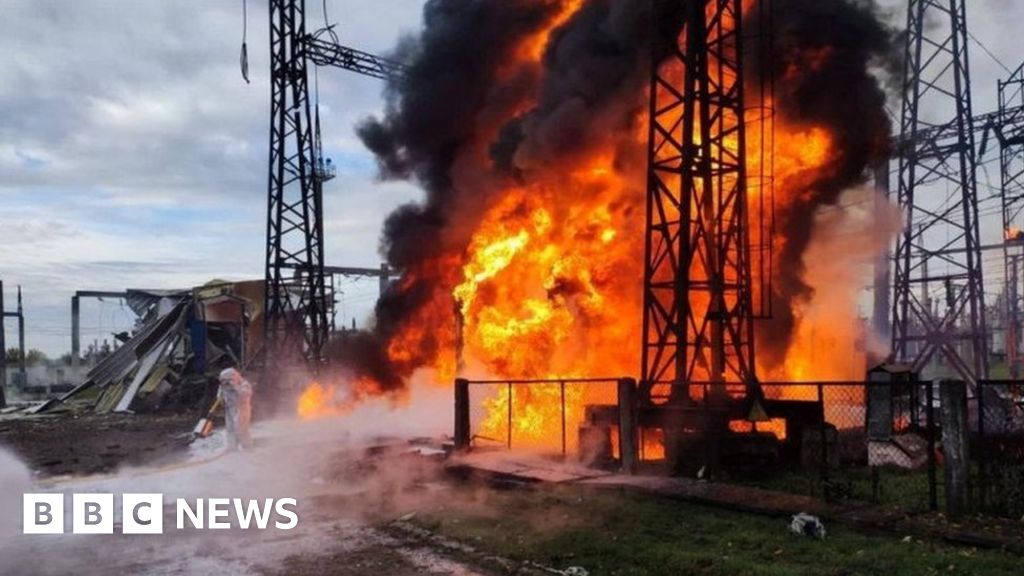
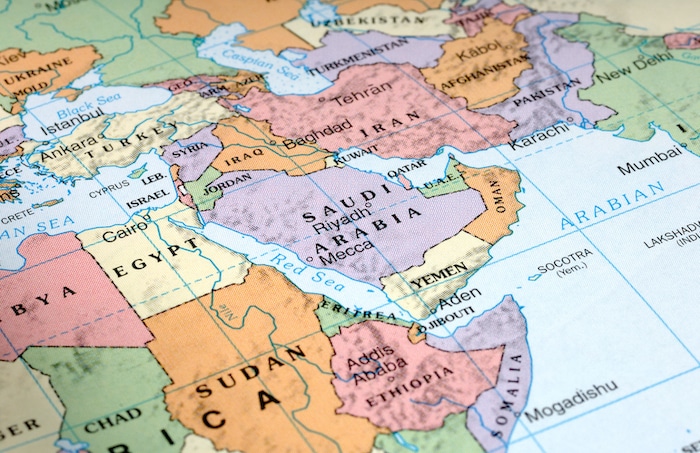
Any discussion of Iraq’s security landscape has to start with a difficult truth: sovereignty on paper is not the same as sovereignty in practice. Groups such as Kataib Hezbollah matter because they operate in the space between formal state power and informal armed influence. That gray zone is where much of Iraq’s political tension lives.
Why the group matters beyond Iraq
Kataib Hezbollah is not just another militia headline. It represents a broader regional model in which armed non-state actors acquire enough legitimacy, firepower, and political leverage to shape national outcomes. That has implications for the United States, Iran, Gulf states, energy markets, and the broader balance of power in the Middle East.
The strategic issue is simple: when a government cannot fully control armed actors operating within its borders, every negotiation becomes more fragile. Foreign policy becomes less predictable. Domestic reform becomes harder. Investment becomes riskier.
This is one reason Iraq repeatedly sits at the center of wider regional anxiety. It is not only about what happens on the ground. It is about what Iraq reveals about the limits of postwar state-building.
The credibility trap facing Baghdad
For the Iraqi state, confronting militia influence is never just a security decision. It is also a political gamble. Move too aggressively, and the government risks escalation. Move too cautiously, and it reinforces the impression that formal authority is secondary to armed networks.
That trap is familiar across conflict-affected states. It creates a cycle in which institutions appear weak precisely because they must avoid testing their weakness too directly. For outside observers, that can make events look static. They are not static. They are unstable in a quieter, more structural way.
Why this matters: markets, diplomats, and citizens all respond to credibility. Once the perception of fragmented authority hardens, recovery becomes more expensive and reform becomes slower.
Castro’s afterlife in modern politics
Few political figures remain as symbolically loaded as Fidel Castro. Decades after his rise transformed Cuba, his legacy still functions less like settled history and more like an active fault line. To supporters, he can represent anti-imperial resistance. To critics, he remains shorthand for authoritarian control and political repression. That split has not faded with time. If anything, it has become easier to weaponize in modern debate.
Why historical memory keeps returning
Political memory is valuable because it compresses complexity into emotionally powerful shorthand. Leaders, activists, and commentators invoke figures like Castro not only to debate the past but to frame the present. Historical legacy becomes a live instrument in ideological battles over democracy, nationalism, foreign intervention, and economic justice.
This matters well beyond Cuba. Across the Americas, arguments about leftist governance, populism, sanctions, and state control often pull in Castro-era symbolism. It is a way of talking about current anxieties through a figure everyone already associates with high political stakes.
History is rarely retired in polarized politics. It is repackaged, redeployed, and made useful for the next fight.
That is why coverage tied to Castro still resonates. It is not nostalgia. It is a contest over meaning.
The risk of flattening complex legacies
The editorial temptation is to turn polarizing historical figures into clean symbols. That makes for sharp headlines, but poor analysis. Legacies like Castro’s are durable precisely because they contain contradiction: revolutionary appeal, state discipline, international influence, economic struggle, and deep human costs.
Readers should be skeptical of any framing that reduces such a figure to either pure icon or pure villain. The real story is how different camps continue to extract political value from the legacy. That is where the present-tense relevance lies.
Eurovision is no longer just entertainment
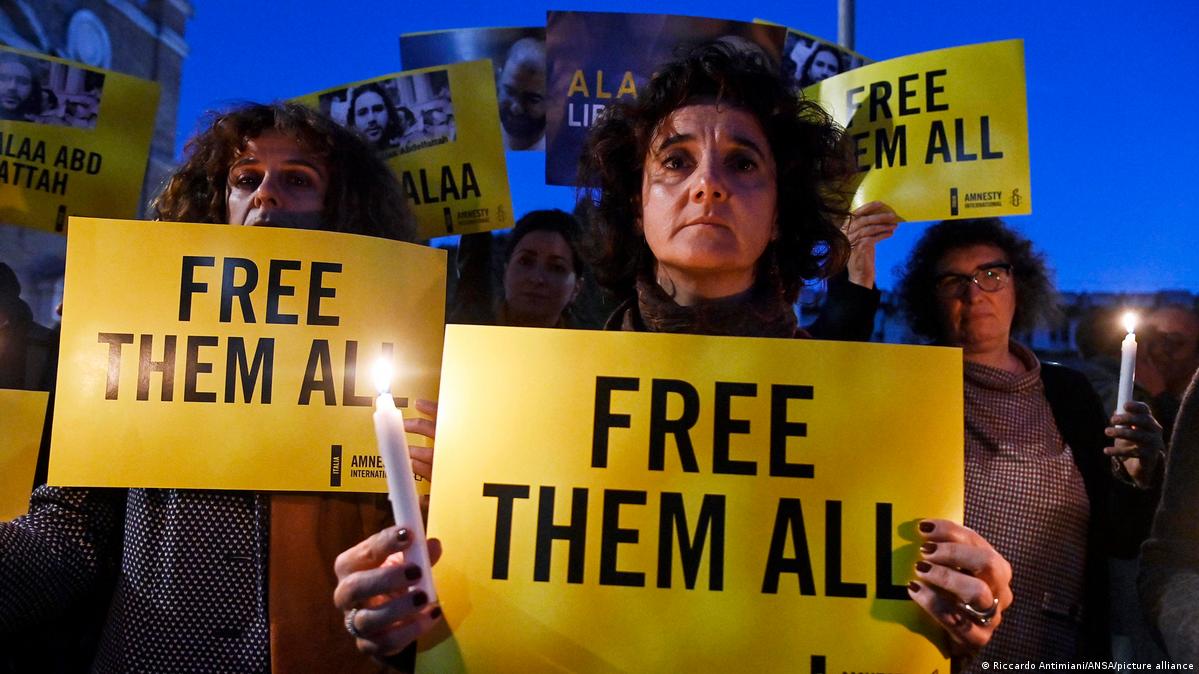
If there was ever a clean boundary between pop spectacle and political conflict, Eurovision has spent years erasing it. The contest remains one of the most visible examples of how entertainment can become a battlefield for legitimacy, protest, and identity. It is still a music event, yes, but pretending it exists outside politics now feels almost quaint.
Why Eurovision keeps attracting controversy
Eurovision is uniquely exposed because it combines mass viewership, national representation, public voting, and cross-border symbolism. That makes it irresistible as a stage for political expression, whether organizers welcome that or not.
The pattern is familiar: viewers argue over participation, broadcasters face pressure, performers become proxies for government disputes, and the event’s claims of neutrality come under strain. Every new controversy tests whether a cultural institution can maintain procedural fairness while operating in a deeply politicized environment.
The bigger issue is institutional legitimacy. Once audiences believe rules are inconsistently applied, every result becomes suspect. That damages more than a single show. It undermines trust in the governance model behind it.
Culture as soft power under pressure
Large entertainment platforms were once treated as diplomatic relief valves – places where shared culture could coexist with disagreement. That assumption is weakening. Audiences increasingly expect cultural institutions to reflect moral and political judgments, not merely host performances.
This shift creates a no-win scenario for organizers. Stay neutral, and they are accused of cowardice. Take a stance, and they are accused of selective enforcement or politicization. That is not a temporary communications problem. It is the new operating environment for global entertainment.
For brands, broadcasters, and governments, the lesson is clear: cultural visibility now comes bundled with geopolitical exposure.
What ties these stories together
At a glance, militia politics in Iraq, Castro’s contested legacy, and Eurovision backlash belong to different desks in a newsroom. Strategically, they belong in the same conversation. Each is a case study in what happens when public institutions lose the luxury of appearing neutral, uncontested, or fully in control.
Three common patterns
- Authority is fragmented: states, organizers, and legacy institutions are being challenged by actors outside traditional control.
- Narrative power matters: the fight is not only over outcomes but over the story audiences are asked to believe.
- Symbolism now scales instantly: a local dispute can become a global ideological flashpoint within hours.
That combination is what makes modern global flashpoints feel so relentless. The issue is not just more information. It is more overlap between politics, identity, and media amplification.
How to read global flashpoints without getting lost
There is a practical takeaway here for readers, executives, and policymakers: stop treating cross-regional headlines as isolated episodes. The better approach is to ask a short set of strategic questions every time a story spikes.
A simple framework
- Who is gaining leverage? Look beyond the headline actor to see who benefits from institutional weakness or public outrage.
- What legitimacy is being contested? Is the argument about law, public trust, cultural representation, or moral authority?
- What system is under stress? Security, diplomacy, media governance, and entertainment platforms now overlap more than they used to.
- What happens if this pattern repeats? Repetition often matters more than any single event.
Think of it like a quick analytic checklist:
event -> actors -> legitimacy challenge -> systemic risk -> repeatability
That simple structure helps separate noise from signal. It also makes clear why stories that look culturally minor can have outsized strategic meaning.
Why this matters for the months ahead
The near future is likely to produce more, not fewer, clashes of this kind. Weak states will continue to face pressure from armed networks. Historical figures will remain ammunition in current ideological battles. Major entertainment institutions will be pushed to act as moral arbiters whether they want the role or not.
The real risk is normalization. When audiences get used to institutional fragility, they may stop expecting coherence, fairness, or stable authority at all. That would be a profound shift. It would mean the crisis is no longer the event itself but the public’s lowered expectations of the systems meant to contain it.
The most consequential change is not that politics invades everything. It is that everything now has political consequences.
That is the frame worth keeping. The headlines may rotate, but the underlying pattern is durable. Global flashpoints are no longer exceptions to a stable order. They are increasingly the operating logic of the order itself.
The bottom line on global flashpoints
If today’s agenda feels chaotic, that is because the old distinctions between security, culture, and historical memory are breaking down. Global flashpoints now emerge wherever legitimacy is weak, symbolism is potent, and institutions cannot convincingly stand above the fight. Iraq shows the pressure on state authority. Castro’s legacy shows how unresolved history keeps shaping political identity. Eurovision shows how even entertainment can become a front line in geopolitical conflict.
For readers and decision-makers alike, the challenge is to resist the temptation of compartmentalized thinking. These stories are not random. They are connected symptoms of a world where power is increasingly contested in public, in real time, and across every available platform.
The information provided in this article is for general informational purposes only. While we strive for accuracy, we make no guarantees about the completeness or reliability of the content. Always verify important information through official or multiple sources before making decisions.