Gray Whale Deaths Expose a Coastal Collision Crisis
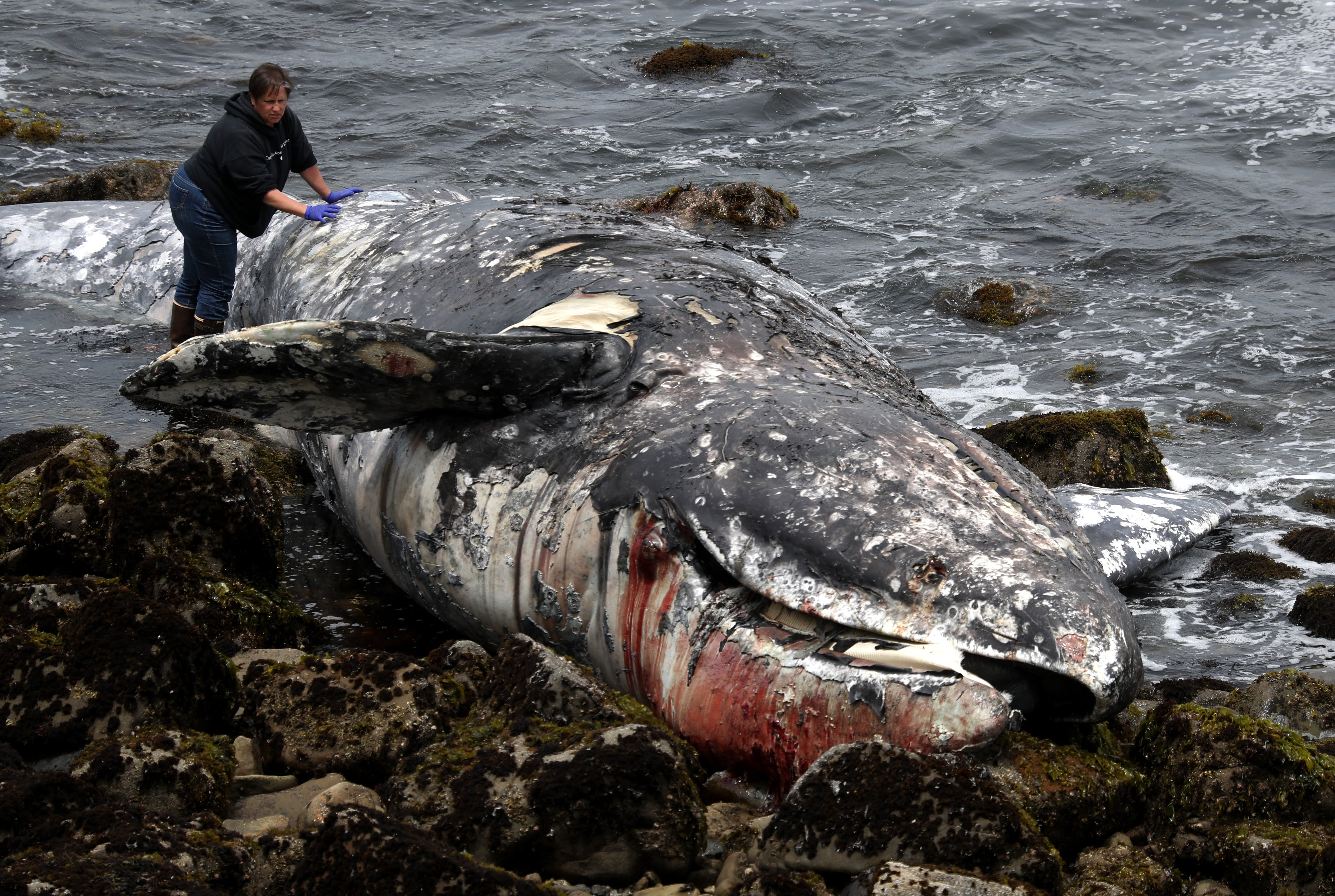
Gray Whale Deaths Expose a Coastal Collision Crisis
Gray whale deaths near San Francisco are becoming more than a tragic headline. They are a warning shot for one of the busiest coastal ecosystems in the United States. When a migrating whale is killed by a vessel, the loss is visible, but the deeper problem is structural: heavy maritime traffic, crowded feeding grounds, and a management system that still treats collisions as isolated accidents instead of a predictable risk. That is the dangerous assumption. The Bay Area sits at the intersection of shipping, recreation, fishing, and conservation, and gray whales are paying the price. If we keep treating these deaths as unavoidable weather events for the ocean, we will keep getting the same outcome. The real question is not whether more whales will be hit. It is whether regulators, shipping operators, and coastal communities will move fast enough to reduce the odds.
- Gray whale deaths near San Francisco reflect a preventable ship-strike problem.
- Vessel traffic, migration timing, and feeding behavior create a high-risk corridor.
- Speed reductions and route changes can lower the collision risk quickly.
- Better monitoring matters, but policy enforcement matters more.
- The stakes extend beyond one species to the health of the entire coastal system.
Why Gray Whale Deaths Keep Happening
Gray whales are built for migration, not for dodging hulking boats in crowded waters. Their annual movement along the Pacific coast brings them through regions where container ships, ferries, sailboats, charter vessels, and recreational traffic all share the same ocean space. Around San Francisco, that overlap becomes especially hazardous because the coastline funnels marine life and maritime commerce into a relatively compact area. Once a whale enters that corridor, the margin for error shrinks dramatically.
The problem is not mysterious. Large vessels move fast enough that even skilled crews can fail to react in time, especially when a whale surfaces unexpectedly or is only partially visible. Add fog, glare, chop, and the simple fact that the ocean is huge while a whale is only visible intermittently, and the risk compounds. For gray whales, which often travel and feed near the surface, that can be a fatal mix.
Gray Whale Deaths and the visibility problem
Ship strikes are often described as avoidable, but avoidance depends on seeing the animal early enough to change course. That is harder than it sounds. Whales do not stay above water long. In some conditions, a watchstander has only seconds to spot a blow or back. By the time the vessel’s crew registers the threat, the collision may already be unavoidable. This is why focusing only on individual navigational skill misses the larger point: the system is engineered for throughput, not for coexistence.
“The ocean is not empty space. It is shared space, and when traffic density rises, the cost of treating it like a highway becomes visible in dead animals.”
The San Francisco Risk Zone
San Francisco sits inside a busy marine environment where local ecology and commercial infrastructure collide. Shipping routes, port access, nearshore feeding areas, and seasonal whale movement create a risk zone that does not disappear just because the strike count drops for a stretch. A quieter period can lull policymakers into thinking the crisis has eased when the underlying conditions have not changed.
That is the editorial trap here: the story is not just about a cluster of deaths. It is about the conditions that make those deaths predictable. Gray whales migrate along the coast, but some also linger near productive feeding grounds and may spend more time in areas with heavy vessel traffic. If those animals feed, rest, or travel in the same corridor used by large ships, the encounter rate rises. The more traffic, the worse the odds.
Why the Bay Area is uniquely vulnerable
The Bay Area has high maritime intensity, dense human activity, and strong conservation expectations. Those three forces do not naturally align. Ports are economic engines. Ferries move commuters. Tour boats and recreational boats fill the water on good days. Meanwhile, whales do not care about schedules, shipping deadlines, or tourism revenue. They respond to prey, migration cues, and ocean conditions. That mismatch is the heart of the conflict.
Climate pressure adds another layer. Ocean conditions can shift prey distribution, changing where whales feed and how long they stay in certain areas. When whales remain near busy routes longer than expected, the collision window widens. So the issue is not static. As the climate changes, the geography of risk changes too.
What Would Actually Reduce Gray Whale Deaths
The good news is that this is not a problem without tools. The marine safety playbook already includes measures that can reduce vessel strikes. The bad news is that many of them only work when they are implemented broadly, consistently, and with enough enforcement to matter. Voluntary caution is helpful. It is not enough.
- Slow the vessels: Lower speeds give crews more time to detect whales and reduce the severity of any impact.
- Shift routes: Moving traffic away from known whale concentrations can cut exposure without stopping commerce.
- Expand monitoring: Real-time sightings, acoustic detection, and aerial surveillance improve situational awareness.
- Target seasonal peaks: Temporary measures during migration or feeding periods can have outsized benefits.
- Strengthen compliance: Rules only work if operators expect consequences for ignoring them.
Speed limits are especially important because they attack the problem from two directions. They give whales a better chance to avoid the vessel, and they reduce the force of a collision if impact still occurs. That is a rare policy lever that is both practical and immediately useful. Yet speed limits often face resistance because they create delays. In other words, the ocean is asked to absorb the external cost of efficiency.
Gray Whale Deaths and the case for seasonal management
One of the smartest responses is seasonal management. Gray whales do not use the coastline uniformly year-round, and neither does vessel traffic. That means regulators can be more surgical than a blanket approach. During periods when whales are more likely to linger near the Bay Area, temporary restrictions on vessel speed or lane usage can deliver protection without permanently disrupting commerce.
This is where policy has to become precise instead of performative. A rule that sounds strong but is hard to enforce is mostly theater. A narrower rule that applies in the right place at the right time can save lives. Conservation often works that way. The best solution is not always the most dramatic one. It is the one that matches the biology.
Why This Matters Beyond One Species
Gray whale deaths are emotionally powerful because whales are charismatic, visible, and culturally resonant. But the importance of the issue runs much deeper than one species. Ship strikes are a signal that marine management is lagging behind the intensity of human use. If large whales cannot safely move through one of the richest coastal corridors on the continent, then smaller marine species are facing pressure we barely measure.
There is also an economic argument that conservation advocates do not say loudly enough: dead whales are a policy failure that can destabilize public trust. Coastal communities increasingly expect environmental stewardship to be built into infrastructure, not bolted on afterward. If shipping growth is allowed to outrun mitigation, the public sees it as proof that ecological damage is tolerated whenever commerce is involved. That is a long-term reputational problem for ports and regulators alike.
“The real test is not whether we can keep shipping moving. It is whether we can do it without normalizing unnecessary wildlife deaths.”
The Technology Exists but the Will Is the Bottleneck
This is not a case where the science is missing. Detection tools, monitoring programs, and operational controls already exist. Satellite data, acoustic networks, and whale-reporting systems can all improve awareness. Better mapping of whale presence can help agencies identify high-risk corridors. Even simple measures, such as improved bridge-team training and more aggressive speed advisories, can make a difference.
But technology only helps if operators respond to it. A whale alert that arrives too late is not a safeguard. A route recommendation that is easy to ignore is not a defense. The bottleneck is organizational. Do shipping firms, regulators, and port authorities have incentives that favor precaution over throughput? Too often, the answer is no.
Practical tips for coastal operators
If the goal is fewer gray whale deaths, the operational checklist should be blunt:
- Build whale risk into voyage planning, not as an afterthought.
- Use slower transit speeds in known migration windows.
- Train crews to recognize blow patterns and surfacing behavior.
- Coordinate with conservation groups and monitoring programs in real time.
- Log near misses so risk patterns can be identified before a fatal strike happens.
That may sound obvious, but maritime safety often improves only when obvious steps are turned into mandatory routines. Ocean conservation is full of warnings that come too late. The better model is prevention by design.
The Future of Gray Whale Protection
The future of gray whale protection will likely hinge on whether California and federal agencies treat ship strikes as a chronic infrastructure issue. That means formalizing speed management, improving seasonal risk models, and making strike mitigation part of port planning. It also means acknowledging that marine wildlife protection cannot rely on scattered goodwill from vessel operators. Shared waters require shared rules.
There is a bigger lesson here for coastal cities everywhere. As climate change reshapes migration and prey patterns, the old assumptions about where animals move and when they are vulnerable will keep breaking down. Static maps will not be enough. Dynamic management will have to replace it. The cities and ports that adapt early will be the ones that avoid turning every headline into a postmortem.
Gray whale deaths near San Francisco are not just a local tragedy. They are a stress test for whether modern coastal economies can coexist with the animals that still depend on the same waters. Right now, the answer is not reassuring. But it is fixable, if regulators are willing to treat every strike as evidence, not fate.
The uncomfortable truth is that the ocean is telling us what the data already shows: if we keep moving faster through whale habitat, the whales will lose. The only meaningful response is to slow down, reroute when needed, and enforce the rules like the lives of these animals actually matter.
The information provided in this article is for general informational purposes only. While we strive for accuracy, we make no guarantees about the completeness or reliability of the content. Always verify important information through official or multiple sources before making decisions.