Hijacked Oil Tanker Raises Red Sea Alarm
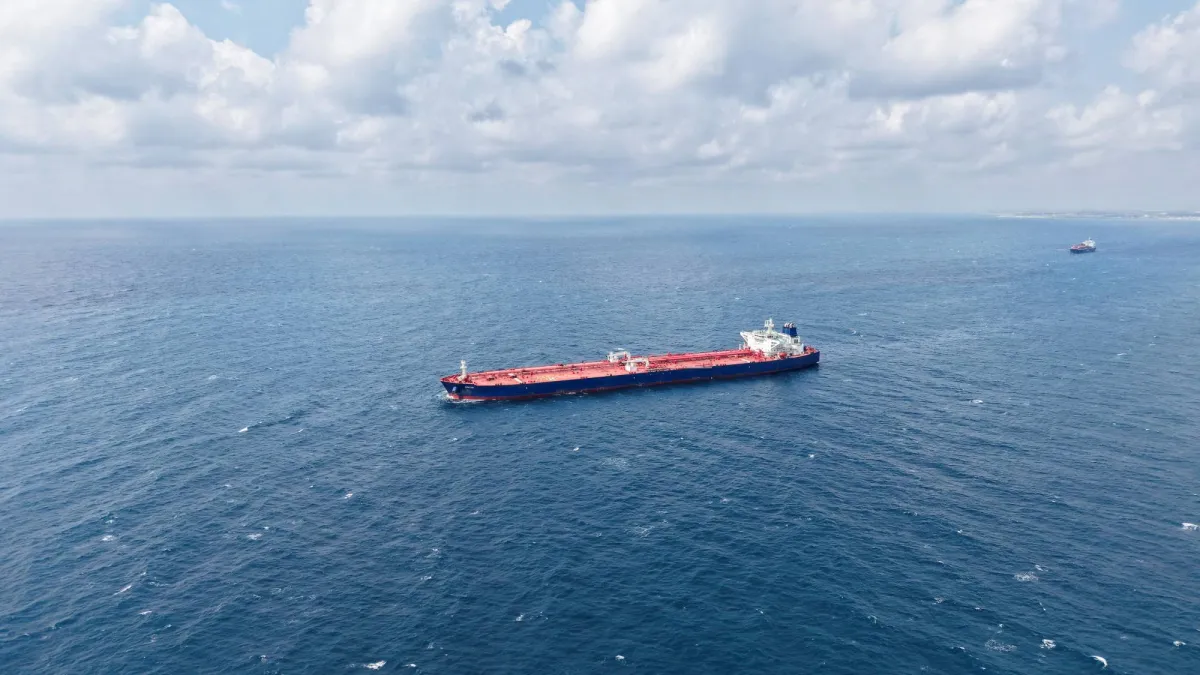
Hijacked Oil Tanker Raises Red Sea Alarm
The reported hijacking of an oil tanker headed for Somalia is not just another maritime security headline. It is a sharp reminder that one vulnerable vessel can expose a much larger problem: fragile shipping lanes, weak enforcement at sea, and an energy trade that still depends on routes where state authority is uneven and armed actors remain opportunistic. The hijacked oil tanker story matters because every seizure at sea sends a signal to insurers, shipping operators, fuel traders, and governments that risk in the region is not theoretical. It is operational, expensive, and potentially destabilizing.
For businesses moving fuel, for governments trying to secure trade corridors, and for crews working dangerous routes, the implications go far beyond one ship. The Red Sea, Gulf of Aden, and waters off Somalia have long been warning zones. This latest report suggests those warnings still deserve to be taken seriously.
- A hijacked oil tanker can disrupt far more than a single voyage: freight costs, insurance premiums, and routing decisions can all shift quickly.
- The Somalia-bound route remains strategically sensitive: weak maritime governance and regional conflict create openings for criminal or armed groups.
- Energy cargoes are especially high-stakes targets: they combine resale value, political symbolism, and immediate market relevance.
- Shipping security is now a boardroom issue: operators must reassess crew protection, route planning, and crisis response.
Why the hijacked oil tanker report matters immediately
When an oil tanker is reportedly seized, the first instinct is to treat it as a regional security incident. That is accurate, but incomplete. Tankers are not ordinary cargo ships. They move a commodity that fuels power grids, transportation systems, military logistics, and local economies. Any threat to that movement creates ripple effects that reach far beyond the coastline where the event occurred.
The strategic importance of a hijacked oil tanker lies in three overlapping realities. First, liquid fuel cargo has obvious monetary value. Second, maritime chokepoints near Yemen and Somalia are already under stress from conflict, piracy legacies, and contested security enforcement. Third, every successful interception or hijacking weakens confidence in maritime protection frameworks that governments and shipping firms have spent years trying to rebuild.
One tanker seizure can do what dozens of warnings cannot: force the shipping industry to price in risk all over again.
That repricing is where the real damage begins. Even if cargo is recovered and crews are eventually released, the cost of operating in nearby waters often rises almost immediately. Insurers adjust rates. Shipowners demand enhanced security. Charterers rethink schedules. Ports and coastal authorities face tougher scrutiny over surveillance and response.
The bigger security picture in waters near Yemen and Somalia
These waters have a long memory. The maritime zones connecting the Red Sea, Gulf of Aden, Arabian Sea, and Somali coastline have repeatedly become testing grounds for both state and non-state power. Piracy off Somalia once forced a global naval response and changed how shipping companies approach high-risk corridors. Yemen’s long-running instability added another layer, turning nearby sea lanes into zones where military, commercial, and political interests overlap in dangerous ways.
That is why a tanker reportedly headed for Somalia immediately draws attention. It touches on several fault lines at once:
- Maritime law enforcement gaps: not all coastal regions have the capacity to monitor and protect shipping consistently.
- Conflict spillover: political violence on land often migrates offshore through smuggling, interception, and coercive control of trade routes.
- Commercial exposure: fuel shipments are high-value and often essential to local supply chains.
- International credibility: every incident raises questions about whether multinational patrols and regional partners are deterring attacks effectively.
There is also a psychological dimension. Shipping companies do not need a full-blown piracy wave to change behavior. A few highly visible incidents can be enough to trigger route adjustments, security upgrades, or hesitation around particular ports and deliveries.
How tanker hijackings reshape business decisions
For executives in shipping and energy, a tanker hijacking is not just a security event. It is a spreadsheet event. Risk managers immediately start recalculating exposure across several categories.
Insurance costs rise first
Marine insurers tend to react quickly when incidents cluster in a region. If the threat environment appears to be worsening, ships transiting nearby waters may face higher war-risk premiums, added security requirements, or restrictions tied to crew safety protocols. Those added costs rarely stay contained. They move into freight pricing and eventually affect downstream buyers.
Route efficiency takes a hit
Operators may decide that the shortest path is no longer the smartest one. Rerouting around danger zones can protect vessels, but it burns time and fuel. In the tanker business, timing matters. Delays can disrupt port slots, refinery inputs, and delivery contracts.
Crew welfare becomes central
No vessel security plan is credible if it treats crew safety as secondary. Seafarers are often the least visible but most exposed people in these crises. A hijacked oil tanker incident can force companies to review communications systems, safe room procedures, private security policies, and emergency drills. In practical terms, that can mean everything from tighter reporting intervals to stricter transit protocols through high-risk areas.
The shipping industry has learned this lesson repeatedly: cargo can be insured, but crew trauma, reputational damage, and strategic disruption are harder to contain.
Why oil cargo changes the equation
Not every hijacking carries the same weight. Oil tankers are uniquely sensitive targets because they sit at the intersection of energy security and geopolitical signaling. A tanker can be valuable not only for the cargo on board, but also for the message its seizure sends.
Fuel cargoes matter because they can:
- Generate direct financial leverage through ransom, diversion, resale, or coercive negotiation.
- Create political visibility since energy shipments receive immediate international attention.
- Pressure local supply chains if the destination market relies on imported fuel.
- Trigger broader market anxiety even when the total volume involved is relatively small.
That last point is crucial. Commodity markets do not always move on volume alone. They also move on perceived vulnerability. If traders believe a route is becoming less secure, the market reaction can exceed the immediate physical disruption.
What this says about regional governance
Maritime insecurity is often a mirror reflecting problems on land. If a vessel can be intercepted, diverted, or hijacked with apparent success, that suggests deeper institutional weaknesses nearby. These can include limited coast guard capability, fragmented territorial control, underfunded port oversight, corruption in supply chains, or insufficient regional coordination.
For Somalia and Yemen, maritime incidents carry particular significance because both countries sit near globally important shipping geography while also grappling with severe political and security pressures. That combination makes local waters highly consequential and difficult to police consistently.
For outside powers, the challenge is equally complicated. Naval patrols can deter some threats, but they do not solve root causes. Long-term maritime security depends on functioning coastal governance, reliable intelligence sharing, and enforceable legal consequences for attackers and facilitators.
What shipping operators should be doing now
This is where the story becomes practical. A reported tanker hijacking should trigger operational review, not just public statements. Companies running vessels through sensitive corridors need a sharper risk model than the one they used a year ago.
1. Reassess route intelligence
Static threat maps are not enough. Operators need current regional reporting, voyage-specific monitoring, and clearer escalation thresholds. If a route passes near conflict spillover zones, the transit plan should be revised before departure, not improvised at sea.
2. Stress-test onboard procedures
Emergency protocols should be treated like live systems, not paperwork. Crews need rehearsed procedures for communications loss, suspicious approach, speed adjustment, and secure shelter. Even basic checklists should be reviewed and simplified where possible.
Pre-transit checklist
Verify communications redundancyUpdate crew emergency rolesReview threat corridor timingConfirm naval reporting requirementsInspect vessel hardening measures
3. Align commercial and security teams
One common industry mistake is treating security and operations as separate conversations. They are not. Chartering teams, legal teams, insurance teams, and vessel operators need a shared view of what risk is acceptable and what triggers route or schedule changes.
4. Prepare for reputational fallout
If a tanker is seized, public communication matters almost as much as crisis management. Investors, regulators, clients, and crews will want fast answers. A weak or delayed response can make an already serious event look like a governance failure inside the company.
Why governments cannot treat this as an isolated case
For regional authorities and international partners, a tanker hijacking report should be read as an intelligence signal. It may indicate renewed operational capability among maritime attackers, a breakdown in deterrence, or a shift in targeting priorities toward energy shipments.
That means the response cannot stop at vessel recovery or condemnation. Governments need to ask harder questions:
- Was the ship specifically selected for its cargo, flag, route, or destination?
- Were local surveillance and warning systems adequate?
- Is there a wider network enabling interception, diversion, or resale?
- Have naval patrol patterns and reporting mechanisms kept up with evolving tactics?
If those questions are ignored, the next incident becomes more likely. And if repeated incidents begin to normalize, the commercial damage compounds quickly.
The market signal nobody should ignore
The most important takeaway from this hijacked oil tanker report is not only that one vessel may have been taken. It is that the region’s maritime risk profile remains unstable enough to threaten energy logistics, shipping confidence, and already fragile political environments.
That matters to a much wider audience than maritime specialists. Fuel importers depend on secure transport. Coastal economies depend on functioning ports. Humanitarian systems often rely on the same broad maritime infrastructure. And global trade depends on the assumption that high-risk corridors are still governable with enough coordination and pressure.
When maritime insecurity returns to the energy trade, it rarely stays local for long.
The shipping industry has spent years trying to make these routes more predictable. But predictability is fragile. A single tanker incident can reopen old questions about naval deterrence, insurance exposure, and the true resilience of sea-based supply chains. That is why this episode deserves close attention now, before it hardens into a pattern.
If there is one lesson here, it is brutally simple: the map of global trade may look fixed, but the security beneath it is anything but. And when an oil tanker is reportedly hijacked on a route tied to Somalia and the waters near Yemen, the warning light is not blinking for one ship alone. It is blinking for the entire corridor.
The information provided in this article is for general informational purposes only. While we strive for accuracy, we make no guarantees about the completeness or reliability of the content. Always verify important information through official or multiple sources before making decisions.