NATO Faces Shock From US Troop Withdrawal in Germany
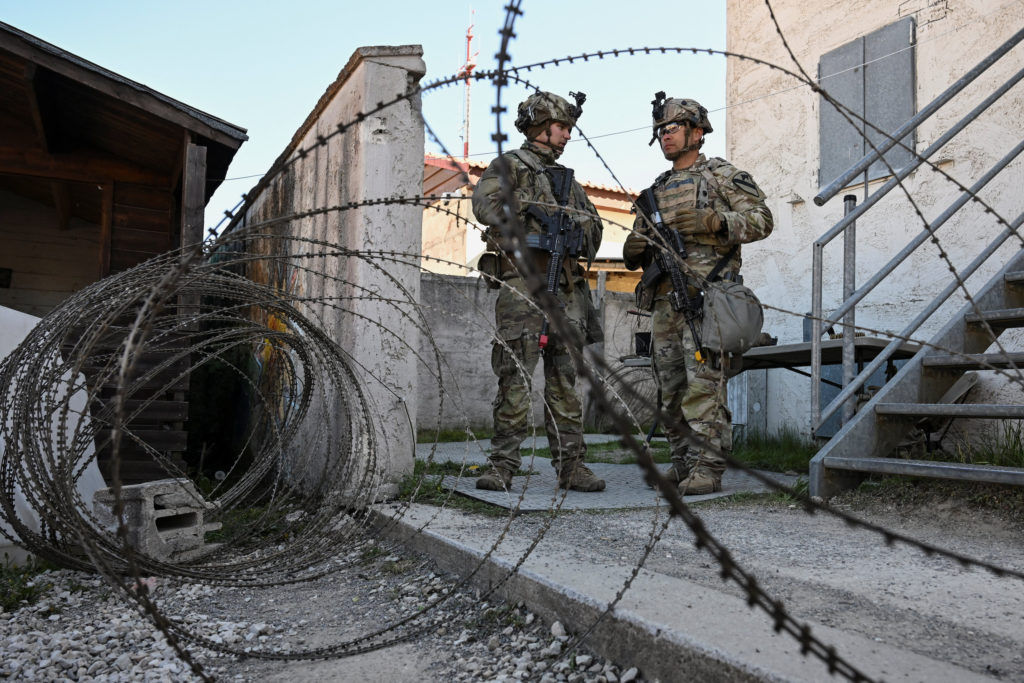
NATO Faces Shock From US Troop Withdrawal in Germany
Europe’s security architecture runs on assumptions that once felt immovable: American troops in Germany, NATO logistics anchored in Central Europe, and a transatlantic alliance that could absorb political turbulence without breaking stride. That confidence is now under pressure. With NATO assessing the details of a reported US troop withdrawal in Germany, the debate is no longer abstract. It is about readiness, deterrence, and whether Europe can still count on a familiar military backbone at the moment geopolitical risk is rising again.
For policymakers, defense planners, and even businesses tied to European stability, this is the kind of shift that changes planning cycles overnight. Germany is not just another host country. It is a critical operating hub. If Washington redraws its footprint there, the ripple effects will extend far beyond barracks and base maps.
- NATO is reviewing the implications of a potential
US troop withdrawal in Germanyfor deterrence and logistics. - Germany’s role is uniquely strategic because it supports command, transport, training, and regional force projection.
- Any reduction could test alliance unity at a moment of heightened security pressure in Europe.
- The real issue is not only troop numbers but what capabilities, infrastructure, and response speed might be lost.
- Europe may face sharper pressure to invest faster in defense autonomy and operational readiness.
Why the US troop withdrawal in Germany matters so much
The phrase US troop withdrawal in Germany sounds deceptively narrow. It suggests an administrative move: personnel shifted, numbers reduced, maybe a few command structures relocated. But Germany occupies a much larger role in the alliance system. For decades, it has functioned as one of the central platforms for American military presence in Europe.
This matters because bases in Germany are not just symbolic. They enable airlift, intelligence coordination, medical support, training rotations, equipment staging, and rapid reinforcement toward NATO’s eastern flank. In practical terms, Germany has been a kind of military motherboard for transatlantic operations.
If that footprint changes significantly, NATO is forced to answer difficult questions fast. Which capabilities can be replaced? Which can be relocated? How much disruption is temporary, and how much becomes structural?
The core risk is not optics. It is friction. The moment alliance logistics become slower or more fragmented, deterrence becomes harder to communicate and harder to execute.
That is why NATO’s reported effort to assess the details is so important. Before officials can reassure allies or markets, they need clarity on scope, timing, and strategic intent.
Germany is more than a base host
A logistics and command hub
Germany’s geographic position makes it indispensable. It connects Western Europe to the alliance’s eastern theater and provides mature infrastructure that few alternatives can replicate quickly. Rail, road, air, warehousing, and command facilities all matter here. Military power is not just about combat units. It is about the network that keeps those units deployable.
That network has taken years to build. Recreating it elsewhere would not be impossible, but it would be expensive, politically sensitive, and slow. For NATO, slow adaptation is the problem. Alliances work best when adversaries believe they can respond immediately.
A political signal to allies and rivals
Troop deployments always send two messages at once. One goes to allies: the United States remains committed. The other goes to rivals: any attempt to exploit cracks in the alliance will meet a coordinated response.
A reduction in Germany complicates both signals. Even if the Pentagon argues that forces are merely being repositioned for efficiency, perception matters. Allies may read the move as strategic drift. Rivals may test whether reduced presence translates into reduced resolve.
This is especially sensitive because NATO cohesion depends as much on confidence as on hardware. If member states begin second-guessing the reliability of the alliance anchor, they may pursue different security bets, creating exactly the fragmentation NATO exists to prevent.
What NATO is likely assessing right now
When alliance officials say they are reviewing the details, that usually means several layers of analysis are underway at once. The headline number of troops tells only part of the story. The operational questions are far more specific.
- Which units are affected: combat, support, intelligence, air defense, logistics, or command elements?
- Whether the move is permanent, rotational, or part of a broader force redesign.
- How quickly replacement capabilities could be generated by European allies.
- What impact the change would have on reinforcement timelines for Eastern Europe.
- Whether existing infrastructure in Germany would be retained, downsized, or repurposed.
The distinction between personnel and capability is crucial. A smaller troop count does not always mean weaker posture if advanced systems, mobility, and interoperability improve. But the reverse is also true: a modest numerical reduction can be strategically damaging if it removes high-value support architecture.
That is why NATO’s language will likely stay cautious until it understands not just how many troops are involved, but what military function they serve.
The strategic consequences could outlast the announcement
Pressure on European defense spending
Europe has spent years talking about burden-sharing. A serious US troop withdrawal in Germany could turn that talking point into a deadline. If Washington reduces its physical commitment, European governments may face stronger pressure to accelerate procurement, improve readiness rates, and streamline joint planning.
That would include investments in air defense, ammunition stocks, heavy mobility, command systems, and industrial capacity. The challenge is that defense spending is not just about budgets. It is about execution. Governments can announce major increases and still struggle with procurement delays, regulatory friction, and fragmented defense industries.
Why this matters: if Europe cannot convert spending into real capability quickly, the alliance may endure a dangerous period where political promises exceed operational reality.
A test for Germany’s defense role
Germany has already faced pressure to redefine its military and strategic posture. Any shift in US basing deepens that pressure. Berlin may need to move faster on infrastructure modernization, host-nation support, procurement reform, and force readiness.
This could also reignite a long-running debate: should Germany remain primarily a logistical center for allied power, or become a more assertive military actor in its own right? That question has economic, political, and cultural dimensions, and it will not be answered quickly.
A wider message about American priorities
Every major troop decision in Europe is interpreted through the lens of US global strategy. Is Washington reallocating resources to the Indo-Pacific? Is it trying to force greater European self-reliance? Is this a cost-saving move, a political signal, or a doctrinal shift?
The answer matters because allies build long-term plans around assumptions of American engagement. If the signal from Berlin is that US posture in Europe is becoming more conditional, NATO members will have to recalculate their own defense planning.
Alliances can survive disagreement. What they struggle to survive is ambiguity about commitment.
Why markets and industries should care
This is not only a military story. Security architecture shapes investment confidence, energy policy, manufacturing resilience, and cross-border political risk. Germany is Europe’s economic engine, and NATO stability underpins the broader business environment around it.
A meaningful shift in US military presence can affect:
- Defense contractors tracking procurement shifts across Europe.
- Infrastructure and logistics firms tied to military mobility upgrades.
- Energy and industrial companies sensitive to regional security volatility.
- Political risk assessments for investors evaluating European exposure.
That does not mean a troop reduction automatically triggers instability. But it does raise the probability of policy responses that ripple into budgets, industrial strategy, and regional planning.
The real debate is about deterrence credibility
At the center of all this is a simple but uncomfortable question: can NATO maintain the same deterrent effect if one of its most visible pillars in Germany is reduced?
Deterrence is not only about having forces somewhere on paper. It depends on credibility, speed, and visible integration. Adversaries study seams: slow mobilization, unclear political will, weak logistics, and dependence on a single provider. A robust US presence in Germany has historically helped close those seams.
If that presence shrinks, NATO must prove the alliance remains just as fast, just as coordinated, and just as willing to act. That may require more rotational deployments, stronger prepositioning, more frequent exercises, and clearer political messaging.
Pro tip for reading the next phase
Watch for three signals after the initial headlines fade:
- Capability language: Are officials talking about preserving readiness and command functions, or only about troop totals?
- European commitments: Do Germany and other allies announce concrete force, funding, or infrastructure measures?
- NATO posture adjustments: Are there new rotational deployments, exercises, or prepositioned assets to offset risk?
These details will reveal whether the move is a manageable restructuring or the start of a deeper strategic decoupling.
What happens next
NATO’s immediate challenge is to prevent uncertainty from becoming its own strategic liability. That means translating an opaque announcement into a credible reassurance plan. Alliance officials will want to show that the command structure remains functional, reinforcement paths remain open, and deterrence remains intact.
For the United States, the burden is different but equally significant. Any drawdown decision must be communicated with enough clarity to avoid damaging alliance trust. In security policy, confusion can be almost as costly as weakness.
For Europe, this may be another warning that the comfort of inherited security arrangements is fading. If the US troop withdrawal in Germany becomes a turning point rather than a temporary adjustment, then the continent’s next chapter will be defined by how quickly it can translate strategic anxiety into usable defense capacity.
The headline may focus on troop movements. The deeper story is about the future shape of the Atlantic alliance – and whether NATO can adapt before uncertainty becomes vulnerability.
The information provided in this article is for general informational purposes only. While we strive for accuracy, we make no guarantees about the completeness or reliability of the content. Always verify important information through official or multiple sources before making decisions.