Hormuz Toll Reshapes Global Shipping
Hormuz Toll Reshapes Global Shipping
The Hormuz toll is the kind of idea that sounds outrageous until the numbers start winning the argument. For governments, insurers, oil traders, and shipping operators, the Strait of Hormuz has always been more than a narrow waterway – it is one of the most sensitive pressure points in the global economy. When transit through that corridor is threatened, the conversation stops being ideological and turns brutally mathematical. What costs less: paying a transit fee under pressure, or living through disrupted energy flows, rerouted tankers, higher insurance premiums, and a market panic that spreads far beyond the Gulf? That is the uncomfortable calculation now sitting at the center of maritime strategy. And it reveals something bigger: geopolitics increasingly behaves like a balance sheet, where even adversaries end up pricing risk rather than eliminating it.
- The core debate: a
Hormuz tollmay be economically cheaper than a prolonged disruption or blockade. - Energy markets care about math, not rhetoric: even small interruptions in the strait can trigger outsized price shocks.
- Shipping costs are cumulative: insurance, rerouting, delays, and security expenses can quickly outweigh any transit payment.
- Iran gains leverage from geography: control over a chokepoint creates bargaining power even without a formal closure.
- Why it matters: the issue is not just oil – it is about how modern trade adapts to coercion, risk pricing, and strategic dependency.
Why the Hormuz toll debate is suddenly serious
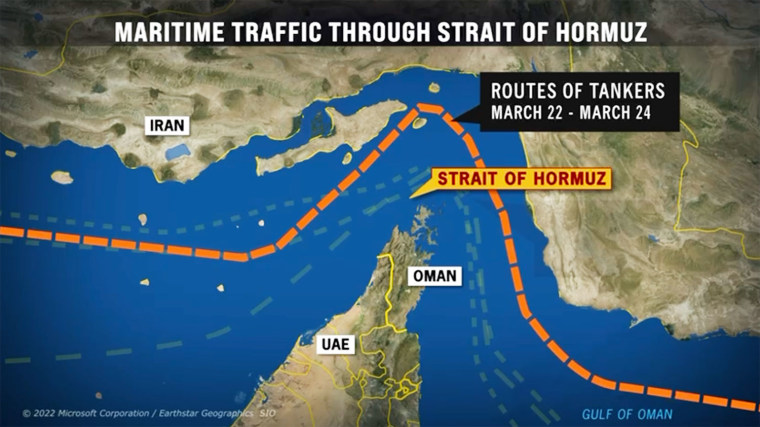
The Strait of Hormuz is one of the few places where geography still behaves like hard power. A narrow maritime channel carries a huge share of global oil and liquefied natural gas exports, connecting Gulf producers to Asia, Europe, and beyond. When instability rises there, the effect is immediate because there are only so many substitutes. Pipelines can offset some flows. Strategic reserves can cushion a shock. But neither can fully replace the scale and speed of uninterrupted tanker traffic.
That is why the Hormuz toll concept lands with such force. It reframes a military and diplomatic standoff as a pricing problem. Instead of asking whether coercion is legitimate, market actors ask whether the fee is lower than the alternative. In many scenarios, the answer is uncomfortably clear.
Key insight: markets do not need a full blockade to panic. They only need enough uncertainty to reprice the risk of every cargo moving through the strait.
This matters because chokepoints are uniquely vulnerable to perception. If tanker operators believe harassment, seizure, inspection delays, or selective interference could intensify, they react long before a formal closure. Charter rates rise. Insurance underwriters widen premiums. Buyers hedge supply. Traders build in a geopolitical surcharge. The toll, in that context, starts to look less like an exceptional cost and more like a predictable one.
The economic math behind a transit fee
Direct costs are visible
A transit payment is politically explosive precisely because it is explicit. It can be modeled, budgeted, and compared line by line. If a vessel pays a set fee to pass through a sensitive corridor, that number is easy to understand. It becomes part of the cargo economics, like bunker fuel, port charges, or canal dues.
For refiners and commodity buyers, visible costs are often easier to absorb than volatile ones. A known charge can be priced into contracts. A sudden maritime incident cannot.
Indirect costs are where the real damage happens
The expensive part of maritime disruption is usually not the headline event. It is the chain reaction behind it. A serious threat in Hormuz can trigger:
- War-risk insurance spikes
- Higher charter rates for tankers
- Longer voyage times if routes shift
- Inventory stress for refiners and importers
- Volatility premiums in crude and gas markets
Those layers compound fast. A single voyage may still move, but the total delivered cost of energy climbs. That cost then ripples outward into electricity, manufacturing, transport, food, and inflation. The toll is not competing with zero. It is competing with systemic disruption.
Markets reward predictability, even when it is ugly
This is the part policymakers often dislike admitting. Businesses can survive many bad arrangements if those arrangements are stable enough to price. What they struggle with is ambiguity. A fixed payment for passage, however distasteful, can become operationally manageable if it reduces the odds of detentions, attacks, or prolonged uncertainty.
That does not make the arrangement strategically healthy. It simply reflects the logic of commercial systems built around continuity.
Why the Strait of Hormuz still holds unmatched leverage
For years, analysts have discussed diversification: more pipelines, different shipping routes, expanded storage, cleaner energy, and less dependence on single chokepoints. All of that matters. But geography remains stubborn. The Strait of Hormuz still compresses an enormous volume of high-value trade into a constrained passage where military signaling and commercial traffic coexist uneasily.
Iran’s leverage comes from this asymmetry. It does not need to permanently shut the strait to alter market behavior. It only needs enough credible capacity to disrupt, delay, or intimidate shipping to force everyone else to calculate around that threat. That distinction is critical. Full closure is an extreme scenario with enormous consequences for all parties. Selective pressure is cheaper, more flexible, and often sufficient to produce economic concessions.
What makes chokepoint politics powerful: you do not need total control. You only need enough influence over timing, risk, and perception to change the price of passage.
This is why the toll debate extends beyond one country or one crisis. It is really about whether the global trading system can function efficiently when strategic waterways become monetized through pressure instead of governed through consensus.
Who actually pays when a Hormuz toll enters the system
On paper, the payer might be a shipowner, charterer, trader, or state-backed energy company. In practice, the cost diffuses through the supply chain. Import-dependent economies are especially exposed, particularly those in Asia that rely heavily on Gulf energy flows. Refiners may absorb part of the hit temporarily, but end consumers eventually feel it through fuel prices, logistics expenses, and inflationary pressure.
That diffusion is why a limited toll can seem deceptively manageable at first. No single actor bears the whole burden. The charge becomes socialized across markets.
There is also a political asymmetry here. Paying a fee can look like a short-term commercial compromise. Enduring a supply shock can become a domestic political crisis. Leaders know voters respond faster to rising prices than to abstract debates about maritime precedent. That reality increases the temptation to choose the cheaper immediate option, even if it normalizes coercive leverage over time.
The strategic risk of treating coercion like a line item
Here is where the numbers stop being the whole story. A Hormuz toll may be economically rational in the narrow sense and strategically corrosive in the broader one. If the market accepts that critical sea lanes can be monetized under pressure, it sets a precedent that other actors may study closely. The logic could spread: if geography can be converted into toll-taking power, then chokepoints everywhere become candidates for similar pressure tactics.
That is bad news for a system that depends on relatively open and rules-based trade. Once coercive transit pricing becomes normalized, every vulnerable corridor acquires a new premium. The result is not just higher shipping costs. It is lower trust in the architecture of global commerce.
Pro Tip: when evaluating whether a transit fee is “cheaper,” always separate short-term cargo economics from long-term strategic cost. The first can favor payment. The second may punish it severely.
What shipping, energy, and insurance markets will watch next
Insurance signals
War-risk pricing is often the earliest hard indicator that a maritime threat has moved from rhetoric into market reality. If insurers sharply adjust premiums for vessels crossing the area, that tells operators the risk environment has materially changed.
Naval posture and escort dynamics
Security guarantees matter, but they are not costless. More escorts, more patrols, and more military coordination may reduce incident risk, yet they also signal that normal commercial transit now depends on exceptional protection. That alone can sustain higher costs.
Oil price behavior versus physical disruption
One of the most revealing patterns in energy markets is that prices can jump well before physical supply falls. Traders do not wait for empty terminals. They react to probabilities. If the market begins to assume that the strait carries a persistent coercion premium, that expectation becomes embedded in contracts and hedging strategies.
Alternative export capacity
Pipeline bypass routes and storage buffers can reduce exposure, but their role is often overstated in public debate. They help at the margins. They do not erase Hormuz from the map. The strategic value of alternatives lies less in replacing the strait outright and more in improving bargaining resilience during periods of pressure.
Why this matters beyond the Gulf
This story is not only about oil tankers and one narrow waterway. It is about the future of globalization under stress. The old assumption was that trade would gradually reduce the power of geography. The newer reality is harsher: geography still rules when supply chains are tight, energy remains essential, and military risk can be translated into commercial cost.
For businesses, the lesson is clear. Supply chains built on just-in-time assumptions look fragile when a single chokepoint can reprice entire sectors. For governments, the challenge is even sharper. They must decide whether resilience means paying more today for diversification, storage, and redundancy – or paying much more later when coercion arrives with a bill attached.
The larger takeaway: the debate over a
Hormuz tollis really a referendum on how much the global economy is willing to pay for resilience before a crisis, rather than during one.
The bottom line on the Hormuz toll
The cold logic behind the current debate is hard to ignore. If the choice is a manageable fee or a destabilizing confrontation that spikes insurance, disrupts energy flows, and rattles markets worldwide, many commercial actors will choose the fee. That is the math. But the politics are more dangerous than the spreadsheet suggests.
A toll may be cheaper than a blockade. It may even look efficient in the short run. Yet every time a vital artery of global trade is priced through pressure, the system becomes a little more fragile, a little less rules-based, and a lot more expensive to secure. The Strait of Hormuz is reminding the world that economics and strategy are no longer separate conversations. They are the same one – and the invoice can arrive faster than anyone expects.
The information provided in this article is for general informational purposes only. While we strive for accuracy, we make no guarantees about the completeness or reliability of the content. Always verify important information through official or multiple sources before making decisions.