Hospice Rebound Rules Explained
Hospice Rebound Rules Explained
Hospice care is supposed to bring clarity at one of life’s most confusing moments. Instead, many families are discovering a jarring twist: a loved one can be discharged from hospice, then later qualify again when their condition declines. That revolving door is more than an administrative headache. It can disrupt medication plans, scramble caregivers, and force families to fight for coverage when they are already exhausted. The rise in hospice discharge appeals is exposing a bigger problem in American end-of-life care: eligibility is not always as definitive as families are told, and the paperwork can move faster than the patient’s reality. If you are trying to understand why this happens, what rights patients have, and how to respond when hospice says it is time to leave, the stakes are immediate.
- Hospice eligibility can change quickly as a patient’s condition improves or declines.
- Discharge does not always mean a patient is done with hospice forever.
- Families can appeal, ask for reassessment, and document symptoms carefully.
- Coverage, care continuity, and communication gaps are the biggest pain points.
- Knowing the process can prevent avoidable gaps in comfort-focused care.
Why the hospice eligibility rebound problem is growing
The phrase hospice eligibility rebound captures a reality many families are only learning when they are already in crisis. A patient can enter hospice because clinicians believe life expectancy is limited, often around six months or less if the disease runs its expected course. But many illnesses do not follow clean lines. Some patients stabilize with treatment, some improve after a temporary setback, and others simply outlive the original estimate. When that happens, hospices may discharge the patient because the individual no longer appears terminally ill enough under program rules.
That sounds straightforward until the patient declines again. Then the family is left asking the obvious question: if the person qualified before, why not now? The answer is that hospice is built on prognostication, not certainty. Doctors make the best estimate they can, but the body does not always cooperate with predictions. The result is a system that can feel both humane and bureaucratic at once.
Hospice is designed around changing conditions, but the documentation, reassessment, and appeals process often lags behind the clinical reality families are living through.
How hospice eligibility works and why it can reverse
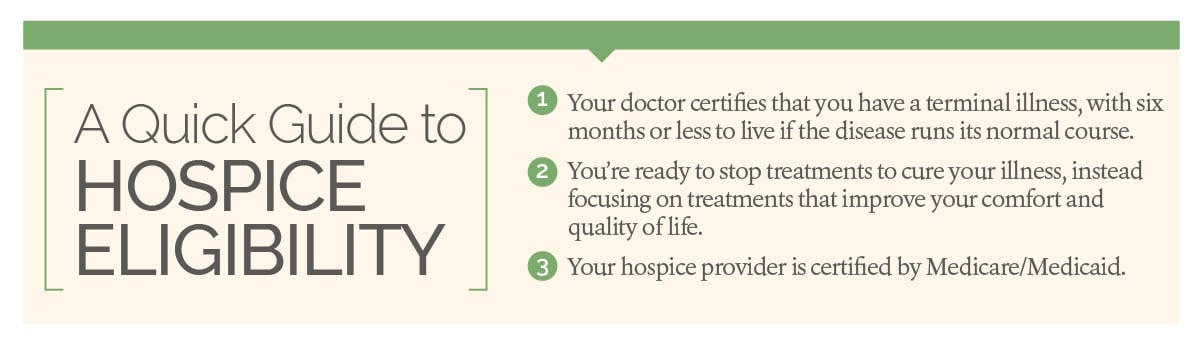
Hospice eligibility depends on a physician’s certification that a patient likely has a terminal prognosis and has chosen comfort-focused care instead of curative treatment. That eligibility is periodically reviewed. If the patient’s status improves, hospice providers may decide the person no longer meets the standard. If symptoms worsen later, eligibility can return.
What triggers discharge
Discharge usually happens for one of a few reasons: the patient’s condition appears stable, the patient no longer meets the expected decline pattern, the family revokes hospice to pursue treatment, or the patient moves out of the service area. From an administrative perspective, hospice organizations are under pressure to justify coverage and avoid claims that could be challenged. From a family perspective, the discharge can feel like being told the illness has somehow become less real.
Why the rebound happens
Medical trajectories are messy. A patient with heart failure may perk up after diuretics. Someone with dementia may have a better month and seem more engaged. A cancer patient may respond temporarily to treatment. These changes do not necessarily mean the underlying disease is gone. They simply mean the decline is not linear. The hospice eligibility rebound shows how fragile the line is between “qualified” and “discharged.”
That fragility matters because hospice is not just a label. It is a package of nursing visits, pain management, social work support, equipment, and emotional guidance. When eligibility reverses, access can disappear just as caregivers have learned how to use it.
What families should do when hospice says discharge
If a hospice team says a patient no longer qualifies, the first response should not be panic. It should be process. Families often have more options than they realize, especially if they move quickly and document what is happening at home.
- Ask for the specific reason for discharge in writing.
- Request a reassessment if the patient is still experiencing meaningful decline.
- Gather symptom logs, weight changes, falls, oxygen needs, medication changes, and caregiver observations.
- Ask whether the patient can remain under palliative care or resume hospice later.
- Clarify what equipment, nurse visits, and medications will stop immediately and what can continue temporarily.
Pro tip: keep a simple daily record of appetite, mobility, confusion, breathing, pain, and sleep. A detailed symptom timeline can matter more than a vague impression that the patient is “about the same.”
Appeals are not just for paperwork people
Discharge appeals can sound intimidating, but they are often the key to preventing a gap in care. The issue is not whether the patient has magically become healthy. The issue is whether enough evidence supports ongoing hospice eligibility. If the family can show that decline continues, or that apparent improvement is temporary, the provider may reverse course.
This is where communication failures become expensive. Families sometimes assume the hospice team will notice everything. It will not. If a patient has lost the ability to walk independently, is falling more often, or needs more help with daily tasks, those changes should be reported explicitly. The appeal process works best when families treat themselves as part of the care team, not passive observers.
Why hospice discharge appeals are so contentious
Hospice discharge appeals sit at the intersection of medical judgment, insurance oversight, and emotional distress. That creates friction. Providers want to stay compliant. Insurers want clear documentation. Families want stability and dignity. When those goals collide, patients can get caught in the middle.
The deeper issue is that hospice eligibility often depends on indicators that are easy to interpret differently. One clinician may see a patient as stable. Another may see a patient as frail and declining. The difference can determine whether services continue. That is a lot of responsibility to place on a documentation packet and a six-month estimate.
End-of-life care should be responsive, not punishing. If a patient’s condition worsens again, the system should make it easy to re-enter hospice without forcing families to relive the same battle.
That is why the rebound story matters beyond one family’s experience. It highlights a structural weakness in hospice policy: when care is tied too tightly to prognosis, patients with unpredictable illnesses can fall through the cracks.
How to protect continuity of care during a rebound
The best defense is preparation. Families who understand the system can reduce the chances of losing services during a rebound period.
Build a paper trail early
Do not wait until discharge is imminent. Keep copies of physician notes, medication lists, discharge paperwork, and symptom reports. If a patient is rehospitalized or seen by specialists, save those summaries too. When hospice eligibility is questioned, the historical record may prove that decline has been ongoing even if one exam looked better.
Know the difference between hospice and palliative care
Hospice focuses on comfort when a terminal prognosis is expected. Palliative care can support symptom management alongside treatment at any stage of illness. If a patient no longer qualifies for hospice, palliative care may offer a bridge while the family and clinicians reassess the next step. That does not replace hospice, but it can soften the blow of a discharge.
Ask about re-enrollment rules
One of the most important questions is simple: if the patient declines again, how quickly can hospice restart? The answer should be documented. In some cases, the same provider can re-admit the patient if eligibility returns. In others, a new referral may be needed. Families should not discover that only after the crisis hits.
What this means for the future of hospice
The rise in hospice discharge disputes suggests the program may need more flexible rules and better communication standards. Patients are living with longer, more complex disease trajectories. A rigid model designed around a neat prognosis window does not fit modern medicine especially well.
Expect more pressure on hospices to explain discharge decisions in plain language. Expect families to demand clearer re-entry pathways. And expect policymakers to keep confronting the same uncomfortable question: how do you preserve program integrity without turning uncertainty into lost care?
For now, the practical answer is vigilance. The hospice eligibility rebound is not rare enough to ignore, and not predictable enough to dismiss. Families need to track symptoms, ask direct questions, and push back when a discharge decision does not match what they are seeing day to day.
The bottom line on hospice eligibility rebound
Hospice discharge is not always the end of the story. For many patients, it is a pause in a much longer and less linear decline. That is why families should treat discharge as a trigger for closer documentation, not surrender. If the patient worsens again, there is a path back into hospice – but it is easier to walk that path when the records are ready, the questions are clear, and the care team knows exactly what is changing.
Why this matters: end-of-life care should reduce uncertainty, not add to it. Understanding hospice rebound rules gives families a better shot at preserving dignity, continuity, and comfort when the system gets shaky.
The information provided in this article is for general informational purposes only. While we strive for accuracy, we make no guarantees about the completeness or reliability of the content. Always verify important information through official or multiple sources before making decisions.