Pig Kidney Transplant Breaks Through
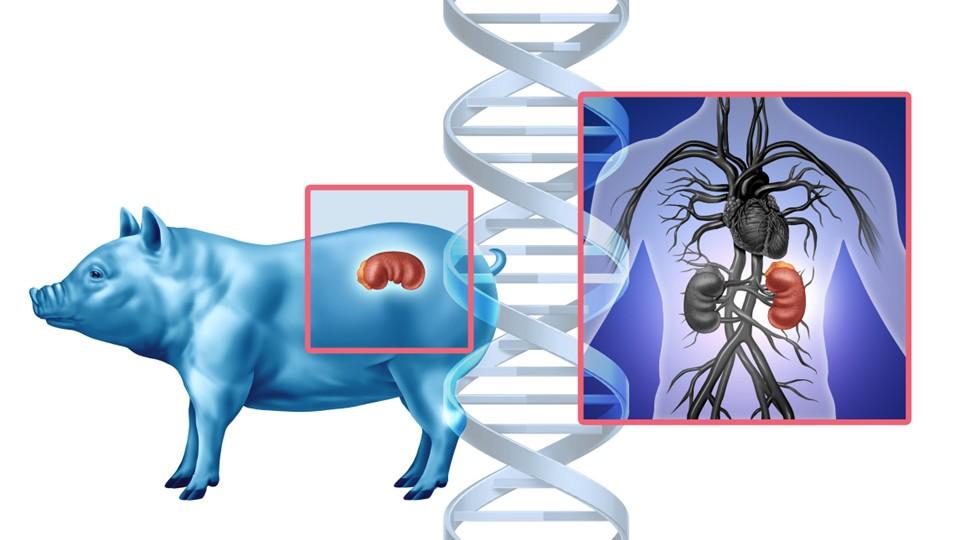
Pig Kidney Transplant Breaks Through
The organ shortage is no longer a distant policy failure. It is a daily triage system where patients wait, decline, and too often die before a human donor organ becomes available. That is why the latest pig kidney transplant story lands with unusual force: it is not just another medical milestone, but a glimpse of a future where organs could be manufactured, matched, and delivered on a radically different timeline. The stakes are enormous. More than a surgical experiment, this is a test of whether xenotransplantation can move from last-resort compassion to a reliable clinical option. For patients with end-stage renal disease, the promise is almost impossible to ignore. For doctors, regulators, and families, the hard part is deciding how much uncertainty society is willing to accept in exchange for a chance at life.
- Pig kidney transplant research is accelerating because the demand for donor kidneys far exceeds supply.
- Gene-edited pigs are designed to reduce
immune rejection, but long-term safety remains unresolved. - The field is moving from isolated cases toward formal clinical trials and tighter regulatory oversight.
- Success could reshape dialysis, transplant waiting lists, and the economics of kidney failure care.
Why the Pig Kidney Transplant Moment Feels Different
For decades, xenotransplantation sounded like science fiction with a surgical gown: take an organ from another species, modify it enough to avoid immediate attack, and place it inside a human body. The idea was elegant. The biology was brutal. Human immune systems are built to detect foreign tissue quickly, and animal organs carry molecular flags that can trigger catastrophic hyperacute rejection.
What has changed is not one miracle technique, but a convergence. Gene editing has become more precise. Immunology has matured. Organ preservation has improved. Surgeons now have better tools to monitor rejection, infection, clotting, and kidney performance in real time. The result is a field that has shifted from provocative laboratory possibility to careful, closely watched human experimentation.
The key insight is not that pigs are suddenly perfect donors. It is that medicine may finally have enough control over genetics, immunity, and monitoring to make cross-species transplantation testable in living patients.
Pig Kidney Transplant Science and the Genetic Rewrite
The modern pig kidney transplant depends on a genetically engineered donor animal. Ordinary pig organs are not compatible with humans. Their cells carry sugar molecules and proteins that human antibodies recognize as foreign. In earlier eras, that meant near-instant destruction of the organ.
Gene editing, often discussed under the umbrella of CRISPR, allows scientists to remove or alter some of those high-risk targets. Researchers can disable pig genes associated with immune attack and add selected human genes meant to make the organ look less alien to the recipient’s immune system. The goal is not invisibility. It is enough compatibility to give immunosuppression a fighting chance.
What Doctors Watch After Surgery
After surgery, the headline question is simple: does the kidney work? But the clinical reality is much more granular. Teams monitor creatinine, urine output, blood pressure, clotting markers, inflammation, and evidence of acute rejection. They also watch for infections because patients receiving strong immunosuppressive therapy have weakened defenses.
A transplanted kidney does more than filter waste. It helps regulate fluid balance, electrolytes, acid-base status, and blood pressure. If a pig kidney can perform those functions consistently in a human body, even for limited periods, it gives researchers crucial data about whether the approach can scale beyond extraordinary cases.
The Virus Question Cannot Be Hand-Waved
One reason regulators move cautiously is the risk of animal-to-human infection. Scientists pay particular attention to porcine endogenous retroviruses, often shortened to PERVs. These viral sequences are embedded in pig DNA, which makes them different from ordinary infections that can be screened out more easily.
The risk is not only to one patient. In theory, a novel infection could adapt in a human host. That possibility makes public health oversight central to the field. Long-term monitoring is not bureaucratic theater. It is the price of responsibly testing an intervention that crosses a species boundary.
Why This Matters for Kidney Failure
Kidney failure is one of the most punishing chronic diseases in modern medicine. Dialysis can keep people alive, but it is not a cure. It consumes time, drains energy, strains the heart, and often locks patients into a rigid medical schedule. A successful human kidney transplant can transform survival and quality of life, but supply is the bottleneck.
That bottleneck is why the pig kidney transplant matters. If genetically modified organs can be produced safely at scale, the transplant system could change from a scarcity model to a readiness model. Instead of waiting years for a compatible human donor, patients might be matched with a prepared organ from a regulated medical herd.
That future would raise its own uncomfortable questions. Who gets access first? Will insurers cover it? How will hospitals prove they can manage the risks? What happens if an organ functions for months but not years? These are not reasons to stop. They are reasons to build the governance before the technology outruns the system.
The Ethical Debate Is Bigger Than One Operation
Every major transplant innovation has forced society to renegotiate its boundaries. Heart transplantation once seemed radical. IVF once triggered moral panic. Gene editing still does. Pig kidney transplantation sits at the intersection of all these anxieties: animal welfare, human experimentation, consent, equity, and the commercialization of biology.
Animal welfare is not a side issue. These pigs are bred for medicine, raised under controlled conditions, and genetically altered for human use. Supporters argue that the moral trade-off is defensible if it saves human lives and reduces suffering. Critics counter that building an organ supply chain from animals deserves deeper scrutiny, especially if demand grows rapidly.
Patient consent is equally complicated. Someone facing death or years on dialysis may accept risks that look unacceptable from the outside. The challenge is ensuring that consent is informed, not desperate. Patients need to understand what is known, what is unknown, and what may never be known until more people receive these organs.
How Regulators Will Shape the Pig Kidney Transplant Era
The next phase will likely hinge on controlled clinical trials. Individual compassionate-use procedures can produce powerful stories, but they cannot answer every scientific question. Trials can define eligibility, standardize immunosuppression, require long-term infection surveillance, and compare outcomes more rigorously.
Regulators will also need to evaluate the full production pipeline. That includes the donor animals, breeding facilities, genetic edits, screening processes, organ transport, surgical protocols, and patient monitoring plans. A pig kidney is not a conventional medical device, a drug, or a standard human organ. It is a living biological product with behavior that changes after transplantation.
Pro Tip for Patients and Families
If you or someone you love has kidney failure, treat xenotransplantation as a serious field but not yet a routine alternative. Ask transplant teams about eligibility for human donor lists, living donation, clinical trials, and dialysis optimization. Be skeptical of any clinic or company that presents pig organs as a guaranteed shortcut. In medicine, early access and proven benefit are not the same thing.
The Future Could Arrive Unevenly
If pig kidney transplantation works, it will not arrive everywhere at once. Major academic medical centers will move first because they have transplant surgeons, infectious disease specialists, immunologists, ethics boards, and intensive monitoring capacity. Smaller hospitals may depend on referral networks for years.
The economics could be just as uneven. Dialysis is expensive, but it is also an entrenched industry. Transplantation has high upfront costs but can reduce long-term treatment burdens if organs function well. A durable pig kidney could disrupt not only clinical care, but also the business architecture around kidney disease.
There is also a global dimension. Wealthier countries may adopt engineered organs first, while lower-income health systems continue to struggle with dialysis access and human donor shortages. If the technology becomes real, the equity debate will move from whether it should exist to who gets to benefit.
The Bottom Line on Pig Kidney Transplant Progress
The pig kidney transplant breakthrough is not a finish line. It is a stress test for 21st-century medicine. The science is thrilling because it points toward a world where organ failure is less often a death sentence. The caution is necessary because the body is not a startup demo, and biology punishes overconfidence.
The most responsible view is both optimistic and demanding. Gene-edited pig kidneys could become one of the most consequential medical technologies of the next decade. But they must earn that future through transparent data, long-term follow-up, ethical sourcing, and honest communication with patients. If the field gets that balance right, the transplant waiting list may one day look less like a queue of desperation and more like a bridge to recovery.
The information provided in this article is for general informational purposes only. While we strive for accuracy, we make no guarantees about the completeness or reliability of the content. Always verify important information through official or multiple sources before making decisions.


