How Sri Lanka Farmers Outsmart Elephants
How Sri Lanka Farmers Outsmart Elephants
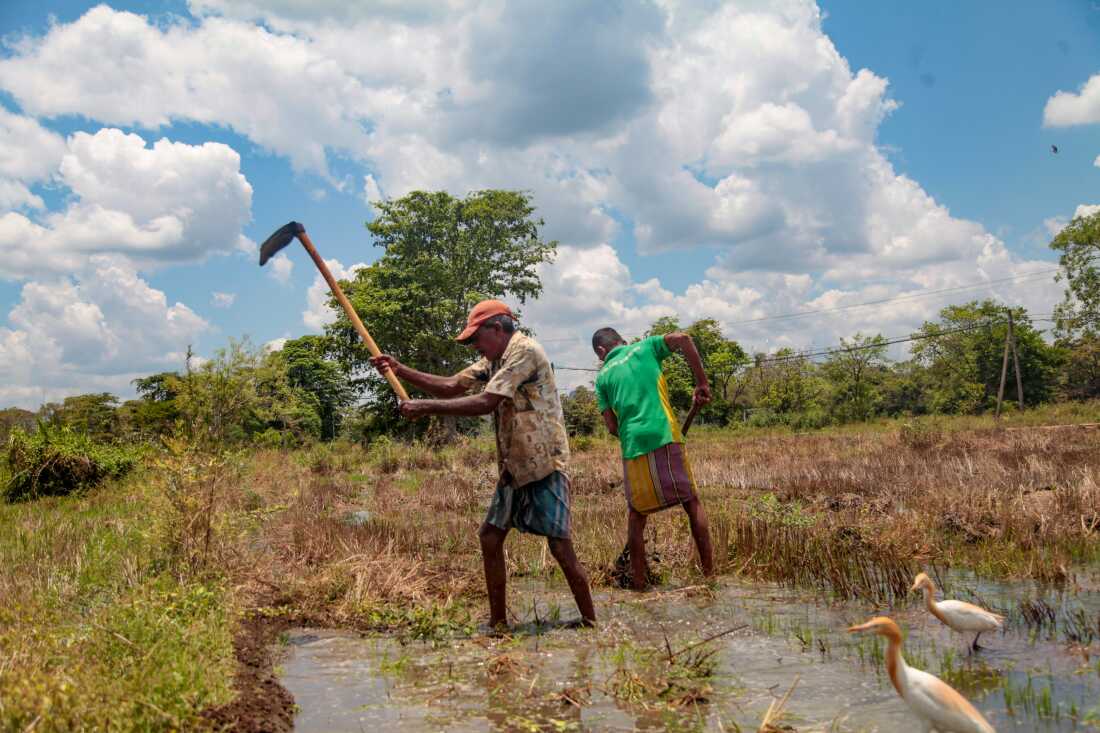
When a single night raid can erase a season of income, human-wildlife conflict stops being an abstract conservation debate and becomes a brutal economic crisis. That is exactly what Sri Lanka farmers face as elephants push into farmland, destroy crops, and put lives at risk. The Sri Lanka farmers elephants conflict is not just a rural inconvenience – it is a collision between development, conservation, and survival. What makes this moment different is that the response appears to be shifting away from blunt force and toward smarter, lower-tech, behavior-based deterrents. That matters far beyond one island nation. If communities can protect harvests without escalating violence, they may offer a model for countries wrestling with the same problem: how to save both livelihoods and wildlife when the boundaries between them have already collapsed.
- Sri Lanka farmers elephants conflict is intensifying because farms and elephant habitat increasingly overlap.
- Communities are experimenting with practical deterrents that aim to redirect elephant behavior rather than simply punish it.
- Traditional solutions such as fences often fail when they ignore how adaptable elephants are.
- The bigger lesson is strategic: conservation only works when farmers can stay economically secure.
Why the Sri Lanka farmers elephants conflict keeps getting worse
The core problem is brutally simple. Elephants need space, water, and food. Farmers need land that produces reliable harvests. As settlements expand and agricultural zones push deeper into former wildlife corridors, the old separation between elephant ranges and human communities breaks down. The result is a recurring frontline where crops become easy calories for one of the planet’s smartest large mammals.
That intelligence matters. Elephants are not random intruders. They learn routes, remember weak points, and return to fields that have paid off before. A crop field, from an elephant’s perspective, is a high-reward buffet. For farmers, that means one broken barrier or one badly timed night can destroy months of labor.
The economics are devastating. A damaged field does not just mean less food. It can mean unpaid debt, lost seed money, reduced school income, and a cycle of insecurity that pushes already vulnerable households closer to collapse. This is why any conversation about elephant protection that ignores farmer losses is incomplete.
The hard truth: conservation strategies fail when the people living beside wildlife are asked to absorb all the risk.
What farmers are doing differently
The most compelling shift in the Sri Lanka farmers elephants story is that communities appear to be relying more on targeted deterrence than on simplistic exclusion. Instead of assuming a wall or a fence can permanently solve the problem, these efforts recognize a basic reality: elephants adapt. Any successful system has to adapt too.
Behavior-based deterrence is the smarter play
Deterrence works best when it exploits what elephants dislike, fear, or prefer to avoid. Around South Asia and Africa, that has included noise, light, scent, buffer crops, coordinated watch systems, and early-warning methods. The point is not to “defeat” elephants. The point is to make a farmed area costly and unpleasant enough that an elephant chooses another path.
This approach is strategically stronger because it aligns with how conflict actually happens. Elephants move. Seasons change. Food availability shifts. Static infrastructure can help, but dynamic deterrence often performs better when animals are highly intelligent and highly motivated.
Community action beats isolated defense
One farmer guarding one plot is at a major disadvantage. A village coordinating alerts, patrols, lighting patterns, and deterrent placement has a better chance. Human-wildlife conflict is rarely solved farm by farm. It is solved landscape by landscape.
That is why local coordination matters so much. If one field is hardened while the neighboring field is left exposed, elephants simply reroute. Effective conflict reduction depends on shared tactics, timing, and maintenance. The social system is as important as the physical one.
Low-cost tools matter more than flashy tech
It is tempting to imagine that drones, AI cameras, or automated barriers will rescue rural communities. Some of those tools may help over time. But in practice, the best interventions are often the ones that are cheap, repairable, and easy to deploy in places with inconsistent power, limited budgets, and urgent risk.
A simple warning system, a better watch routine, or a crop choice that elephants find less appealing can outperform expensive gear that fails after one season. That is not anti-technology. It is a reminder that resilience matters more than novelty.
Why fences alone are not enough
Electric fencing has become a familiar answer to elephant incursions, but its track record is mixed when deployed without ecological logic or long-term upkeep. A fence can be useful. It can also become a maintenance burden, a political talking point, or a false sense of security.
There are several reasons fences disappoint:
- Elephants learn quickly and may identify weak sections or exploit poorly maintained stretches.
- Landscapes are complex: rivers, forest edges, roads, and private land can interrupt continuity.
- Maintenance is expensive, especially where power supply and local funding are unreliable.
- Bad placement backfires if fences trap elephants inside farming zones instead of keeping them out.
The deeper issue is strategic. Fences are often treated as complete solutions when they are only one layer in a broader conflict-management system. Without local buy-in, ecological planning, and rapid response when elephants breach them, they become symbolic infrastructure.
Pro tip: the best wildlife barriers are not standalone projects. They are part of a system that includes monitoring, local maintenance, and emergency response.
Why this matters beyond Sri Lanka
The Sri Lanka farmers elephants challenge resonates globally because it reflects a pattern repeating across biodiversity hotspots. As climate pressure, land conversion, and human expansion intensify, more communities will end up sharing contested space with large wildlife. The specifics may differ – elephants in Sri Lanka, bears in North America, big cats in India, boars in Europe – but the governing question stays the same: can policy protect wildlife without making rural people pay the full cost?
That question has economic, political, and ethical weight.
Rural legitimacy is the hidden variable
If farmers believe conservation means crop losses, danger, and no compensation, public support erodes fast. Once that trust breaks, governments and NGOs face a much harder path. Retaliation rises. Enforcement gets messier. Illegal killing becomes easier to rationalize.
By contrast, when communities see a strategy that protects both harvests and wildlife, conservation gains legitimacy. That legitimacy is not soft politics. It is operational infrastructure. Without it, even well-funded programs can fail.
Food security is part of the conservation debate
It is easy to frame elephant raids as isolated wildlife incidents. They are not. They are food system disruptions. For smallholder farmers, repeated crop damage can reduce household resilience, increase dependence on aid, and distort local planting decisions. That means elephant conflict belongs in conversations about rural development, insurance, and national food security just as much as it belongs in conservation planning.
The best solutions will be hybrid
No single intervention will solve this conflict. The most durable path likely combines several layers:
- better land-use planning around migration routes
- community-led deterrence systems
- carefully managed fencing where it makes ecological sense
- faster compensation or insurance mechanisms
- data collection to track raid patterns and seasonal pressure
That hybrid model is less glamorous than a miracle fix, but it is far more realistic.
What policymakers and conservation groups should learn
The obvious lesson is that people living closest to wildlife need to shape the response. But there is a more uncomfortable lesson too: too many interventions are designed for headlines rather than durability. A pilot project launches, equipment is distributed, photographs are taken, and maintenance quietly collapses six months later.
Serious conflict mitigation should be judged by a tougher standard:
- Did crop losses actually fall?
- Did nighttime danger decrease?
- Did the system remain functional after the funding spotlight moved on?
- Did local communities want to keep using it?
Those are the metrics that matter. Not novelty. Not donor appeal. Not policy theater.
There is also a need for better operational data. Even a basic incident log can help communities and officials identify patterns:
date | village | crop type | time of raid | herd size | deterrent used | outcome
That kind of recordkeeping can reveal whether elephants are shifting routes, whether certain deterrents work seasonally, and where scarce funds should be spent first. It is not glamorous, but it is the kind of field intelligence that turns reaction into strategy.
The future of the Sri Lanka farmers elephants response
The next phase will likely depend on whether local successes can be scaled without stripping away the community knowledge that made them work. That is always the risk. A tactic that works because it is locally owned can become ineffective once turned into a top-down program.
Still, there is reason for cautious optimism. The current direction suggests a more mature understanding of conflict: elephants are not villains, and farmers are not collateral damage. Both realities have to be held at once. That framing is more honest, and it opens the door to solutions that are practical instead of ideological.
If Sri Lanka can continue refining methods that reduce crop losses while limiting harm to elephants, it could become an important case study for other nations facing similar pressure. Not because it discovered a magic tool, but because it recognized a harder truth: coexistence is not a slogan. It is a system that has to work on the ground, at night, during harvest, when the stakes are highest.
The Sri Lanka farmers elephants conflict is often described as a battle between people and wildlife. That misses the real story. This is a test of whether modern conservation can move beyond aspiration and deliver protection that is economically credible, locally trusted, and operationally durable. If it can, farmers keep their crops, elephants keep their future, and the rest of the world gets a badly needed blueprint.
The information provided in this article is for general informational purposes only. While we strive for accuracy, we make no guarantees about the completeness or reliability of the content. Always verify important information through official or multiple sources before making decisions.