Hungary’s Election Shockwave Could Unseat Orban
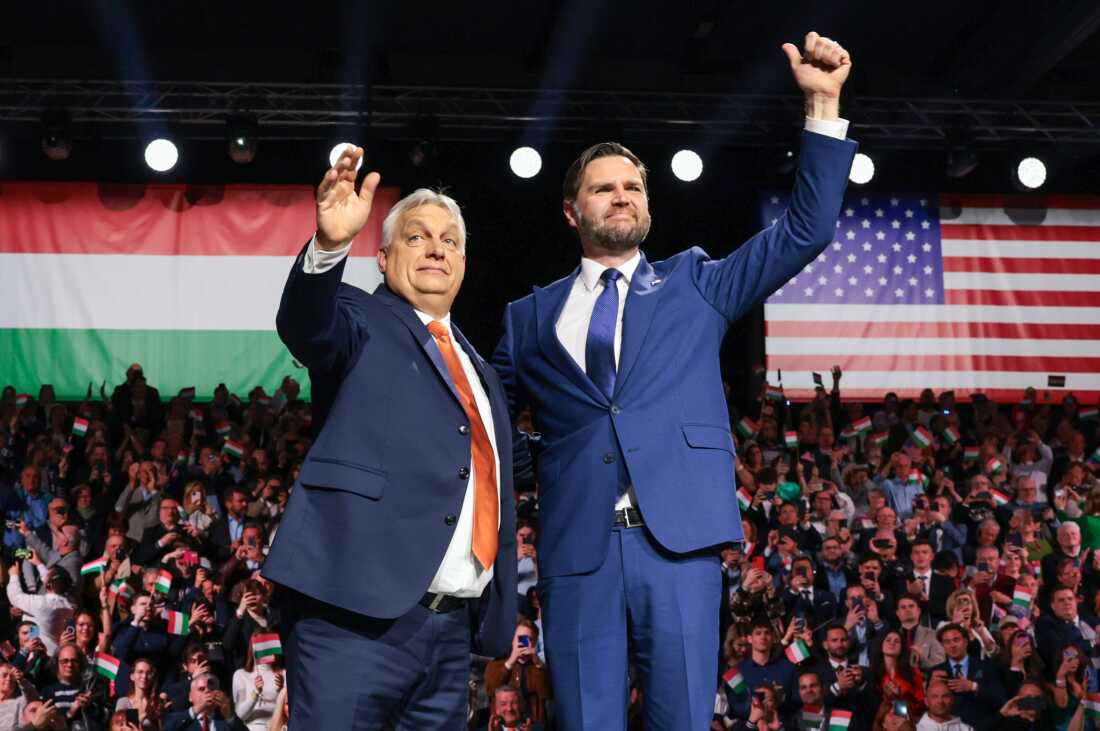
Hungary’s Election Shockwave Could Unseat Orban
Hungary is bracing for the Hungary elections 2026, and the stakes read like a political thriller: Viktor Orban’s 16-year run faces its strongest challenge yet, Brussels is watching for democratic backsliding, and regional strongmen wonder if their playbook is about to be rewritten. For voters exhausted by inflation and cronyism, the ballot is a rare pressure valve. For the opposition, it is a once-in-a-generation chance to reset constitutional guardrails. For the European Union, it is a test of whether its most rebellious member will realign with core democratic norms or double down on illiberalism.
- Orban’s tight control over media, courts, and budgets meets its biggest stress test.
- A united-but-fragile opposition bets on kitchen-table economics over ideology.
- Brussels weighs funding leverage to pull Hungary back toward democratic norms.
- Regional autocrats watch for proof that entrenched power can be disrupted at the ballot box.
Why the Hungary elections 2026 are different
Sixteen years of dominance allowed Orban’s Fidesz to reshape institutions, redraw districts, and centralize media oversight. Yet spiraling prices and stalled wages have eroded the everyday bargain that kept many voters loyal. Opposition parties, once fragmented, now understand that ideological purity is less persuasive than promising lower utility bills and cleaner governance. The novelty is not just that the opposition is louder – it is that their message now lands in wallets.
Key insight: When incumbents lose the economic narrative, institutional advantages suddenly feel brittle.
Economic fatigue beats culture wars
For years, Fidesz framed politics as a cultural clash. But with food prices climbing and mortgage rates biting, voters shift attention to tangible costs. The opposition’s pitch is lean: cut patronage, unlock frozen EU funds, and redirect money from loyalists to public services. By avoiding grand ideological crusades, they sharpen contrast between household pain and elite insulation.
Media control faces digital leakage
State-aligned broadcasters still dominate TV, but younger voters live online. Encrypted chats and short-form video dilute the impact of traditional propaganda. Independent outlets, though harassed, seed narratives that spread faster than censorship can plug. The 2026 campaign becomes a study in whether analog control can withstand digital agility.
Can Orban’s incumbency machine still bulldoze competition?
Institutional control remains formidable: gerrymandered districts, public advertising budgets skewed toward allies, and a judiciary reshaped across a decade and a half. Fidesz has weathered scandals before by absorbing economic angst into nationalist rhetoric. Yet two elements have shifted. First, EU funds are partially frozen over rule-of-law disputes, depriving the government of its favorite fiscal lever. Second, a new generation of urban voters grew up with no memory of pre-Orban politics and are less attached to his promises of stability.
Expert echo: “When public money tightens, patronage coalitions loosen,” notes a Budapest-based political scientist.
Redistricting vs mobilization
Redrawn boundaries favor incumbents, but they cannot nullify turnout surges. The opposition focuses on high-density districts where a few thousand votes swing seats. Door-to-door operations, often dismissed in centralized systems, matter again because persuasion costs are low when economic pain is visible.
Courts and the rule-of-law trap
Even if the opposition wins, Orban’s judicial appointees will shape policy for years. That tension sets up a constitutional chess match: can a new government pass reforms without triggering legal roadblocks? The election is step one; institutional reset requires sustained negotiation with courts, EU partners, and civil society.
MainKeyword stakes: Hungary elections 2026 and the EU relationship
The EU’s patience is thin. Rule-of-law breaches have already stalled billions in cohesion funds. Brussels signals that a credible reform agenda could thaw the freeze. That makes this election a fiscal lifeline: victory for the opposition could unlock investment for infrastructure, green transition, and digital modernization. Conversely, another Orban term may deepen isolation and nudge Hungary closer to non-EU partners who offer cash without transparency strings.
Funding leverage
EU mechanisms tie payouts to governance benchmarks. If voters deliver a new mandate, the next cabinet must quickly draft compliance plans to reassure markets. Delay risks a liquidity squeeze, forcing unpopular austerity before reforms bear fruit.
Security calculus
Hungary’s NATO posture has been cautious, especially on Ukraine. A post-Orban government might synchronize more closely with alliance priorities, altering arms transit and energy diversification. Regional security planners watch the vote as a proxy for Hungary’s future alignment.
How the opposition is crafting a viable path to power
Rather than compete on ideology, the opposition hammers procedural fairness and cost-of-living relief. Leaders learned from past cycles where infighting sunk momentum. This time, they elevate a single prime ministerial candidate, distribute district responsibilities, and standardize messaging on three pillars: cheaper energy, transparent procurement, and judicial independence.
Pro Tip: Keep the message simple
Campaign strategists emphasize repetition. Complex corruption cases are distilled into one-liners tied to visible assets: luxury villas, opaque foundations, and public tenders with single bidders. Simplicity survives counter-messaging better than sprawling exposés.
Ground game over rallies
Permits for large rallies can be constrained; canvassing cannot. Volunteers map apartment blocks, schedule stairwell visits, and share scripts focused on utility bills. Micro-donations fund digital ads targeting undecided suburban voters rather than loyal base segments.
Why this moment matters beyond Budapest
Illiberal incumbents from Central Europe to the Caucasus study Orban’s model: dominate media, entrench loyalists in courts, and weaponize culture wars to distract from economic drift. If voters remove him through ballots rather than protests or external pressure, it offers a blueprint for democratic resilience. Conversely, if he survives, it signals that institutional capture can outlast economic discontent.
Regional watcher: “If Orban falls, the lesson is clear: inflation is the opposition’s best canvasser.”
Investor sentiment
Markets price political risk. A credible reform path could narrow bond spreads and attract FDI hungry for EU-adjacent manufacturing hubs. Continued friction may push investors toward Poland or Romania, where EU funds flow more freely.
Media freedom ripple effects
Success against a media wall could embolden journalists in neighboring states to test boundaries. Failure might chill investigative work, reinforcing the idea that concentrated media power is unassailable.
Scenarios: what election night could trigger
Polls suggest a tight race. Three scenarios dominate chatter: a narrow opposition win, a slim Fidesz hold, or a hung parliament requiring coalition acrobatics. Each carries distinct policy implications.
- Opposition win: Immediate push to unfreeze EU funds, audit state contracts, and propose judicial reforms; expect turbulence as loyalist appointees resist.
- Fidesz hold: Continued centralization, possible new media regulations, and deeper friction with Brussels; economic relief likely through short-term subsidies.
- Hung parliament: Horse-trading with smaller nationalist or green parties; policy gridlock could delay EU compliance and budget planning.
Short-term signals to watch
Turnout in suburban swing districts will hint at opposition traction. Early concession or defiance statements will set the tone for post-vote legitimacy battles. International observer reports may influence EU leverage within days.
Action plan for stakeholders
Businesses should scenario-plan supply chain and currency volatility. Civil society groups need rapid-response teams to document any voting irregularities and distribute them across digital channels. Diplomats should prepare calibrated statements that support fair process without appearing to pick sides. Voters, meanwhile, hold the ultimate throttle on whether 16 years of centralized power continue or reset.
For EU policymakers
Prepare conditional offers tied to early reforms. Visibility of milestones will help a new government sell tough choices domestically. If Fidesz stays, be ready to expand oversight tools to safeguard funds without punishing citizens.
For tech platforms
Expect coordinated misinformation. Rapid fact-check partnerships and transparent content moderation logs can blunt narrative hijacks. Transparency reports during the campaign window signal accountability.
Looking past election day
Even with a change in government, unwinding entrenched networks will be slow. Constitutional amendments may require supermajorities the opposition does not hold. Incrementalism – targeting procurement transparency, media board appointments, and judicial review processes – might prove more durable than sweeping purges. Public patience will be thin; economic relief must show up in utility bills and grocery receipts within months.
Final take: The ballot is only the ignition key. Steering Hungary back toward robust pluralism demands sustained torque from voters, lawmakers, and Europe.
Whatever the outcome, the Hungary elections 2026 are a rare inflection point. They test whether prolonged incumbency, fortified by legal and media bulwarks, can be punctured by pocketbook politics and digital mobilization. If change comes, expect a bumpy but potentially transformative ride toward re-engagement with democratic norms and the European project. If it does not, brace for a deepening experiment in managed democracy that other leaders will study – and perhaps emulate.
The information provided in this article is for general informational purposes only. While we strive for accuracy, we make no guarantees about the completeness or reliability of the content. Always verify important information through official or multiple sources before making decisions.