Hunger Warfare Is Surging Fast
Hunger Warfare Is Surging Fast
Hunger warfare is no longer a side effect of conflict: it is increasingly the strategy itself. Across active war zones, food is being choked off not only by collapsed infrastructure or bad harvests, but by deliberate attacks on farms, markets, supply routes, and humanitarian access. That shift matters far beyond the immediate crisis. When armed actors weaponize hunger, they do more than deepen suffering – they destabilize regions, drive displacement, and shred the legal and moral boundaries that are supposed to protect civilians. The result is a grim feedback loop: less food, more violence, weaker institutions, and deeper dependence on outside aid. For policymakers, aid groups, and anyone watching global security trends, this is one of the clearest signs that modern conflict is becoming both more cynical and more devastating.
- Hunger warfare is increasingly intentional, with armed groups targeting food access as a tactical weapon.
- Attacks on agriculture, aid convoys, roads, ports, and markets can trigger famine conditions even before crops fail.
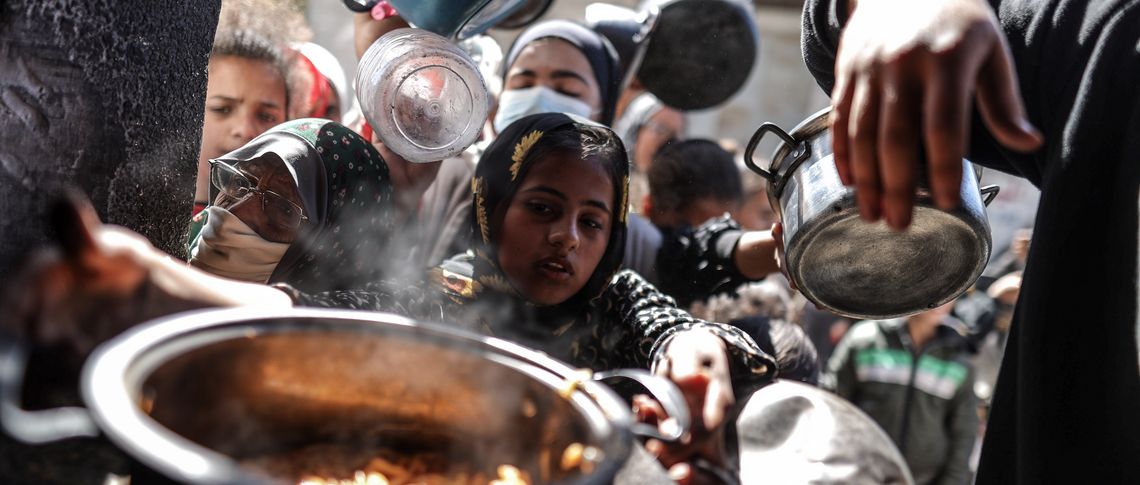
- Civilians pay the highest price, especially children, displaced families, and communities already living on the edge.
- The long-term damage includes migration, economic collapse, political instability, and generational trauma.
- Stopping this trend requires accountability, protected humanitarian corridors, and stronger monitoring of food-system attacks.
How hunger warfare became a frontline tactic
War has always disrupted food. Fields go unplanted, transport systems fail, prices spike, and families run out of savings. What is changing now is the degree of intent. In many conflicts, food insecurity is not just collateral damage. It is being engineered through sieges, looting, blockades, crop destruction, attacks on water systems, and restrictions on humanitarian access.
That distinction matters. A collapsed food system caused by generalized fighting is catastrophic. A collapsed food system caused by deliberate strategy is something darker: a calculated effort to break civilian endurance, punish communities, or force political concessions.
When food becomes a weapon, starvation stops being a humanitarian emergency alone and becomes a method of coercion.
This trend also fits a broader evolution in warfare. Modern conflicts are increasingly fragmented, involving state forces, militias, proxy groups, and criminal actors. In these environments, controlling bread, fuel, and aid can be as powerful as controlling territory. A checkpoint that blocks grain shipments can shape the battlefield almost as effectively as a military assault.
Why food systems are such attractive targets
Food systems are vulnerable because they are wide, interconnected, and difficult to defend. A functioning food economy depends on roads, storage, labor, seeds, irrigation, fuel, trade finance, and access to markets. Disrupt any one of those nodes and scarcity spreads quickly. Disrupt several at once and hunger escalates with brutal speed.
Farms and fields are easy to sabotage
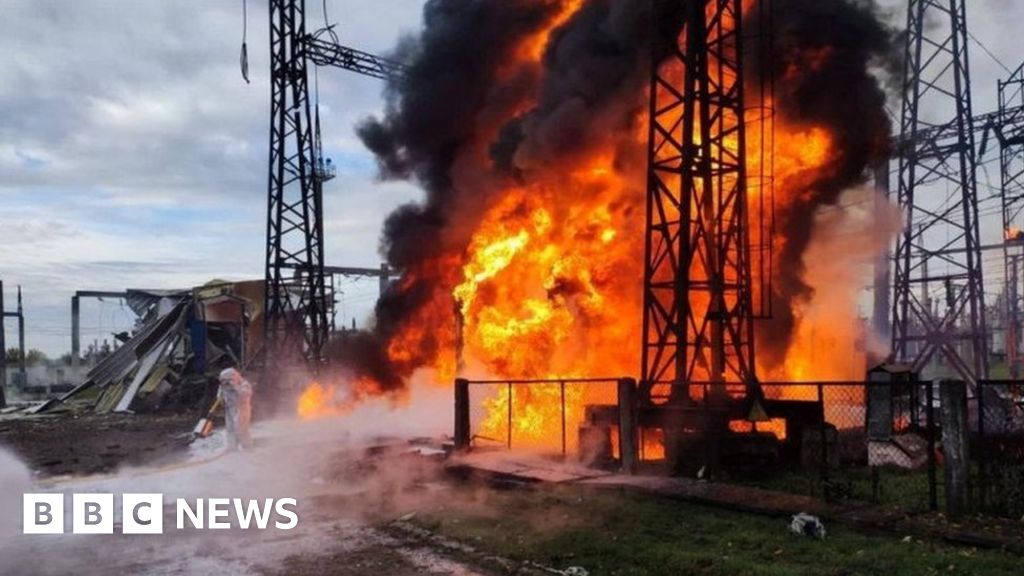
Agricultural land is exposed by nature. Crops can be burned. Livestock can be stolen or slaughtered. Farmers can be displaced just before planting or harvest season. Irrigation canals and pumps can be damaged, while contamination or occupation of land can leave entire regions unable to produce food for months or years.
The economic logic is viciously simple. Destroying a harvest does not just deprive people of calories today. It wipes out income, seed stock, and next season’s production. That turns a temporary shock into a long emergency.
Markets and roads multiply the damage
Even where food exists, it may not reach the people who need it. Roads can be blocked, ports closed, warehouses raided, and transport workers threatened. Local traders often become invisible casualties of conflict. Once they stop moving goods, prices rise fast and poorer households are pushed out first.
Pro Tip: One of the earliest warning signs of hunger warfare is not always empty shelves. It is often extreme price volatility for staples, fuel shortages, and abrupt declines in market access.
Humanitarian aid can be manipulated
Aid access has become another pressure point. Armed actors may deny permits, loot relief supplies, impose taxes, or selectively allow assistance to reward loyal populations and punish others. In effect, food aid itself can be folded into conflict strategy.
That creates a dangerous paradox. The more communities depend on external support, the more leverage those who control access can gain.
What makes this surge especially alarming
The rise in conflict-related hunger is not happening in isolation. It is colliding with climate stress, debt pressure, fragile public health systems, and shrinking donor bandwidth. That convergence makes each new conflict shock harder to absorb.
In practical terms, communities are entering war with less resilience than they had a decade ago. Families may already be spending most of their income on food. Governments may be too indebted to subsidize imports. Health systems may be too weak to treat malnutrition at scale. Humanitarian agencies may face funding gaps just as needs surge.
Starvation in conflict zones is rarely caused by one failed harvest. It is usually the end result of layered system failure pushed by violence.
The political consequences are equally serious. Hunger accelerates displacement. Displacement strains neighboring regions. Strain fuels instability, resentment, trafficking, and recruitment by armed groups. In that sense, hunger warfare is not only a moral catastrophe. It is a strategic threat multiplier.
Who suffers first and longest
Civilians always carry the heaviest burden, but the impact is not evenly distributed. Children, pregnant women, older adults, people with disabilities, and displaced families face the highest risks. Acute malnutrition can escalate quickly, especially where clean water, healthcare, and sanitation are also under attack.
Women often absorb the shock in ways that are underreported. They may skip meals first, take on dangerous journeys to find food, or face increased exploitation when household resources collapse. Farmers and informal workers also suffer disproportionate losses because they depend directly on functioning local markets and seasonal cycles.
Then there is the generational damage. Malnutrition in early childhood can impair physical development, learning outcomes, and long-term health. A conflict that weaponizes hunger can therefore diminish a society’s human capital for years after the guns fall silent.
Why international law is struggling to deter it
There are legal norms meant to protect civilians and prohibit the starvation of populations as a method of warfare. The problem is not a total absence of rules. The problem is weak enforcement, political paralysis, and the operational complexity of proving intent in chaotic conflict zones.
Intent is hard to document
To hold perpetrators accountable, investigators often need to show patterns: repeated denial of aid, targeted destruction of food infrastructure, or policies that make survival impossible for civilian populations. But active war zones are difficult places to collect evidence. Communications are disrupted, witnesses are displaced, and frontlines shift rapidly.
Power politics get in the way
Even when evidence is strong, accountability can stall. Allies shield partners. Rival blocs dispute findings. Humanitarian alarm does not always translate into political action. That gap between outrage and enforcement is one reason hunger warfare remains tempting for actors willing to ignore norms.
Why This Matters: Impunity teaches belligerents that starvation can deliver military or political gains at relatively low immediate cost. That is precisely the lesson the international system cannot afford to normalize.
What a serious response should look like
If governments and institutions want to reduce conflict-driven hunger, they need to treat attacks on food systems as a core security issue, not just a late-stage humanitarian problem.
Protect the full food chain
Response cannot focus only on emergency rations. It must also protect farmers, transport corridors, storage facilities, irrigation assets, and local markets. Keeping food systems partially alive during conflict can prevent much worse outcomes later.
Monitor attacks with more precision
Better data matters. Analysts should track incidents involving cropland, livestock, mills, water infrastructure, roads, and aid access in near real time. A more consistent taxonomy for food-system attacks could improve early warning and sharpen diplomatic pressure.
Even simple operational tagging helps identify patterns:
attack_type = crop_burningtarget = market_routeimpact = access_denialrisk_level = severe
Secure humanitarian access early
Delays are deadly. By the time famine conditions are formally recognized, families may already have exhausted assets, migrated, or suffered irreversible health harm. Protected corridors, pre-positioned supplies, and negotiated access mechanisms should be pursued before collapse becomes total.
Raise the political cost
Sanctions, investigations, public attribution, and diplomatic isolation are imperfect tools, but failing to use them consistently sends the wrong signal. Leaders and armed groups must believe that weaponizing hunger carries consequences beyond headlines.
What comes next if this trend continues
If hunger warfare keeps spreading, the global effects will reach well beyond conflict zones. Food-importing countries could face sharper price shocks. Neighboring states may absorb larger refugee flows. Donor governments may confront repeated emergency appeals with diminishing fiscal and political room to respond. Fragile states could be pushed into deeper cycles of unrest.
There is also a darker strategic possibility: copycat behavior. If one set of belligerents sees starvation tactics work without meaningful punishment, others may adopt the same playbook. That would mark a dangerous normalization of civilian deprivation as a military instrument.
The fight against hunger warfare is really a fight over whether civilians remain off limits in modern conflict.
Why hunger warfare demands urgent attention now
The phrase hunger warfare should unsettle anyone involved in policy, aid, or security because it captures a broader collapse in restraint. This is not just about food shortages. It is about the deliberate dismantling of survival systems. Once that line is crossed, recovery becomes vastly harder and peace becomes more fragile.
The good news, if there is any, is that this trend is visible. Food-system attacks can be documented. Risk patterns can be tracked. Pressure can be applied earlier. Relief operations can be designed to protect local resilience instead of merely reacting to total collapse.
But none of that happens automatically. It requires governments to stop treating starvation as an inevitable byproduct of war and start recognizing it as what it increasingly is: a strategic assault on civilians. Until that shift happens, hunger will remain one of the cheapest and cruelest weapons on the battlefield.
The information provided in this article is for general informational purposes only. While we strive for accuracy, we make no guarantees about the completeness or reliability of the content. Always verify important information through official or multiple sources before making decisions.