Idaho Dairy Immigration Crisis Hits Hard
Idaho Dairy Immigration Crisis Hits Hard
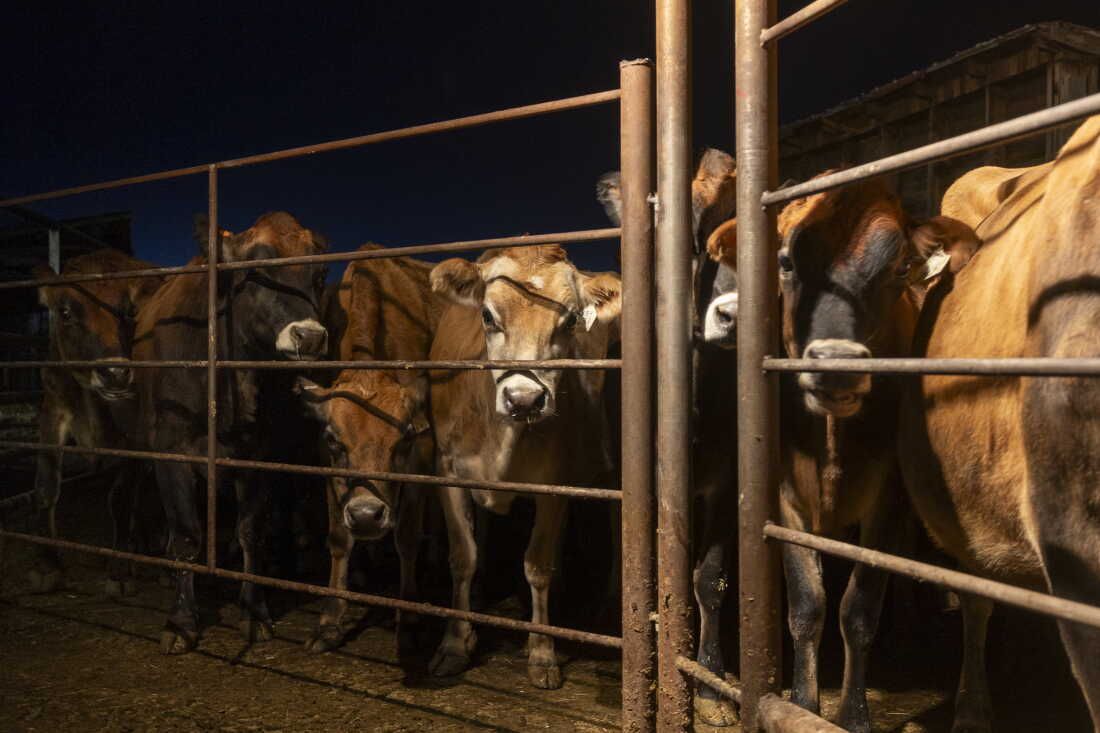
The Idaho dairy immigration fight is no longer an abstract policy debate. It is a barn-floor problem, a payroll problem, and increasingly a grocery-store problem. Dairy operations depend on workers who show up before dawn, handle demanding physical labor, and keep milk moving through a supply chain that does not pause for politics. When immigration enforcement intensifies, that system gets fragile fast. The uncomfortable reality is that some of the same rural communities that backed tougher border policies also rely on immigrant labor to keep farms alive. That tension is now becoming impossible to ignore. Idaho’s dairy industry is a case study in what happens when national immigration rhetoric collides with local economic dependence.
- Idaho dairy farms rely heavily on immigrant labor, especially for year-round milking, feeding, and herd care.
- Trump-era immigration enforcement creates operational uncertainty for producers already squeezed by costs and volatile milk prices.
- The core policy mismatch is structural: dairy needs permanent labor, while many visa programs are built around seasonal work.
- Consumers could feel the impact if labor shortages raise production costs or reduce output.
- The political divide is local and personal, with farmers often supporting enforcement while fearing the loss of essential workers.
Idaho dairy immigration exposes a national contradiction
Idaho has become one of America’s most important dairy states, and that rise did not happen by accident. Large-scale operations, advanced milking systems, feed logistics, veterinary coordination, and processing capacity have turned the state into a serious milk powerhouse. But behind that industrial efficiency is a human workforce doing work that is difficult to automate completely.
Dairy is not like fruit picking or holiday retail. Cows need care every day. Milking schedules run through weekends, storms, heat waves, and political cycles. If a crew is short, the farm cannot simply delay production. Animals suffer, workers burn out, and businesses lose money quickly.
Key insight: Immigration policy often treats farm labor as seasonal. Dairy economics treats it as constant. That mismatch is the heart of the crisis.
The debate becomes even more complex because many dairy producers are politically conservative. They may support border security, oppose unauthorized immigration, and favor tougher enforcement in principle. But when enforcement threatens the workforce that keeps their operations running, ideology meets the balance sheet.
Why Idaho dairy immigration pressure is different from other farm labor fights
Many agricultural industries use the H-2A guest worker program to legally bring in foreign workers. The problem is that H-2A was designed largely for seasonal agricultural jobs. Dairy work is year-round. Cows do not stop producing milk when a visa season ends.
That makes dairy one of the most exposed industries in the immigration debate. Producers need stable, trained workers who understand animal handling, sanitation protocols, milking equipment, and safety routines. Constant turnover is expensive and risky.
The labor pipeline is already thin
Even before renewed enforcement pressure, dairy farms struggled to hire enough U.S.-born workers for entry-level and mid-skill farm roles. The work is physically demanding, schedules can be punishing, and farms are often located far from urban labor pools. Higher wages help, but they do not automatically solve the problem if the local workforce is small or uninterested.
Automation can reduce some labor pressure, especially with robotic milking systems and sensor-based herd monitoring. But these tools are expensive, require technical maintenance, and are not a universal replacement for experienced workers. A robot can assist with milking. It cannot fully replace human judgment when an animal is sick, a calf needs attention, or equipment fails at 3 a.m.
Compliance is getting more complicated
Employers must navigate I-9 verification, potential E-Verify requirements, audits, and the risk of enforcement actions involving ICE. For large farms, compliance is now an operational function, not a paperwork afterthought. Mistakes can trigger fines, reputational damage, and workforce disruption.
For smaller producers, the challenge is sharper. They may not have in-house legal teams or human resources departments. They are trying to run a farm, manage debt, care for animals, negotiate with processors, and interpret fast-changing federal signals at the same time.
The business risk hiding behind the politics
The dairy industry runs on tight margins. Feed costs, energy costs, land prices, water access, veterinary expenses, interest rates, and milk market volatility already pressure producers. Labor instability adds another layer of risk that can quickly become existential.
If workers disappear because they fear raids, detention, or deportation, farms cannot instantly rebuild crews. Hiring and training new workers takes time. Animal care knowledge is not plug-and-play. A farm may survive a short disruption, but repeated shocks can damage productivity and morale.
Editorial view: The hardest truth for policymakers is that enforcement-only immigration strategy can look decisive on television while creating chaos in the industries that feed the country.
There is also a downstream effect. Processors need steady milk supply. Trucking schedules depend on predictable farm output. Retailers and food manufacturers rely on price stability. When labor uncertainty hits the farm, the whole chain absorbs the impact.
What Trump immigration policy means for Idaho dairy farms
Trump’s immigration agenda has typically emphasized stronger enforcement, expanded deportations, tighter border controls, and a harder line against unauthorized workers. Supporters argue that the approach protects the rule of law and discourages illegal hiring. Critics counter that it ignores the degree to which key industries depend on immigrant labor because Congress has failed to modernize legal pathways.
For Idaho dairy producers, the practical question is not whether immigration law matters. It does. The question is whether the legal labor system matches the economy that actually exists. Right now, for dairy, the answer is clearly no.
Farmers face a political trap
Many producers want both secure borders and access to reliable legal workers. That is not inherently contradictory. But national politics often forces the issue into binary terms: enforcement versus amnesty, border security versus open borders, citizens versus immigrants.
Dairy operators live in the gray area. They may want unauthorized hiring reduced, but they also need a functioning visa pathway that fits year-round agriculture. Without that, enforcement becomes a blunt instrument.
- Farm owners need legal certainty so they can plan staffing and investment.
- Workers need protection from exploitation and a realistic path to lawful employment.
- Consumers need supply stability because dairy is a staple category, not a luxury niche.
- Communities need honesty about who is doing the labor that supports local economies.
The human cost behind the milk supply
It is easy to reduce this story to wages, visas, and output. But the people at the center of the issue are workers and families who often live deeply embedded in rural communities. Their children attend local schools. They rent homes, shop at local businesses, attend churches, and build relationships with employers and neighbors.
When enforcement fear spreads, people may avoid driving, miss medical appointments, pull back from schools, or stop reporting workplace abuse. That instability does not only affect undocumented workers. It affects mixed-status families, legal residents, employers, teachers, clinics, and local economies.
There is also a trust problem. Farms need workers to report animal health issues, safety hazards, and equipment problems quickly. Fear-driven workplaces are bad workplaces. If employees feel disposable or targeted, communication breaks down.
Why Idaho dairy immigration reform needs a smarter fix
A durable solution would not be simple, but the outline is obvious. Dairy needs a legal labor pathway that reflects year-round work. Employers need clear rules and accountability. Workers need lawful status tied to fair standards, not a shadow economy that rewards fear and undercuts responsible businesses.
That could mean modernizing H-2A, creating a dairy-specific visa channel, expanding adjustment options for long-term agricultural workers, and increasing enforcement against truly abusive employers. The goal should be a system where farms can hire legally, workers can live without constant panic, and regulators can focus on bad actors rather than destabilizing essential food production.
Pro tip for dairy operators
Farms should treat immigration compliance like food safety or animal health: systematic, documented, and regularly reviewed. That means consistent I-9 practices, supervisor training, careful recordkeeping, and legal guidance before a crisis hits. Waiting until an audit or raid occurs is not a strategy.
What happens next
The Idaho dairy immigration debate is likely to intensify because the underlying pressures are not going away. Immigration enforcement remains a central political issue. Dairy labor demand remains constant. Rural communities remain divided between cultural support for tougher immigration policy and economic dependence on immigrant workers.
The most likely near-term outcome is more uncertainty. Some farms will invest faster in automation. Some will raise wages. Some will consolidate. Some smaller operations may exit if labor instability combines with high costs and weak margins. Larger producers with better compliance systems and capital access may gain an advantage.
Consumers may not see the connection immediately. Milk still appears in the cooler. Cheese still lands on shelves. But food systems often look stable until stress accumulates. Labor is one of those hidden load-bearing beams. Remove too much of it too quickly, and the structure starts to crack.
The bottom line on Idaho dairy immigration
Idaho’s dairy industry is exposing a problem Washington has avoided for decades: the U.S. economy depends on immigrant labor while the legal system fails to provide enough realistic channels for that labor to exist above ground. Tough enforcement may satisfy a political promise, but it does not milk cows, train workers, or stabilize supply chains.
A serious policy would pair border control with labor-market realism. It would acknowledge that dairy farms need workers every day, not just during harvest season. It would protect workers from exploitation while giving employers a lawful way to staff essential roles. Until that happens, Idaho dairy will remain trapped between political symbolism and economic necessity.
The information provided in this article is for general informational purposes only. While we strive for accuracy, we make no guarantees about the completeness or reliability of the content. Always verify important information through official or multiple sources before making decisions.