Iran Revolutionary Guards Tighten Their Grip
Iran Revolutionary Guards Tighten Their Grip
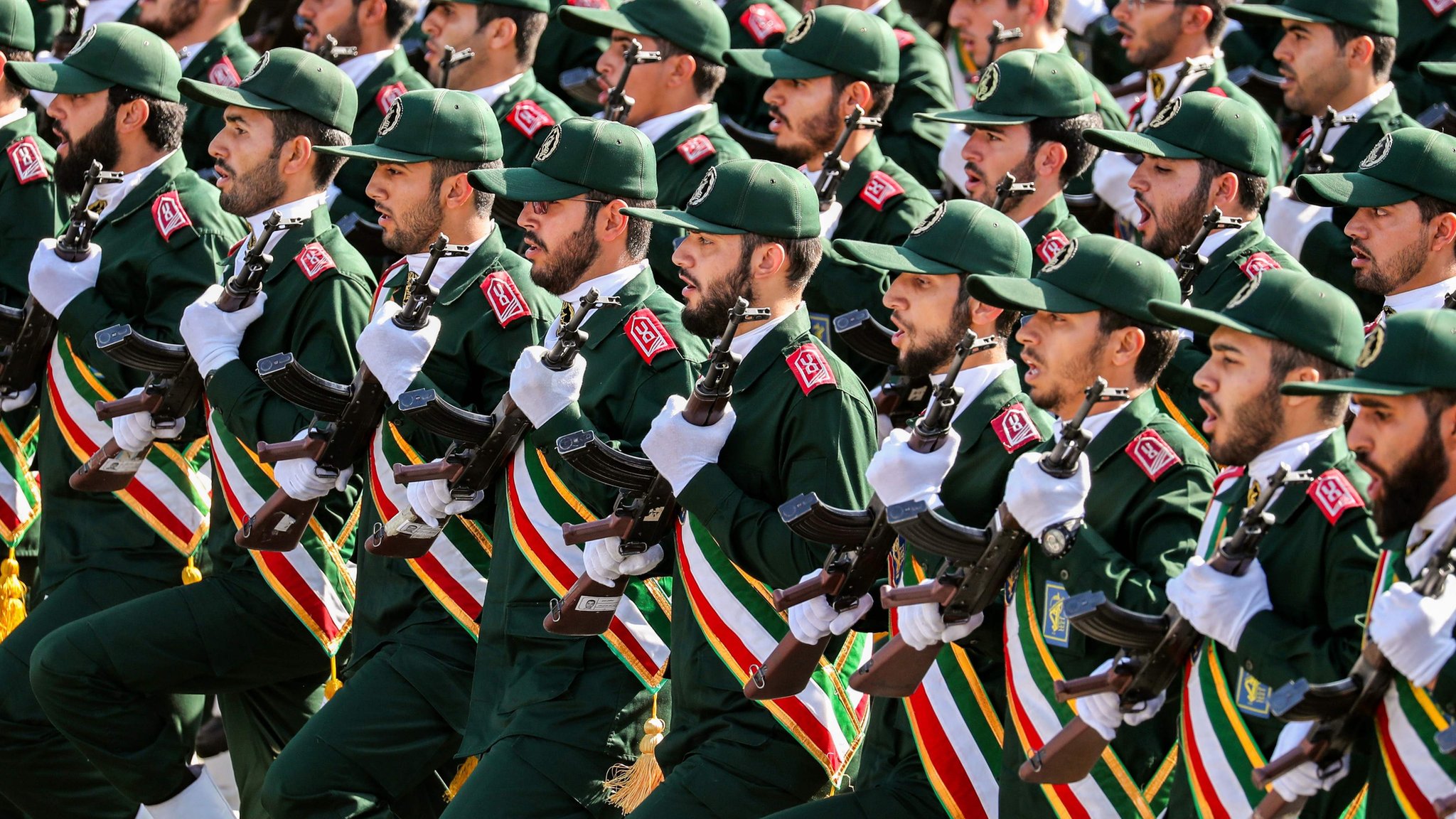
The Iran Revolutionary Guards are not just a military force: they are a state within the state, a political enforcer, an intelligence machine, and an economic power center rolled into one. That matters far beyond Tehran. When the Guards gain leverage, the ripple effects hit regional diplomacy, internal dissent, oil markets, cyber operations, and the broader balance of power across the Middle East. For policymakers, investors, analysts, and anyone trying to understand where Iran is heading next, this is the signal worth watching. The current moment suggests a familiar but increasingly consequential pattern: when pressure rises, the Revolutionary Guards often emerge stronger, more visible, and harder to challenge. That raises the stakes for Iran’s domestic politics and for every country trying to predict what comes next.
- The Iran Revolutionary Guards are central to Iran’s power structure, not a secondary institution.
- Security crises tend to strengthen the Guards, especially when civilian authority appears constrained.
- Their influence spans military, intelligence, politics, and business, making them unusually resilient.
- Regional consequences are immediate: proxy networks, deterrence strategy, and diplomatic calculations all shift with them.
- Why this matters now: any expansion of Guard power can harden Iran’s posture at home and abroad.
Why the Iran Revolutionary Guards matter more than ever
The simplest mistake outsiders make is treating the Islamic Revolutionary Guard Corps, or IRGC, like a conventional army. It is not. Iran already has a regular military. The Guards were built to defend the revolution itself, which means their mission has always been ideological as much as operational. Over time, that mission expanded. What began as a protective force became a sprawling ecosystem that touches nearly every pillar of Iranian power.
That distinction matters because institutions built to protect a political system rarely behave like neutral security bureaucracies. They move aggressively when elites feel threatened. They prioritize regime survival over reform. And they often accumulate influence during moments of instability, because leaders trust loyal coercive institutions more than public-facing civilian ones.
When Iran enters a period of uncertainty, the Revolutionary Guards are often the institution best positioned to convert crisis into authority.
This is why every apparent shift inside Tehran should be viewed through the IRGC lens. The question is rarely just what happened. The more revealing question is who gains operational control once it does.
How the Guards built a parallel state
Military force with political purpose
The Guards control elite capabilities that give them outsized influence. Their reach extends across missile forces, internal security, intelligence activity, and expeditionary operations through external networks and allied militias. In practical terms, that means the IRGC can shape both street-level coercion and long-range strategy.
Unlike a conventional chain of command focused on battlefield readiness alone, the Guards exist to preserve ideological continuity. That creates a powerful feedback loop. The more insecure the ruling order feels, the more indispensable the Guards become. The more indispensable they become, the harder it is for any rival institution to dilute their role.
Economic power that reinforces security power
The IRGC’s influence is not limited to barracks and command centers. It has long been associated with major business interests, infrastructure projects, logistics networks, and protected access to strategic sectors. This matters because economic leverage can fund patronage, reward loyalty, and insulate the institution from political swings.
For outside observers, this is one of the most important structural realities to understand. A force with guns is powerful. A force with guns, money, intelligence reach, and ideological legitimacy inside the system is far more durable.
Pro Tip: When assessing Iranian political developments, track which institution gains control over implementation, contracting, and enforcement. Formal announcements matter less than who executes them.
Intelligence and internal control
The Guards also matter because they are deeply embedded in surveillance, internal security, and threat assessment. In systems facing recurring unrest, these functions become decisive. They shape who gets detained, which factions gain protection, how dissent is framed, and what the leadership sees as manageable versus existential.
That gives the IRGC something more valuable than visibility: it gives them privileged access to the state’s perception of reality. In political systems under stress, the institution that controls threat reporting often controls the menu of possible responses.
What stronger Iran Revolutionary Guards mean for domestic politics
If the Guards are consolidating power, the domestic implications are stark. First, civilian institutions have less room to maneuver. Even when elected bodies formally exist, their authority can shrink if security actors dominate the policy environment. Second, reformist or pragmatic factions face a narrower lane. Third, public dissent becomes easier to contain and easier to redefine as a security challenge rather than a political grievance.
This does not mean every decision in Tehran is made by a single monolithic bloc. Iran’s politics remain factional, competitive, and often opaque. But opacity should not be confused with weakness. In fact, opaque systems can be highly effective at protecting core power centers while projecting an image of debate.
The most durable form of power in Iran is often the power that sits behind formal institutions, not the power that speaks through them.
That is why the rise of the Guards matters even if public political processes continue. Elections, cabinets, and parliamentary debates can still occur while real strategic autonomy shifts elsewhere. When security logic dominates, politics starts to orbit enforcement rather than persuasion.
Regional fallout is where the story gets bigger
Deterrence, proxies, and escalation risk
The regional significance of the IRGC is impossible to overstate. The Guards are deeply tied to Iran’s approach to deterrence, including missile strategy, asymmetric warfare, and relationships with aligned armed groups across the region. If their influence rises, neighboring states and global powers will assume Iran is less likely to moderate and more likely to rely on hard-power signaling.
That does not automatically mean open conflict. Often the Guards operate in the space below conventional war: calibrated pressure, strategic ambiguity, deniable action, and selective escalation. But this gray-zone posture can be destabilizing precisely because it is difficult to predict and easy to misread.
For markets, this creates recurring stress points around shipping, energy infrastructure, and sanctions enforcement. For diplomats, it shrinks the margin for trust. For regional adversaries, it raises incentives for preemption and covert counterpressure.
Why foreign governments watch the IRGC so closely
Foreign ministries may negotiate with civilian officials, but intelligence services and defense planners often watch the Guards for the real signal. That is because shifts in IRGC posture can reveal whether Tehran is moving toward confrontation, caution, or strategic patience.
Understanding that hierarchy is essential. A seemingly conciliatory public message can coexist with more assertive security planning. Likewise, internal political rhetoric may sound fragmented while the security apparatus remains tightly aligned around deterrence and control.
The strategic guide to reading this moment
If you want to understand where this trajectory leads, focus on a few practical indicators rather than headlines alone.
- Watch personnel changes: promotions, appointments, and command reshuffles often reveal where power is consolidating.
- Track security language: when political problems are increasingly described as threats to stability, the Guards gain justification for a larger role.
- Monitor economic access: contracts, reconstruction efforts, and protected sectors can show whether institutional influence is deepening.
- Read regional messaging carefully: tougher proxy posture or sharper deterrence rhetoric often signals confidence inside the security establishment.
- Separate theater from structure: public debate can be noisy, but structural control usually tells the real story.
Analysts often reduce Iran coverage to a single question: is the system opening or closing? That framing is too simplistic. A better question is this: which institutions are gaining the capacity to define reality, set priorities, and enforce outcomes? If the answer is the Iran Revolutionary Guards, then any future opening becomes harder to sustain.
Why this matters beyond Iran
It is tempting to treat the IRGC as a niche subject for regional specialists. That would be a mistake. The Guards sit at the intersection of several global concerns: energy security, sanctions policy, cyber risk, maritime stability, great-power competition, and the future of authoritarian resilience. Their behavior shapes not only Iran’s political trajectory but also how external powers calibrate pressure, deterrence, and negotiation.
There is also a broader lesson here. Modern power is rarely confined to formal constitutions or public office. It often accumulates in hybrid institutions that combine military authority, intelligence access, ideological legitimacy, and commercial reach. The IRGC may be a uniquely Iranian case, but the governing logic is globally recognizable.
When one institution can police dissent, project force abroad, and profit at home, it becomes more than an arm of the state: it becomes a system for preserving the state on its own terms.
What comes next
The likely path forward is not a dramatic rupture but a deeper entrenchment of existing patterns. That means more authority for security actors during moments of tension, less room for civilian autonomy, and continued regional caution mixed with periodic escalation risk. The exact pace may vary, and Iranian politics can still surprise. But structurally, the trend is familiar: pressure consolidates hard power.
For outside observers, the challenge is not just to watch events unfold. It is to identify which institutions emerge stronger after each test. Right now, the Iran Revolutionary Guards look less like a background force and more like the central operating system of the Iranian state.
That should change how the story is read. This is not merely about one elite corps gaining influence. It is about the architecture of power in a pivotal country becoming more concentrated, more security-driven, and potentially more willing to shape the region through coercive leverage. In a fragile Middle East, that is not a side note. It is the headline.
The information provided in this article is for general informational purposes only. While we strive for accuracy, we make no guarantees about the completeness or reliability of the content. Always verify important information through official or multiple sources before making decisions.