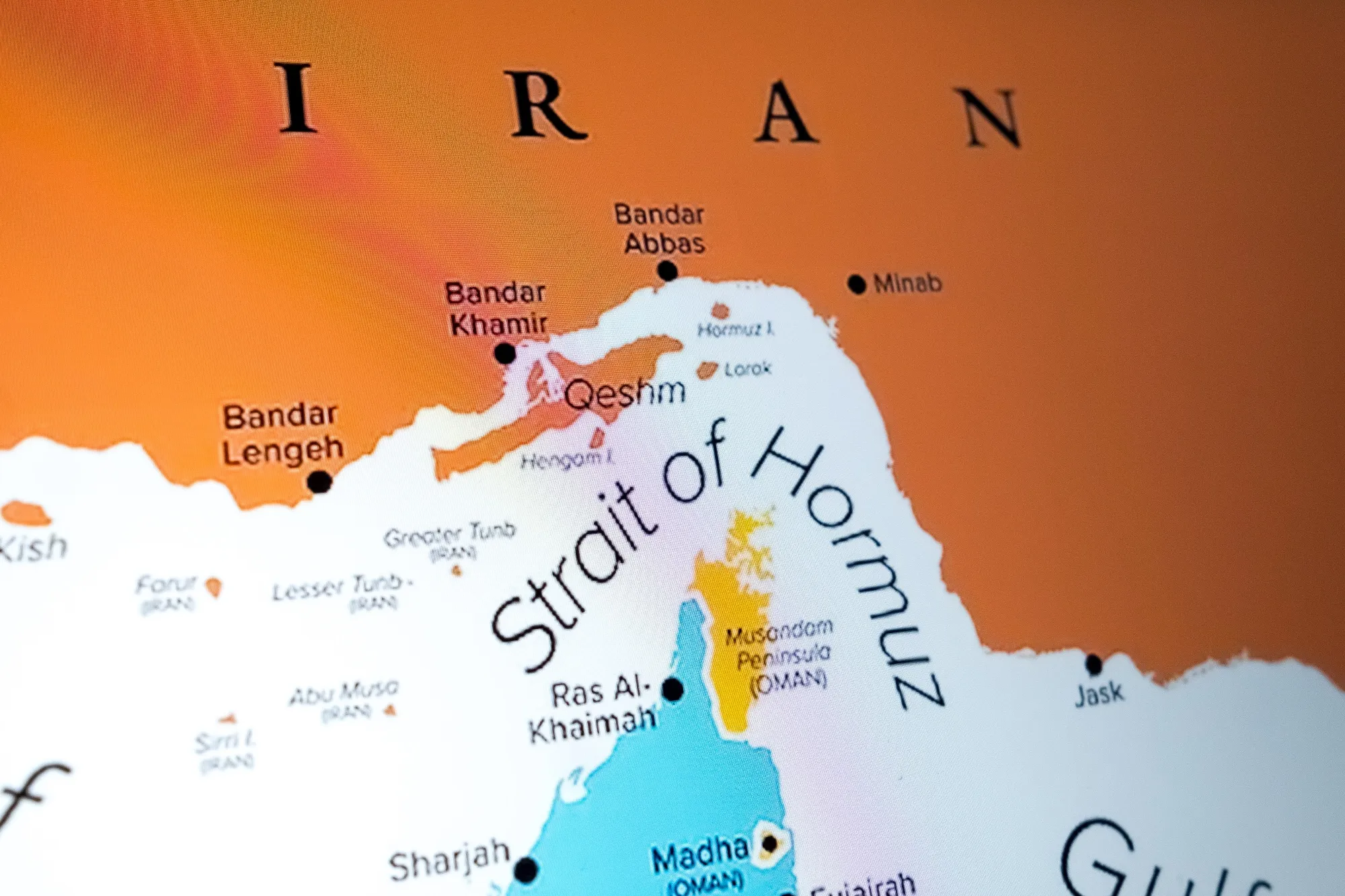
Iran UAE Attacks Trigger Global Alarm

Iran UAE Attacks Trigger Global Alarm
The Iran UAE attacks are not just another flashpoint in an already volatile region. They land at the intersection of Gulf security, global energy stability, shipping risk, and the credibility of international deterrence. When strikes hit the United Arab Emirates and governments across the world moved quickly to condemn Tehran, the message was clear: this is being read as a dangerous escalation, not a contained incident. For policymakers, investors, and anyone tracking the balance of power in the Middle East, the stakes are immediate. A single round of attacks can now ripple outward into oil prices, insurance costs, military posturing, and diplomatic realignment. That is why this moment matters far beyond the Gulf. It is a test of how the region, and the wider international system, responds when a simmering confrontation threatens to become something much larger.
- The Iran UAE attacks have intensified fears of a broader regional confrontation.
- Global condemnation signals that governments view the strikes as a threat to international stability, not just a bilateral dispute.
- Energy markets, maritime trade routes, and Gulf investor confidence are all exposed to the fallout.
- The UAE now faces pressure to strengthen deterrence while avoiding a full-scale military spiral.
- What happens next will shape regional alliances and the credibility of diplomatic de-escalation.
Why the Iran UAE attacks matter beyond the battlefield
The Middle East has seen no shortage of warnings about escalation, but some events cut through the noise. Attacks on the UAE do exactly that because the country occupies a uniquely strategic position. It is a commercial hub, a logistics center, an aviation crossroads, and a major player in global energy flows. Any direct threat to its security sends a signal that no node in the Gulf’s economic architecture is fully insulated.
That changes the calculation for everyone. Airlines review risk. Insurers reassess exposure. Energy traders reprice uncertainty. Foreign governments revisit force posture and defense cooperation. Even if the physical damage from any single attack is limited, the psychological and economic impact can be much wider. In modern conflict, perceived vulnerability can be almost as consequential as actual destruction.
This is the core danger: when an attack hits a state like the UAE, the objective may be larger than tactical damage. It can be about proving reach, undermining confidence, and forcing adversaries to spend more money, attention, and political capital on defense.
When Gulf infrastructure or major urban centers come under threat, the shockwave is financial and diplomatic as much as military.
How world leaders are reading this escalation
The speed and tone of international condemnation matter. Governments do not always agree on Middle East crises, and even when they do, their language is often carefully calibrated. So when leaders describe an event as a dangerous escalation, that wording is doing real work. It suggests they believe the incident could alter the regional trajectory if left unanswered.
There are a few reasons for that. First, attacks attributed to Iran raise immediate concerns about proxy conflict becoming more direct. Second, Gulf states are deeply tied into the global economy, which means instability is rarely local for long. Third, recent years have shown that miscalculation in this region can cascade quickly, especially when multiple actors maintain overlapping military, political, and ideological rivalries.
Diplomacy is now under pressure
Every condemnation creates a diplomatic demand for a response. That response does not have to mean retaliation, but it does mean action. Expect calls for emergency consultations, intelligence sharing, defense coordination, and renewed efforts to build a coalition around deterrence. The challenge is that diplomacy in moments like this operates on two tracks at once: public signaling and private crisis management.
Publicly, governments want to show resolve. Privately, many of them want to stop the cycle before it expands. That tension defines the current moment. Nobody wants to appear weak, but plenty of capitals are aware that a direct regional war would be catastrophic.
Deterrence credibility is on the line
The Gulf security order depends heavily on deterrence: the idea that the cost of aggression will outweigh the benefits. If attacks continue without a convincing response, that model starts to look fragile. But if the response is too forceful, the region can slide into a larger confrontation. This is the narrow corridor decision-makers now have to navigate.
For the UAE and its partners, the problem is not just preventing the next strike. It is preserving the idea that strategic coercion will fail. That means military readiness matters, but so do intelligence capabilities, air defense integration, and political unity among allies.
What this means for oil, shipping, and investor confidence
One reason the Iran UAE attacks are drawing global focus is that markets have learned to fear Gulf instability for good reason. The region is central to oil production and maritime transit. Even when infrastructure is not directly disabled, the threat environment itself can move prices and reshape risk assessments.
Energy markets react to uncertainty first
Oil traders do not wait for worst-case scenarios to materialize. They price in the probability that they might. If attacks suggest a heightened risk to production, export routes, or critical facilities, expect volatility. That does not automatically translate into a long-term price spike, but it does inject uncertainty into a market that is already sensitive to geopolitical disruptions.
Natural gas, refined products, and downstream sectors can also feel the effects. For import-dependent economies, that becomes an inflation story as much as an energy story. For exporters, it becomes a revenue story with strategic implications.
Shipping lanes remain a strategic pressure point
Security concerns in and around Gulf waterways can quickly become a maritime issue. Even absent a blockade or major disruption, shipping companies and insurers respond to elevated threat levels. That can mean higher premiums, route adjustments, delayed cargo movement, and extra naval coordination.
For businesses, the practical consequence is simple: geopolitical risk eventually shows up on a balance sheet. Sometimes it appears as fuel costs. Sometimes as insurance. Sometimes as delayed delivery schedules. The point is that regional conflict no longer stays neatly in the realm of foreign policy.
Markets rarely need certainty to react. A credible threat to Gulf stability is enough to trigger defensive behavior across energy and shipping sectors.
Why the UAE is a uniquely symbolic target
The UAE has spent years cultivating an image of resilience, connectivity, and managed stability. That brand has real strategic value. It helps attract capital, talent, tourism, and diplomatic relevance. Attacks on the country therefore carry symbolic weight that goes beyond immediate military calculation.
Striking such a target can be interpreted as an attempt to challenge the narrative that economic modernity and global integration provide insulation from regional conflict. It is also a reminder that sophisticated urban centers and critical infrastructure remain vulnerable in an era of missiles, drones, and hybrid warfare.
The new security reality in the Gulf
States across the region have invested heavily in air defense, surveillance, and counter-drone capabilities. But the threat has evolved fast. Low-cost systems, deniable operations, and distributed proxy networks complicate traditional defense models. The issue is not just intercepting incoming threats. It is identifying launch chains, attribution pathways, and escalation thresholds in real time.
This is where modern conflict starts to look less like conventional war and more like a systems challenge. Defense is now a stack: radar, intelligence fusion, cyber resilience, interception, redundancy planning, and public communication. A gap at any layer can be exploited.
- Air defense integration becomes more urgent when threats are fast, cheap, and difficult to attribute.
- Infrastructure resilience matters because critical systems must keep operating even under attack.
- Strategic messaging matters because public confidence is part of national security.
What comes next after the Iran UAE attacks
There are several plausible paths forward, and none of them are especially comfortable.
Scenario one: calibrated containment
This is the best-case outcome. International pressure mounts, backchannel diplomacy intensifies, and all sides avoid steps that would force open confrontation. The rhetoric stays sharp, but military action remains limited. Under this scenario, the immediate crisis cools, even if underlying tensions remain unresolved.
Scenario two: persistent gray-zone conflict
This is arguably the most likely path. Instead of a dramatic regional war, the Gulf could see recurring attacks, deniable operations, cyber disruptions, and proxy pressure. That would keep markets nervous and defense systems under strain without crossing the threshold into total conflict.
The danger here is normalization. If repeated incidents become routine, each one may draw less surprise but more cumulative damage. Strategic instability can become chronic.
Scenario three: retaliatory spiral
This is the scenario global leaders are trying hardest to avoid. One strike prompts retaliation, retaliation prompts counter-retaliation, and what began as a targeted incident expands into a broader military exchange. Once that process begins, controlling escalation becomes much harder. Misreading intent, domestic political pressure, and alliance obligations can all accelerate the cycle.
Why this crisis could reshape regional strategy
The deeper significance of the Iran UAE attacks is that they may force a reassessment of regional strategy on multiple fronts. Gulf states could push for tighter defense integration. External powers may revisit force deployments and deterrence commitments. Energy buyers may renew focus on diversification and strategic reserves. Investors may place a greater premium on resilience over headline growth.
This is also a moment that tests whether diplomacy still has the bandwidth to manage layered crises. The Middle East is not operating in isolation. Global powers are juggling competition elsewhere, economic uncertainty, and domestic political constraints. That means every new crisis is competing for attention, resources, and strategic patience.
Pro tip for readers tracking the next phase: watch not just official statements, but also quieter indicators like airspace advisories, shipping risk notices, defense consultations, and market insurance movements. Those signals often reveal how seriously institutions are taking escalation risk before headlines fully catch up.
The bigger lesson for the international system
If there is one conclusion to draw from this episode, it is that regional security and global economic order are now deeply fused. An attack in the Gulf is not merely a regional headline. It is a systems event. It can influence prices, supply chains, military alignments, investor psychology, and diplomatic bandwidth all at once.
That is why the broad condemnation matters. It reflects a recognition that allowing escalation to become routine would carry costs far beyond the immediate conflict. Whether the response ultimately leans toward deterrence, diplomacy, or some unstable combination of both, the objective is the same: prevent a dangerous precedent from hardening into the new normal.
The UAE now stands at a familiar but uncomfortable crossroads faced by many strategically exposed states: project strength, preserve stability, and avoid being pulled into a larger war by the logic of escalation itself. How successfully it and its partners manage that balancing act will shape not just the next few days, but the wider security architecture of the Gulf for years to come.
The information provided in this article is for general informational purposes only. While we strive for accuracy, we make no guarantees about the completeness or reliability of the content. Always verify important information through official or multiple sources before making decisions.