Iran War Updates Reshape Regional Risk

Iran War Updates Reshape Regional Risk
The latest Iran war updates are not just another burst of breaking-news volatility. They are a stress test for the Middle East, for global energy markets, and for the already fragile idea that major regional escalation can still be contained through routine diplomacy. When conflict signals intensify around Iran, the effects move fast: shipping costs climb, oil traders recalibrate, allied governments harden their messaging, and ordinary civilians brace for the next shock. This is the kind of moment when headlines can blur into noise, even as the stakes become more dangerous by the hour. The real challenge is separating tactical developments from strategic change – and understanding which signals point to a wider conflict, which suggest deterrence is still holding, and why every new Iran war update now carries consequences far beyond one front.
- Iran war updates now matter far beyond the battlefield because they affect diplomacy, energy, and regional security at once.
- Short-term military actions can trigger long-tail economic and political consequences, especially around oil and shipping.
- Escalation risk depends not only on strikes and retaliation, but also on signaling, alliances, and domestic pressure.
- Governments, markets, and civilians are all reacting to the same core question: can this crisis still be contained?
Why the latest Iran war updates feel different
Not every regional flare-up becomes a historic turning point. But some patterns make this phase more serious than a routine exchange of threats. The current Iran war updates appear to reflect a broader collision between military action, proxy dynamics, and strategic messaging. That matters because escalation is rarely driven by one event alone. It usually emerges from a chain of moves in which each side believes it is restoring deterrence, while the region experiences the opposite.
The core issue is credibility. If one side absorbs a strike without a visible response, it risks looking weak to domestic audiences and rivals. If it responds too aggressively, it can trigger a cycle that becomes hard to pause. That is why every official statement, force movement, and alert level matters. These are not just details for policy professionals. They are signals that shape what traders price in, what diplomats prepare for, and what civilians fear next.
Key insight: The most important part of a fast-moving conflict is often not the strike itself, but the message each side believes the strike sends.
What to watch inside fast-moving Iran war updates
Military activity versus strategic intent
A surge in military activity does not always mean leaders want full-scale war. Sometimes it means the opposite: a calibrated show of force designed to restore deterrence without crossing a red line. The problem is that calibration can fail. Airstrikes, missile launches, and force repositioning can be interpreted very differently by adversaries under pressure.
That is why analysts tend to focus on three questions. First, are operations expanding geographically? Second, are higher-value targets being struck? Third, are public statements becoming less conditional and more absolute? When the answer to all three trends upward, the risk profile changes quickly.
Proxy networks and regional spillover
Any serious reading of Iran war updates must account for proxy dynamics. Regional conflict involving Iran rarely stays confined to one arena. Non-state actors, aligned militias, and politically connected armed groups can widen the map without a formal declaration of war. This creates a more chaotic environment because actions by proxies may be tolerated, encouraged, or disavowed depending on the political moment.
For outside observers, that ambiguity is part of the danger. A single incident involving shipping lanes, border positions, or urban centers can trigger retaliation before the chain of responsibility is even clear. That compresses diplomatic timelines and increases the chance of miscalculation.
Domestic politics on every side
Conflict decisions are never made in a vacuum. Leaders facing internal criticism often become less flexible in public, even if private channels remain open. Iran, its rivals, and global powers involved in the crisis all have domestic audiences to manage. That means messaging can sound more maximalist than policy really is – until events force rhetoric to become reality.
Why this matters: Political leaders do not just respond to military facts. They respond to public anger, elite pressure, alliance expectations, and perceived weakness.
How markets interpret Iran war updates
Markets are brutally efficient at translating conflict into risk premiums. When Iran war updates intensify, traders look first at oil supply, shipping security, insurance costs, and safe-haven demand. The immediate question is not whether a conflict can be morally justified or diplomatically explained. It is whether supply chains, transport corridors, and strategic infrastructure are becoming harder to protect.
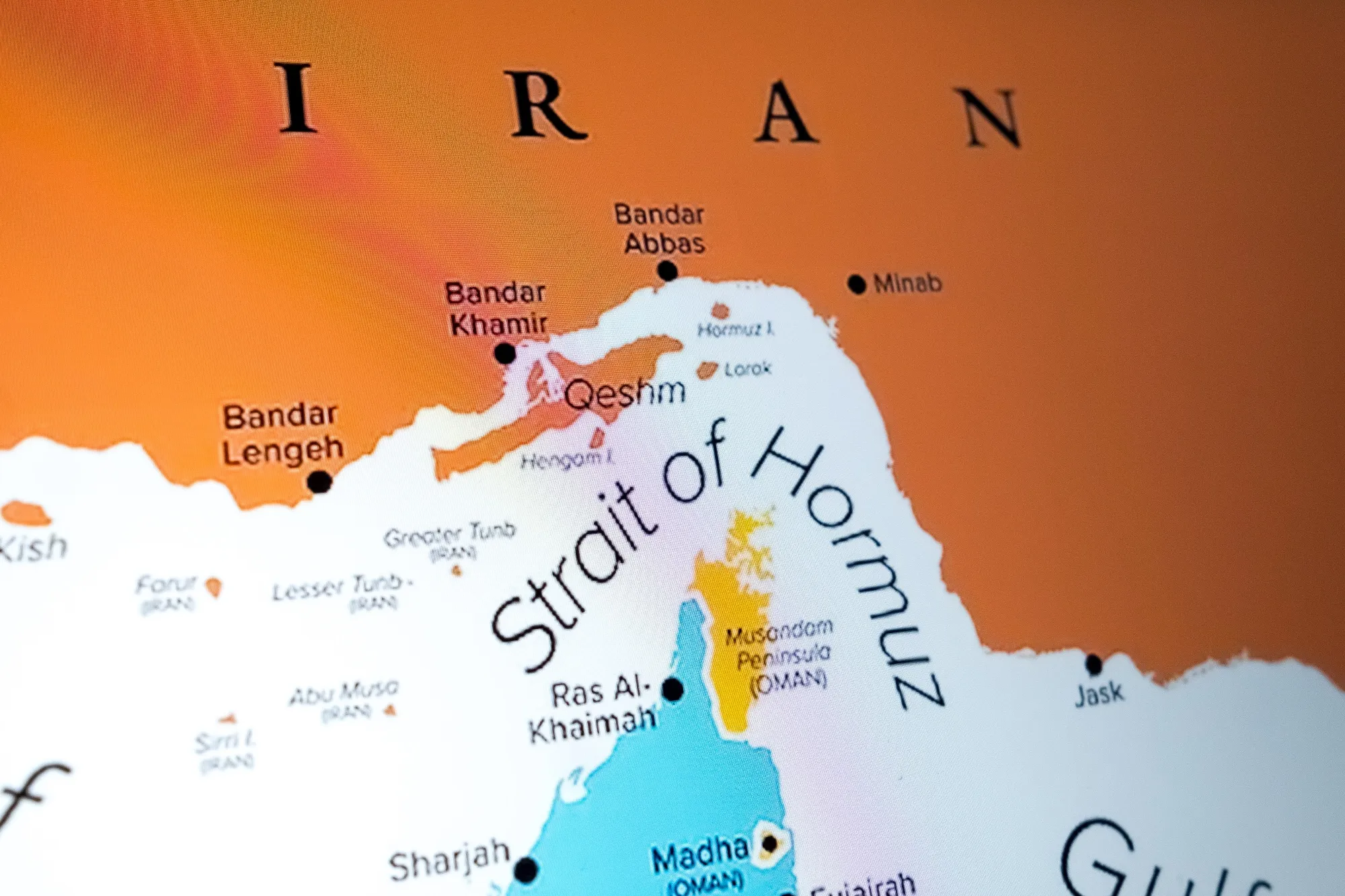
Energy is the clearest pressure point. Even when actual supply disruption is limited, the perception of vulnerability can move prices. That is especially true if maritime chokepoints or energy facilities appear exposed. Shipping firms and insurers tend to respond faster than politicians, because they price risk in real time.
Markets do not wait for certainty. They move on probabilities, and conflict expands the range of bad outcomes that must be priced in.
The second-order effects matter too. Higher energy costs can feed inflation, complicate central bank decisions, and weigh on consumer confidence. In that sense, Iran war updates are not only a foreign policy story. They can become a cost-of-living story in countries far from the region.
Why diplomacy gets harder as the news cycle speeds up
Diplomacy works best when leaders have time, space, and plausible deniability. Fast, emotionally charged Iran war updates erode all three. The public sees dramatic footage, political factions demand immediate action, and governments become trapped between deterrence and de-escalation. That is a difficult place to negotiate from.
There is also a sequencing problem. Backchannel diplomacy often requires at least one side to pause visibly or soften language. But in the middle of a crisis, pauses can be framed as weakness. So leaders may choose visible firmness while quietly searching for off-ramps. This creates a strange dual-track environment: aggressive public posture, cautious private contact.
The danger is that private channels can be overtaken by public escalation. Once casualty counts rise or symbolic targets are hit, room for compromise narrows sharply.
Signals that de-escalation may still be possible
- Official statements leave room for conditional restraint rather than absolute vows of retaliation.
- Military actions appear targeted and time-limited rather than open-ended.
- Third-party governments intensify mediation language instead of evacuation language alone.
- Critical infrastructure remains largely untouched, suggesting some red lines are still being observed.
What civilians and businesses should actually pay attention to
One of the failures of crisis coverage is that it often overwhelms readers with dramatic fragments while underexplaining practical implications. For civilians in or near affected regions, the most important variables are often simple: transportation reliability, communications resilience, access to fuel, and the likelihood of sudden security restrictions.
For businesses, the checklist is broader but still concrete. Companies with exposure to regional logistics, energy inputs, or multinational staffing need to monitor operational continuity rather than just headline intensity. A dramatic headline with little infrastructure impact may be less disruptive than a quieter development involving ports, airspace, or cross-border movement.
Practical risk areas to monitor
- Transport: Airspace closures, maritime rerouting, and border slowdowns.
- Energy: Fuel availability, refinery exposure, and price pass-through.
- Workforce safety: Evacuation protocols, local shelter guidance, and communication plans.
- Supply chains: Delays affecting
inventory,freight contracts, and just-in-time operations.
Pro tip: In conflict scenarios, logistics data often becomes more useful than political rhetoric. If ports, roads, and flights keep tightening, the real-world impact is escalating even if official language remains measured.
What the latest Iran war updates mean for the wider world
The global system is already running with limited shock absorption. Wars in one region now ripple faster across trade, migration, cyber risk, and domestic politics elsewhere. That is why these Iran war updates deserve sustained attention. The issue is not only whether a conflict expands geographically. It is whether it normalizes a more dangerous model of regional confrontation: constant brinkmanship, looser red lines, and higher tolerance for disruption.
There is also a strategic lesson for major powers. If deterrence frameworks are repeatedly tested without durable settlement, eventually every crisis becomes harder to stabilize. Allies demand stronger guarantees. Rivals probe for openings. Neutral states hedge more aggressively. The result is a less predictable international environment, where local conflicts generate global consequences with alarming speed.
The deeper risk is normalization. Once markets, governments, and armed actors start treating recurring escalation as routine, the threshold for a truly destabilizing event can quietly fall.
The bottom line on Iran war updates
The most useful way to read Iran war updates is not as isolated flashes of violence, but as indicators of whether restraint is still functioning. If actions remain bounded, rhetoric leaves room for exit, and critical infrastructure stays mostly out of play, there is still a path to containment. If those conditions erode, the region enters a much more dangerous phase.
For readers, investors, policymakers, and businesses, the task is the same: focus less on spectacle and more on systems. Watch the signals that reveal whether this crisis is being managed, widened, or misread by the people with the power to make it worse. Right now, that distinction is everything.
The information provided in this article is for general informational purposes only. While we strive for accuracy, we make no guarantees about the completeness or reliability of the content. Always verify important information through official or multiple sources before making decisions.