Iran Weighs Retaliation Paths
Iran Weighs Retaliation Paths
The question is no longer whether tension in the Middle East will reverberate across borders. It is how, where, and how hard. Iran retaliation options are now at the center of a geopolitical stress test that could hit energy markets, redraw deterrence lines, and force regional powers into decisions they have spent years trying to avoid. For policymakers, investors, and ordinary readers tracking the region, the real challenge is cutting through the noise. Retaliation is rarely a single act. It is a menu of calibrated choices, each with its own military logic, political symbolism, and economic fallout. That is what makes this moment so volatile. The most dangerous scenarios are not always the loudest ones. Often, they are the moves designed to signal control while quietly widening the battlefield.
- Iran retaliation options range from symbolic strikes to proxy escalation and cyber operations.
- Tehran must balance domestic pressure for a response against the risk of triggering a wider regional war.
- Oil prices, shipping lanes, and diplomatic channels could all be affected by even a limited retaliatory move.
- The most likely path may be a calibrated response built for deniability, not an immediate all-out confrontation.
Why Iran retaliation options matter right now
Iran does not make these decisions in a vacuum. Every retaliatory calculation sits inside a broader matrix: regime credibility, military capability, public expectations, allied proxy networks, and the reactions of rivals such as Israel and the United States. A weak response can look like vulnerability. An overwhelming response can invite direct confrontation. That strategic squeeze explains why Iran retaliation options matter far beyond the immediate battlefield.
There is also a timing problem. Modern conflicts move at two speeds. Military signaling happens in hours. Political consequences unfold over weeks or months. Tehran may feel pressure to respond quickly, but haste can narrow its choices and hand the initiative to its opponents. A slower, more layered retaliation could be more effective, especially if the goal is to preserve deterrence without crossing a threshold that triggers major war.
Key insight: The most important question is not whether Iran can retaliate. It is whether it can retaliate in a way that restores deterrence without losing control of escalation.
The Deep Dive into Iran retaliation options
Iran’s toolkit is broader than conventional missile launches. It includes proxies, maritime pressure, cyber capabilities, diplomatic theatrics, and selective military action. Each option sends a different message to domestic audiences and foreign adversaries.
Direct missile or drone strikes
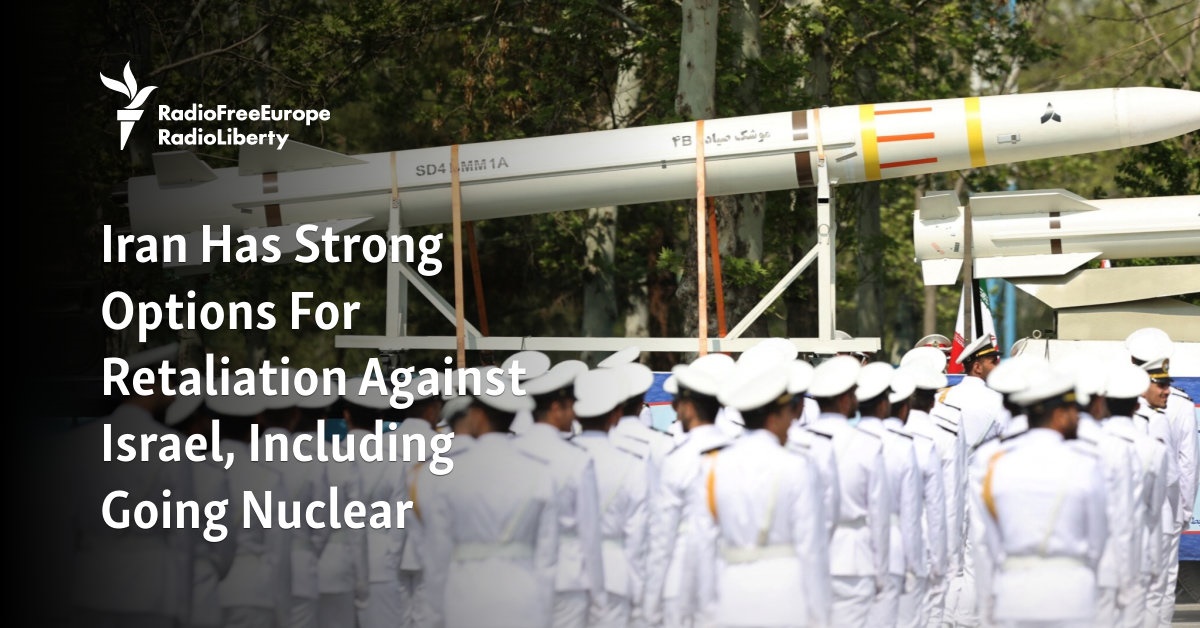
The most visible form of retaliation would be a direct strike using missiles or drones. This approach offers clarity and immediate symbolism. It demonstrates capability, reach, and willingness to act openly. But it also carries the highest risk of escalation. Direct attacks are easier to attribute, harder to walk back, and more likely to invite rapid military responses.
Iran has spent years developing layered strike capabilities designed to project force while complicating defense planning. Even so, a direct strike would be judged not only by its tactical outcome but by its political effect. If it causes limited damage, it may look performative. If it causes mass casualties, it could shift the entire region into a new phase of conflict.
Proxy network activation
A more familiar path is to lean on aligned militias and partner groups across the region. This is strategically attractive because it offers distance, deniability, and flexibility. Proxy operations can target military outposts, critical infrastructure, shipping, or border areas while allowing Tehran to avoid immediate ownership.
From a strategic standpoint, proxy action can also be staged over time. That matters. A sequence of smaller attacks can create sustained pressure without delivering the kind of single dramatic event that forces a massive counterstrike. It is slower, murkier, and often more effective at exhausting an opponent’s attention and resources.
The downside is control. Proxy actors may share interests with Tehran, but they are not always perfectly disciplined instruments. Escalation by a partner group can produce consequences Iran did not intend.
Maritime disruption and chokepoint pressure
One of the most economically potent options involves shipping routes, especially areas tied to global oil flows. Tehran understands that markets react not just to actual supply disruptions but to perceived risk. Harassment of commercial vessels, seizures, or military posturing near key waterways can raise insurance costs, unsettle traders, and remind the world how vulnerable energy logistics remain.
This is a classic asymmetric play. Iran does not need to shut down a maritime corridor outright to make its point. It only needs to inject enough uncertainty to force global attention.
Why this matters: A limited military exchange can stay local. A threat to shipping can go global within hours through oil prices, freight costs, and investor sentiment.
Cyber retaliation
Cyber operations are especially attractive because they can be calibrated, plausibly denied, and aimed at high-value targets such as infrastructure, communications, logistics, or financial systems. They also fit a broader trend in statecraft: punish without immediately crossing into traditional battlefield optics.
For Tehran, cyber retaliation offers several advantages. It can demonstrate reach, embarrass an adversary, and create disruption without necessarily producing the images that turn public opinion overnight. But cyber strikes are difficult to measure in public. If the attack is too subtle, the deterrent message may be lost. If it is too severe, it can still trigger a harsh response.
The political logic behind Tehran’s decision
Retaliation is not just military planning. It is domestic politics under pressure. Iranian leaders must show resolve to internal constituencies that expect the state to defend its standing. Elite credibility matters. Nationalist sentiment matters. So does the regime’s long-running narrative that resistance, not restraint, preserves sovereignty.
At the same time, leaders know that symbolic strength can become strategic overreach. This is where the decision gets hard. Tehran has to assess not only what response looks strong at home, but what response remains survivable abroad.
That balance usually favors a middle path: enough action to signal resolve, not enough to invite regime-threatening retaliation. In practice, that often means layered operations rather than a single overwhelming move.
What regional rivals are watching
Every actor in the region reads retaliation differently. Israel will likely assess whether Iran’s response changes the deterrence equation or simply seeks political theater. Gulf states will watch for spillover risk, especially around shipping and energy infrastructure. The United States will focus on force protection, escalation control, and whether any response threatens its personnel or assets.
This creates a dangerous feedback loop. Even a carefully calibrated move can be interpreted as a step toward something larger. In highly militarized environments, perception can be as destabilizing as action.
Signals versus surprises
There is a long tradition in crisis behavior of signaling before acting. States leak warnings, move assets, or issue rhetoric to shape expectations. But surprise remains valuable when the goal is to restore deterrence through shock. Tehran must choose between these models. Signaling reduces accidental escalation but can weaken tactical effectiveness. Surprise boosts operational value but raises the chance of miscalculation.
The deterrence test
The core issue is whether any retaliatory move changes future behavior. If a response is seen as too cautious, adversaries may conclude they can absorb it. If it is too aggressive, it may unify opponents and justify stronger countermeasures. The ideal deterrent action is memorable, limited, and hard to dismiss. That is easier to define in theory than execute in reality.
Economic fallout could arrive before the military dust settles
One reason this story extends beyond geopolitics is that markets price uncertainty quickly. Energy traders do not wait for full clarity. They react to threat perception, shipping risk, and the possibility of broader conflict. Even if actual supply remains stable, fear alone can move prices.
- Oil: Any hint of disruption can tighten sentiment and raise volatility.
- Shipping: Insurance premiums and routing decisions can change fast.
- Equities: Regional escalation often pushes investors toward defensive positions.
- Diplomacy: Countries trying to de-escalate may suddenly face shrinking room to maneuver.
That is why policymakers care about language as much as weapons. A statement, mobilization order, or warning to shipping companies can trigger second-order effects even before a shot is fired.
What happens next
The most plausible scenario is not an immediate, maximal war. It is a calibrated sequence: selective retaliation, strategic ambiguity, and continued signaling designed to preserve options. Tehran’s leadership is likely weighing not just military efficacy but narrative control. Can it tell domestic audiences it acted forcefully while telling the outside world it acted proportionally?
If so, the response may come in a form that looks smaller than the rhetoric surrounding it. That does not mean it is insignificant. Limited moves can have outsized impact if they expose vulnerabilities, shake markets, or compel diplomatic intervention.
Pro Tip for readers tracking this crisis
Watch for three indicators: movement around proxy groups, changes in maritime security posture, and unusual language around cyber incidents. Those signals often reveal the chosen lane of retaliation before official narratives catch up.
Why this moment could reshape regional strategy
If Iran chooses restraint, rivals may interpret it as weakness or discipline, depending on the outcome. If it chooses visible retaliation, the region may enter a more direct era of confrontation where old buffer mechanisms matter less. Either way, this is not just a one-off crisis. It is a test of how modern Middle East deterrence works when proxies, precision weapons, and economic chokepoints all intersect.
The bigger takeaway: The future of regional stability may hinge less on who strikes hardest and more on who best controls escalation after the strike.
That is the uncomfortable truth at the center of this moment. Retaliation can satisfy politics, but it rarely resolves strategy on its own. For Iran, the challenge is not finding a way to respond. It is finding a response that does not unleash consequences nobody can contain.
The information provided in this article is for general informational purposes only. While we strive for accuracy, we make no guarantees about the completeness or reliability of the content. Always verify important information through official or multiple sources before making decisions.