Israel Ambassador Pitch Sparks Hard Questions
Israel Ambassador Pitch Sparks Hard Questions
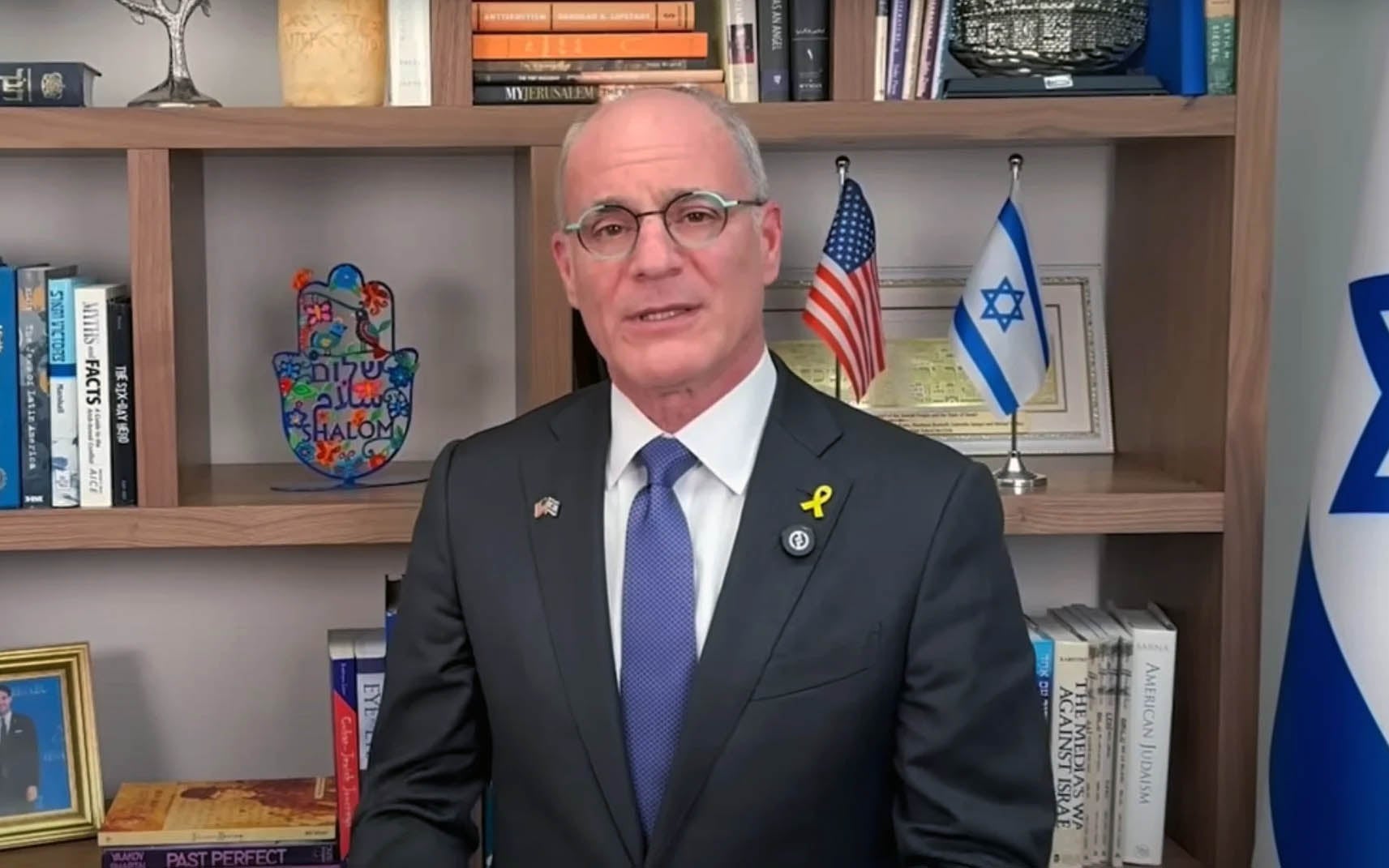
Diplomatic messaging is supposed to clarify. When it feels overly polished, it does the opposite: it raises suspicion. That is the tension at the center of the latest spotlight on the Israel ambassador messaging directed at Christian audiences, where a carefully framed appeal appears to lean on reassurance, affinity, and moral alignment while sidestepping the harder realities shaping global opinion. For governments under pressure, communications strategy is no longer a side act – it is the battlefield. But audiences are sharper, faster, and less willing to accept narrative packaging at face value. When a public pitch sounds too neat for a conflict this messy, every omission becomes part of the story. That is why this moment matters far beyond one appearance or one spokesperson: it reveals how modern political persuasion works, where it breaks down, and why credibility is now the scarcest resource in international politics.
- Israel ambassador messaging to Christian audiences is being scrutinized for tone, framing, and selective emphasis.
- Polished diplomatic narratives can backfire when they appear disconnected from visible realities on the ground.
- Faith-based outreach remains strategically important because it shapes political sympathy, donations, activism, and media amplification.
- The bigger issue is credibility: modern audiences compare official claims against real-time imagery and competing narratives instantly.
Why Israel ambassador messaging matters more than ever
There was a time when diplomatic communications could rely on distance, gatekeepers, and delayed reaction. That era is over. Today, every ambassador is effectively a live-content publisher operating in an environment shaped by clipped video, instant commentary, partisan reinterpretation, and algorithmic spread. A message aimed at one constituency rarely stays there.
That makes Israel ambassador messaging especially consequential. Christian audiences, particularly in parts of the United States and elsewhere, have long been seen as a strategically valuable bloc. They can influence public opinion, civil society networks, political pressure, fundraising ecosystems, and media narratives. A message delivered to them is never just pastoral or symbolic – it is political infrastructure.
The challenge is that audiences now evaluate not just what is said, but what is avoided. If the language feels curated to produce comfort rather than understanding, viewers detect that quickly. In a conflict saturated with imagery, testimony, and deeply contested claims, any attempt to offer a simplified moral frame will meet immediate resistance.
When public diplomacy sounds like branding, people stop hearing reassurance and start hearing risk management.
The narrative strategy behind the pitch
At its core, outreach of this kind typically depends on three moves: establish shared values, personalize the relationship, and redirect attention from contested actions to civilizational alignment. It is an old strategy, but it remains effective when executed with precision.
Shared identity as a persuasive shortcut
Appeals to Christian audiences often emphasize biblical connection, democratic values, persecution narratives, or the idea of a common moral front. This creates a framework in which support is not merely geopolitical but deeply cultural and spiritual. It is persuasive because it lowers analytical friction. If the relationship is framed as familial, then criticism can be cast as betrayal or misunderstanding.
But that same shortcut can collapse if the audience senses emotional leverage. People do not like feeling managed, especially on matters involving suffering, war, and humanitarian consequence.
Optimism as message discipline
The “rose-coloured” quality critics point to is not accidental. Diplomatic spokespeople are trained to reduce volatility, stabilize perception, and foreground defensible themes. In practice, that often means emphasizing resilience, coexistence, moral intention, or security threats while muting the most politically damaging details.
This is not unique to Israel. It is how state communications work. But the technique becomes more visible when reality is intensely documented and public trust is already under strain.
Selective framing is still framing
No spokesperson can say everything in one appearance. That is fair. The issue is whether the omissions are proportionate or strategic. In highly polarized conflicts, selective framing is often interpreted as narrative engineering. And once an audience reaches that conclusion, even accurate claims lose force because the broader presentation no longer feels honest.
The credibility gap is the real story
The immediate controversy is less important than the structural problem beneath it: a widening credibility gap between official advocacy and public perception. Governments can still project authority, but they cannot control context the way they once did. A statement now enters a live ecosystem where journalists, activists, analysts, religious leaders, diaspora communities, and ordinary users test it against everything else they have seen.
That means rhetorical confidence alone is not enough. If a spokesperson appears too polished, too rehearsed, or too insulated from visible suffering, the message can boomerang. What was meant to reassure supporters instead energizes skeptics and unsettles the persuadable middle.
This is where diplomatic communication starts to resemble product marketing – and where the analogy breaks down. A consumer brand can sometimes survive glossy overstatement. A state defending controversial conduct faces a much higher burden. The audience is not evaluating a feature set. It is evaluating morality, accountability, and truthfulness under pressure.
In the attention economy, trust is not built by saying more. It is built by sounding less evasive.
Why faith-based audiences remain strategically important
It would be a mistake to treat this as a niche communications story. Faith-aligned outreach remains one of the most durable channels in political persuasion because it activates identity, community, and long-term loyalty at the same time.
Christian audiences matter for several reasons:
- They organize: churches, nonprofits, advocacy groups, and conferences can rapidly amplify messages.
- They vote: in some countries, faith-shaped foreign policy views influence elected officials.
- They donate: charitable and political giving often follows identity-based narratives.
- They legitimize: moral support from respected religious voices can soften broader criticism.
That is why this messaging is so calibrated. It is not just about public relations. It is about maintaining a durable coalition of emotional, political, and institutional support.
How the media environment changed the rules
Modern public diplomacy now operates under conditions that are unforgiving by design. Video clips are stripped of context, but they also expose tone with brutal efficiency. A single smile, phrase, or omission can become the headline because audiences are decoding affect as much as substance.
Three forces matter here.
Platform compression
Complex geopolitical arguments are forced into short-form segments. Nuance gets flattened. Messaging becomes sloganized. That favors certainty over honesty, even when honesty would be strategically wiser.
Distributed fact-checking
Official claims are no longer checked only by editors or institutions. They are checked by everyone, instantly. That democratizes scrutiny, but it also means every statement enters a contested arena where trust is earned post-publication, not assumed beforehand.
Audience fragmentation
The same diplomatic appearance reaches supporters, critics, neutral observers, and hostile interpreters simultaneously. A line crafted to energize one audience may alienate another. Communications teams now optimize for coalition retention while hoping reputational damage stays contained. Often, it does not.
What effective diplomacy would look like instead
If governments want to persuade skeptical audiences now, the old formula of polished certainty needs an upgrade. The strongest communicators in high-trust environments tend to do three things well.
Acknowledge complexity without losing the argument
Audiences can handle moral ambiguity better than spin doctors assume. Admitting pain, contradiction, and tragic trade-offs does not necessarily weaken a case. In many instances, it strengthens it because it signals seriousness rather than performance.
Match tone to reality
When visible events are grave, excessive smoothness reads as detachment. Effective diplomatic communication requires tonal discipline. Empathy must feel real, not appended.
Trade short-term comfort for long-term trust
Highly managed messaging may preserve support in the immediate cycle, but it can damage credibility over time. Once audiences decide a spokesperson is narrating around reality, recovery becomes hard.
The most durable message is rarely the cleanest one. It is the one that survives scrutiny.
Why this moment reaches beyond one ambassador
The larger lesson is not about a single personality or appearance. It is about the strain on official narratives in an era where governments no longer dominate the storytelling environment. Every state now faces a legitimacy test each time it speaks publicly about conflict. The question is not simply whether a message is persuasive. It is whether it can coexist with what audiences already know, fear, and suspect.
For Israel, that challenge is especially acute because support networks are strong but scrutiny is stronger than before. For Christian audiences, the challenge is different but equally serious: distinguishing between genuine moral appeal and carefully engineered alignment. That requires critical listening, not just emotional resonance.
And for the broader media ecosystem, this is a reminder that language itself has become a front line. Pitches, interviews, testimonies, and diplomatic appearances are no longer soft accessories to power. They are instruments of power.
The bottom line on Israel ambassador messaging
The real issue is not whether an ambassador can deliver a compelling case. Most can. The issue is whether the case feels complete enough, grounded enough, and honest enough to withstand a public that has become deeply skeptical of polished narratives. Israel ambassador messaging aimed at sympathetic audiences may still rally the base, but rallying is not the same as persuading, and persuasion is not the same as trust.
That distinction matters. In modern geopolitics, every official message is stress-tested in real time against visible evidence, emotional reality, and ideological priors. If the framing is too rosy, too selective, or too strategically neat, the audience notices. And once they do, the performance stops being about reassurance and starts becoming evidence in the case against credibility.
That is why this episode lands harder than a routine media clip. It captures a broader truth about contemporary diplomacy: narrative discipline can still shape perception, but it cannot indefinitely outpace reality.
The information provided in this article is for general informational purposes only. While we strive for accuracy, we make no guarantees about the completeness or reliability of the content. Always verify important information through official or multiple sources before making decisions.