Israel Hezbollah Campaign Reshapes Lebanon

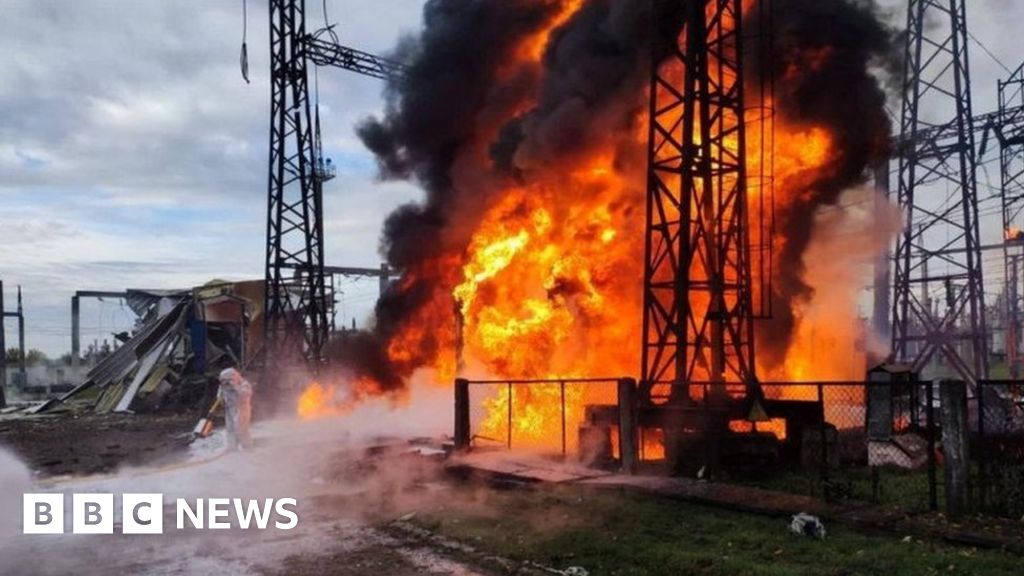
The Israel Hezbollah campaign is no longer a contained border conflict or a familiar cycle of calibrated retaliation. It is becoming something more consequential: a grinding military contest that is testing deterrence, exposing Lebanon’s fragility, and forcing the wider region to confront how quickly a “limited” confrontation can become a strategic reset. For policymakers, investors, aid groups, and ordinary civilians, the pain point is brutally simple: when escalation becomes normalized, every assumption about stability starts to break. That matters far beyond the front line. The campaign is shaping air defense decisions, political calculations in Beirut, risk pricing across the Middle East, and the future credibility of nonstate armed power. What looks tactical on the surface increasingly feels structural underneath.
- The Israel Hezbollah campaign has moved beyond symbolic exchanges and now carries broader military and political consequences.
- Lebanon is absorbing the heaviest systemic pressure, from displacement and infrastructure strain to deeper state paralysis.
- Israel appears focused on degrading Hezbollah’s operational capacity, not merely restoring short-term deterrence.
- The regional message is as important as the battlefield outcome: armed proxies face a new level of military exposure.
- Why this matters: the campaign could reset border security doctrine, crisis diplomacy, and the balance of power in the Levant.
Why the Israel Hezbollah campaign feels different now
Border clashes between Israel and Hezbollah have long operated within an ugly but recognizable logic. Fire is exchanged, red lines are tested, civilian fear rises, and outside powers scramble to prevent the slide into all-out war. The current phase appears different because the campaign suggests a more ambitious strategic objective. This is not just about signaling. It is about reshaping the operating environment.
That distinction matters. A signaling conflict is designed to communicate resolve. A reshaping conflict is designed to alter capabilities, geography, command structures, and political leverage. If that is the shift underway, then the consequences will last much longer than the latest round of strikes.
Key insight: Once a military campaign starts targeting long-term capacity instead of short-term messaging, the path back to the old status quo gets much narrower.
Israel’s apparent logic is straightforward: if Hezbollah’s military posture near the border and across Lebanon has become intolerable, then deterrence alone is insufficient. The goal becomes operational attrition – reducing launch capacity, disrupting logistics, constraining leadership movement, and complicating future force regeneration.
For Hezbollah, the challenge is equally stark. Its credibility rests on resistance, survivability, and the ability to impose costs on Israel. If it absorbs losses without demonstrating durable leverage, its aura changes. That does not necessarily mean immediate collapse or irrelevance. It means the brand of strategic intimidation becomes harder to sustain.
Lebanon pays the highest price
Every regional war story eventually returns to the same grim fact: weak states suffer the deepest and longest aftershocks. Lebanon enters this moment with a crippled economy, an exhausted public, fractured institutions, and limited state capacity. A serious military campaign layered onto that reality is not just another security crisis. It is an accelerant.
State weakness magnifies every strike
When infrastructure is already strained, even localized damage has outsized impact. Roads, energy access, communications, health services, and municipal response systems all operate with less redundancy than they would in a healthier state. That means disruption spreads faster and recovery takes longer.
This is the hidden multiplier in the Israel Hezbollah campaign. The immediate military target may be specific, but the broader stress radiates through a country that has little cushion left. Displacement becomes harder to manage. Commerce contracts. Insurance risk rises. Confidence evaporates. In practical terms, every day of sustained confrontation makes national recovery more remote.
Political paralysis becomes a security liability
Lebanon’s fragmented political structure was already struggling to convert crisis into coherent policy. A prolonged campaign deepens that paralysis. The state cannot fully control escalation, cannot easily negotiate from strength, and cannot reassure its own population that it retains monopoly over national security decisions.
That is one of the most important underappreciated effects of this conflict. The campaign is not just hitting military infrastructure. It is testing whether Lebanon as a state can remain politically legible while a powerful armed actor fights a strategic war on its soil.
Why this matters: When state institutions are too weak to absorb external conflict, military escalation quickly becomes a constitutional and economic crisis too.
What Israel likely wants beyond the battlefield
The Israel Hezbollah campaign is also a campaign of messaging – just not the old kind. The message now seems aimed at multiple audiences at once: Hezbollah, Tehran, Lebanese elites, Israel’s own public, and international mediators.
Deterrence through visible degradation
Classic deterrence relies on the threat of future punishment. But after repeated cycles of violence, threats can lose force if the adversary adapts. A more aggressive military approach attempts to rebuild deterrence through visible degradation. The point is not only to threaten pain later. It is to demonstrate pain now.
That sends a broader signal to regional proxy networks. If entrenched military organizations believe they can absorb periodic strikes while preserving their command depth and missile architecture, they may view escalation as manageable. If that assumption breaks, strategic calculations change.
Domestic credibility and strategic patience
No democratic government can sustain endless border insecurity without facing pressure to act. For Israel, restoring public confidence in border security is part of the strategic equation. That does not mean military action automatically solves the problem. It means political leaders likely view inaction as carrying its own escalating cost.
The deeper question is whether tactical success can translate into durable security. That has historically been the hardest part. Air power, intelligence penetration, and targeted strikes can achieve a lot. They rarely produce clean political endings by themselves.
Hezbollah’s dilemma is bigger than retaliation
Hezbollah still matters because it retains military capability, political embeddedness, and symbolic weight. But the current campaign exposes a central tension in its model. The organization must appear resilient enough to preserve deterrence while avoiding a level of destruction that further alienizes parts of Lebanon or weakens its long-term position.
The burden of being both militia and political actor
Nonstate armed groups often benefit from ambiguity. Hezbollah’s case is more complex because it is not merely a clandestine force. It is also a deeply embedded political and social actor. That gives it legitimacy in some constituencies, but it also ties it to public consequences.
When conflict expands, Hezbollah cannot fully separate military logic from national fallout. Civilian displacement, economic stress, and international isolation all feed back into the domestic environment in which the group operates.
Survival is not the same as strategic victory
One recurring mistake in analyzing armed movements is assuming that if they survive, they win. Survival matters, but strategic victory requires more. It requires retaining coercive credibility, preserving logistics, maintaining political support, and avoiding a narrative of avoidable ruin.
That is why the Israel Hezbollah campaign should not be judged only by casualty counts or strike volume. The more revealing metric is whether the conflict changes future freedom of action on both sides.
The regional implications are impossible to ignore
Even when fighting is geographically concentrated, the strategic audience is regional. Tehran is watching. Gulf states are watching. Washington is watching. So are armed groups that have built their own deterrence theories around missiles, drones, tunnel networks, and embedded command structures.
If this campaign demonstrates that heavily networked proxy forces are more vulnerable than advertised, it could alter military planning across the region. If instead Hezbollah absorbs the campaign and reconstitutes with limited long-term damage, the lesson moves the other way.
The real contest is not just over territory or retaliation cycles. It is over which model of deterrence still works in the Middle East.
Risk markets and diplomacy will react before the war ends
Geopolitical markets do not wait for official peace deals. Shipping costs, energy expectations, sovereign risk perceptions, and investment behavior all shift in anticipation. The longer the campaign continues, the more likely those second-order effects become durable.
Diplomacy follows a similar pattern. Mediators tend to intervene most aggressively once both sides believe additional fighting yields diminishing returns. Until then, diplomacy often trails events rather than directing them. That is a dangerous gap when the military tempo is high and civilian vulnerability is rising.
What to watch next in the Israel Hezbollah campaign
For readers trying to make sense of fast-moving developments, a few indicators matter more than headline noise. These markers can help separate symbolic escalation from structural change.
- Target depth: Are strikes remaining near the border, or reaching deeper into command, logistics, and mobility networks?
- Operational tempo: Sustained, high-frequency operations usually indicate strategic intent beyond signaling.
- Leadership disruption: Damage to coordination structures can matter as much as hardware loss.
- Displacement patterns: Large-scale civilian movement is often the clearest sign that a campaign is redefining normal life.
- Diplomatic language: When outside actors shift from de-escalation rhetoric to post-conflict architecture, they are acknowledging a possible new baseline.
Why this matters beyond the Middle East
It is tempting to view the Israel Hezbollah campaign as a localized security crisis. That would be a mistake. This conflict touches broader questions that governments and strategists everywhere are wrestling with: how to deter entrenched nonstate forces, how to defend borders under persistent missile threat, and how weak states become battlefields for stronger actors with competing strategic goals.
There is also a hard truth here for the international system. The old assumption that carefully managed escalation can remain permanently manageable looks weaker by the year. Once military normalization takes hold, the threshold for broader conflict drops. That is not just a Middle East lesson. It is a modern conflict lesson.
Pro tip: Watch for signs of institutional adaptation, not just military action. New buffer arrangements, revised border rules, changed deployment patterns, and altered diplomatic frameworks often reveal more about the future than the latest exchange of fire.
The bottom line
The Israel Hezbollah campaign is increasingly about more than punishing an adversary or surviving another round of escalation. It is about whether the strategic map of southern Lebanon and northern Israel is being rewritten in real time. Israel appears to be pursuing a tougher formula for restoring deterrence. Hezbollah is trying to preserve relevance and resilience under severe pressure. Lebanon, as so often happens, is trapped in the middle and paying the steepest price.
The most consequential outcome may not be a dramatic battlefield climax. It may be the quieter establishment of a new normal: one in which deeper strikes, weaker assumptions, and harsher doctrines define the border. If that happens, the campaign will be remembered not as another flare-up, but as a turning point.
The information provided in this article is for general informational purposes only. While we strive for accuracy, we make no guarantees about the completeness or reliability of the content. Always verify important information through official or multiple sources before making decisions.