Kremlin Tightens Grip on Telegram and Rewrites Russia’s Internet Playbook
Kremlin Tightens Grip on Telegram and Rewrites Russia’s Internet Playbook
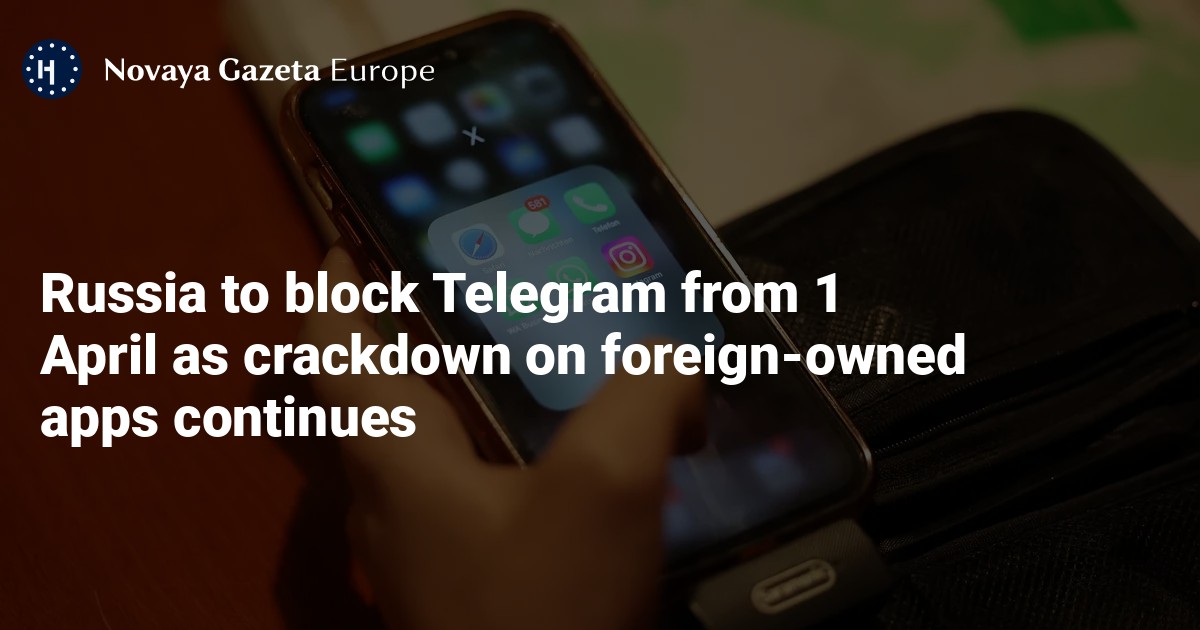
Russia Telegram crackdown is no longer a hypothetical threat. It is a live stress test for every platform that believed encrypted messaging could stay neutral in the Kremlin’s widening internet perimeter. The move lands as Moscow leans on wartime narratives, domestic surveillance ambitions, and a renewed appetite to bend infrastructure to its will. For users, the pain point is blunt: a service built for privacy is being coerced into compliance, and the wider internet fabric risks more fragmentation. For platform operators, the stakes are existential. If Russia can weaponize regulatory levers against encryption and traffic flows, expect a domino effect across other states eager to police dissent and own the data layer.
- Russia Telegram crackdown exposes how quickly
regulationcan morph into platform control. - Deepening
internetsovereignty raises costs for businesses, journalists, and civil society. - Expect ripple effects: more pressure on
end-to-endtools, more fragmentedrouting, more state demand for visibility. - Companies need contingency plans for
compliance,resilience, and user trust in contested markets.
Russia Telegram crackdown and the push for digital sovereignty
The Kremlin has spent years testing how far it can go in reshaping the public internet. The current pressure on Telegram fits a broader doctrine: build a Russian-run stack that can throttle or reroute data on demand. Laws compelling foreign services to store Russian user data on local servers, the buildup of a national DNS system, and investments in traffic inspection all point to a state that wants to flick switches at will. The messaging giant is a symbolic prize. It is widely used by officials, propagandists, soldiers, activists, and everyday users. For Moscow, forcing Telegram into compliance is about signaling that even beloved platforms must bend.
Key insight: Russia is testing whether popularity protects a platform. If it can bend
Telegram, no service is too entrenched to escape control.
How Russia Telegram crackdown targets infrastructure
When a government wants leverage over a cross-border app, it follows the plumbing. Expect scrutiny on routing rules, throttling of CDN nodes, and selective blocking at the ISP layer. Russia has already trialed deep packet inspection on other services, using DPI boxes to degrade performance until companies cooperate. That playbook is likely to return. If Telegram resists, users could see intermittent outages, slower media delivery, and unreliable push notifications. If it complies, encryption backdoors or metadata access become bargaining chips. Either path erodes user trust.
The legal levers: from data localization to content mandates
Legislation gives the crackdown teeth. Russia’s data localization rules require foreign services to keep Russian citizens’ data on domestic storage. Content laws demand rapid removal of posts flagged by regulators, and fines escalate quickly. Newer statutes allow regulators to block or throttle platforms deemed non-compliant. The net result: a legal funnel that forces Telegram to choose between bending product architecture to Russian standards or risking service instability. This is not a one-off dispute; it is structural.
What this means for users, businesses, and the open internet
For ordinary users, the immediate risk is degraded privacy. If Telegram yields to government demands for broader moderation or backdoor access, the app’s trusted identity as an encrypted sanctuary fades. Journalists and activists who rely on private channels and anonymous tips would need new operational security playbooks. Businesses that distribute updates, customer service, or crisis communications through Telegram could lose reach or face regulatory scrutiny for unapproved content.
Expert take: A partially compliant
Telegramis still dangerous. Even metadata sharing erodes the protective layer that dissidents depend on.
Economic fallout and platform calculus
Russia’s digital market remains large, but compliance carries reputational costs. Companies that accept intrusive terms risk alienating users in other regions who view strong encryption and free expression as baseline features. Conversely, exiting Russia severs revenue streams and can trigger hardware seizures or legal claims. Telegram occupies a unique space: it serves as both an official broadcast tool for state messaging and a haven for opposition speech. That dual role complicates any binary decision to leave or comply.
Why the Russia Telegram crackdown matters to the global internet
The confrontation is a template for other governments seeking to domesticate global platforms. If Russia proves that targeted throttling, fines, and legal pressure can tame a major encrypted app, expect copycat policies elsewhere. The global internet could fracture into zones where services run modified, state-approved versions. This undercuts the promise of seamless communication and burdens companies with maintaining multiple regional builds. It also invites systemic vulnerabilities as encryption standards splinter and government access points proliferate.
Pro tips: navigating a tightening Russian internet
For users: diversify channels. Keep alternative messaging apps ready, and consider tools like VPN or Tor for sensitive communications. Audit your privacy settings and minimize identifiable metadata in chats. Avoid sharing sensitive data over channels that may be monitored.
For businesses: map your dependency on Telegram for customer support, marketing, or internal alerts. Draft contingency plans to shift traffic to email, SMS, or other encrypted platforms. Prepare customer communications explaining any service disruptions. Align with legal counsel on data handling to avoid unexpected exposure under Russian law.
For developers: design for graceful degradation. If API calls slow or fail, ensure failover paths exist. Consider caching critical content and building transport-agnostic messaging layers that can pivot to alternative protocols if throttling occurs.
Risk mitigation checklist
- Assess whether your team uses
Telegramfor crisis workflows; add backups now. - Review device hygiene: update
OS, rotatepasswords, enable2FAon related accounts. - Monitor Russian regulator bulletins for new compliance deadlines.
- Encrypt local backups and sanitize logs that could reveal contacts.
- Educate staff on phishing that may exploit uncertainty around policy changes.
Future implications: beyond Telegram
Today’s clash is about one app, but the underlying trend points to a segmented internet where each jurisdiction shapes the rules of engagement. This bodes poorly for interoperability and trust. If every country insists on local keys or privileged access, true end-to-end encryption becomes rare. Innovation slows because small teams cannot sustain multiple parallel codebases tuned to different censorship regimes. Users lose choice as services withdraw from hostile markets.
However, resistance is not futile. Strong user demand for privacy has driven the rise of Signal, Matrix, and other decentralized protocols that are harder to co-opt. The more platforms adopt open-source cryptography and distribute infrastructure, the higher the cost of control for any single government. Expect a surge in research on obfuscation techniques, traffic padding, and resilient routing to keep communication alive even under heavy-handed throttling.
Forward look: The next phase of the Russia Telegram crackdown will influence global standards. If encryption is weakened in one market, it risks cascading into others through precedent and technical compromise.
Why this matters now
Russia is not the only country rethinking the balance between national security claims and digital freedom. But it is one of the few with both the political will and the technical apparatus to enforce it at scale. The confrontation with Telegram will shape how companies negotiate with states that want inspection access. It will also test how resilient modern messaging architectures are under state-level pressure. For anyone who relies on secure, fast, and reliable messaging – from citizens to corporations – the outcome will signal whether the open internet can withstand coordinated legal and technical assaults.
As the crackdown unfolds, the smartest move for users and organizations is to treat the current moment as a drill. Harden your setups, diversify your channels, and stay ready for a future where connectivity is not guaranteed but earned through careful planning. The open internet remains powerful precisely because it is adaptable. Now is the time to prove it.
The information provided in this article is for general informational purposes only. While we strive for accuracy, we make no guarantees about the completeness or reliability of the content. Always verify important information through official or multiple sources before making decisions.