Kushner Hardens Gaza Rebuild شروط
Kushner Hardens Gaza Rebuild شروط
Jared Kushner has thrown a blunt new condition into one of the most fragile reconstruction debates on earth: Gaza will not be rebuilt, he says, until Hamas disarms. That is not just a negotiating line. It is a political pressure test for every actor involved, from Israel and the United States to Arab mediators and aid agencies trying to keep civilian suffering from deepening. The message lands at a moment when the region is already trapped between security demands, humanitarian collapse, and a reconstruction bill that will likely run into the tens of billions. For anyone hoping for a clean postwar recovery, the Kushner Gaza rebuild condition is a reminder that infrastructure plans are now inseparable from security policy, ceasefire mechanics, and the future shape of governance in Gaza.
- Kushner is linking reconstruction to Hamas disarmament, turning aid into leverage.
- Gaza rebuilding is now a geopolitical bargaining chip, not just a humanitarian project.
- Any recovery plan will need enforcement, governance, and funding alignment to work.
- The condition raises hard questions about who decides when Gaza is safe to rebuild.
- The stakes extend beyond Gaza to regional stability and U.S. credibility.
Why the Kushner Gaza rebuild condition matters now
The phrase Kushner Gaza rebuild condition may sound like a talking point, but it has real-world consequences. Reconstruction is often treated as the inevitable second act after conflict, a way to restore housing, roads, power, and water. Here, it is being reframed as a reward that cannot begin until a militant force gives up its weapons. That changes the incentive structure completely.
For Gaza, this is not a theoretical argument. The territory’s civilian infrastructure has repeatedly been crushed in cycles of war, and the longer rebuilding is delayed, the more difficult basic recovery becomes. Rubble removal, temporary shelter, hospital repairs, and utility restoration are not optional extras. They are the difference between a functioning society and a prolonged emergency.
But the political logic behind this line is equally clear. If reconstruction begins while Hamas remains armed, critics argue that new roads, buildings, and supply chains could entrench the same power structure that led to the conflict. Supporters of the condition see it as leverage. Skeptics see a dangerous form of collective punishment dressed up as strategy.
Reconstruction is never neutral in a postwar zone. It either stabilizes a peace process or becomes a tool in the next one.
The security-first logic behind the proposal
At the heart of the debate is a familiar but unresolved question: can you rebuild a territory before you settle the security environment? The Kushner Gaza rebuild condition assumes the answer is no. That view is rooted in the idea that reconstruction without demilitarization simply restores the battlefield for the next round.
That logic appeals to policymakers who prioritize deterrence. It also aligns with a broader trend in conflict diplomacy, where donor money is increasingly tied to governance reforms, monitoring mechanisms, and security guarantees. In practical terms, that means any future rebuilding framework would likely require some combination of international oversight, verified disarmament milestones, and a new administrative authority capable of controlling aid flows.
Why disarmament is easier to demand than to deliver
Disarmament sounds straightforward in public remarks and extremely difficult in practice. Weapons are hidden, command structures are decentralized, and militant organizations often survive by blending into civilian environments. Even if a leadership deal is reached, verifying compliance can take months or years.
That makes the condition politically powerful but operationally messy. If the standard is absolute disarmament before any rebuilding, then reconstruction could be delayed indefinitely. If the standard is partial or phased disarmament, then the question becomes who certifies progress and what happens if one side disputes the assessment.
This is where the Kushner Gaza rebuild condition collides with diplomacy. The stricter the requirement, the more leverage it creates. The looser it becomes, the less credible it looks to security hawks. That tension is why reconstruction talks often stall before they even begin.
What Gaza rebuilding would actually require
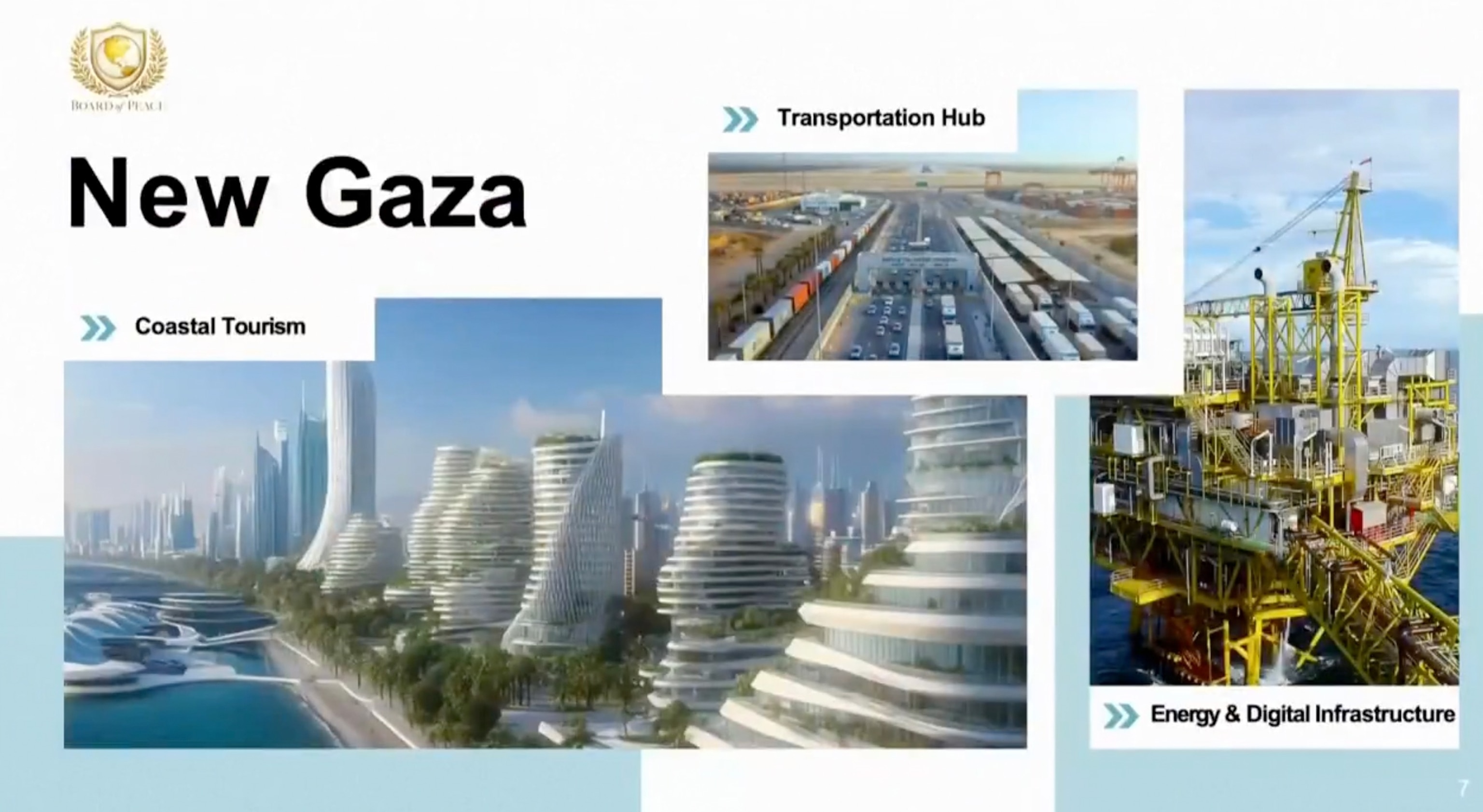
Rebuilding Gaza is not a matter of pouring concrete and reopening shops. It is a massive systems project. The territory needs functioning water treatment, electricity distribution, port access, debris clearance, healthcare restoration, school rebuilding, and secure logistics corridors for materials. Every one of those tasks depends on governance and safety.
If the aim is to avoid rebuilding under militant control, then the international community would need a layered framework that answers four questions at once:
- Who secures the territory during reconstruction?
- Who verifies that weapons are being surrendered or destroyed?
- Who administers contracts and prevents diversion of materials?
- Who funds the process when political risk remains high?
Without answers, money sits on the sidelines. Donors do not want their aid to be absorbed into another collapse cycle. Governments do not want to bankroll reconstruction that later strengthens armed actors. And aid groups do not want to work under conditions that make civilian relief impossible to separate from military advantage.
That is why the Kushner Gaza rebuild condition matters so much. It is not simply a moral line. It is a gating mechanism for the entire reconstruction architecture.
The humanitarian cost of waiting
Still, the biggest flaw in any hardline reconstruction condition is that civilians pay first. If rebuilding is held hostage to a security benchmark that may take years to satisfy, families remain stuck in displacement, schools remain closed, and public health deteriorates. That is where the moral argument becomes unavoidable.
Humanitarian planners typically argue for parallel tracks: secure the environment where possible, while beginning lifesaving reconstruction immediately. That approach does not solve the political problem, but it reduces the risk that a generation grows up amid permanent ruin.
The challenge is that partial rebuilding can also become a political signal. Pouring resources into homes and roads before the security question is settled may be seen as normalization without accountability. So the policy choice is grim either way: wait and deepen suffering, or rebuild and risk repetition.
Any serious Gaza plan has to solve two problems at once: keep civilians alive now and prevent armed actors from controlling tomorrow.
How a phased reconstruction model could work
If the international community wants to avoid an all-or-nothing trap, the most realistic path is a phased model. That would separate emergency relief from strategic rebuilding, with each stage tied to measurable conditions.
A workable version might look like this:
- Phase 1: debris removal, emergency shelter, water, sanitation, and hospital stabilization.
- Phase 2: critical utility repairs, temporary housing, and reopening of schools and clinics.
- Phase 3: full infrastructure rebuilding, commercial revival, and long-term urban planning.
Each phase would need monitoring to ensure materials are not diverted. That could involve inspection checkpoints, controlled procurement channels, and third-party verification of delivery and use. In a conflict environment, the technical details matter as much as the politics.
The strength of this model is flexibility. The weakness is trust. If mediators do not trust each other, even the best-designed system can collapse under accusations of cheating or delay.
The political signal to Israel, the U.S., and Arab mediators
Kushner’s remarks also function as a signal. To Israel, they suggest that reconstruction should not be decoupled from security outcomes. To the U.S., they reinforce a familiar policy frame: no durable rebuilding without demilitarization. To Arab states and regional mediators, they imply that financial commitments may come with conditions far more stringent than humanitarian rhetoric suggests.
That matters because reconstruction in Gaza is not just a technical project. It is a diplomatic test. Arab states are unlikely to bankroll a process they believe will entrench instability. Israel will resist any setup that leaves hostile capabilities intact. The U.S. will be pressured to reconcile humanitarian urgency with security demands. And Palestinians, meanwhile, remain caught between competing blueprints designed mostly by outsiders.
The Kushner Gaza rebuild condition therefore sharpens a larger question: who gets to define peace? If the answer is only the actors with military power, reconstruction becomes transactional. If the answer includes civilians and legitimate local governance, then rebuilding must begin earlier, with tighter safeguards and broader political legitimacy.
What happens next
The next phase will likely hinge on whether the condition becomes a formal policy principle or remains a hard-edged statement meant to frame negotiations. If it becomes policy, expect more friction around donor pledges, reconstruction benchmarks, and ceasefire sequencing. If it stays rhetorical, it still shapes the conversation by drawing a line around what the U.S. may tolerate in any postwar arrangement.
For readers watching closely, the real signal is not just whether Gaza is rebuilt. It is what kind of Gaza the outside world thinks should emerge from the ruins. A territory rebuilt under heavy security supervision would look very different from one rebuilt through a broader political settlement. The first may be easier to design on paper. The second is harder to achieve, but far more likely to last.
Either way, the Kushner Gaza rebuild condition shows that the next battle over Gaza may not be fought only with weapons or diplomacy. It will be fought over sequencing, legitimacy, and the power to decide when destruction ends and recovery begins.
The information provided in this article is for general informational purposes only. While we strive for accuracy, we make no guarantees about the completeness or reliability of the content. Always verify important information through official or multiple sources before making decisions.