Laos Cave Rescue Tests Nerve and Limits
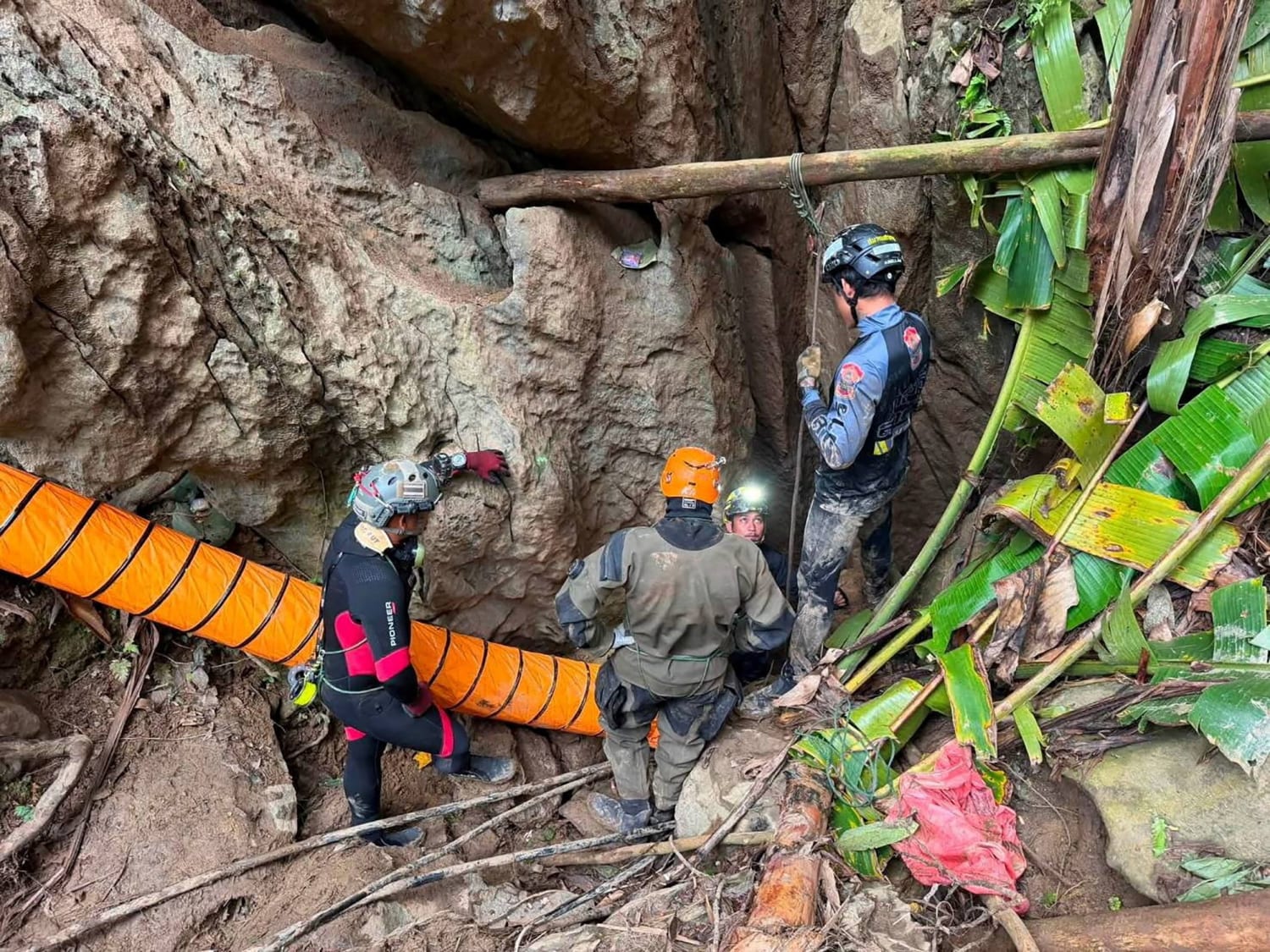
Laos Cave Rescue Tests Nerve and Limits
The Laos cave rescue is the kind of crisis that exposes every weakness in emergency response at once: bad weather, impossible terrain, dwindling time, and the brutal math of survival underground. When rescuers pull more men out of a flooded cave, the headline sounds hopeful. The reality is harsher. Every extraction through narrow, waterlogged passages is a high-risk operation where one wrong move can turn a rescue into a recovery mission. That is why this story matters far beyond Laos. It is a case study in how modern rescue teams confront natural hazards that are becoming more volatile, more frequent, and less forgiving. What looks like a local emergency is also a global lesson in disaster readiness, technical coordination, and how fragile life becomes when infrastructure ends and raw human endurance takes over.
- Four more men freed marks real progress, but the most dangerous phase of the mission may still be unfolding.
- Flooded cave rescues are uniquely complex because water, darkness, tight spaces, and oxygen limits compound every risk.
- The Laos cave rescue highlights preparedness gaps in remote emergency response and cross-agency coordination.
- Weather is the hidden enemy: changing rainfall can instantly reverse gains made by rescuers.
- Why this matters: extreme rescue events are becoming a stress test for governments, responders, and communities worldwide.
Why the Laos cave rescue feels bigger than one breaking news event
There is a reason cave rescue stories seize global attention. They sit at the intersection of human drama and technical impossibility. The men trapped in the Laos cave were not simply waiting in a sealed room. They were caught in an environment where rising water, unstable visibility, constricted passageways, and physical exhaustion can combine into a lethal chain reaction.
The reported release of four more men is a meaningful milestone. But rescue milestones can be misleading if they create the impression that the hardest part is over. In cave emergencies, each successful extraction is proof of capability, not proof of safety. Conditions can shift by the hour. A route that was passable in the morning may become impassable after another surge of water.
The core truth of any flooded cave mission is simple: progress is never linear, and survival depends on controlling variables that are often uncontrollable.
That tension is what makes the Laos cave rescue such a defining story. It is not only about bravery. It is about systems under pressure: command structure, logistics, communications, medical triage, and environmental monitoring all have to work at once.
How flooded cave rescues actually work
For many readers, the term cave rescue suggests a difficult but straightforward extraction. In practice, flooded cave operations are among the most technically demanding rescue scenarios anywhere. Rescuers are managing multiple layers of risk simultaneously.
The environment is actively hostile
Unlike a mountain evacuation or a building rescue, a flooded cave does not merely challenge responders. It actively degrades their options. Water reduces mobility. Darkness erases orientation. Tight rock corridors restrict equipment use. Mud and debris can cut visibility to near zero.
In many cave passages, rescuers cannot simply swim side by side with the trapped individual. They may have to guide, tow, or maneuver people through spaces where panic itself becomes a major hazard. That makes psychological stability almost as important as technical skill.
Air and time are limited resources
Even when food and water can be delivered, breathable air remains a critical concern. In enclosed subterranean spaces, oxygen levels can fall while CO2 accumulates. Teams must monitor whether the cave environment remains survivable during a prolonged operation.
That means rescue commanders are balancing two clocks: the weather clock above ground and the atmospheric clock below it.
Extraction is only one part of the mission
Before anyone comes out, teams often need to establish route security, assess medical status, deploy diving specialists, position pumps, stage supplies, and maintain communication chains. A rescue can look sudden from the outside, but it is built on hours or days of invisible preparation.
That is why each person freed from the Laos cave represents not just courage, but an enormous amount of planning under pressure.
What makes this rescue especially hazardous
The key phrase in the coverage is hazardous rescue mission. That wording matters because it acknowledges a reality often softened by dramatic storytelling: these operations are dangerous for both victims and rescuers.
Water transforms a cave into a moving obstacle course
Floodwater is not static. It surges, recedes, swirls, and carries sediment. This can obscure fixed guide lines, alter buoyancy, and make narrow points more treacherous. A passage that seems technically manageable on paper can become a choke point when current, debris, and fatigue enter the equation.
Remote access complicates everything
A cave crisis in a remote area creates a logistics bottleneck. Medical staff, diving equipment, food supplies, pumps, lighting systems, and communications gear all have to reach the site, often across terrain that was never designed for rapid emergency deployment.
In these situations, governments are not just conducting a rescue. They are building a temporary operational ecosystem under extreme time pressure.
Rescuers absorb risk to reduce risk
One underappreciated fact about cave extraction is that trained responders often take on disproportionate danger to create even a narrow margin of safety for those trapped. That includes repeated traversals through the same hazardous route, often while carrying or guiding someone in worse physical condition.
Every successful cave rescue is built on a brutal trade-off: the mission advances only because specialists repeatedly enter an environment that common sense says to avoid.
Laos cave rescue and the larger question of disaster preparedness
The Laos cave rescue is also a test of institutional readiness. Natural disasters and terrain-related emergencies are no longer rare edge cases. Heavier rainfall, flash flooding, and infrastructure gaps are making localized disasters more complex and more difficult to stabilize quickly.
This is where the story becomes bigger than one cave.
Preparedness is not just equipment
Governments often measure readiness by visible assets: helicopters, pumps, rescue boats, or emergency stockpiles. Those matter. But remote rescue success also depends on less visible capabilities:
- Inter-agency command clarity
- Rural communications resilience
- Specialist training in confined-space and water rescue
- Rapid medical screening and evacuation protocols
- Public information discipline to reduce confusion and crowding
If one of those layers fails, the operation slows or becomes more dangerous.
Weather intelligence matters more than ever
Flooded cave emergencies are often determined by upstream rainfall as much as by conditions at the cave entrance itself. That means forecasting, hydrological awareness, and local terrain knowledge can directly influence survival outcomes.
Pro tip for policymakers: rescue investment should not stop at response. It should extend to real-time weather integration, terrain risk mapping, and community alert systems that prevent avoidable entrapments in the first place.
The human factor that technology cannot solve alone
It is tempting to frame modern rescue stories as triumphs of gear and planning. But technology has limits in a flooded cave. Pumps can fail. Radios can cut out. Visibility can collapse. At some point, the mission depends on judgment, discipline, and the ability of exhausted people to stay calm inside a lethal environment.
That applies to both sides of the rescue equation.
For those trapped
Survival often depends on conserving energy, following instructions precisely, and resisting panic. These are not minor behavioral details. In enclosed, flooded passages, fear can magnify danger quickly.
For rescuers
Teams must make repeated high-stakes decisions with incomplete information. How long can conditions remain stable? Is the route still viable? Does a medically weaker survivor get moved now or later? Should the team pause for safety, or does delay create greater risk?
These decisions rarely offer clean answers. The public sees outcomes. Rescue leaders live inside uncertainty.
Why the global audience keeps watching
There is an obvious emotional reason stories like this spread worldwide: people are drawn to survival against impossible odds. But there is a strategic reason too. The Laos cave rescue compresses several modern anxieties into one event: climate volatility, infrastructure limits, state capacity, and dependence on specialized expertise.
It also reminds people that some of the most important public systems only become visible when they are under strain. Emergency management is easy to ignore until geography and weather suddenly overpower ordinary life.
This is why cave rescues resonate: they reveal how thin the line is between routine adventure and national emergency.
What happens next matters as much as what happened now
If more people remain inside, the mission remains unstable. Even after full extraction, the aftermath will matter. Officials will need to evaluate route decisions, warning systems, access control, weather monitoring, and whether known hazards were underestimated.
The hard but necessary question after any rescue is not just what went right. It is what nearly went wrong.
The post-crisis checklist should include
- Detailed timeline reconstruction
- Assessment of emergency response speed
- Review of cave access policy during risky seasons
- Medical and psychological support for survivors and responders
- Infrastructure upgrades for future incidents
These are not bureaucratic formalities. They are the difference between learning from a crisis and merely surviving it.
Why this matters beyond Laos
The final lesson of the Laos cave rescue is uncomfortable but important: extreme rescue scenarios are no longer exceptional enough to treat as one-off anomalies. As weather patterns become less predictable and tourism pushes deeper into fragile environments, the gap between recreation and emergency can close fast.
For governments, this means investing in specialized rescue capacity before headlines arrive. For communities, it means respecting seasonal risk and terrain warnings. For the rest of us, it means understanding that the most dramatic rescues are not miracles in the cinematic sense. They are the product of training, coordination, sacrifice, and a willingness to confront danger with precision.
Four more men freed is the hopeful part of the story. The deeper truth is that hope in a flooded cave has to be engineered, protected, and repeatedly earned. That is what makes this rescue so gripping – and so consequential.
The information provided in this article is for general informational purposes only. While we strive for accuracy, we make no guarantees about the completeness or reliability of the content. Always verify important information through official or multiple sources before making decisions.