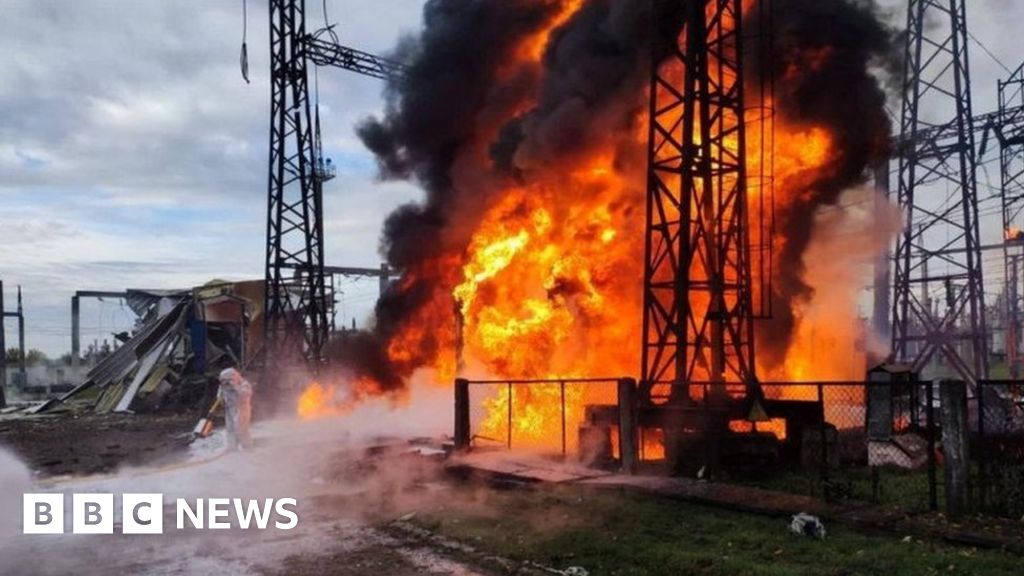
Lebanon Condemns Deadly Israel Strike

The latest Lebanon Israel strike controversy cuts to the heart of a brutal regional reality: even rescue workers are no longer safely outside the blast radius of war. When emergency crews become casualties, the political argument shifts fast – from military necessity to legal accountability, from battlefield claims to questions about whether the rules of war still hold any practical force. Lebanon’s leadership has seized on that shift, denouncing the attack in language designed to resonate far beyond Beirut.
That matters because strikes involving medics, civil defence teams, and first responders tend to become more than another tragic headline. They test how governments frame legitimacy, how militaries justify operations, and how international audiences decide what they are willing to tolerate. For civilians trapped near conflict zones, the consequences are immediate. For the region, every such incident adds pressure to an already combustible standoff.
- Lebanon’s government is framing the attack as a major legal and political issue, not just a battlefield incident.
- The deaths of rescue workers intensify scrutiny on civilian protection under the laws of war.
- This Lebanon Israel strike could deepen diplomatic pressure and sharpen regional instability.
- Attacks on emergency responders carry outsized symbolic and strategic consequences.
Why the Lebanon Israel strike is drawing such fierce condemnation
According to the reported details, an Israeli attack killed three rescue workers, prompting Lebanon’s prime minister to accuse Israel of war crimes. That accusation is not casual rhetoric. It is a deliberate escalation in diplomatic language, meant to push the incident from the realm of military operations into the sphere of international law and public accountability.
There is a reason leaders use that terminology carefully. Claims involving war crimes immediately raise questions about distinction, proportionality, and the protection of noncombatants. If those killed were clearly operating as rescue personnel, the strike becomes politically explosive. Even when facts remain contested in the immediate aftermath, the optics are severe: emergency responders are widely understood as protected actors, and attacks involving them are difficult to defend in the court of global opinion.
When first responders are killed, the incident rarely stays tactical. It becomes a referendum on whether any meaningful red lines still exist.
That is why this story has traction beyond Lebanon and Israel. It speaks to a larger pattern in modern conflict: civilian infrastructure, humanitarian access, and emergency response systems are increasingly caught inside military logic. Once that happens, the damage multiplies. A strike does not just kill the people on site – it can also degrade the system meant to save the next victims.
What makes attacks on rescue workers especially consequential
Protected status changes the legal stakes
Under the laws of armed conflict, medical and rescue personnel are generally afforded special protection, assuming they are not directly participating in hostilities. That principle exists because war, however savage, is supposed to preserve a minimum architecture of humanity. Ambulance crews, medics, and civil defence teams are part of that architecture.
When those workers are struck, several questions follow quickly:
- Were they clearly identified as rescue personnel?
- Was there intelligence suggesting a military target nearby or embedded?
- Was the strike proportionate to the threat?
- Were precautions taken to avoid civilian harm?
Those questions matter because international reaction often depends less on broad narratives and more on whether a government can provide a coherent operational explanation. In high-intensity conflicts, that explanation is often contested immediately.
The humanitarian impact is bigger than the death toll
Three deaths are devastating on their own. But the strategic damage can extend further. Rescue systems in conflict zones are fragile, understaffed, and operating under constant risk. Losing experienced responders means slower evacuations, weaker triage capacity, and more fear among crews who still have to answer the next call.
That creates a chilling effect. If emergency teams begin to believe response missions themselves are becoming targets, response times stretch, coordination deteriorates, and civilians are left even more exposed. In practical terms, one strike can make every later strike deadlier.
The narrative power is enormous
There is also a hard political truth here: images and reports involving rescue workers cut through public fatigue. Audiences that may tune out conventional battlefield updates often react strongly when the dead are medics or civil defence personnel. Governments understand this. So do armed groups. That is why incidents like this rapidly become information battles as much as military ones.
Lebanon’s strategy goes beyond outrage
Lebanon’s prime minister is not only condemning the strike – he is trying to shape the diplomatic frame around it. Calling the attack a war crime serves several strategic purposes at once.
- It internationalizes the incident, inviting scrutiny from foreign governments and multilateral bodies.
- It raises the reputational cost for Israel if the allegation gains traction.
- It reinforces Lebanon’s argument that civilian and humanitarian spaces are under unacceptable threat.
- It pressures international mediators to treat de-escalation as urgent rather than optional.
This is a familiar pattern in modern conflict diplomacy. States that cannot dictate military outcomes directly often compete to define legal and moral legitimacy. The language matters because legitimacy can influence aid flows, mediation efforts, ceasefire pressure, and the broader tolerance of military action among allies and partners.
In conflicts where neither side fully controls the narrative, legal language becomes a strategic weapon.
That does not mean the legal threshold is automatically met because a prime minister says so. It means the accusation itself is part of a larger contest over who gets to define what happened and what consequences should follow.
Why this matters for regional stability
Every cross-border incident raises the floor of risk
The regional danger is not limited to one deadly episode. Each high-profile Lebanon Israel strike raises the baseline risk of wider escalation. Civilian casualties and deaths of responders create public pressure for stronger rhetoric, stronger military posture, or both. That narrows the space for quiet de-escalation.
Even when leaders want to avoid all-out war, repeated incidents produce momentum of their own. Domestic audiences demand answers. Armed actors test boundaries. International partners issue warnings, then struggle to enforce them. The system becomes more brittle with every cycle.
Civilian protection is becoming a strategic fault line
There is another layer here that often gets overlooked. Civilian harm is no longer just a humanitarian concern – it is a strategic variable. High civilian tolls can alter diplomatic relationships, affect military freedom of action, and shift media narratives in ways that outlast any single operation.
For Israel, incidents involving rescue workers intensify scrutiny of targeting practices and operational safeguards. For Lebanon, they strengthen claims that cross-border attacks are violating fundamental protections. For outside powers, they increase pressure to respond, even if only rhetorically.
How readers should evaluate claims in fast-moving conflict coverage
Conflict reporting arrives fast, fragments quickly, and is often shaped by officials speaking before all facts are independently verified. That makes disciplined reading essential.
Focus on these core questions
- Who was hit? Rescue workers, civilians, combatants, or a mixed environment?
- What was the stated target? Was there an alleged military objective?
- What evidence is being offered? Official statements, witness accounts, visual material, or later investigations?
- How consistent is the timeline? Early accounts often change as more information emerges.
A useful mental model is simple:
incident - identification - justification - verification - accountability
If one of those stages is missing, the public picture remains incomplete.
What could happen next after this Lebanon Israel strike
Several pathways are now plausible, and none are especially comforting.
1. Diplomatic escalation
Lebanon may continue pressing the case in international forums, using the deaths of rescue workers to argue for sharper condemnation and stronger pressure on Israel. That would keep the incident alive politically even if battlefield activity moves on.
2. Military signaling without full escalation
The more common regional pattern is calibrated retaliation or intensified warning messages rather than immediate full-scale war. That can include posture shifts, air activity, or public threats designed to restore deterrence without triggering an uncontrollable spiral.
3. Renewed scrutiny of targeting protocols
If incidents involving emergency responders accumulate, pressure grows for clearer procedures around protected sites, emergency vehicle identification, and deconfliction mechanisms. Those systems are imperfect, but when they fail, the consequences are severe.
4. Hardening public opinion
Perhaps the most durable effect is psychological. Repeated reports of responder deaths can harden public attitudes on all sides, making compromise look weaker and retaliation look more justified. That is how tactical incidents become strategic barriers.
The larger lesson from a deadly strike on rescuers
This is what makes the story so significant. The deaths of three rescue workers are not only a tragedy. They are a stress test for the laws of war, for regional diplomacy, and for the credibility of every actor claiming to protect civilians while prosecuting conflict. Once first responders are among the dead, the moral and legal stakes rise sharply.
That is the real weight of this Lebanon Israel strike. It is not just about one government’s condemnation or one military action under dispute. It is about whether humanitarian protections still function when hostilities intensify, and whether violations – alleged or proven – carry consequences meaningful enough to change behavior.
For now, the region gets another grim reminder that escalation is not measured only in missiles fired or borders crossed. Sometimes it is measured in the silence left behind when the people sent to save lives never make it home.
The information provided in this article is for general informational purposes only. While we strive for accuracy, we make no guarantees about the completeness or reliability of the content. Always verify important information through official or multiple sources before making decisions.