London Nakba March Signals Rising Pressure

London Nakba March Signals Rising Pressure
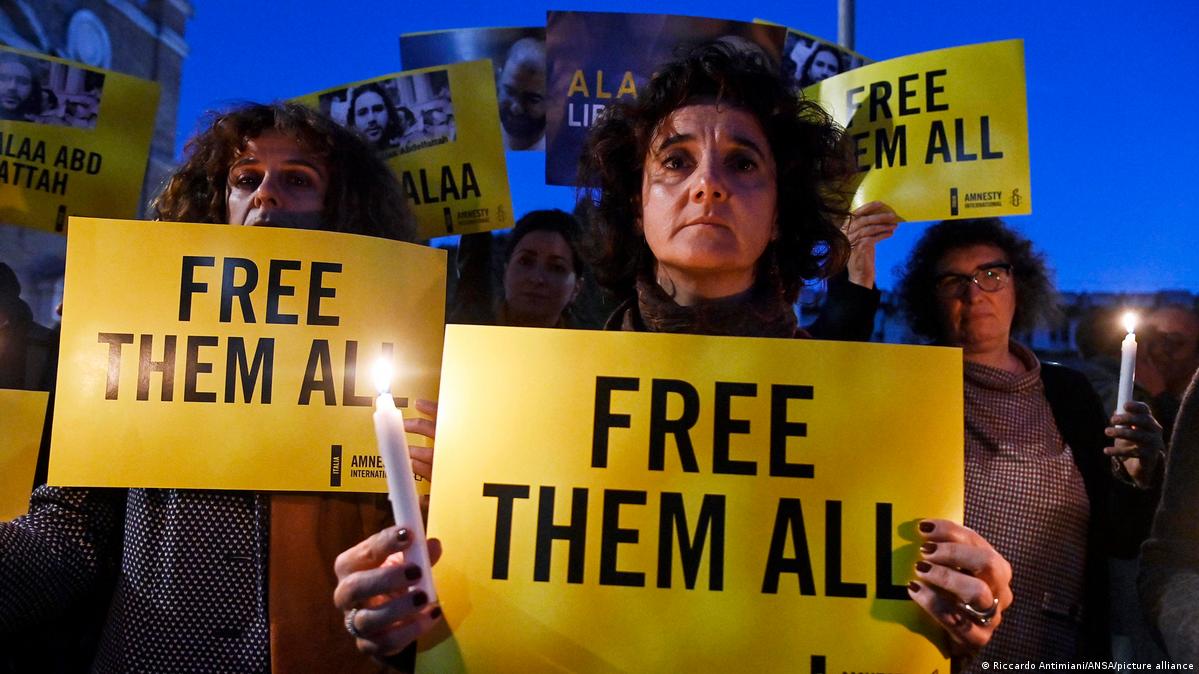
The London Nakba march was not just another weekend protest moving through familiar streets. It was a live measure of public anger, political fatigue, and the widening gap between government messaging and what large parts of the public are willing to tolerate over Gaza and Palestinian displacement. When thousands gather in central London to mark the 78th anniversary of the Nakba, the symbolism matters: memory is being turned into organized pressure. That matters for British politics, for international diplomacy, and for the broader debate over how democracies respond when mass protest becomes persistent rather than episodic. What looks like a march is also a referendum on visibility, accountability, and whether public demonstrations can still bend the policy conversation in an era saturated by crisis.
- Thousands in central London marked the 78th anniversary of the Nakba, turning remembrance into a political statement.
- The London Nakba march reflects sustained public pressure around Gaza, Palestine, and UK policy.
- Large demonstrations now function as both memorial events and strategic media moments.
- The protest signals that grassroots mobilization remains a serious force in shaping political narratives.
Why the London Nakba march matters beyond the crowd size
Marches are often reduced to attendance estimates, route maps, and slogans. That misses the larger story. The Nakba, which refers to the mass displacement of Palestinians during the creation of Israel in 1948, remains one of the most consequential fault lines in modern Middle East politics. An anniversary march in London is therefore never only about history. It is about whose suffering is recognized, whose claims are seen as legitimate, and whether global cities are becoming key arenas for foreign policy pressure.
Central London gives this kind of demonstration a specific political charge. It is not a peripheral gathering tucked away from power. It unfolds in one of the world’s most visible urban stages: near government, media institutions, and international financial and diplomatic networks. That visibility turns a commemorative event into a strategic act.
Big-city protest is not background noise. It is often the fastest way for citizens to force elite institutions to acknowledge that an issue is not fading from public concern.
The timing also matters. Demonstrations tied to Gaza and Palestinian rights have shown unusual staying power compared with many modern protest cycles. What might once have been treated as a single burst of outrage has evolved into repeated mobilization. That persistence changes how officials, parties, and newsrooms evaluate the issue.
The strategic meaning of remembrance in public protest
Anniversary politics can be powerful because they fuse emotion with structure. A date on the calendar gives organizers a built-in moment for turnout, messaging, and continuity. The 78th Nakba anniversary does exactly that. It links present-day outrage to a historical narrative that many protesters believe has never been resolved.
That framing is crucial. Protest movements gain durability when they are not only reactive. If a movement can root itself in memory, identity, and annual ritual, it becomes harder to dismiss as temporary. The London demonstration appears to fit that model: remembrance as infrastructure.
Why anniversaries mobilize people differently
Anniversaries create a few advantages for protest organizers:
- They provide a clear message frame: participants are not only opposing current events but reaffirming a longer historical argument.
- They lower coordination costs: supporters expect annual mobilization, making turnout easier to organize.
- They increase emotional resonance: commemoration can unify people with different immediate priorities.
- They attract broader coalitions: activists, families, students, faith groups, and civil society organizations can all participate under a shared banner.
That coalition effect helps explain why these marches often feel larger than a single-issue rally. They become umbrella events for overlapping grievances: war, displacement, civilian suffering, government silence, and media frustration.
What this says about British politics
The UK has become one of the most closely watched stages for Palestine-related demonstrations outside the Middle East itself. That is partly due to London’s status as a global media capital, but also because British politics is unusually sensitive to public demonstrations that cross generational, ethnic, and class lines.
For elected officials, the challenge is not simply whether to respond, but how. Large and repeated protests create pressure on multiple fronts:
- They test party discipline.
- They sharpen divisions between grassroots supporters and leadership.
- They force local representatives to answer for national and international positions.
- They shape how younger voters judge moral credibility.
The political risk is especially acute when public protest appears sustained rather than symbolic. A one-off rally can be managed. A recurring movement becomes part of the political weather. It influences interviews, parliamentary language, constituency relations, and campaign strategy.
The generational factor
One of the most important subtexts in demonstrations like the London Nakba march is age. Younger voters increasingly expect international issues to be treated as domestic political concerns, especially when human rights, civilian harm, and state accountability are in question. For them, foreign policy is not distant. It is moral, immediate, and highly networked through social media feeds, messaging apps, and live video.
That creates a mismatch with older political playbooks, which often assume public attention will drift. On Palestine, it often has not.
Media optics are now part of protest strategy
No major march today is only a street event. It is also a content event. Organizers understand that aerial shots, crowd images, chants, signs, and police movement all feed a distributed media ecosystem that extends far beyond the people physically present.
That does not make the march less real. It makes it more strategic.
The visual logic is simple: numbers matter, but so does composition. A protest that includes families, older participants, youth groups, religious communities, and broad civic representation sends a different signal than a narrow activist bloc. It suggests legitimacy, durability, and social breadth.
The modern protest succeeds twice or not at all: once on the street, and once in the battle over how the street is interpreted.
This is why route, timing, banners, and speaker moments matter so much. The goal is not just to gather people. It is to produce a coherent public image of moral seriousness and democratic participation.
The London Nakba march and the politics of persistence
Persistence is what gives demonstrations their leverage. Governments can wait out outrage. They struggle more when protest becomes ritualized, disciplined, and visible over time. The London Nakba march points to that second model.
There are at least three reasons persistence matters here.
1. It keeps the issue in public view
News cycles move quickly. Repeated marches interrupt that drift. They reinsert Palestine and Gaza into national discussion, even when institutions would prefer to move on.
2. It builds movement memory
Each protest teaches organizers what works: turnout logistics, stewarding, message discipline, coalition building, and media handling. Over time, that produces more resilient civic infrastructure.
3. It changes the cost of political silence
When large crowds continue to appear, saying little becomes its own statement. Officials may still choose caution, but the public cost of caution rises.
This is where demonstrations can shape politics without immediately changing policy. They alter the baseline of expectation. They make some forms of neutrality harder to sustain.
What protesters are really contesting
At one level, the march commemorates a historic injustice. At another, it contests a hierarchy of recognition. Protesters are effectively arguing that Palestinian suffering cannot be treated as peripheral, temporary, or too politically inconvenient to name clearly.
That challenge is aimed at several audiences at once:
- Governments: to take stronger or clearer positions.
- Media institutions: to avoid flattening historical context.
- The public: to sustain attention rather than consume tragedy passively.
- Civil society: to translate sympathy into organization.
This layered messaging is one reason these marches remain potent. They are not asking only for awareness. They are demanding a shift in what counts as acceptable public language and acceptable political inaction.
Why this matters globally
London is local, but the signal is transnational. Demonstrations in major capitals often echo across activist networks, diaspora communities, student groups, and advocacy organizations. A large turnout in one city can encourage action in another. It can also reassure participants elsewhere that they are part of something larger than a local rally.
That feedback loop matters because the Palestine issue is unusually globalized. It is discussed not only in diplomatic forums and conflict reporting, but in municipal politics, campus organizing, labor activism, arts institutions, and faith communities. A march in central London therefore operates as both a British political event and a node in a much wider movement ecosystem.
Pro Tip for reading protest moments
Do not evaluate a demonstration only by asking whether it changed policy the next day. A better framework is to ask whether it changed narrative momentum, coalition strength, and the reputational pressure facing institutions. Those shifts often come first. Policy follows later, if it follows at all.
The bigger question for policymakers
The core question raised by the London Nakba march is not whether protests are disruptive. Of course they are. The real question is whether policymakers can afford to treat repeated mass demonstrations as symbolic release valves rather than evidence of an unresolved legitimacy problem.
When people keep returning to the streets, they are usually saying one of two things: either they have not been heard, or what they heard back was not credible. Neither message is politically comfortable. Both are important.
For Britain, this creates a test of democratic responsiveness. Officials do not have to agree with every demand made in a march. But they do have to recognize what sustained turnout signals: the issue has moved beyond activist margins and into a broader public conscience.
That is why the 78th Nakba anniversary march matters. Not because a single demonstration settles anything, but because it shows the argument is alive, organized, and increasingly difficult to sideline. In a crowded crisis era, attention is power. The people marching in central London know that. The question is whether the institutions watching them understand it too.
The information provided in this article is for general informational purposes only. While we strive for accuracy, we make no guarantees about the completeness or reliability of the content. Always verify important information through official or multiple sources before making decisions.