Mahmoud Khalil Challenges Columbia
Mahmoud Khalil Challenges Columbia
Campus politics just crossed into a far more consequential arena: the courts. The Mahmoud Khalil lawsuit against Columbia University is not merely another chapter in the culture war over Israel, Palestine, and student protest. It is a direct challenge to how elite universities respond when speech, identity, safety, immigration pressure, and institutional reputation collide. For students who believe their schools protect donors and headlines before people, this case lands like a warning flare. For universities, it is a test of whether polished commitments to inclusion survive when the politics get radioactive.
- Mahmoud Khalil has filed a
discrimination lawsuitaccusing Columbia of failing to protect him and other Palestinian voices. - The case reflects a broader national reckoning over campus protest,
free speech, and unequal enforcement of school rules. - Columbia faces scrutiny over whether its actions matched its public commitments to student safety and fairness.
- The outcome could influence how universities handle politically sensitive activism in the years ahead.
The Mahmoud Khalil lawsuit puts Columbia on trial beyond the courtroom
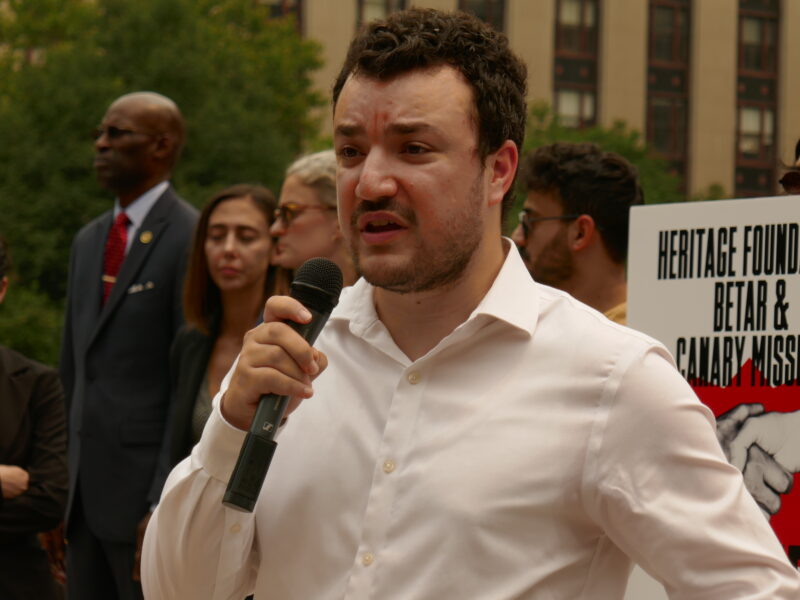
Mahmoud Khalil, a prominent Palestinian student activist connected to Columbia’s protest movement, says the university failed him. His claim, according to the source report, is blunt: Columbia did not care. That phrase is devastating because it targets the heart of the modern university brand. Columbia, like its peers, sells more than education. It sells belonging, protection, prestige, and a promise that students can think dangerously without being treated as disposable.
The lawsuit reportedly alleges discrimination and institutional neglect amid the backlash surrounding pro-Palestinian organizing. That matters because campus disputes are often framed as noisy clashes between activists and administrators. A lawsuit changes the frame. It asks whether specific decisions, omissions, investigations, suspensions, public statements, and security choices created unequal treatment.
The core question is not whether Columbia liked Khalil’s politics. The sharper question is whether Columbia applied its own standards evenly when those politics became inconvenient.
This is where the case becomes bigger than one student. Universities have spent years writing expansive policies on harassment, discrimination, equity, and student conduct. Those policies can become liabilities when students argue that administrators enforced them selectively. If Palestinian, Arab, Muslim, or anti-war students can show they were left exposed to intimidation or disciplined more aggressively than others, the institution has a problem that no press release can fix.
Why the Mahmoud Khalil lawsuit resonates now
The timing is not incidental. Since the war in Gaza intensified global outrage and polarization, US campuses have become pressure cookers. Student encampments, building occupations, police interventions, congressional hearings, donor pressure, and disciplinary crackdowns have turned universities into stages for national politics. Columbia has been one of the most visible examples.
That visibility cuts both ways. Supporters of strict enforcement argue universities must prevent disruption, antisemitism, threats, and intimidation. Critics counter that schools have treated pro-Palestinian advocacy as uniquely dangerous, collapsing political speech into misconduct and leaving some students vulnerable to public targeting.
Khalil’s case appears to live inside that tension. It is not just about whether one activist was mistreated. It is about whether Columbia’s governance model broke under pressure from donors, politicians, media attention, and federal scrutiny.
Universities are learning that neutrality is not a shield
Administrators often claim they are simply following policy. But policy is not neutral if it is enforced unevenly. A school can have a beautifully written code of conduct and still create an unequal environment through selective investigations, inconsistent discipline, vague warnings, or silence when students are targeted.
That is the hidden risk for Columbia. The lawsuit forces a factual review of choices that may have seemed tactical in the moment. Who received protection? Who received scrutiny? Which complaints moved quickly? Which complaints stalled? Which students were publicly condemned? Which harms were minimized?
Pro Tip for university leaders: in politically charged cases, documentation is not bureaucracy. It is survival. If administrators cannot show consistent processes, clear timelines, and equal application of rules, they should expect litigation to fill the gaps.
The free speech trap elite schools built for themselves
Elite universities want to be seen as guardians of debate, but they also function as risk-managed institutions with donors, trustees, political relationships, and reputational exposure. That contradiction is now impossible to hide.
When protests are abstract, campuses celebrate dissent. When protests anger powerful constituencies, schools often reach for discipline. The problem is not that universities enforce rules. They should. The problem is that enforcement can look suspiciously flexible depending on whose speech is being challenged.
A campus cannot market itself as a laboratory for hard ideas and then panic when students test that promise in public.
The Khalil lawsuit points toward a larger crisis in academic governance. Students increasingly understand that policy language can be weaponized. Terms like harassment, safety, disruption, and bias are necessary, but they can also become elastic. If an institution stretches them in one political direction more than another, it invites accusations of viewpoint discrimination.
The immigration and activism overlay raises the stakes
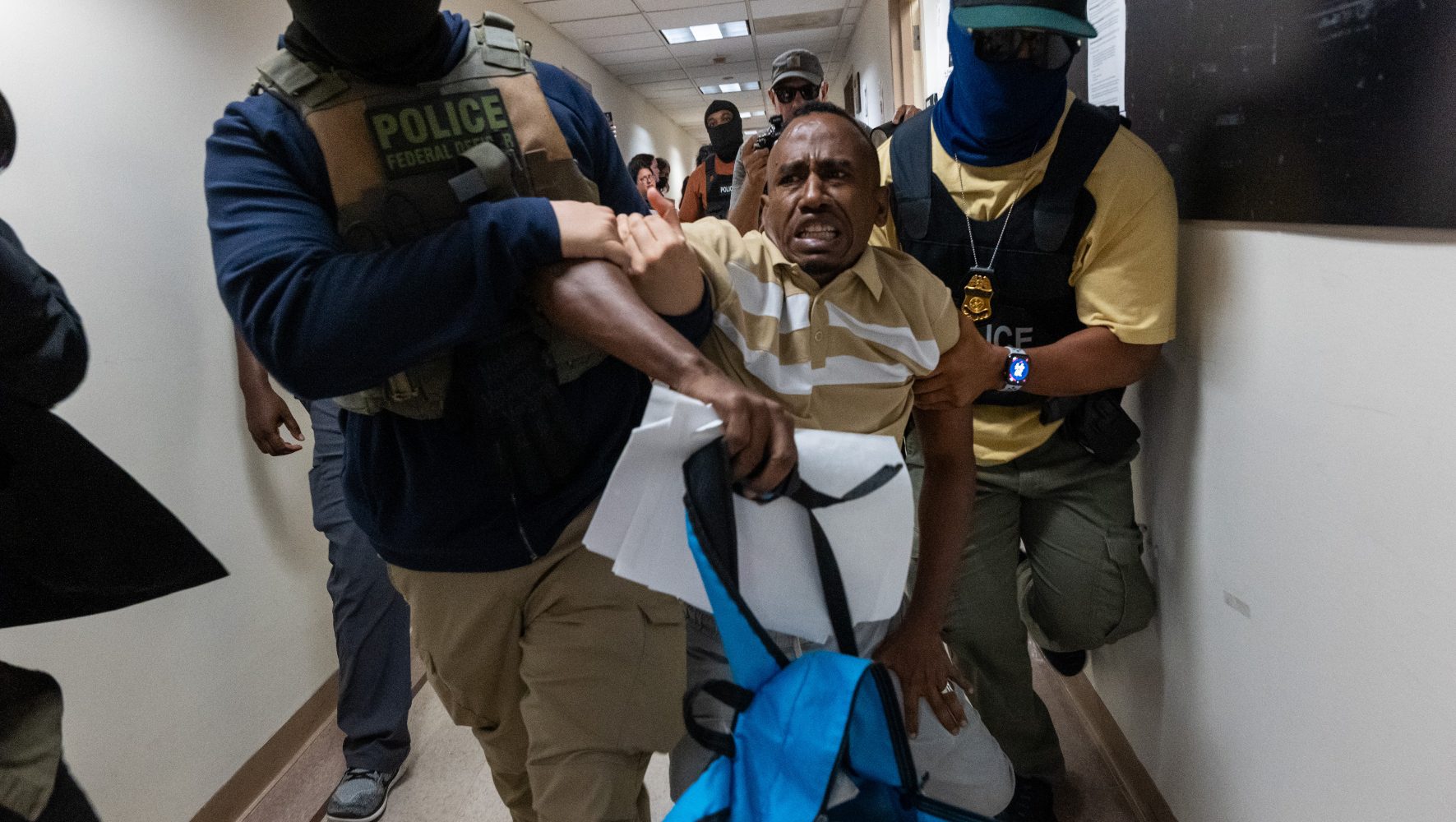
Khalil’s case also carries an additional layer because pro-Palestinian activism in the US has intersected with immigration enforcement, visa anxiety, and political demands to punish foreign students. Even when a university is not directly responsible for government action, its posture toward vulnerable students matters. Silence can be read as abandonment. Cooperation can be read as complicity. Delay can be read as disregard.
For international students and students from targeted communities, the message sent by institutional behavior can be chilling. If activism appears to threaten academic standing, housing, immigration status, or personal safety, speech is not truly free in practice. It becomes a privilege reserved for those with the least to lose.
What Columbia must answer now
The most important questions are not rhetorical. They are operational, and they are exactly the kind of questions legal discovery is built to pursue.
- Did Columbia respond to complaints from Palestinian or pro-Palestinian students with the same urgency it showed in other discrimination cases?
- Were disciplinary rules applied consistently across different protest groups and political positions?
- Did administrators document threats, doxxing, harassment, or public targeting in a way that matched university policy?
- Were public statements crafted to protect students, or primarily to protect the institution?
- Did outside pressure influence internal decisions about protest, punishment, or communication?
These questions matter because institutional intent is often hard to prove, but institutional pattern is not. If the record shows unequal treatment, Columbia’s defenses become harder. If the record shows consistent application of policy, the university has a stronger argument. Either way, the case may reveal how power actually moved behind closed doors during one of the most volatile periods in recent campus history.
Why this matters far beyond Columbia
The lawsuit arrives at a moment when universities are being squeezed from every direction. Politicians want control over campus speech. Donors want influence. Students want safety and moral clarity. Faculty want academic freedom. Administrators want the news cycle to move on. Courts are increasingly being asked to decide what campus governance could not resolve.
That is a dangerous place for higher education. Courts can address rights and responsibilities, but they cannot rebuild trust inside a university community. If students believe their institution will protect them only when their identity or politics are convenient, the civic mission of the university weakens.
For Columbia, the reputational risk is acute. The school is not just defending against allegations. It is defending its claim to be a serious institution capable of principled leadership under pressure. That is a much harder case to win in the court of public opinion.
The next playbook for student activists
Expect this case to influence how activists organize. Students will likely document more, communicate more strategically, preserve messages, file formal complaints earlier, and treat university policy as both shield and evidence. Protest movements are becoming legally literate because they have to be.
Universities should expect the same sophistication from all sides. A vague warning email, an inconsistent suspension, or a delayed response to harassment can become part of a legal narrative. The era of improvisational crisis management is ending.
The bottom line on the Mahmoud Khalil lawsuit
The Mahmoud Khalil lawsuit is powerful because it challenges the gap between what universities say and what students experience. Columbia may argue that it acted appropriately during an extraordinarily difficult moment. Khalil is arguing that the difficulty of the moment exposed a deeper failure.
Both things can be partially true. Campus leaders faced real security, speech, and community challenges. But difficulty does not excuse unequal care. If anything, high-pressure moments are when institutional values matter most.
The defining issue is not whether Columbia could avoid conflict. It is whether Columbia could remain fair when conflict became unavoidable.
Whatever the legal outcome, this case should unsettle every major university. The next campus crisis will not be judged only by statements, task forces, or disciplinary announcements. It will be judged by records, timelines, policies, and the lived reality of students who asked for protection and say they did not receive it.
The information provided in this article is for general informational purposes only. While we strive for accuracy, we make no guarantees about the completeness or reliability of the content. Always verify important information through official or multiple sources before making decisions.