Mall Plot Shakes Minnesota Politics
Mall Plot Shakes Minnesota Politics
A terror scare at one of America’s most recognizable shopping centers is no longer just a law enforcement story. It is becoming a political stress test. The alleged Mall of America terror plot has injected public safety, immigration scrutiny, and national security into Minnesota’s already combustible Senate conversation. For voters, the issue is brutally practical: can public officials keep high-traffic civilian spaces safe without turning every mall, airport, and event venue into a fortress? For candidates, the stakes are even sharper. The episode gives Republicans a powerful attack line and forces Democrats to defend not just policy choices, but the public’s sense of security. That is why this story matters beyond one alleged plot. It sits at the intersection of counterterrorism, border politics, local policing, and the 2026 campaign map.
- The alleged Mall of America terror plot is now a campaign issue in Minnesota’s Senate race.
- Republicans are framing the case around public safety and immigration enforcement, while pressing Democrats for accountability.
- Large civilian venues remain difficult security challenges because they are open, crowded, and symbolically powerful.
- The political impact may depend on trust: whether voters believe officials are preventing threats or minimizing them.
Why the Mall of America Terror Plot Became Political Fast
The Mall of America is not just a shopping center. It is a regional landmark, a tourism engine, and a symbol of ordinary public life. That is why any alleged threat against it lands differently from a routine criminal case. A plot involving a place designed for families, travelers, and workers immediately raises the public’s threat perception.
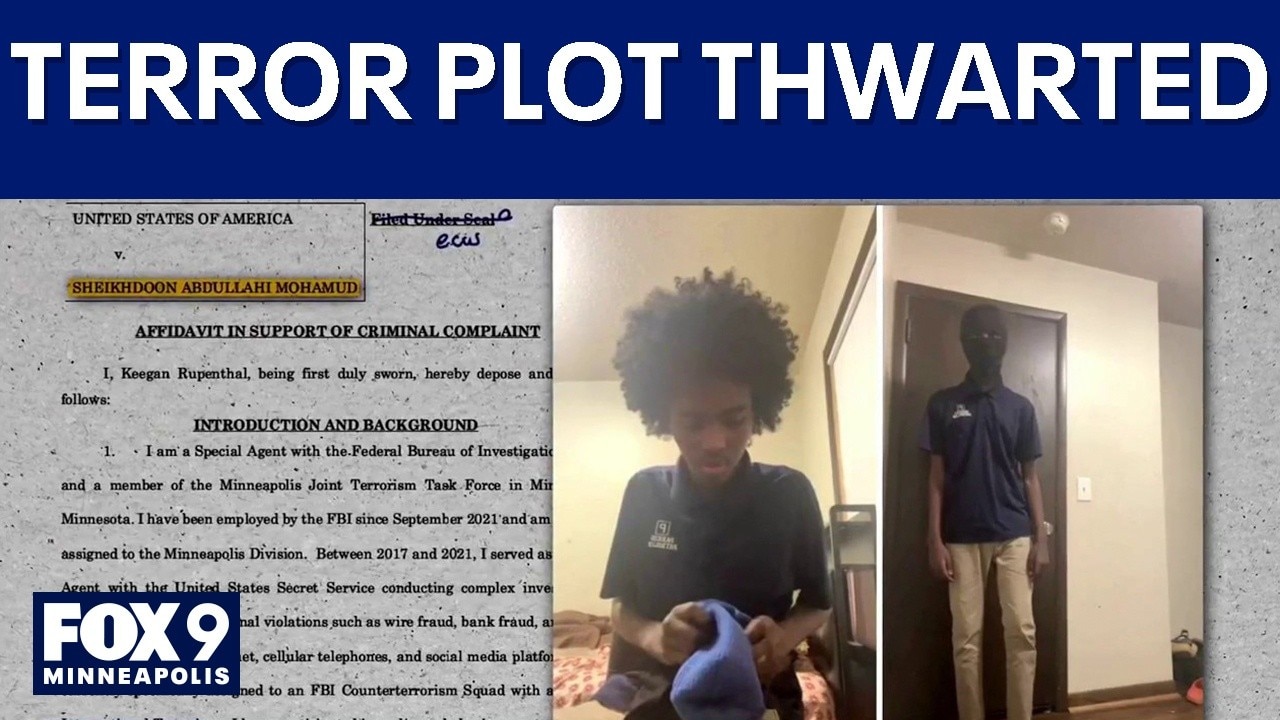
According to the reported allegations, authorities thwarted a plot connected to the Mall of America, and a Republican Senate hopeful quickly sounded the alarm. The political message is straightforward: if a major civilian target was allegedly in danger, then public officials must answer for the policies that may have allowed the risk to emerge.
When a threat touches a landmark civilian space, the politics become inseparable from the security question. Voters do not just ask what happened. They ask who failed, who acted, and who can be trusted next time.
That framing is potent because it moves the debate from abstraction to proximity. Border security, immigration vetting, terrorism watchlists, local policing, and federal coordination can sound remote until the location is familiar. The political power of the alleged Mall of America terror plot is that it makes national security feel local.
The Republican Argument on the Mall of America Terror Plot
The GOP line is likely to be aggressive and simple: Democratic leadership has been too lax on public safety and immigration enforcement, and the public is paying the risk premium. In a Senate race, that argument is designed to do two things at once. First, it energizes conservative voters who already prioritize border and crime issues. Second, it pressures independents and suburban voters who may not identify as hardline but do worry about safety in public spaces.
Republican candidates often benefit when the conversation shifts from legislative process to visceral risk. A thwarted plot gives them a concrete example to cite in debates, ads, and fundraising emails. It also lets them argue that federal policy failures can have consequences far from the southern border or Washington, D.C.
The Core GOP Message
- Public safety should be the first duty of government, not a secondary concern.
- Immigration and vetting systems must be judged by outcomes, especially when national security is implicated.
- Local communities should not carry the burden of federal enforcement failures.
- High-profile targets require stronger intelligence coordination between federal, state, and local agencies.
That message is politically effective because it compresses multiple anxieties into one story. Crime, terrorism, border security, and distrust of institutions all become part of a single narrative. Whether voters accept that narrative depends on the facts that emerge and how clearly officials communicate what they knew, when they knew it, and how the plot was stopped.
Public Safety Versus Political Overreach
There is a real danger here for both parties. Republicans can overplay the politics if they appear to exploit fear before the facts are fully understood. Democrats can underplay the concern if they respond with procedural language while voters are thinking about families walking through a mall.
The smarter debate is not whether the public should be worried. People are worried. The real question is what level of policy response is justified and effective. Security theater is easy. Effective counterterrorism is harder. It requires intelligence sharing, credible community reporting channels, trained local law enforcement, and careful attention to civil liberties.
The uncomfortable truth is that open societies create soft targets. The answer cannot be panic, but it also cannot be denial.
For Minnesota leaders, the challenge is to reassure without minimizing. Voters can tolerate risk when they believe institutions are competent. They become angry when they sense evasiveness, blame-shifting, or partisan reflexes substituting for answers.
Why Soft Targets Remain America’s Security Problem
Shopping malls, transit hubs, schools, houses of worship, stadiums, and entertainment districts are difficult to secure because they are built around access. A location like the Mall of America has enormous foot traffic and many entry points. That openness is part of its economic and cultural value.
Security professionals often refer to these as soft targets: places that are publicly accessible and difficult to harden without disrupting daily life. The policy dilemma is obvious. Add too little security, and officials look negligent. Add too much, and the public space starts to feel militarized.
What Stronger Venue Security Can Look Like
- Visible deterrence, including trained security teams and coordinated police presence.
- Behavioral threat assessment focused on suspicious activity rather than broad profiling.
- Emergency response drills involving mall management, tenants, police, fire, and medical teams.
- Real-time communication protocols that reduce confusion during fast-moving incidents.
- Intelligence sharing between local authorities and federal agencies when credible threats emerge.
None of these steps guarantees prevention. But layered security can reduce risk and improve response times. The key is competence, not spectacle.
How Immigration Enters the Debate
The reported political reaction to the alleged plot also reflects a broader Republican strategy: tie national security incidents to immigration policy wherever the facts permit. That strategy has intensified as border crossings, asylum backlogs, and vetting concerns remain major national issues.
For Democrats, the danger is being trapped into a defensive posture. If they talk only about compassion, process, or legal complexity, they may miss the public’s primary question: are dangerous people being identified and stopped? If they talk only about enforcement, they risk alienating core supporters who want a humane system.
The serious policy conversation sits in the middle. The United States needs an immigration system that is orderly, enforceable, and capable of distinguishing legitimate claims from security risks. That requires functioning databases, interagency coordination, timely court processing, and credible removal procedures for people who do not qualify to remain.
Pro Tip for readers watching the politics: separate the allegation from the system-level question. One case does not prove an entire system is broken. But one case can expose weak points that officials should not ignore.
What This Means for the Minnesota Senate Race
Minnesota is not usually framed as the center of national security politics, which is exactly why this issue could cut through. Senate races are often shaped by inflation, health care, abortion, presidential approval, and candidate quality. But a public safety scare can reorder the conversation quickly, especially if it becomes part of a broader pattern voters already believe they see.
For a GOP Senate hopeful, the alleged Mall of America terror plot provides a way to nationalize the race. The candidate can argue that Minnesota’s security depends on federal decisions about immigration, law enforcement funding, and counterterrorism priorities. That is a classic Senate campaign move: connect local anxiety to Washington power.
For Democrats, the response must be sharper than accusing Republicans of fearmongering. They need to show command of the facts, support for law enforcement, and a credible plan for preventing similar threats. If they do that, they can blunt the attack. If they appear dismissive, the issue could harden into a damaging trust gap.
The Voter Groups to Watch
- Suburban parents who may respond strongly to threats involving family-friendly public spaces.
- Independent voters who dislike partisan escalation but prioritize competence and safety.
- Law-and-order conservatives who see the case as validation of their concerns.
- Immigrant communities who may fear broad suspicion or political scapegoating.
- Business owners and workers who depend on safe public commerce and tourism.
The Media Dynamic Is Part of the Story
High-profile threat stories are uniquely vulnerable to distortion. Early reporting can be incomplete. Political reactions can outrun confirmed details. Social media can turn allegations into certainty before a court process unfolds. That makes editorial discipline essential.
At the same time, officials should not hide behind caution to avoid accountability. The public deserves clear information about the nature of the alleged threat, how it was detected, what agencies were involved, and whether any policy failure contributed to the situation. Transparency is not optional when the target is a public landmark.
Trust is built when leaders communicate uncertainty honestly while still showing that someone is in control.
The worst outcome would be a vacuum. In the absence of credible information, partisan narratives fill the space. That is how a security incident becomes a political weapon before the public understands what actually happened.
Why This Matters Beyond Minnesota
The alleged Mall of America terror plot taps into a national question that neither party has fully solved: how does a free society protect open spaces in an era of decentralized threats? The challenge is not limited to one ideology, one border, or one state. It includes online radicalization, lone-actor risk, international extremist movements, mental health breakdowns, and gaps in intelligence coordination.
That complexity does not make the political debate irrelevant. Elections decide who controls oversight, funding, agency priorities, and immigration law. But voters should be wary of anyone offering a one-slogan solution. Security policy is not built from outrage alone.
The most credible leaders will be the ones who can hold two ideas at once: the public deserves aggressive protection from credible threats, and policy must be grounded in facts rather than panic. That balance is difficult, but it is the standard voters should demand.
The Bottom Line on the Mall of America Terror Plot
The alleged Mall of America terror plot is now more than a criminal allegation. It is a flashpoint in the fight over public safety, immigration, and political trust. Republicans see an opening to argue that national security failures are reaching into everyday American life. Democrats face pressure to prove that their approach can be both humane and hard-nosed.
For voters, the immediate issue is simpler: they want to know that public spaces are safe, threats are taken seriously, and leaders are not spinning before they are solving. That is the test Minnesota politicians now face. The campaign will move on to other issues, but the anxiety behind this one is not going away.
The information provided in this article is for general informational purposes only. While we strive for accuracy, we make no guarantees about the completeness or reliability of the content. Always verify important information through official or multiple sources before making decisions.