Measles Outbreak Rewrites the Vaccine Debate
Measles Outbreak Rewrites the Vaccine Debate
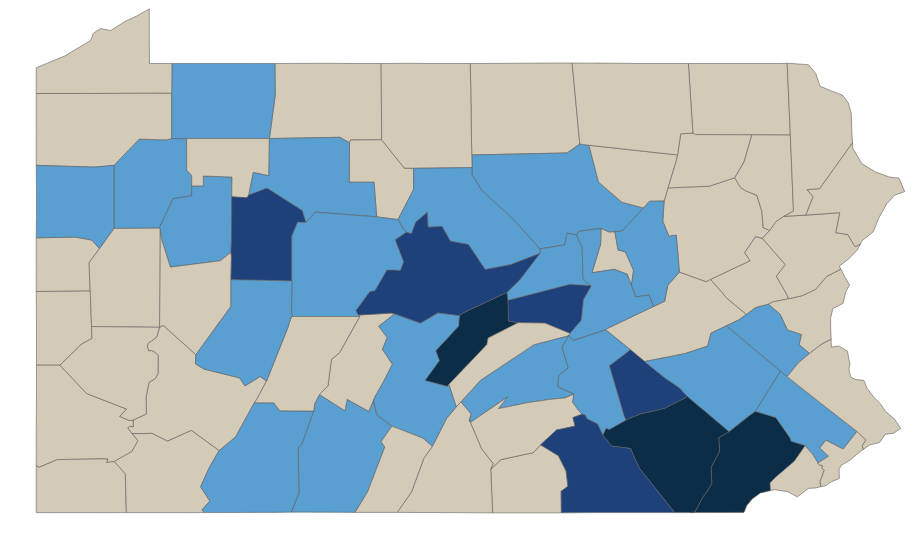
Measles is back in the uncomfortable way public health officials feared most: not as a memory, but as a live crisis forcing hospitals, schools, and families to confront the cost of vaccine hesitation. A Pennsylvania outbreak has made that reality harder to ignore, especially as preventable diseases find room to spread when confidence in immunization weakens. The stakes are bigger than one state or one cluster of cases. When a virus as contagious as measles gains traction, it exposes the fragile seams in community protection, the consequences of mixed messaging, and the speed at which public doubt can become a public health problem. For parents, the question is immediate. For officials, it is structural. And for a country still debating vaccine trust, the outbreak is a warning shot.
- Measles remains one of the most contagious viruses, and small coverage gaps can trigger fast-moving outbreaks.
- The Pennsylvania outbreak highlights how vaccine hesitation and delayed response can amplify risk.
- Public health systems depend on high vaccination rates, not just treatment after exposure.
- The political tone around vaccines matters because it shapes whether communities act early or wait too long.
Why the measles outbreak in Pennsylvania matters now
The phrase measles outbreak in Pennsylvania sounds local, but the lesson is national. Measles spreads with alarming efficiency, often before people realize they have been exposed. That makes it a brutal test of modern public health, where communities may assume a disease has been defeated simply because it is not constantly visible. It has not been defeated. It has been held back by immunization, surveillance, and rapid containment.
When vaccination rates dip, measles takes advantage immediately. Schools, daycare centers, waiting rooms, and transit systems can become transmission channels in a matter of days. That is why outbreaks like this carry significance beyond case counts. They reveal whether a community still has enough immunity to protect newborns, immunocompromised patients, and people who cannot be vaccinated. They also reveal how prepared public agencies are to communicate clearly before fear becomes confusion.
Measles does not need a dramatic opening. It only needs enough unprotected people in the same place at the same time.
How measles exploits vaccine gaps
Measles is not just contagious. It is one of the most efficient spreaders in infectious disease. A person infected with measles can release the virus through coughs, sneezes, and even shared airspace after they leave a room. That means a short encounter can still become a real exposure. For public health experts, that is what makes measles different from many other infections: the threshold for community protection is high, and the margin for error is tiny.
Why herd immunity is doing heavy lifting
Measles prevention relies on very high vaccine coverage. The MMR vaccine, which protects against measles, mumps, and rubella, has long been one of the most effective tools in medicine. But it only works at the population level if enough people receive it. When coverage slips, the virus finds pockets of vulnerability. One under-vaccinated school district, one community with access problems, or one cluster of hesitant families can be enough to create an outbreak.
This is where the broader policy debate gets real. Vaccine skepticism is often framed as a personal choice, but infectious disease does not stay personal. It spreads across households and institutions, and it punishes the people least able to absorb the risk. Infants, pregnant people, and immunocompromised patients can face outsized danger when herd immunity weakens.
Why hesitation is not a neutral position
In public health, delay is a decision. Waiting to vaccinate, waiting to isolate, or waiting for clearer guidance can all widen the response window for the virus. Measles rarely rewards hesitation. If anything, it converts indecision into exposure. That is why officials tend to push fast outreach during outbreaks: not because they are being alarmist, but because the math is unforgiving.
For families, the practical takeaway is simple. If a child is eligible for the MMR vaccine and not fully vaccinated, the time to act is before an outbreak hits the neighborhood. Once measles is circulating nearby, the conversation becomes far more urgent and far more difficult.
The public health response has to be faster than the rumor mill
Modern outbreaks do not unfold in a vacuum. They unfold in a media environment where misinformation can move almost as quickly as the virus itself. That is one reason measles outbreaks often become political flashpoints. When public figures cast doubt on vaccines or imply that immunization is optional in a broader sense, the result can be measurable. Confidence erodes. Parents hesitate. Clinics spend more time correcting myths and less time delivering protection.
That dynamic matters in Pennsylvania and beyond. If health agencies cannot communicate clearly, the vacuum gets filled by speculation. If elected leaders send mixed signals, local health departments have to do double duty: disease control and trust repair. The latter is much harder, and it often comes too late.
The hardest part of outbreak response is not the science. It is convincing people to believe the science fast enough to matter.
What officials usually do next
During a measles outbreak, public health teams typically focus on contact tracing, exposure notifications, vaccination clinics, and guidance for schools and healthcare facilities. They may also recommend isolation for infected individuals and post-exposure vaccination for some close contacts. These steps are not glamorous, but they are the difference between a contained cluster and a longer-running outbreak.
Strong response depends on three things: speed, clarity, and reach. Health departments need accurate case reporting. Families need simple instructions. Providers need enough vaccine supply and a clear playbook. If any one of those pieces breaks, the virus benefits.
What parents and caregivers should do now
For readers trying to turn headlines into action, the next move is practical. Start with vaccination status. If children or adults are missing doses of the MMR vaccine, make the appointment now rather than waiting for a school notice or a direct exposure alert. If you are unsure about records, ask a pediatrician, pharmacist, or primary care provider to verify them. In outbreak conditions, uncertainty is not a harmless administrative problem. It can become a health risk.
- Check immunization records for every household member.
- Confirm whether your child has received both recommended
MMR vaccinedoses. - Ask about exposure guidance if your school, workplace, or childcare center reports a case.
- Watch for symptoms such as fever, cough, runny nose, red eyes, and rash.
- Avoid public settings if a clinician advises isolation or observation after exposure.
There is also a communication step that matters more than people think. If your family is traveling, visiting relatives, or attending large gatherings, make sure your vaccination status is current beforehand. Measles does not respect convenience. It exploits it.
Pro tip: use the outbreak as a calendar reset
If you are already overdue for routine care, treat a measles alert as a reminder to update the entire household’s preventive health checklist. That can include school-required immunizations, annual checkups, and records needed for childcare or travel. A few minutes of paperwork can eliminate a lot of future panic.
Why this outbreak is bigger than one virus
The Pennsylvania outbreak is also a case study in how fragile confidence can be. Public health success is often invisible. When vaccines work, nothing happens. That silence can be misread as proof that the threat was overstated. Then coverage slips, cases appear, and the system has to explain why a seemingly old disease is suddenly causing modern disruption.
This is why measles remains such a powerful signal. It measures not just immune coverage, but social trust. It reveals whether communities believe in preventive care, whether leaders support science consistently, and whether institutions can act before a problem becomes an emergency. If measles is circulating, something else is circulating too: doubt.
That should concern policymakers. It should also concern employers, schools, and healthcare systems, all of which depend on predictable health behavior. Every outbreak imposes costs: missed work, cancelled classes, strained clinics, and public anxiety. Those costs are preventable, which is what makes them so frustrating.
The policy question is no longer theoretical
At some point, every measles outbreak pushes the same uncomfortable question to the surface: how much preventable illness are communities willing to tolerate before vaccine confidence is treated as a public infrastructure issue? The answer cannot be limited to personal preference or political branding. Immunization is one of the clearest examples of an individual action with collective consequences.
That means schools need stronger verification systems. Health agencies need faster outreach tools. Policymakers need to support consistent messaging instead of amplifying doubt for short-term gain. And the healthcare system needs to make vaccination easier, not harder, to access.
There is a reason measles still scares epidemiologists. It is not because the science is mysterious. It is because the solution is known, effective, and still vulnerable to human behavior.
The bottom line
The Pennsylvania measles outbreak in Pennsylvania is a reminder that old diseases return when public systems lose focus. Measles does not need a dramatic resurgence to cause damage. A small coverage gap, a hesitant family, or a delayed response can be enough. The way out is not complicated, but it does require discipline: vaccinate on time, communicate clearly, and treat prevention as urgent rather than optional. That is what keeps a local outbreak from becoming a larger national lesson.
The information provided in this article is for general informational purposes only. While we strive for accuracy, we make no guarantees about the completeness or reliability of the content. Always verify important information through official or multiple sources before making decisions.