Mediterranean Reframes Migration Debate
Mediterranean Reframes Migration Debate
The Mediterranean is no longer just a body of water on a map. It is a pressure test for Europe, a graveyard for broken policy, and a stage where migration, security, and diplomacy collide in public view. The phrase “bridge not a barrier” sounds simple, even hopeful, but it lands in a region where borders are hardened, rescue politics are weaponized, and every crossing carries geopolitical weight. For governments, the real problem is not whether people will move. They will. The problem is whether the region can build a framework that treats movement as a reality to manage rather than a threat to exploit. That tension sits at the center of the Mediterranean debate, and it is why this story matters far beyond the shoreline.
- The Mediterranean is now a frontline for migration policy, not just a transit route.
- Security-first responses often deepen the humanitarian and political crisis.
- Any durable solution will require cooperation across Europe, North Africa, and the Middle East.
- The biggest risk is policy inertia disguised as toughness.
Why the Mediterranean Is a policy fault line
The Mediterranean migration crisis has become shorthand for a much broader failure: states want control, but they do not want the political cost of humane, orderly migration systems. That mismatch creates the recurring cycle we see now – spikes in arrivals, emergency meetings, tough language, and short-term deals that delay the next shock instead of preventing it.
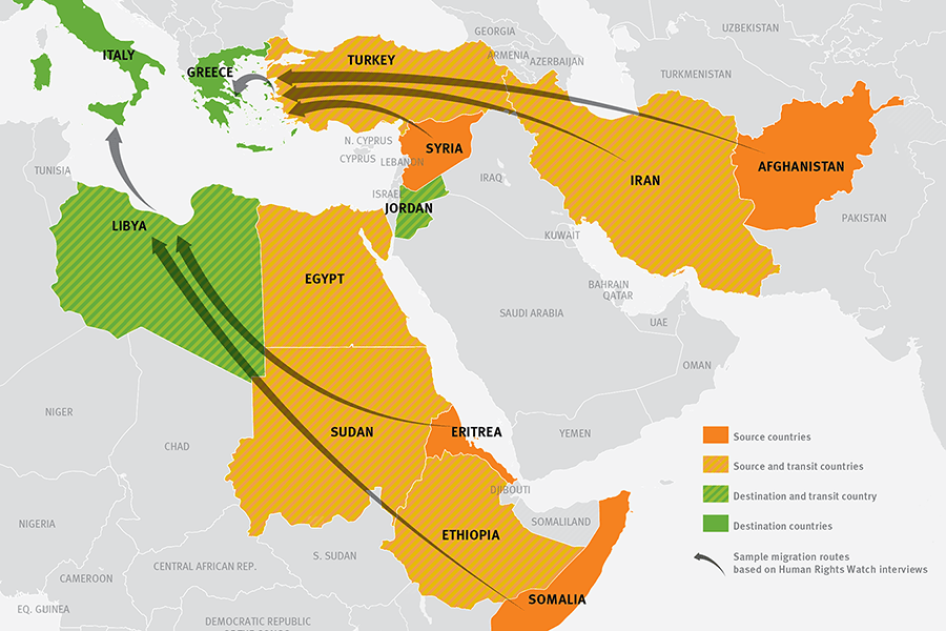
What makes the Mediterranean especially volatile is that it is not one border. It is a chain of jurisdictions, coastlines, search-and-rescue zones, and contested responsibilities. People leaving conflict, poverty, climate stress, or failed governance do not stop at national lines, but political responses still do. That is why the region keeps producing the same headlines and the same failures.
“The Mediterranean is not a border problem alone. It is a governance problem, a humanitarian problem, and a strategic problem all at once.”
The Mediterranean migration crisis and the politics of fear
Politicians often frame migration as an emergency because emergencies justify extraordinary measures. That approach plays well domestically, especially when voters are anxious about housing, jobs, identity, or public services. But the politics of fear comes with a cost: it narrows the policy menu until only deterrence remains.
Deterrence can slow crossings in the short term. It cannot solve the upstream drivers that push people to move. Nor can it create legitimacy for governments that outsource responsibility to third countries, criminalize rescuers, or turn asylum into a procedural maze. The result is a system that is tough in rhetoric and fragile in practice.
There is also a deeper contradiction. European states rely on migration in labor markets, aging economies, and demographic renewal, yet they struggle to say that publicly. So the system sends mixed signals: needed, but unwelcome; managed, but not welcomed; tolerated, but never normalized. That ambiguity feeds dysfunction.
What “bridge not a barrier” really means
The bridge metaphor is powerful because it shifts the question from exclusion to connection. A bridge implies movement with structure. It implies rules, but not denial. It implies exchange, not panic. In the Mediterranean context, that means building migration systems that are predictable, rights-respecting, and coordinated across states rather than improvised at sea.
That does not mean open borders or naive idealism. It means recognizing that zero-migration policy is fantasy. The real choice is between managed migration and unmanaged chaos. Right now, the region is choosing fragments of both – enough enforcement to create suffering, not enough coordination to create order.
What a smarter Mediterranean migration policy would look like
A serious approach would start with three principles: save lives, share responsibility, and create legal pathways. Those ideas sound obvious, but they remain politically difficult because each one forces governments to admit that migration is structural, not exceptional.
- Search and rescue must remain a core priority because no border policy is credible if people keep dying at sea.
- Reception systems need capacity so frontline states are not left improvising under pressure.
- Legal migration channels can reduce reliance on smugglers and dangerous routes.
- Returns policy must be lawful and workable or it becomes symbolic politics with no real effect.
- Burden-sharing across regions is essential because isolated national responses fail repeatedly.
For policymakers, this is less about one grand solution and more about stacking practical measures that reduce chaos. Better registration systems. Faster asylum processing. Reliable labor visas. Stronger anti-smuggling operations. More investment in source countries. None of these are glamorous. Together, they are more effective than another cycle of panic.
Why rescue politics keeps becoming a proxy war
One of the ugliest features of the Mediterranean debate is the way rescue itself becomes politicized. Instead of being treated as a moral baseline, humanitarian assistance is often recast as a political signal. That lets leaders argue over who is “encouraging” crossings while sidestepping the fact that many crossings happen because people have no safer alternative.
This framing is dangerous because it corrodes public trust. When rescue operations are attacked, delayed, or used as bargaining chips, the region sends a message that survival is negotiable. That is not just morally corrosive. It is strategically reckless. A maritime crisis cannot be managed if life-saving coordination is treated as ideology.
“Every time governments treat rescue as a weakness, they make the sea more dangerous and the policy response less credible.”
The strategic stakes for Europe and its neighbors
The Mediterranean migration crisis is now tied to diplomacy, security, and regional influence. North African governments understand that Europe needs cooperation on migration, trade, energy, and counterterrorism. That gives them leverage. Europe, meanwhile, often responds by trading money or political recognition for migration enforcement. That may reduce arrivals for a period, but it also creates dependency and diplomatic fragility.
This is where the debate gets bigger than migration. The Mediterranean is a corridor for supply chains, energy routes, naval strategy, and regional competition. If migration policy is handled badly, it bleeds into every other file. If handled well, it can support stability instead of undermining it.
There is also a future-facing reality that policymakers keep underestimating: climate pressure. As heat, water stress, and economic disruption intensify across parts of Africa and the Middle East, migration will not shrink. It will become more complex. That means the region needs systems built for adaptation, not just reaction.
Why this matters now
The danger is not merely that the Mediterranean remains a difficult migration route. The danger is that governments normalize dysfunction until a humanitarian emergency becomes permanent infrastructure. That would lock in a politics of crisis, where leaders always look responsive but rarely deliver durable solutions.
For Europe, the lesson is uncomfortable but unavoidable: the region cannot enforce its way out of movement. It can only manage movement better or manage its own political collapse worse. For North African states, the challenge is equally stark. Being asked to police migration without shared prosperity or meaningful investment is not sustainable. And for everyone watching from afar, the Mediterranean is a warning about what happens when geography, inequality, and politics collide without a credible plan.
The bridge metaphor matters because it offers an alternative to the logic of siege. A bridge is not borderlessness. It is structure. It is access with rules. It is the recognition that connection, if managed wisely, is stronger than panic.
What comes next for the Mediterranean migration crisis
Expect more pressure for bilateral deals, more disputes over rescue operations, and more public arguments about sovereignty. But the next real test will be whether leaders can move beyond performance and into architecture. That means building institutions that survive headlines.
Three questions will define the next phase:
- Can states create legal migration channels that reduce irregular crossings?
- Can frontline countries share responsibility without turning the issue into a political hostage situation?
- Can the region separate humanitarian duty from partisan theater?
If the answer to those questions is no, then the Mediterranean will remain what it has become too often: a symbol of failure. If the answer is yes, then maybe the bridge metaphor can move from rhetoric to reality.
That is the real test. Not whether Europe can close a route. Whether it can govern a frontier with enough intelligence, restraint, and humanity to make the word “bridge” mean something again.
The information provided in this article is for general informational purposes only. While we strive for accuracy, we make no guarantees about the completeness or reliability of the content. Always verify important information through official or multiple sources before making decisions.