Malaysia Endangers Rohingya Refugees
Malaysia Endangers Rohingya Refugees
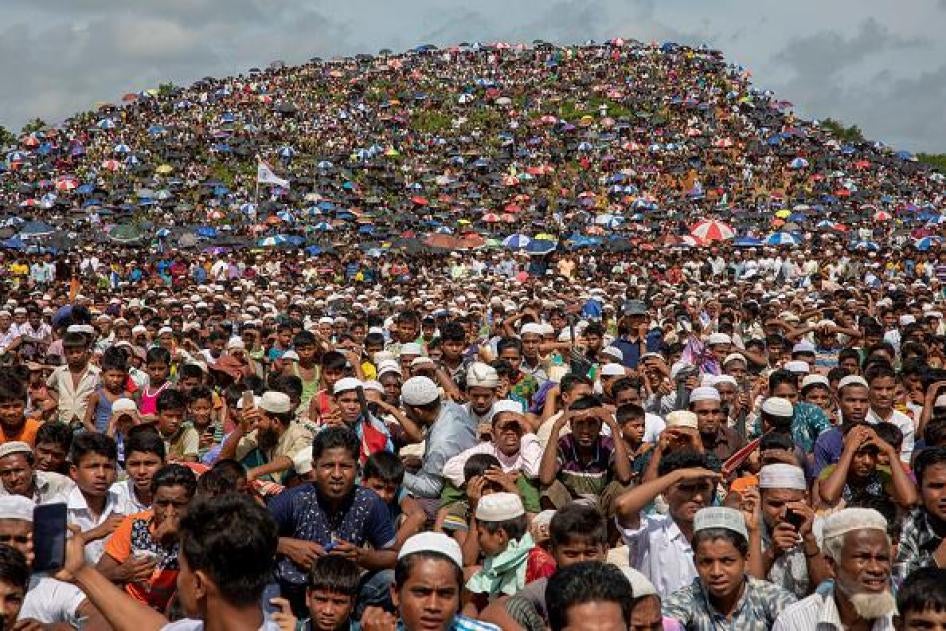
Malaysia’s reported push to send Rohingya refugees back to Myanmar lands at the worst possible moment: when Myanmar remains fractured by war, statelessness is still being used as a weapon, and regional governments are increasingly treating displaced people as a domestic nuisance rather than a protection crisis. For Malaysia, the political temptation is obvious. Border pressure, public fatigue, trafficking networks, and weak regional burden-sharing have made refugee policy harder to defend. But returning Rohingya to Myanmar is not just a bureaucratic decision. It is a test of whether Southeast Asia can uphold basic humanitarian standards when the people in need are poor, stateless, Muslim, and politically expendable.
- Malaysia’s deportation stance raises serious concerns under the principle of
non-refoulement. - Rohingya refugees face persecution, statelessness, and conflict-related risks if returned to Myanmar.
- The crisis exposes the failure of
ASEANto build a credible regional refugee protection system. - Malaysia’s domestic pressures are real, but forced returns would set a dangerous precedent.
Why Malaysia’s Rohingya Refugees Policy Is Under Scrutiny
Malaysia has long been a major destination for Rohingya fleeing Myanmar and, increasingly, refugee camps in Bangladesh. It is not because Malaysia offers an easy life. Refugees there often lack legal work rights, face arrest or detention, and live in a shadow economy where exploitation is routine. Yet for many Rohingya, Malaysia has represented something Myanmar has denied them for decades: the possibility of survival outside direct persecution.
The current controversy centers on whether Malaysia is sending, or preparing to send, Rohingya back to Myanmar. That question matters because Myanmar is not a safe destination. Since the military’s seizure of power in 2021, the country has descended into multi-front conflict. For Rohingya, the risks are layered: they are stateless under Myanmar’s citizenship framework, stigmatized by authorities and nationalist groups, and vulnerable to movement restrictions, detention, forced recruitment, and violence.
Returning Rohingya to Myanmar is not a migration management tool. It is a decision that can expose already persecuted people to renewed danger.
Malaysia’s frustration is not invented. The country hosts large numbers of undocumented migrants and refugees without a formal asylum framework. But the absence of a perfect system does not erase the obligation to avoid sending people into foreseeable harm.
Rohingya Refugees And The Red Line Of Non Refoulement
The core legal and moral issue is non-refoulement, the principle that people should not be returned to a place where they face persecution, torture, or serious harm. Malaysia is not a party to the 1951 Refugee Convention, but non-refoulement is widely treated as a foundational protection norm. In plain English: if return could put someone in danger, the state must not force it.
That is why deportations to Myanmar are so explosive. Rohingya are not ordinary migrants who overstayed visas. Many have no recognized citizenship, no safe province to return to, and no meaningful access to state protection. Calling them illegal immigrants may be politically convenient, but it flattens the reality of a group that has been systematically excluded from nationality and basic rights.
The Safety Test Myanmar Cannot Pass
A safe return requires more than a seat on a boat or bus. It requires legal status, freedom of movement, access to livelihoods, protection from violence, and credible monitoring. Myanmar currently offers none of these at a scale that would make forced returns defensible.
Even voluntary repatriation is fraught. Refugees may agree to return because they are desperate, detained, misinformed, or pressured by officials. A return process only deserves the label voluntary if it is informed, free from coercion, and supported by independent safeguards. Without that, repatriation becomes deportation with softer branding.
Malaysia’s Domestic Pressure Is Real But Not Enough
Any serious assessment must acknowledge Malaysia’s dilemma. The country is carrying a regional burden without a regional system. Refugees need housing, healthcare, education, and work. Local communities worry about wages and security. Politicians face pressure to look tough, especially when refugee issues become entangled with crime narratives or nationalist rhetoric.
But the harder truth is that Malaysia has benefited from keeping refugees in legal limbo. Employers can tap vulnerable labor. Authorities can periodically crack down. Political leaders can signal control without building a rights-based system. This model may be administratively convenient, but it is unstable and inhumane.
Legal limbo is not a neutral policy. It creates the conditions for exploitation, fear, detention, and eventually deportation.
If Malaysia wants to reduce irregularity, it should move refugees out of the shadows, not push them back into danger. That means expanding documentation, allowing lawful work, improving screening, and coordinating with UNHCR and civil society groups. These steps are not charity. They are governance.
Pro Tip For Policymakers: Separate Asylum From Border Theater
The most effective refugee policy is not the loudest one. Malaysia should distinguish between trafficking enforcement, maritime security, and refugee protection. Smugglers should be prosecuted. Corrupt networks should be dismantled. But refugees rescued from boats or found without papers should be screened for protection needs before any return decision is made.
- Register first: Establish credible identity and protection claims before detention or removal.
- Screen risk individually: Do not treat Rohingya as a removable group by default.
- Permit lawful work: Reduce exploitation and public resentment by moving refugees into regulated labor channels.
- Coordinate regionally: Push
ASEANfor shared responsibility rather than unilateral expulsions.
Why Rohingya Refugees Expose ASEAN’s Failure
The Rohingya crisis is not only Malaysia’s problem. It is a regional governance failure hiding in plain sight. Myanmar created the conditions for mass displacement. Bangladesh hosts the largest refugee camp population under enormous strain. Malaysia, Indonesia, Thailand, and others receive people moving onward by sea and land. Yet ASEAN continues to operate with a diplomacy-first approach that avoids hard enforcement and rarely centers refugees themselves.
This is where the region’s non-interference doctrine collides with reality. Refugee flows are inherently cross-border. A persecution campaign in one country becomes a labor, maritime, security, and humanitarian challenge for others. Pretending otherwise simply transfers the cost to refugees and frontline communities.
Malaysia could use this moment to lead. It could argue that protecting Rohingya is not a Western demand or an abstract rights agenda, but a regional stability issue. Forced returns may satisfy domestic politics in the short term, but they encourage a race to the bottom. If Malaysia sends people back, other states may follow. If boats are pushed away, deaths at sea will rise. If documentation is denied, criminal networks will grow stronger.
The Human Cost Behind The Policy Language
Government statements often reduce refugee movements to numbers: arrivals, detentions, deportations, costs. But the Rohingya crisis is built from individual lives interrupted by repeated betrayal. A family may flee a village in Rakhine State, spend years in overcrowded camps, borrow money from predatory brokers, survive a dangerous sea crossing, and then end up detained in the country they believed might offer safety.
For children, the damage compounds. Without stable legal status, schooling is precarious. Healthcare becomes harder to access. Teenage boys are at risk of labor exploitation, arrest, or recruitment by criminal networks. Girls face heightened risks of early marriage, abuse, and trafficking. A deportation order does not reset these vulnerabilities. It magnifies them.
Malaysia’s leaders should also understand the reputational cost. The country has often presented itself as a voice for Muslim communities under threat, including Palestinians and Rohingya. Sending Rohingya back to Myanmar would undercut that moral position. A foreign policy built on solidarity cannot stop at the water’s edge.
What A Credible Malaysia Rohingya Refugees Strategy Looks Like
A responsible strategy does not require open borders. It requires lawful process, humane treatment, and realistic regional diplomacy. Malaysia can defend its sovereignty while refusing to violate basic protection norms. The starting point should be a moratorium on forced returns of Rohingya to Myanmar while conflict and persecution risks remain acute.
From there, Malaysia should build a practical framework with three pillars. First, documentation: refugees need recognized papers that reduce arbitrary arrest and help authorities distinguish refugees from other migrant categories. Second, labor access: legal work channels would reduce dependency, tax the informal economy less, and make exploitation easier to prosecute. Third, regional pressure: Malaysia should push ASEAN to create a protection mechanism for maritime arrivals and long-term displacement.
Why This Matters Beyond Malaysia
What happens here will echo across the region. If Malaysia normalizes forced returns, it weakens the already thin safety net protecting stateless populations. If it chooses a managed protection model, it can pressure neighbors to share responsibility and reduce dangerous onward journeys.
The future of refugee policy in Southeast Asia is being written through these decisions. Not in grand summits, but in detention centers, immigration offices, coast guard operations, and quiet diplomatic calls. The question is whether governments will treat Rohingya as people with rights or as a problem to be moved somewhere else.
The real test is not whether Malaysia can remove vulnerable people. It is whether Malaysia can build a system strong enough to protect them without losing control of its borders.
The Bottom Line On Rohingya Refugees
Malaysia is right to demand more support. It is right to challenge smugglers, traffickers, and regional indifference. But sending Rohingya refugees back to Myanmar crosses a dangerous line. It ignores the reality of statelessness, the brutality of Myanmar’s conflict, and the basic principle that no person should be returned to a place where they face serious harm.
The politically easy move is to make refugees disappear from the national conversation. The harder, more credible move is to build a system that is firm, lawful, and humane. Malaysia still has that choice. For Rohingya refugees, the stakes could not be higher.
The information provided in this article is for general informational purposes only. While we strive for accuracy, we make no guarantees about the completeness or reliability of the content. Always verify important information through official or multiple sources before making decisions.