Modena Attack Shocks Italy
Modena Attack Shocks Italy
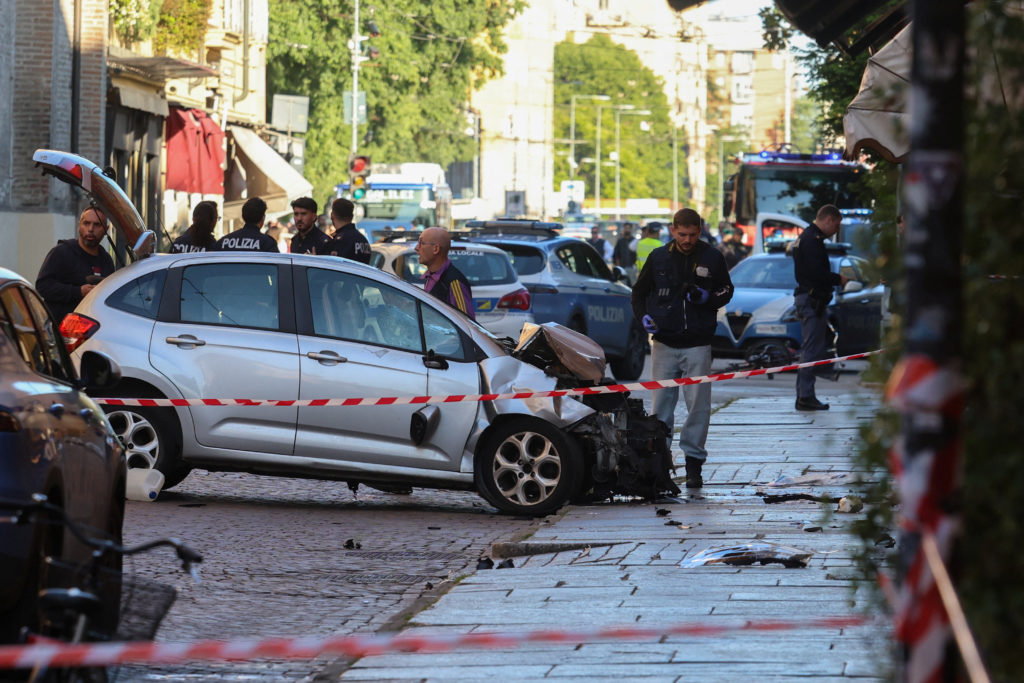
The Modena attack lands at a moment when Europe is already on edge about public safety, social cohesion, and the speed at which violence can rupture an ordinary day. A car ramming followed by stabbings is the kind of incident that instantly overwhelms local tragedy and becomes a national stress test. It forces governments to answer hard questions fast: Was this preventable? Were warning signs missed? How should leaders balance visible security with civil calm?
That is why the visit by Italian leaders to victims matters beyond symbolism. In moments like this, public trust is fragile. Citizens watch for competence, empathy, and clarity in equal measure. Families want support, communities want facts, and the broader public wants reassurance that the state can still protect open civic life without sliding into panic or political theater.
- The Modena attack has triggered a national reckoning over public safety and emergency response.
- Italian leaders visiting victims is both a humanitarian gesture and a political signal.
- The incident raises urgent questions about prevention, policing, and intelligence coordination.
- How Italy frames the response could shape public trust far beyond Modena.
Why the Modena attack hits so hard
Vehicle rammings and stabbing attacks carry a uniquely destabilizing effect because they rely on tools of everyday life. A car is not an exotic weapon. A knife is not a rare object. That reality makes these attacks feel frighteningly accessible, and therefore difficult to defend against in a fully open society.
For Italy, the emotional impact is amplified by the randomness such violence appears to project. People are not confronting an abstract threat in a distant zone. They are confronting the possibility that a normal commute, a walk, or a city errand can transform into chaos in seconds. That perceived randomness is what often turns a local crime scene into a national political event.
The immediate aftermath usually follows a familiar but volatile sequence: emergency services secure the area, hospitals mobilize, investigators attempt to reconstruct the timeline, and political figures move quickly to the site or to the victims. Each of those steps matters. But each also becomes part of a broader public narrative about whether the system worked under pressure.
What the leaders’ visit really signals
When senior officials visit survivors and families, the move is not merely ceremonial. It serves three overlapping functions: empathy, message control, and institutional legitimacy.
Empathy has to look real
After an attack, public officials are judged first on emotional credibility. If the response feels scripted, detached, or opportunistic, trust erodes immediately. A hospital visit, a meeting with families, or a statement delivered with precision and restraint can help communicate that the state sees victims as more than headlines.
Message control matters in the first 24 hours
Early information environments are messy. Conflicting witness accounts, partial police updates, and social media speculation can all distort what actually happened. Leaders visiting victims creates a focal point for official communication. It tells the public where attention should be centered: on verified facts, on care for the injured, and on the integrity of the investigation.
Legitimacy is being tested in real time
Every attack becomes a referendum on institutions. Police, local officials, national ministries, hospitals, and emergency response teams are all being evaluated at once. A visible leadership response is meant to reassure citizens that institutions are coordinated rather than fragmented.
Key insight: In modern crisis politics, symbolic action is never just symbolic. It is part of the operational response because public confidence can shape whether fear spreads faster than facts.
Security questions Italy cannot avoid after the Modena attack
The hardest part of incidents like the Modena attack is that the public demands immediate answers before the investigative picture is complete. Still, some questions emerge almost automatically, and they are legitimate.
- Was the suspect already known to authorities?
- Were there behavioral or digital warning signs?
- Did local law enforcement have enough tools to intervene earlier?
- Were physical protections in crowded or vulnerable areas adequate?
- How quickly did emergency services contain the scene and treat victims?
These questions do not always produce clean conclusions. Not every attack is predictable. Not every dangerous person triggers a clear intelligence trail. But patterns matter, especially across Europe, where authorities have spent years adapting to lower-tech, fast-moving acts of violence that can be planned and executed with very little logistical complexity.
That is part of the policy dilemma. Governments can harden public spaces with barriers, increase patrol visibility, and expand monitoring. Yet no democratic state can turn every city street into a checkpoint. The challenge is targeted resilience, not total lockdown.
The operational reality behind public safety
There is a tendency after these attacks to flatten everything into slogans about toughness or failure. The real operating environment is more complicated. Effective prevention often depends on dozens of small systems working together: local policing, mental health interventions, community reporting, digital monitoring, hospital readiness, and transport-area design.
Prevention is usually fragmented by default
One recurring weakness in many countries is institutional fragmentation. Information may exist, but it is scattered across agencies, municipalities, or databases. A person may be known for prior violence, instability, or extremist behavior, but no single node of the system sees the full risk profile in time.
That does not excuse failure. It explains why post-incident reviews often focus on coordination instead of just manpower.
Response speed defines survival
Once an attack starts, prevention is over. Response becomes everything. The timing of police arrival, the training of first responders, the availability of trauma care, and the ability to clear routes to hospitals can determine casualty outcomes within minutes.
This is where governments often have a more direct path to improvement. Better drills, more interoperable communications, and clearer urban emergency protocols can save lives without waiting for sweeping legislative change.
Public-space design is now a security layer
Across Europe, urban planning has increasingly become part of security planning. Bollards, traffic-calming layouts, protected pedestrian zones, and event access controls may look mundane, but they are now core tools against vehicle-based attacks.
Done well, these interventions fade into the background of city life. Done poorly, they make public space feel militarized. The design challenge is subtlety with purpose.
The political risk of overreaction
After incidents this brutal, the pressure to act visibly is enormous. That is understandable. But there is always a difference between action that improves safety and action that simply performs anger.
Italian leaders now face a narrow path. If they appear passive, critics will say they failed to protect the public. If they move too aggressively before facts are established, they risk politicizing grief and fueling division. That tension defines the modern European response to public attacks.
What matters now: The state has to project control without manufacturing certainty it does not yet have.
That includes how officials talk about motive, suspect background, and broader social implications. Early misstatements can poison public debate for weeks. Precision matters more than speed once the emergency phase has passed.
Why the Modena attack matters beyond one city
The Modena attack is not only about one investigation or one locality. It touches on a wider European anxiety: how to keep open societies open when threats can be improvised, mobile, and psychologically devastating.
There is also a civic dimension here. Repeated violence of this kind can alter public behavior even when statistical risk remains low. People avoid crowds. Municipalities cancel events. Police presence becomes more visible. The social cost is not always measured in casualty figures alone. It is measured in how public life contracts under fear.
That is why leaders are right to emphasize support for victims. Recovery is not just medical. It is communal. If residents believe their city has been permanently transformed into a symbol of vulnerability, the attacker achieves a secondary victory. The state response must therefore aim at both justice and normalcy.
What effective follow-through should look like
Once the cameras move on, the real test begins. Serious follow-through usually includes a few predictable but essential layers.
- Transparent updates: regular, fact-based communication from investigators and local officials.
- Victim support: long-term medical, psychological, and financial assistance.
- Operational review: a clear assessment of what worked and what failed during the response.
- Targeted reforms: practical changes to coordination, emergency protocols, or public-space protections.
What should be avoided is the temptation to announce sweeping measures disconnected from the specifics of the case. Broad declarations can satisfy a news cycle, but they often collapse under scrutiny if they are not tied to actual operational gaps.
The bigger takeaway for Italy
Italy is being asked to do several things at once: grieve with the victims, support the injured, investigate rigorously, communicate responsibly, and reassure a nervous public. None of that is easy, especially under the pressure of nonstop media attention and partisan interpretation.
But moments like this reveal whether institutions can still function with discipline. The public does not expect perfection. It does expect seriousness. That means leaders showing up, yes, but also refusing to substitute optics for substance.
The visits to victims in the wake of the Modena attack are the visible front edge of that responsibility. What follows will matter more: the facts established, the failures identified, the support delivered, and the credibility maintained. In an era where fear can scale instantly, the most important response is not theatrical force. It is competent, humane, and sustained governance.
The information provided in this article is for general informational purposes only. While we strive for accuracy, we make no guarantees about the completeness or reliability of the content. Always verify important information through official or multiple sources before making decisions.