NATO Tightens Support for Ukraine
NATO Tightens Support for Ukraine
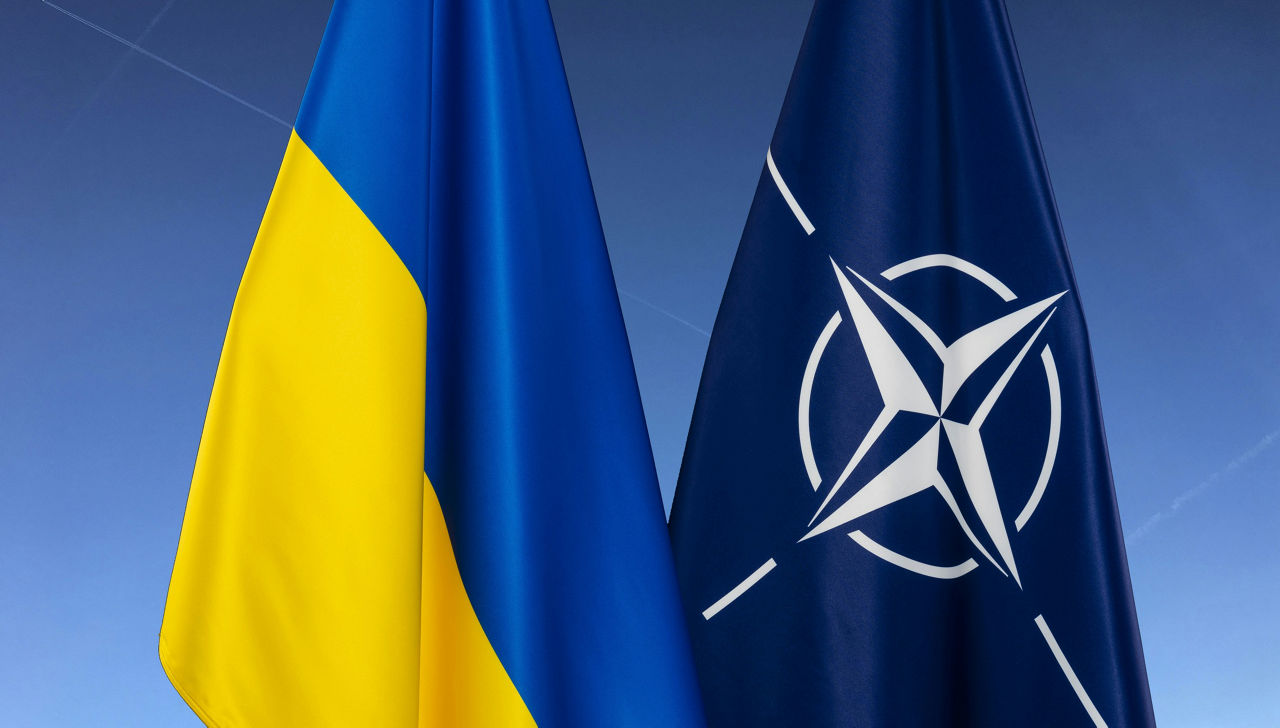
Europe’s security order is being rewritten in real time, and the latest NATO support for Ukraine signals that the alliance is preparing for a longer, harder confrontation with Russia. This is no longer about temporary aid packages or symbolic pledges. It is about building a framework that can survive election cycles, budget fights, and battlefield uncertainty. For Ukraine, that means more predictable military backing. For Europe, it means accepting that deterrence now requires industrial scale, political discipline, and a clearer strategy. The bigger story is not just what NATO says publicly, but how the alliance is trying to convert urgency into structure. That shift matters because wars are not won by headlines. They are shaped by logistics, training, command coordination, and the willingness of allies to lock in support before fatigue sets in.
- NATO support for Ukraine is evolving from reactive aid to long-term strategic planning.
- The alliance wants more coordination, predictability, and burden-sharing across member states.
- Ukraine’s future battlefield resilience depends on weapons supply, training, and defense industry capacity.
- The broader implication is clear: European security is entering a more militarized and enduring phase.
Why NATO support for Ukraine is entering a new phase
At a basic level, the alliance appears to be responding to a hard truth: short-term assistance is not enough in a grinding war of attrition. Ukraine needs ammunition, air defense, maintenance, intelligence support, training pipelines, and reliable financial commitments. NATO, meanwhile, needs a model that reduces political improvisation every few months.
That is the strategic backdrop to the latest moves. The shift is less about one announcement and more about institutionalizing support. When an alliance like NATO takes a more structured role, it sends two messages at once. First, to Kyiv: help is being organized for endurance, not just emergency response. Second, to Moscow: the West is trying to make support harder to disrupt politically.
This is the real turning point. Emergency solidarity has value, but bureaucratic permanence changes the equation. Once military aid is embedded in alliance planning, it becomes more resilient.
Support that is coordinated, budgeted, and routinized is far more powerful than support that depends on a new political argument every quarter.
The Deep Dive into what the alliance is really building
The most important development is not rhetorical. It is structural. NATO appears increasingly focused on creating systems that can deliver steady assistance over time. That includes planning mechanisms, force training coordination, and tighter alignment between national contributions.
From ad hoc pledges to managed commitments
For much of the war, support for Ukraine has often arrived in waves: a summit pledge here, an emergency package there, then delays as domestic politics intervene. That model can keep a partner alive, but it does not create confidence.
What NATO is now pushing toward is a more managed framework. That means allies can better track who is providing what, where capability gaps remain, and how to avoid duplication. It also helps Ukraine plan operations with fewer unknowns.
Military planners prefer predictability over drama. A delayed shipment of shells or air defense interceptors is not a public relations problem. It is a battlefield problem.
Training is becoming as important as equipment
Weapons transfers dominate headlines because they are visible. But wars are sustained by trained personnel who can integrate complex systems under pressure. NATO’s role in training Ukrainian forces has become increasingly significant because advanced platforms require more than delivery. They require instruction, maintenance knowledge, tactical integration, and operational discipline.
That is especially true for systems wrapped in technical complexity, whether that means air defense batteries, armored vehicles, or precision-guided munitions. Hardware without a functioning training ecosystem is just expensive symbolism.
Why this matters: a reliable training pipeline allows Ukraine to absorb losses, rotate units, and improve effectiveness over time. It also gives allies more confidence that expensive systems will be used efficiently.
The defense industry problem no one can ignore
There is another reality sitting underneath the diplomatic language: stockpiles across Europe and North America are under strain. The war exposed just how unprepared many Western countries were for sustained high-intensity conflict. Production lines built for peacetime consumption do not easily scale to wartime demand.
That means NATO support for Ukraine is now inseparable from defense industrial policy. If allies want to promise long-term backing, they need factories that can actually deliver shells, missiles, spare parts, and air defense components at volume.
This is where the conflict becomes bigger than Ukraine alone. Rebuilding industrial capacity is not just about aiding Kyiv. It is about restoring NATO’s own readiness.
- Ammunition production must expand faster.
- Maintenance networks need to be funded and streamlined.
- Procurement timelines have to shrink.
- Interoperability standards matter more as equipment sources diversify.
What this means for Ukraine right now
For Ukraine, the central issue is not simply whether more help is coming. It is whether that help arrives in a form that supports sustained military planning. A commander facing Russian pressure does not just need promises. He needs timelines, replacement parts, trained crews, and enough confidence in future deliveries to make decisions now.
That is why a more formal NATO-backed support architecture matters. It can reduce uncertainty. And in war, uncertainty is costly.
If support becomes more predictable, Ukraine gains several advantages:
- Better operational planning across multiple months instead of weeks.
- Improved force regeneration through structured training cycles.
- Greater resilience against political shocks inside allied capitals.
- Stronger signaling to Russia that waiting out Western fatigue may not work.
None of this guarantees battlefield breakthroughs. That would be an overstatement. Russia still has manpower, industrial adaptation, and a willingness to absorb extraordinary costs. But more durable alliance support raises the floor under Ukraine’s war effort.
The politics behind NATO support for Ukraine
This story is also about political timing. NATO leaders understand that support for Ukraine cannot remain vulnerable to every election, coalition split, or budget standoff. The alliance is effectively trying to future-proof assistance by moving it into more formal channels.
That is not just smart administration. It is strategic insurance.
There is a clear concern in European capitals that if aid remains too personalized or too dependent on a handful of leaders, it becomes fragile. Institutions, for all their slowness, can outlast political moods. NATO is betting that structure can beat volatility.
The alliance is not just sending a message to Russia. It is sending a message to its own members: this commitment must survive domestic turbulence.
Europe is being forced to grow up strategically
One of the most important long-term consequences of the war is that Europe is shedding old assumptions about security. For years, many governments relied on a post-Cold War logic that major conventional war on the continent was improbable. That assumption is gone.
Now the conversation is different. It includes readiness, stockpiles, recruitment, industrial output, and border defense. NATO support for Ukraine sits inside that larger transformation. The alliance is no longer just reacting to a crisis. It is adapting to a new era.
Pro tip for policymakers: if support to Ukraine is treated as separate from European rearmament, both efforts will underperform. The two are tightly linked.
The risks and limits of this strategy
None of this is frictionless. A more centralized or durable support model can still run into political resistance, procurement bottlenecks, and disagreements over burden-sharing. Some member states will push for stronger commitments. Others will worry about escalation, cost, or domestic backlash.
There is also the risk of overpromising. Grand declarations can backfire if industrial capacity, budget approvals, or delivery schedules fall short. Ukraine has heard major promises before. What matters now is execution.
Another limit is time. Even well-designed systems can take months to show results. New production contracts, training cycles, and organizational reforms are not instant. On the battlefield, delays are measured in territory, infrastructure, and lives.
That is why credibility is everything. NATO does not just need a strategy that sounds durable. It needs one that produces visible and reliable outputs.
Why this matters beyond the battlefield
The implications reach far past Ukraine’s front lines. If NATO succeeds in turning fragmented support into a durable framework, it will reshape how the alliance handles prolonged conflict on its borders. It could also influence future deterrence by showing that member states can sustain collective action over years, not just news cycles.
If it fails, the lesson will be equally powerful and far more dangerous. Adversaries would see that democracies can unite quickly but struggle to maintain momentum when costs rise and political attention fades.
That is why this moment matters so much. NATO support for Ukraine is becoming a test of institutional stamina. Can the alliance convert moral clarity into long-term operational capacity? Can it match rhetoric with shells, systems, training hours, and budget commitments?
Those questions define more than this war. They define Europe’s strategic credibility for the next decade.
The bottom line
NATO’s latest push on Ukraine reflects a sober recognition that the conflict is not ending on anyone’s preferred timetable. The alliance is trying to build something more durable than a series of emergency measures: a support architecture that can survive politics, sustain military pressure, and strengthen European deterrence at the same time.
That is the right ambition. But ambition is the easy part. The harder task is execution – faster production, tighter coordination, reliable deliveries, and enough political discipline to keep the system running when headlines move on.
For Ukraine, that could mean the difference between unstable backing and strategic endurance. For NATO, it may become the clearest measure yet of whether the alliance can still adapt under pressure. The stakes are not abstract. They are material, immediate, and historic.
The information provided in this article is for general informational purposes only. While we strive for accuracy, we make no guarantees about the completeness or reliability of the content. Always verify important information through official or multiple sources before making decisions.