Neanderthal Extinction Exposes Modern Fear

Neanderthal Extinction Exposes Modern Fear
Neanderthal extinction has become one of archaeology’s most seductive mysteries because it lets us ask a terrifying modern question in ancient disguise: what happens when a human species fails to survive? The standard story is familiar: Homo sapiens arrived, Neanderthals vanished, and superiority won. But that clean narrative is increasingly hard to defend. The evidence is messier, stranger, and more politically revealing. Our obsession with Neanderthal disappearance says less about a simple prehistoric defeat and more about today’s anxieties over climate collapse, migration, competition, technology, disease, and cultural fragility. The real story is not just about them. It is about how we keep using them as a mirror.
- Neanderthal extinction is often framed through modern fears rather than settled science.
- New research complicates the old idea that
Homo sapienssimply outcompeted Neanderthals. - Media narratives often amplify dramatic explanations because uncertainty is harder to sell.
- The most important lesson may be about survival under pressure, not evolutionary superiority.
Why Neanderthal Extinction Became a Modern Obsession
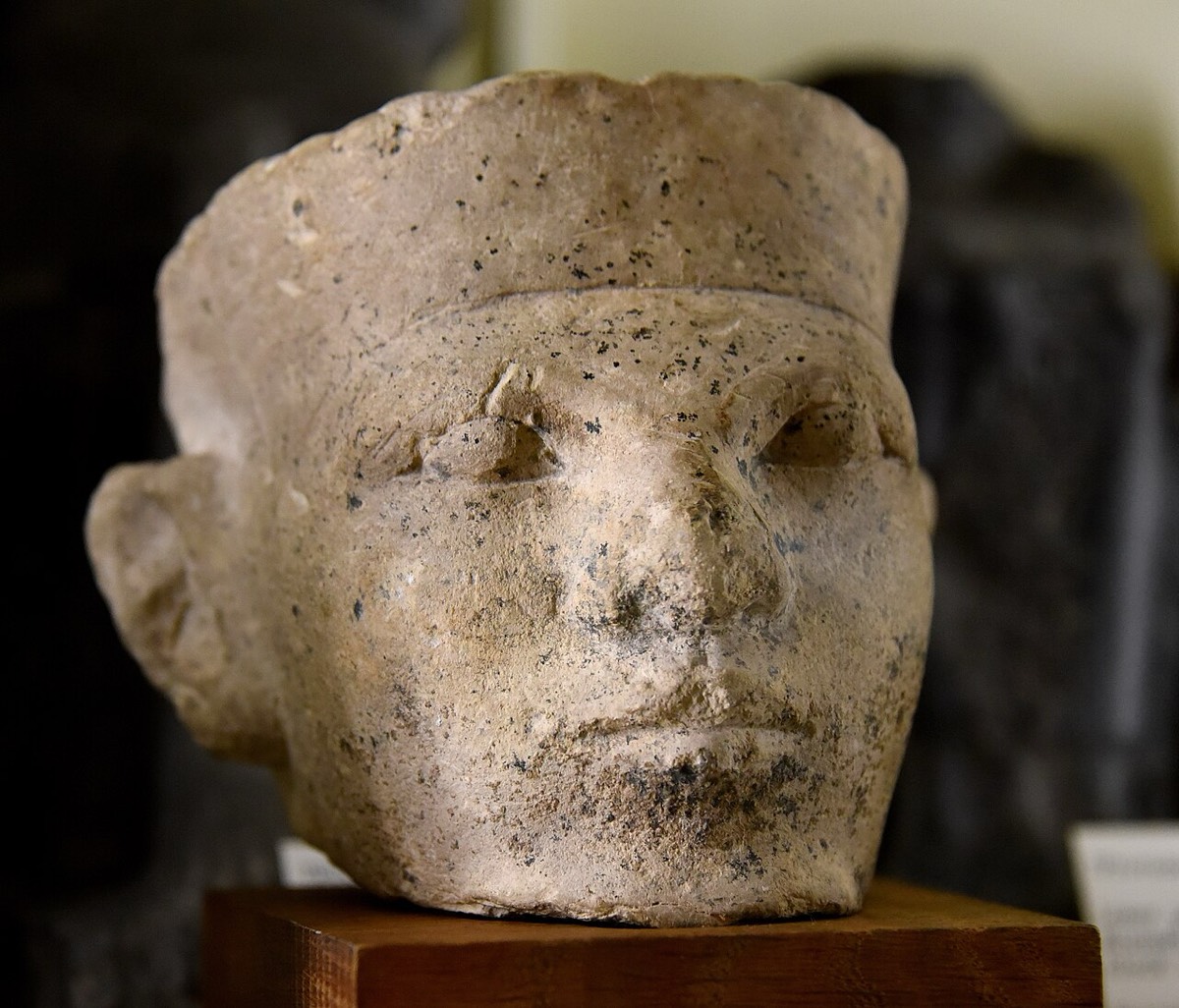
The disappearance of Neanderthals roughly 40,000 years ago has always carried more emotional weight than a typical archaeological puzzle. They were not dinosaurs, not distant abstractions, and not failed animals. They were humans of a different kind: toolmakers, hunters, caregivers, possibly artists, and certainly survivors across hundreds of thousands of years of brutal Ice Age instability.
That is what makes their disappearance so unsettling. If a human species that endured glacial cycles, hunted megafauna, cared for injured group members, and adapted across Eurasia could still disappear, then survival begins to look less like destiny and more like luck plus timing.
Key insight: Every generation seems to reinvent Neanderthal extinction using the fears it already has: violence, disease, climate change, migration, technological disruption, or social collapse.
This is where the science becomes culturally charged. Public accounts of Neanderthal extinction often shift with the mood of the moment. When society worries about racial hierarchy, Neanderthals are cast as inferior. When war dominates public consciousness, they are victims of conquest. When climate change becomes the existential threat, they become climate casualties. When pandemic anxiety rises, disease takes center stage.
None of those explanations is automatically wrong. The problem is that each can become too neat, too totalizing, and too convenient.
Neanderthal Extinction Is Not a Simple Replacement Story
The old model was brutally simple: modern humans entered Europe and western Asia, Neanderthals could not compete, and they vanished. It was the Stone Age equivalent of a hostile takeover. But archaeology and genetics have made that version harder to sustain.
First, Neanderthals and Homo sapiens overlapped in time and space. Second, they interbred. Many living people today carry Neanderthal DNA, which means extinction was not a clean biological erasure. Some Neanderthal ancestry was absorbed into later human populations. Third, evidence of Neanderthal behavior has become more sophisticated over time. They used complex tools, controlled fire, likely had symbolic practices, and adapted to difficult landscapes.
That does not mean Neanderthals were identical to modern humans. It means the lazy hierarchy of smart us, doomed them is no longer good enough.
The Problem With the Superiority Narrative
The most popular version of Neanderthal extinction depends on a comforting assumption: Homo sapiens survived because we were better. Better language, better weapons, better social networks, better creativity, better planning. This story flatters us, which should make us suspicious.
Evolution does not hand out trophies for moral or intellectual worth. Survival can hinge on population size, birth rates, resource access, pathogen exposure, ecological flexibility, and sheer contingency. A group can be highly capable and still lose if its numbers are too small or its environment changes too fast.
Pro Tip for readers of science headlines: when a claim explains Neanderthal extinction with one decisive cause, treat it as a hypothesis, not a verdict.
How Media Narratives Tweak the Science
Archaeology moves slowly. Media moves fast. That mismatch creates distortion. A new fossil date, tool analysis, or genetic model might suggest a shift in probability. By the time it reaches a headline, it can sound like a case has been solved.
This is especially true with Neanderthals because the topic sits at the perfect intersection of science and identity. Stories about them are never just stories about the past. They touch the nerve of what it means to be human, whether progress is real, whether intelligence guarantees survival, and whether collapse can happen to beings like us.
Editorial stance: The most responsible reading of Neanderthal extinction is not that one theory wins. It is that multiple pressures likely converged on small, vulnerable populations over long periods.
That convergence model is less cinematic than a single battle between species, but it is more plausible. Climate volatility could have fragmented habitats. Small population sizes could have increased inbreeding. Competition with incoming Homo sapiens could have intensified pressure on prey and territory. Interbreeding could have reduced distinct Neanderthal populations over time. Disease could have played a role. Cultural exchange may also have occurred. The outcome was disappearance, but the mechanism was probably not one dramatic event.
Neanderthal Extinction and the Climate Anxiety Loop
Climate has become one of the dominant frames for understanding Neanderthal extinction, and for obvious reasons. We now live in an age where environmental instability no longer feels abstract. Extreme weather, ecosystem stress, food insecurity, and displacement make ancient climate vulnerability feel newly relevant.
Neanderthals lived through repeated climatic swings, but resilience has limits. If prey routes changed, forests gave way to steppe, or habitable zones shrank, small groups could have found themselves isolated. Isolation matters because it reduces mating networks, weakens cultural transmission, and makes local disasters more dangerous.
The danger is turning Neanderthals into a prehistoric climate parable with a simplistic moral. They were not fools who failed to adapt. They were long-term survivors who may have finally encountered a combination of pressures that adaptation could not solve quickly enough.
Why This Matters Now
Modern humans often treat adaptation as a magic word. If conditions change, innovate. If systems break, optimize. If resources shrink, become more efficient. But Neanderthals remind us that adaptation is bounded by demography, geography, biology, and time.
That lesson should feel uncomfortable. Our species is technologically powerful, but not exempt from ecological limits. The Neanderthal story punctures the fantasy that intelligence alone guarantees continuity.
The Genetics Revolution Changed the Plot
Ancient DNA transformed Neanderthals from extinct outsiders into partial ancestors. That changed everything. The discovery that Neanderthals contributed genetic material to many modern human populations complicated the word extinction itself.
If a population disappears as a distinct group but some of its DNA persists, is that extinction, absorption, or both? Scientifically, Neanderthals no longer exist as a separate human population. But genetically, traces remain. That is not a sentimental point. It changes how we think about contact between human groups.
The genetic evidence undermines the clean replacement model. It suggests interaction: mating, movement, proximity, and perhaps social complexity. The boundary between us and them was real, but porous.
- Replacement: Neanderthals vanish as
Homo sapiensexpands. - Assimilation: Some Neanderthal ancestry enters modern human populations.
- Fragmentation: Small groups become isolated and demographically fragile.
- Multi-cause decline: climate, competition, disease, and population dynamics interact.
This is why the best current thinking resists a single villain. Neanderthal extinction was likely a process, not a moment.
Neanderthal Extinction Reveals Our Fear of Being Next
The deepest reason Neanderthals fascinate us is not their brow ridges, stone tools, or caves. It is that they make human extinction imaginable. Not asteroid-extinction imaginable. Not science-fiction imaginable. Humanly imaginable.
They were close enough to us to trigger recognition, but different enough to carry our projections. We can make them victims, rivals, warnings, ancestors, or ghosts depending on what we need the past to say.
That flexibility is powerful, and risky. If we turn Neanderthals into symbols too quickly, we flatten their reality. They were not merely a metaphor for climate change, colonial violence, pandemics, or technological disruption. They were real populations living complex lives across immense spans of time.
Still, metaphors matter. The way we talk about Neanderthals exposes our assumptions about success. If we say they died because they were inferior, we reveal a faith in progress. If we say they died because climate changed, we reveal ecological dread. If we say they were absorbed, we reveal discomfort with hard boundaries between human groups.
The Better Story Is More Complicated and More Human
A stronger account of Neanderthal extinction begins with humility. Neanderthals were not failed versions of us. They were a successful human lineage that lasted far longer than industrial civilization has existed. Their disappearance was not proof that evolution was aiming at us.
The better story also accepts uncertainty. Archaeological evidence is partial. Fossil records are uneven. Dating methods improve. Genetic models shift. Every new discovery can sharpen the picture, but it rarely delivers the final word.
For science communication, that uncertainty should be a feature, not a flaw. The public does not need a cartoon version of the past. It needs a more mature one: evidence-based, provisional, and alert to the cultural baggage we bring into ancient history.
The takeaway: Neanderthal extinction is not just a mystery to solve. It is a stress test for how honestly we can talk about human vulnerability.
What Neanderthals Should Teach Us
The most useful lesson is not that humans are doomed, or that Homo sapiens will inevitably repeat the pattern. It is that survival depends on systems, not just traits. Intelligence matters. So do cooperation, population resilience, ecological stability, mobility, health, and cultural memory.
Neanderthals force us to abandon the myth of automatic progress. They also invite a more generous view of humanity, one that includes multiple human forms, blurred boundaries, and shared inheritance.
Their extinction remains unresolved in the most interesting way. It is not an empty gap waiting for one grand answer. It is a crowded intersection where climate, biology, culture, chance, and modern imagination all collide. And if the story feels urgent now, that is because it has never only been about the dead. It has always been about the living, trying to decide whether survival is something we have earned or something we must keep learning how to do.
The information provided in this article is for general informational purposes only. While we strive for accuracy, we make no guarantees about the completeness or reliability of the content. Always verify important information through official or multiple sources before making decisions.