Netanyahu Rejects Lebanon Ceasefire, Testing Alliances
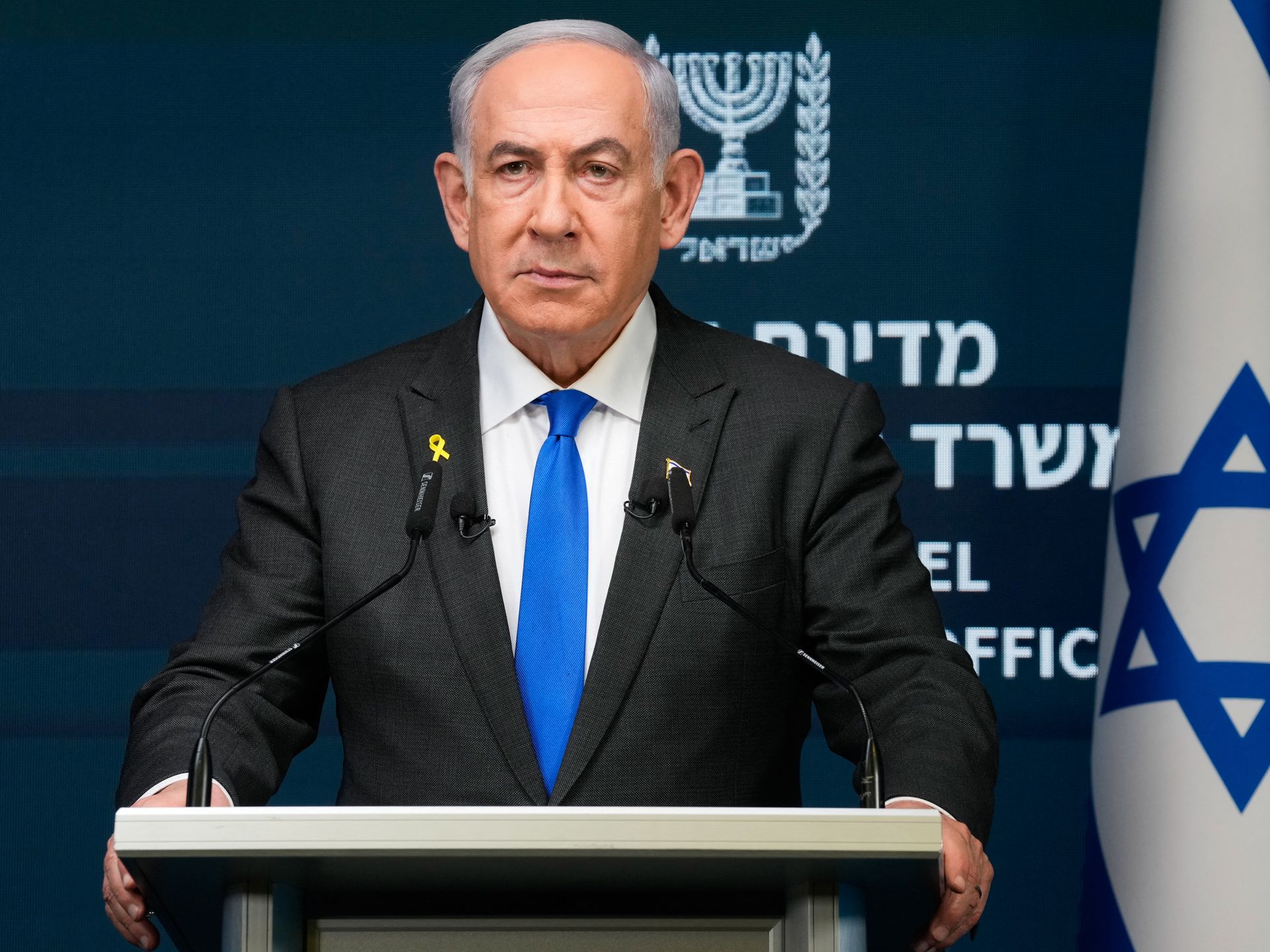
Netanyahu Rejects Lebanon Ceasefire, Testing Alliances
The stakes around the Netanyahu Lebanon ceasefire dispute are brutal: a rumored US-Iran thaw over Gaza and Red Sea tensions suddenly hits a wall at Israel’s northern border. Readers tracking fatigue around endless negotiations now face a fresh dilemma – if Lebanon remains outside any truce architecture, does the region slide back into open confrontation or stumble into a new balance of fear. Israel’s prime minister is betting that strategic ambiguity over the Lebanon front protects deterrence; critics argue it endangers a fragile coalition with Washington and accelerates escalation with Hezbollah. That friction sits atop a deeper question: who actually sets the rules when great-power backchannels clash with frontline realities.
- Netanyahu insists a US-Iran ceasefire framework stops at Lebanon, keeping pressure on Hezbollah.
- Washington seeks de-escalation to stabilize energy routes and avoid a multi-front conflict.
- Hezbollah signals it will mirror Gaza dynamics, risking a widening war if excluded.
- Israeli northern communities demand clarity as reservists remain mobilized.
- Any split truce could undermine deterrence while straining US-Israel coordination.
Why the Netanyahu Lebanon ceasefire carve-out matters
Benjamin Netanyahu’s refusal to fold Lebanon into a broader ceasefire is not a throwaway line – it is a strategic gambit. By separating fronts, Israel retains freedom to strike Hezbollah nodes without breaching a Gaza-centric pause. Yet the distinction assumes Hezbollah will respect compartmentalization, an assumption history rarely validates. The northern front has already seen exchanges involving rocket salvos and counter-battery fire. Excluding Lebanon signals to Hezbollah that the trigger threshold is lower, not higher. It also tests Washington’s appetite to manage two divergent escalation ladders at once.
Editorial stance: Keeping Lebanon outside a truce reads like deterrence on paper, but in practice it gambles on perfect crisis choreography between actors with wildly different incentives.
Strategically, this choice also tangles with US priorities. The Biden administration wants to cool the theater to protect maritime trade through the Suez chokepoint and reassure Gulf partners. A unilateral carve-out means US envoys must sell a split narrative: restraint in Gaza, latitude in Lebanon. That is a hard sell to European capitals already fretting over oil price volatility and refugee flows.
How the messaging shift reverberates across power centers
Jerusalem’s calculus
Inside Israel, the prime minister is signaling to domestic hawks that the northern command retains initiative. Cities like Kiryat Shmona are still partially evacuated, and reservists circulate between border outposts and short furloughs. A firm line offers psychological ballast, but it also prolongs economic strain on border towns already battered by disrupted agriculture and tourism.
Washington’s diplomatic tightrope
For the White House, a carve-out complicates messaging to Congress and regional partners. Selling new air defense packages for Israel while urging de-escalation elsewhere will invite scrutiny. Pentagon planners must allocate Patriot batteries and THAAD rotations with a split-theater mindset. The State Department, meanwhile, juggles assurances to Beirut that US diplomacy is not greenlighting an open northern campaign.
Tehran and Hezbollah’s read
Iranian strategists will frame the exclusion as proof that pressure works: Gaza negotiations extracted concessions, but Lebanon remains contested. Hezbollah can leverage this for domestic credibility, arguing that its deterrence posture forced Israel to blink on Gaza but not on their own border. Yet the group risks overplaying its hand. Any miscalculated volley could invite Israeli airpower that tests Hezbollah’s air defense network and pushes Beirut’s fragile economy closer to the edge.
Netanyahu Lebanon ceasefire signal vs. ground realities
Exclusion from a ceasefire might sound binary, but ground realities are far messier. The United Nations Interim Force in Lebanon (UNIFIL) already struggles to monitor violations. Communications between Israeli and Lebanese officers rely on antiquated deconfliction channels. A single mis-tagged drone or misinterpreted radar return could ignite a cascade. In this context, political statements in Jerusalem or Washington translate into tactical constraints on officers deciding whether to intercept a suspected UAV.
Furthermore, Hezbollah’s arsenal now includes precision-guided munitions with enhanced range. Israel’s Iron Dome and David's Sling systems handle saturation attacks but are less tested against swarms of guided drones and cruise missiles. Keeping Lebanon off the truce list forces Israel to maintain high readiness cycles, which erode morale and burn cash. Defense economists estimate that each additional month of northern mobilization costs hundreds of millions of dollars, not including lost productivity from reservists pulled from the civilian workforce.
Energy routes, global markets, and the ceaseless risk premium
Global markets have already priced in a conflict risk premium for Mediterranean energy routes. Tanker operators reroute around potential missile arcs, spiking insurance costs. European utilities seeking alternatives to Russian gas fear any disruption to EastMed infrastructure. A partial truce that excludes Lebanon leaves investors uncertain, limiting capital flows into regional infrastructure like the planned EastMed pipeline or LNG expansions in Egypt. That uncertainty reverberates into domestic politics in Israel and Lebanon, where governments need economic wins to balance public fatigue with conflict.
Key insight: Investors hate half-measures. A ceasefire that stops at the Litani River is functionally a rolling risk warning for every port and pipeline in the eastern Mediterranean.
Pro tips for policymakers navigating the split-front dilemma
- Embed explicit Lebanon clauses in any Gaza ceasefire text to avoid ambiguity that Hezbollah can exploit.
- Upgrade
hotline protocolsbetween the Israel Defense Forces and Lebanese intermediaries to shorten reaction loops. - Prioritize joint drills that combine
air defense,cyber monitoring, and civilian evacuation to stress-test northern readiness. - Use multilateral forums to align messaging so Washington, Paris, and Ankara are not talking past each other.
- Allocate economic relief for northern Israeli towns and Lebanese border villages to reduce the incentive for retaliation cycles.
Why this could reshape US-Israel coordination
The United States has historically balanced unconditional support with gentle pressure on settlement policy. The current moment is different: Washington is trying to de-escalate a wider region. Netanyahu’s stance forces a question about the limits of US leverage. If the administration cannot widen a ceasefire to Lebanon, its deterrent credibility in other arenas – such as deterring Houthis from striking Red Sea shipping – could waver. Conversely, if Washington leans harder, it risks exposing public rifts that embolden adversaries.
Domestic US politics adds a layer. Election-year optics make prolonged deployment of US naval assets near the Levant a political talking point. Congress will interrogate whether security assistance is enabling or constraining Israel. A split ceasefire will also test intelligence-sharing rhythms: what information about Hezbollah movements will the US demand before tacitly accepting Israeli strikes.
Future scenarios: escalation ladder or managed stalemate
Low-boil conflict
In this path, both sides trade controlled fire, but neither seeks decisive engagement. Civilian strain grows, but major infrastructure stays intact. The risk is normalization of sporadic strikes that steadily degrade deterrence while numbing public urgency for a diplomatic off-ramp.
Spillover escalation
A misfire or civilian casualty prompts Hezbollah to unleash a larger volley, met by Israeli deep strikes into the Bekaa Valley. US carriers reposition, oil spikes, and UN Security Council paralysis deepens. In this scenario, the absence of a Lebanon clause becomes a catalyst rather than a footnote.
Negotiated dual-front freeze
Under pressure from Washington and European capitals, Israel and Hezbollah accept a monitored freeze tied to economic incentives. This would require robust verification tech – think over-the-horizon radar sharing and drone-based compliance checks. It is unlikely without clear benefits for both sides, such as reconstruction aid for southern Lebanon and security guarantees for Galilee communities.
Editorial take: deterrence needs clarity, not carve-outs
Netanyahu’s move telegraphs toughness but invites miscalculation. Deterrence thrives on clarity; carving out Lebanon creates a grey zone where each actor reads intent differently. Washington should press for a comprehensive framework that links Gaza, Lebanon, and Red Sea maritime security into a single architecture. Anything less forces commanders to make split-second calls under inconsistent rules – and history shows how often that ends badly.
The path forward requires more than statements. It needs upgraded sensor fusion across air defense networks, sustained humanitarian corridors to deflate public anger, and economic carrots that make restraint worthwhile. Without those, the northern front remains a live wire. Policymakers who treat it as a side note will find themselves, and the region, learning the hard way that partial truces rarely stay partial for long.
The information provided in this article is for general informational purposes only. While we strive for accuracy, we make no guarantees about the completeness or reliability of the content. Always verify important information through official or multiple sources before making decisions.