Newsom Moves to End California Death Row
Newsom Moves to End California Death Row
California is forcing the country to look again at one of its most punishing institutions: California death row. For decades, the state held the largest condemned population in the United States while carrying out executions rarely, creating a legal and moral limbo that satisfied almost no one. Gov. Gavin Newsom’s latest move to relocate condemned prisoners away from San Quentin’s death row is not just an administrative shuffle. It is a political statement, a prison-management experiment, and a direct challenge to the future of capital punishment in America’s largest state. For victims’ families, prosecutors, reform advocates, and prison officials, the stakes are painfully real: what happens when a state keeps the death penalty on the books but dismantles the machinery built to support it?
- California is phasing out its traditional death row model while keeping death sentences legally intact.
- Newsom’s policy shifts condemned prisoners into the broader prison system, changing custody, labor, and housing practices.
- The move reflects a larger national decline in executions, even as capital punishment remains politically divisive.
- Victims’ families and law enforcement critics argue the policy undercuts jury verdicts and accountability.
- The strategy may shape how other states rethink expensive, isolated death row systems.
California death row becomes a test case for criminal justice reform
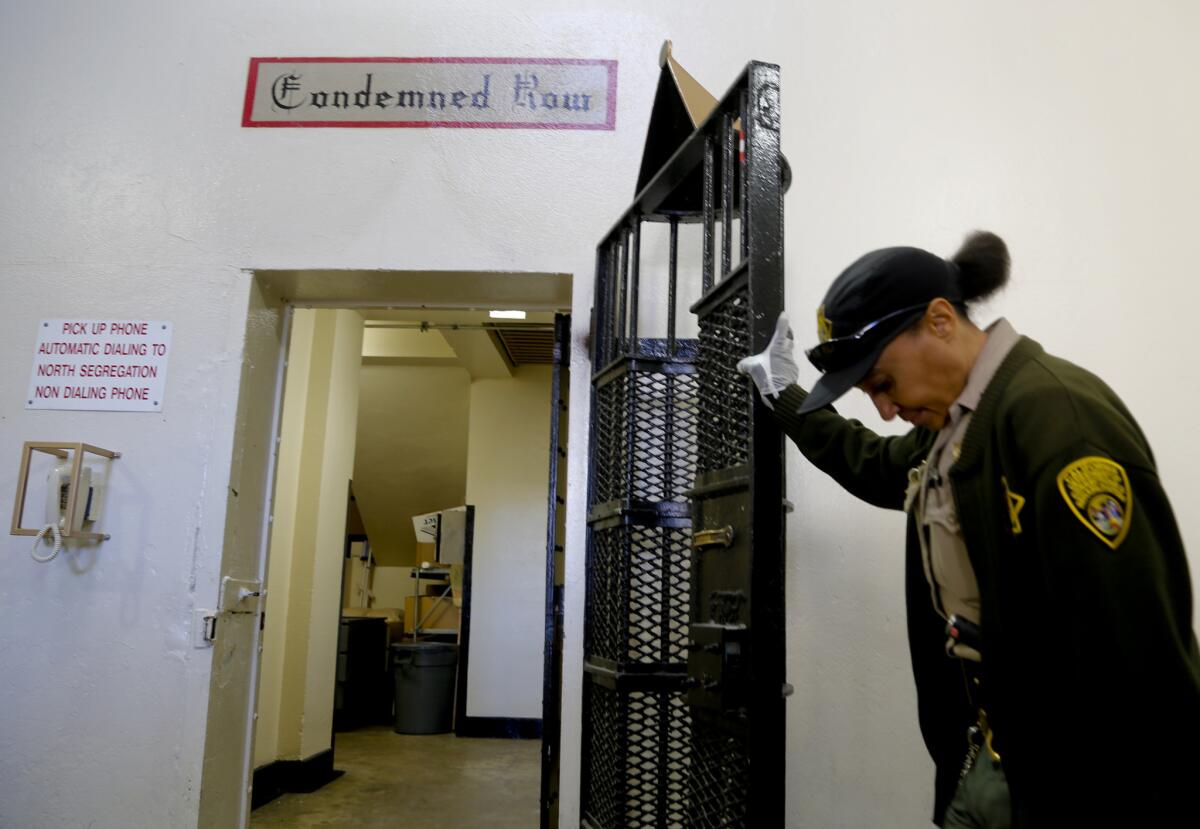
For years, San Quentin State Prison was synonymous with California’s death row. Its condemned housing unit became a symbol of the state’s contradictory stance on capital punishment: a massive death row population, an execution chamber, and almost no executions. California voters repeatedly preserved the death penalty, yet the legal process, appeals, lethal injection challenges, and political opposition made executions functionally dormant.
Newsom’s position has been clear since 2019, when he imposed a moratorium on executions. The latest relocation effort goes further by unwinding the physical and operational structure of death row itself. Condemned prisoners are being moved to other maximum-security facilities, where they may be housed under different conditions and, in some cases, placed into work programs.
Key insight: The state is not abolishing the death penalty through legislation. It is making the old death row system less central, less visible, and less operational.
That distinction matters. A governor cannot simply erase death sentences approved by courts and juries. But a governor can reshape how the prison system houses people under those sentences. That is where this policy becomes both powerful and controversial.
Why California death row is being dismantled now
The official logic is pragmatic: death row is expensive, isolating, and out of step with how California now wants to manage prisons. Maintaining a separate condemned unit requires specialized staffing, heightened security routines, and facilities built around a punishment the state has not carried out in years.
But the political logic is just as important. Newsom has positioned himself as one of the country’s most visible Democratic governors willing to confront legacy criminal justice policies. Ending the traditional death row model allows him to act without waiting for voters or legislators to abolish the death penalty outright.
The administrative argument
Prison officials have long argued that housing people solely by sentence status can be inefficient. Under the new model, condemned prisoners can be classified by behavior, security risk, medical need, and institutional programming, rather than automatically placed in a single death row unit.
This is a major operational shift. In theory, it could reduce the burden on San Quentin, expand access to rehabilitative programming, and allow the state to use prison space more flexibly. It also aligns with broader California corrections reforms that emphasize normalization, education, and reduced isolation.
The moral argument
Newsom’s moral case is blunt: the death penalty is irreversible, racially unequal, financially wasteful, and vulnerable to wrongful convictions. Reform advocates argue that a dormant execution system still inflicts harm by keeping prisoners in extreme isolation for decades while giving victims’ families an illusion of closure that may never arrive.
Why this matters: California is not a marginal player. When the state changes how it handles capital punishment, it influences national debates on sentencing, prison design, and the meaning of justice.
The backlash is intense and politically durable
Critics see the move as an end-run around voters. California residents have had opportunities to repeal the death penalty and have declined to do so. For prosecutors, some victims’ families, and tough-on-crime lawmakers, dismantling death row looks like executive overreach: a governor using prison administration to weaken a punishment still authorized by law.
The emotional core of the opposition comes from families of murder victims. Some have waited decades through appeals, hearings, and procedural delays. To them, moving condemned prisoners into the general prison system can feel like another institutional betrayal, especially if those prisoners gain access to work assignments or less restrictive environments.
Editorial view: Newsom’s policy is bold, but it also exposes a democratic tension. If voters keep capital punishment, can a governor effectively neutralize it by redesigning the prison system around it?
That question will follow this policy. It will be litigated in courtrooms, debated in campaigns, and used as a proxy fight over public safety. Expect opponents to frame the move as soft on violent crime, especially in an election environment where crime narratives can overwhelm policy nuance.
What changes for condemned prisoners
The most visible change is location. Prisoners sentenced to death are no longer automatically confined to the historic death row at San Quentin. Instead, they can be transferred to other high-security prisons across California.
The more consequential change is status inside the system. Depending on classification, some prisoners may have access to jobs or programming unavailable in the old death row structure. California has also explored ways for wages earned by condemned prisoners to go toward victim restitution, a policy designed to answer critics who argue that the shift benefits offenders without helping victims.
- Housing: Condemned prisoners may be placed in different prisons based on security classification.
- Programming: Some may gain access to education, work, or behavioral programs.
- Restitution: Prison wages can potentially be directed toward victim compensation obligations.
- Legal status: Death sentences remain in place unless overturned by courts or changed by law.
That last point is crucial. This is not mass clemency. It is not resentencing. It is a transformation of confinement conditions while the underlying death judgments remain legally active.
A national signal on capital punishment
The United States has been moving away from executions unevenly. Some states continue to carry them out, while others have abolished the death penalty, paused executions, or allowed capital systems to wither under legal and practical constraints. California’s approach is unusual because it combines scale with ambiguity: the state retains capital punishment on paper while dismantling its most recognizable infrastructure.
That ambiguity may become a template. Governors in states with stalled execution systems may find it easier to alter housing and prison operations than to win full abolition. Legislatures may avoid the issue. Courts may keep sentences intact. Meanwhile, death row as a physical institution could shrink.
Pro tip for readers watching policy trends
Do not measure death penalty change only by statutes. Watch prison budgets, housing policies, execution protocols, drug procurement rules, and clemency practices. Capital punishment can be weakened long before it is formally repealed.
This is the real story behind California’s move. The death penalty is not just a law. It is a system requiring buildings, staff, medical procedures, legal timelines, political will, and public legitimacy. Remove enough of that infrastructure, and the punishment becomes increasingly symbolic.
The future of California death row
The future of California death row is now likely to be defined by three forces: litigation, electoral politics, and prison outcomes. If transfers produce violence, security failures, or high-profile controversies, critics will seize on them. If the system absorbs the population without major disruption, reformers will argue that the old death row model was unnecessary all along.
Newsom’s larger challenge is that symbolic criminal justice reform is easy to attack and hard to explain. Dismantling a condemned housing unit does not fit neatly into a campaign slogan. Supporters must argue in systems language: cost, classification, racial bias, procedural delay, and institutional design. Opponents can answer with a simpler claim: juries imposed death, and the state is refusing to honor it.
Why this matters now: California is testing whether capital punishment can be hollowed out by governance before it is abolished by law.
That is why this moment matters beyond California. Newsom is not merely managing a prison population. He is redefining what it means for a state to have a death penalty it does not intend to use. The old death row model offered certainty of symbolism, if not certainty of execution. The new model forces a harder question: if a punishment is too flawed to carry out, too expensive to maintain, and too divisive to repeal, how long can it survive as policy theater?
California may not have ended the death penalty. But it has made the traditional death row era feel unmistakably closer to over.
The information provided in this article is for general informational purposes only. While we strive for accuracy, we make no guarantees about the completeness or reliability of the content. Always verify important information through official or multiple sources before making decisions.