Newsrooms Fight White House Press Ban
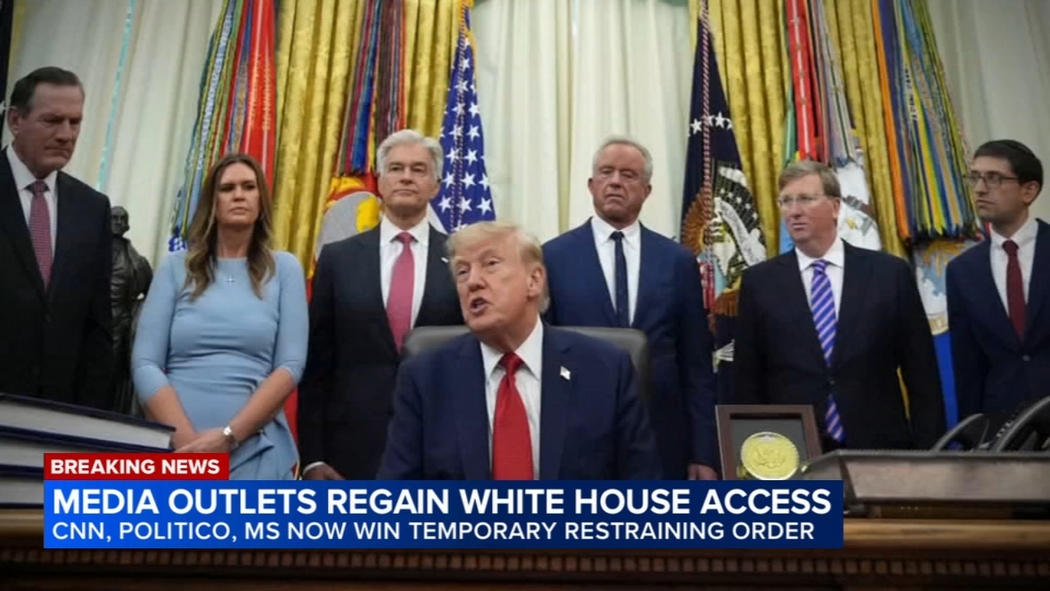
A White House press ban is never just a scheduling dispute. It is a stress test for whether political power can punish coverage it dislikes by cutting off access to the rooms where decisions are made. News organizations are now pushing that question into court, arguing that exclusion from presidential events, briefings, or press spaces can cross the line from media management into retaliation. For readers, this is not an inside-baseball fight among reporters. It affects what the public learns, how quickly it learns it, and whether government officials can quietly reward friendly coverage while freezing out aggressive scrutiny. The stakes are especially high because modern political communication already runs through tightly managed channels, social platforms, and partisan ecosystems. If access becomes a privilege granted only to compliant outlets, the public loses more than a press credential. It loses an independent witness.
- News organizations are challenging limits on White House access as a First Amendment issue, not merely a workplace dispute.
- The central legal question is whether the government can exclude journalists based on viewpoint, editorial choices, or unfavorable coverage.
- The outcome could reshape press access rules for future administrations, briefings, pools, and presidential travel.
- Even narrow bans can have broad consequences because access determines what questions get asked and what facts reach the public.
Why the White House press ban fight matters now
The presidency has always tried to shape the story. Every administration chooses backdrops, calibrates briefings, and rewards message discipline. But a White House press ban raises a sharper constitutional concern: whether officials are using access as leverage against independent journalism.
Courts have generally recognized that the White House has practical control over secure spaces, events, and travel. Not every reporter can fit into every room, and security rules are real. But once the government creates a press access system, it cannot administer that system in a way that punishes protected speech. That distinction is the core of the dispute.
The key issue is not whether the White House must invite every journalist everywhere. It is whether it can deny access because it dislikes what a journalist or outlet says.
That is why news organizations tend to treat these cases as bigger than one outlet. A ban against a single newsroom can become a template. If officials learn they can sideline one organization for its terminology, framing, investigations, or questions, the pressure spreads across the press corps. Editors may start calculating not only what is accurate, but what might trigger exclusion.
The legal fault line in a White House press ban
At the center of the case are two overlapping principles: First Amendment protection against government retaliation and the need for viewpoint neutrality in government-controlled access systems. The government can impose reasonable rules around security, capacity, decorum, and logistics. It cannot use those rules as a mask for viewpoint discrimination.
That is where these disputes become fact-intensive. The court will likely ask what reason the White House gave for the ban, whether the rule was applied consistently, whether similarly situated outlets were treated differently, and whether the affected organization had a meaningful way to challenge the decision.
Access is not the same as favoritism
There is no constitutional right to a front-row seat at every presidential appearance. But the modern presidency depends on pooled reporting, credentialed access, and shared distribution of information. When an outlet is removed from those systems, it may lose the ability to witness events firsthand, ask questions in real time, or provide independent accounts to the broader public.
That harm is not abstract. In Washington reporting, timing matters. A question asked in the moment can force an answer before a narrative hardens. A reporter in the room can notice who was present, what was avoided, and how officials reacted under pressure. Exclusion changes the record.
Retaliation is the constitutional tripwire
The strongest argument for news organizations is that a ban imposed because of editorial decisions would chill speech. If the penalty for independent coverage is loss of access, the government is effectively creating a reward system for compliance.
That does not mean every access decision is unconstitutional. It means officials need a neutral, defensible basis. A written credentialing process, clear standards, documented security concerns, and an appeal mechanism all matter. Vague claims about fairness, attitude, or disruption are more vulnerable when they appear connected to coverage the administration dislikes.
How press access became a power center
White House access used to be viewed as a professional credentialing issue. Today, it is part of a much larger information war. Presidents can speak directly through social media, friendly broadcasters, podcasts, livestreams, and official video channels. That gives administrations more ways to bypass traditional questioning.
At the same time, fragmented audiences make official access more valuable. A clip from a briefing can travel instantly. A question can become a national controversy. A denial of access can send a political signal to supporters and a warning to critics.
This is why the press corps is protective of shared access norms. The point is not that legacy media deserves special treatment. It is that democratic accountability requires independent intermediaries who are not chosen solely for loyalty.
- Pool access allows a small group of journalists to report on events where space is limited.
- Credentials determine who can enter secure press areas and official events.
- Briefing access shapes which questions officials face in public.
- Travel access affects coverage of presidential trips, foreign meetings, and crisis response.
Each mechanism sounds procedural. Together, they define the public’s window into executive power.
The White House press ban could set a lasting precedent
The biggest consequence may not be the immediate fate of one newsroom. It may be the precedent courts create for future administrations. A narrow ruling could simply require clearer procedures before suspending access. A broader ruling could affirm that viewpoint-based exclusion from White House press systems is unconstitutional. A government-friendly ruling could give presidents more latitude to police the press environment.
That last scenario would not only affect national outlets. Statehouses, city halls, police departments, and federal agencies watch these battles. If the White House can exclude critical journalists with minimal judicial pushback, other public officials may test similar tactics at smaller scales where local newsrooms have fewer resources to fight back.
Press freedom often erodes through procedure before it erodes through censorship. A revoked credential can be as consequential as a blocked publication when it keeps scrutiny out of the room.
Why smaller newsrooms should care
Large media organizations can hire lawyers and rally industry support. Local and nonprofit newsrooms often cannot. Yet they are the ones most vulnerable to access retaliation, especially when covering sheriffs, mayors, school boards, and governors. A strong ruling on neutral access rules could give those journalists a tool when officials try to shut them out.
That is the practical E-E-A-T dimension of this dispute. Journalism depends on firsthand observation, accountable sourcing, and transparent methods. Access restrictions do not just inconvenience reporters. They can weaken the evidence base behind public-interest reporting.
What the court is likely to scrutinize
Expect the court to focus less on political theater and more on administrative detail. Judges often look for a record: what policy existed, who made the decision, what reason was given, and whether the outlet received due process.
Key questions before the court
- Was the ban based on a neutral rule or on the outlet’s editorial position?
- Did the White House apply the same rule to other organizations?
- Was there a clear process for suspension, review, and reinstatement?
- Did the exclusion affect core reporting functions such as briefings, pools, or presidential events?
- Could less restrictive measures have addressed the stated concern?
Those questions matter because the government usually has more room to manage logistics than to punish speech. If the record shows inconsistent treatment or statements tying the ban to coverage, the legal risk for the administration rises.
Pro tips for reading the next filing
Legal filings in press access fights can sound technical, but readers should watch for a few signals. References to viewpoint discrimination, retaliation, due process, and irreparable harm usually indicate the challengers are trying to frame the dispute as a constitutional injury that needs urgent relief.
On the government side, look for language about security, capacity, orderly administration, and discretion. Those terms are designed to place the case in the realm of operational control rather than speech punishment.
The most important evidence may be the simplest: whether officials connected the exclusion to what the outlet published, said, or refused to say. Courts tend to be skeptical when the government claims neutrality but the timeline suggests retaliation.
The bigger picture for democracy and media trust
This fight arrives at a moment when trust in media is already fractured. Some audiences see press access as elitist. Others see it as essential oversight. Both concerns can be true at once. The White House press system should not operate like a private club, but the answer is not to let political officials handpick the questioners.
The better path is transparency: clear credentialing standards, published suspension rules, consistent enforcement, and an appeal process. That protects the public, the press, and the government itself. It reduces the perception that access is traded for favorable coverage and makes it harder for any outlet to claim special entitlement.
A court ruling will not fix the deeper crisis of information trust. But it can draw a bright line around government retaliation. In a media environment flooded with spin, leaks, and direct-to-audience propaganda, the public still needs reporters who can enter official spaces without promising obedience at the door.
The case is ultimately about who gets to decide which questions are legitimate. If the answer is the government alone, the press becomes managed scenery. If the answer includes independent newsrooms operating under fair rules, the public keeps a fighting chance at seeing power clearly.
The information provided in this article is for general informational purposes only. While we strive for accuracy, we make no guarantees about the completeness or reliability of the content. Always verify important information through official or multiple sources before making decisions.


