Trump Xi Netanyahu Shake Global Markets

Trump Xi Netanyahu Shake Global Markets
The pressure points are no longer isolated. The latest Trump Xi Netanyahu news lands at a moment when global power politics, Middle East diplomacy, and household affordability are colliding in real time. For readers trying to understand what actually moves markets, elections, and family budgets, the signal is this: decisions made in presidential offices, at the United Nations, and inside bond markets are now feeding directly into one another. A conversation between Washington and Beijing can rattle supply chains. A speech by Israel’s prime minister can reshape diplomatic leverage. A small move in mortgage rates can decide whether millions of buyers stay on the sidelines. This is not just another busy news cycle. It is a stress test for political leadership and economic confidence.
- Trump and Xi remain central to global economic risk, especially around
tariffs, trade, technology, and security competition. - Netanyahu’s posture at the
United Nationskeeps the Middle East at the center of U.S. foreign policy pressure. - Mortgage rates are more than a housing story: they are a consumer confidence indicator with political consequences.
- The through line is trust: in leaders, markets, alliances, and the ability of institutions to absorb shocks.
Why The Trump Xi Netanyahu News Hits Differently Now
There are weeks when the headlines merely stack up, and there are weeks when they begin to explain each other. This is the latter. The renewed focus on Donald Trump, Xi Jinping, Benjamin Netanyahu, the United Nations General Assembly, and shifting mortgage rates is not random. It reflects a world where domestic politics and global strategy are increasingly inseparable.
Trump’s approach to China has long fused economics with political theater. Xi’s approach to the United States has long fused patience with pressure. Netanyahu’s international messaging, meanwhile, has become a recurring test of how far U.S. support can stretch amid humanitarian, military, and diplomatic scrutiny. Add housing costs to the mix, and the news cycle moves from abstract geopolitics to kitchen-table anxiety.
The real story is not that these events happened at the same time. The real story is that each one amplifies the others.
That amplification matters because voters do not experience policy in neat categories. A family priced out of the housing market may also worry about inflation, energy costs, global instability, and whether political leaders are competent enough to manage all of it. In that sense, this is a single story about control: who has it, who is losing it, and who can credibly promise to restore it.
Trump Xi Netanyahu News And The Return Of Great Power Risk
The Trump-Xi dynamic remains one of the most consequential relationships in the global economy. The U.S. and China are locked into a competition that spans semiconductors, artificial intelligence, critical minerals, military positioning, trade deficits, and supply chains. Even when leaders sound conciliatory, markets listen for the subtext: Will tariffs rise? Will export controls tighten? Will companies face new uncertainty?
For businesses, the danger is not only a dramatic rupture. It is the slow normalization of friction. Companies have already spent years rethinking sourcing, manufacturing, and logistics under the banner of supply chain resilience. But resilience is expensive. It often means duplicating suppliers, carrying more inventory, or shifting production to higher-cost regions. Those costs eventually travel downstream to consumers.
The Trade War Never Really Ended
The phrase trade war can make the conflict sound like an on-off switch. It is not. U.S.-China competition has become infrastructure. It sits inside investment decisions, compliance departments, venture capital risk models, and national security reviews. A single leader-to-leader conversation can soften the tone, but it rarely erases the deeper incentives driving both governments.
Washington wants to protect strategic industries and reduce dependence on Beijing. Beijing wants to reduce vulnerability to U.S. pressure and strengthen its own technological self-sufficiency. That means the baseline condition is rivalry, even when diplomacy resumes.
Pro Tip: When tracking U.S.-China news, do not focus only on the public remarks. Watch changes in export controls, sanctions, investment screening, and corporate guidance. Those are often better indicators of where policy is actually heading.
Netanyahu At The United Nations Raises The Stakes
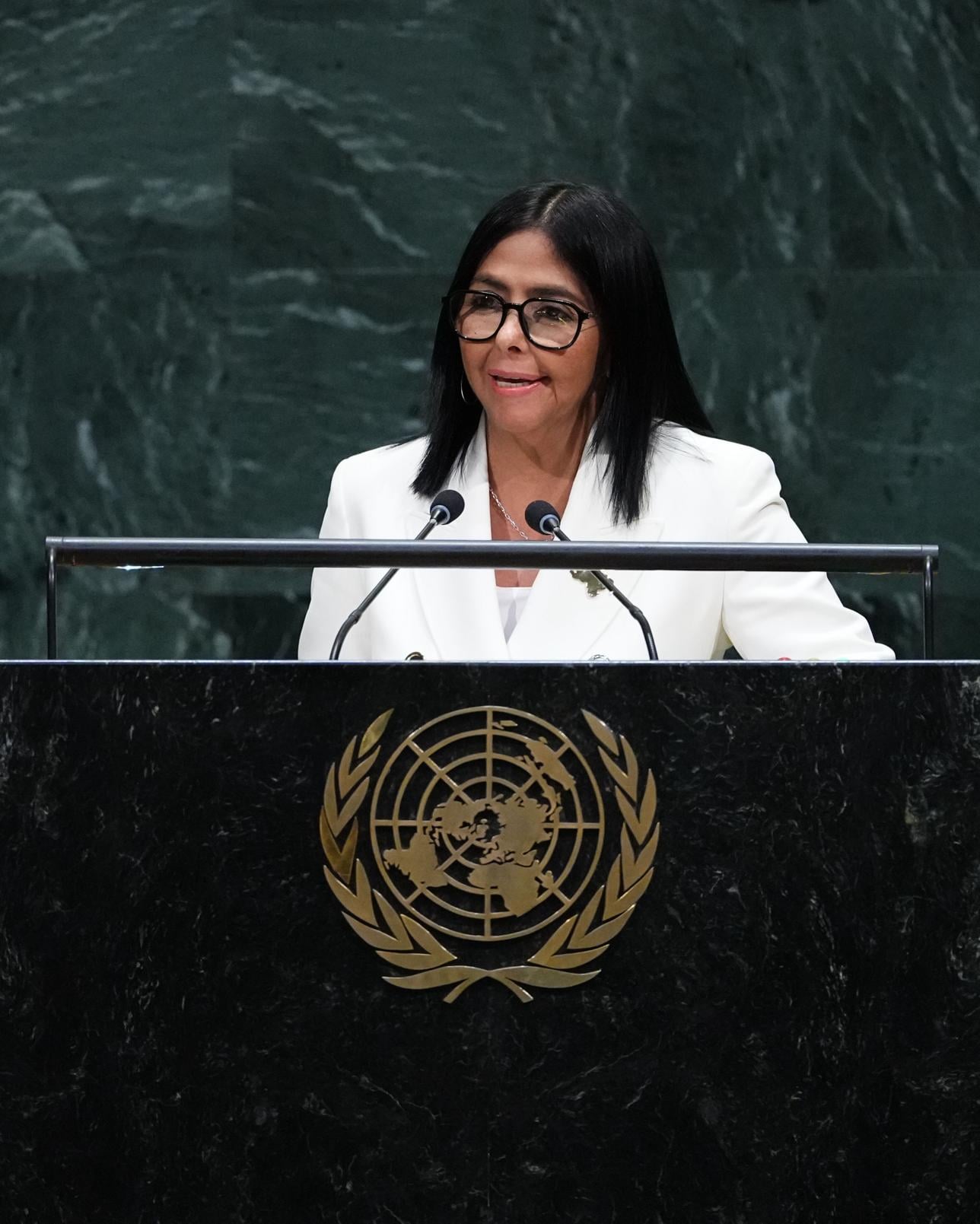
Netanyahu’s appearance on the global stage is never just a speech. It is a message to several audiences at once: allies, adversaries, domestic voters, hostage families, military planners, and U.S. policymakers. The United Nations provides a particularly charged venue because it turns national strategy into global theater.
For Israel, the challenge is maintaining military and diplomatic objectives while managing mounting international scrutiny. For the United States, the challenge is even more complicated. Washington must balance support for Israel with regional stability, alliance management, and growing domestic divisions over the war and its humanitarian toll.
Netanyahu’s diplomacy now functions like a pressure gauge for U.S. influence in the Middle East.
If U.S. officials can shape Israeli choices, American leverage looks intact. If they cannot, critics at home and abroad will argue that Washington is underwriting a strategy it does not fully control. That perception matters enormously in an election-shaped environment where foreign policy can become a proxy fight over strength, morality, and competence.
Why The UN Stage Still Matters
It is fashionable to dismiss the United Nations as performative. That is partly true, but performance is part of power. Speeches at the UN General Assembly frame conflicts for global audiences. They signal red lines. They test diplomatic coalitions. They also create sound bites that travel faster than formal policy documents.
For Netanyahu, the platform can reinforce his argument that Israel faces existential threats and cannot outsource its security. For critics, the same platform can intensify demands for accountability, cease-fire pressure, or recognition of Palestinian statehood. Either way, the stage magnifies the stakes.
Mortgage Rates Turn Politics Into Personal Math
Then there is the housing market, the part of the news cycle that may feel less dramatic than geopolitics but hits Americans with brutal precision. A movement in the 30-year fixed mortgage rate can change a monthly payment by hundreds of dollars. That can determine whether a buyer qualifies for a loan, whether a seller lists a home, or whether a young family delays a major life decision.
Mortgage rates are tied to expectations about inflation, Federal Reserve policy, labor markets, and demand for government debt. They do not simply fall because people want them to. They move when investors reassess the future path of growth and interest rates.
That is why any drop in rates gets attention quickly. It can revive buyer interest, improve affordability at the margins, and give real estate professionals a reason to hope the frozen housing market may thaw. But the relief is relative. Prices remain high in many markets, inventory remains uneven, and years of elevated borrowing costs have reset expectations.
The Housing Market Is Still Stuck
The core problem is the lock-in effect. Many homeowners secured ultra-low loans during the pandemic-era rate trough. Selling now could mean giving up a cheap mortgage and taking on a much more expensive one. That keeps supply constrained, which props up prices even when demand weakens.
For first-time buyers, this creates a punishing equation: high prices plus elevated rates plus limited inventory. A modest rate decline helps, but it does not magically restore affordability. It simply reduces the level of pain.
Why this matters: Housing is one of the clearest ways economic sentiment becomes political sentiment. If voters feel locked out of ownership, they are less likely to believe optimistic claims about the economy.
The Hidden Link Between Foreign Policy And Mortgage Rates
At first glance, Trump and Xi, Netanyahu at the United Nations, and U.S. mortgage rates seem like separate stories. But markets connect them through risk. Global tension can influence energy prices, inflation expectations, investor behavior, and confidence. Trade conflict can affect consumer prices. War can pressure budgets and alliances. Central banks then respond to the inflation and growth picture those forces help create.
This is where the politics get dangerous. Leaders often want the benefits of toughness without the economic costs. They want to sound hawkish on China without raising prices. They want to project strength in the Middle East without being blamed for instability. They want lower borrowing costs without reigniting inflation. Those goals can coexist for a while, but not always.
The age of clean separation between foreign policy and household economics is over.
For voters, the question becomes brutally simple: Are leaders making the world feel safer and life feel more affordable? If the answer is no, even impressive diplomatic gestures may not translate into political credit.
What To Watch Next In Trump Xi Netanyahu News
The next phase will be defined less by speeches than by follow-through. Watch whether U.S.-China engagement produces concrete steps on trade, technology, or military communication. Watch whether Netanyahu’s international messaging hardens or softens the diplomatic space around Israel. Watch whether mortgage rates continue to ease or snap back as economic data shifts.
- On China: Look for signals around
tariffs,semiconductor export controls, and military communication channels. - On Israel: Track U.S. pressure, regional responses, and any movement around cease-fire or postwar governance plans.
- On housing: Follow the
10-year Treasury yield,Federal Reservemessaging, inventory levels, and mortgage application data. - On politics: Watch whether candidates connect global instability to the cost of living in a way voters find credible.
The Bottom Line
The convergence of Trump, Xi, Netanyahu, the United Nations, and mortgage rates is a reminder that modern power is interconnected. A diplomatic signal can move markets. A rate shift can reshape voter mood. A foreign leader’s speech can complicate a domestic campaign. The leaders who understand those linkages will have an advantage. The ones who treat them as separate news items will keep getting surprised.
For readers, the practical takeaway is to resist headline whiplash. The important question is not which development dominates one morning’s news. It is how these developments combine to shape confidence. Right now, confidence is the scarce resource: confidence in diplomacy, confidence in affordability, confidence in alliances, and confidence that political leaders can manage complexity without turning every crisis into a campaign prop.
The information provided in this article is for general informational purposes only. While we strive for accuracy, we make no guarantees about the completeness or reliability of the content. Always verify important information through official or multiple sources before making decisions.