Online Age Checks Rewrite the Web
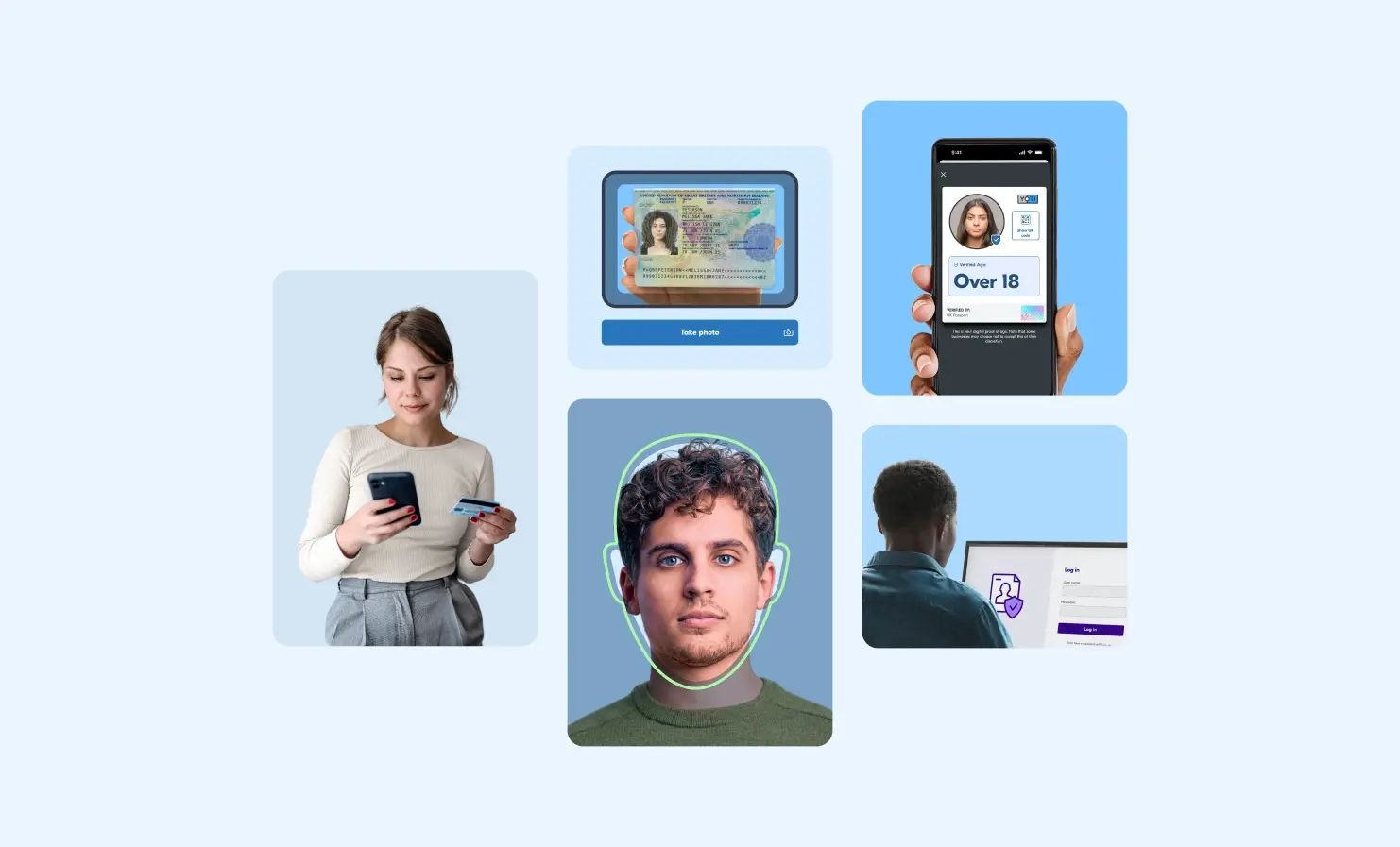
The web is entering a more tightly gated era, and online age checks are no longer a niche compliance feature buried in a settings menu. They are becoming a core design problem for social platforms, adult sites, app stores, gaming networks and any service that hosts risky or age-restricted content. The shift sounds simple: prove a user is old enough before letting them in. The reality is messier. Platforms must balance child safety, privacy, fraud prevention, user friction and regulatory pressure, all while avoiding a new surveillance layer across everyday browsing. A BBC report on the debate highlights the central tension: everyone wants safer digital spaces for young people, but nobody wants the internet to become a place where identity documents or AI face scans are required at every door.
- Online age checks are becoming a mainstream compliance requirement, not an optional safety feature.
- The biggest challenge is balancing child protection with privacy and data minimization.
AI-based age estimation may reduce document checks, but it introduces accuracy and bias risks.- Platforms that build trust-first age systems will have a competitive advantage as regulation expands.
Why Online Age Checks Are Suddenly Everywhere
For years, the internet relied on the weakest possible version of age verification: the honor system. A pop-up asking whether someone is over 18 was cheap, fast and mostly performative. Regulators are now making clear that this model is not enough for services hosting pornography, gambling-like mechanics, self-harm content, violent material or algorithmic feeds that can push children into harmful loops.
The pressure is coming from two directions. Parents and child-safety advocates want stronger protections after years of scandals around social media harms. Governments want enforceable rules rather than voluntary platform promises. The tech industry, meanwhile, is trying to avoid systems that feel intrusive enough to drive users away or risky enough to create new databases of sensitive personal information.
Key insight: The next phase of internet safety will not be won by companies that collect the most data. It will be won by companies that can prove eligibility while revealing the least.
That is why the phrase age assurance matters. It is broader than classic ID verification. It includes a spectrum of methods, from age estimation and payment-card checks to mobile-network signals, parental approval flows and privacy-preserving credentials. The question is not only whether a platform can identify a user. It is whether it can make a sufficiently reliable age decision without turning every login into a passport control desk.
Online Age Checks Need Better Design Than Old ID Uploads
The bluntest solution is also the most controversial: ask users to upload a passport, driving licence or national identity card. That may satisfy a narrow compliance requirement, but it creates immediate trust problems. Users worry about where the document goes, how long it is stored, who can access it and what happens if the provider is breached.
Those concerns are not paranoia. Identity data is among the most valuable data a company can mishandle. A leaked password can be reset. A leaked scan of an identity document can haunt a person for years. If age checks become routine, the industry must avoid normalizing unnecessary collection of high-risk documents.
The Better Model Is Layered Assurance
A smarter approach is tiered. Low-risk services can use lighter signals, while high-risk content demands stronger proof. For example, a general social app might use device-level parental controls, birthdate consistency checks and behavioral flags. A site with explicit adult content may need stronger proof, but that proof does not always need to be stored by the site itself.
This is where third-party verification and reusable credentials enter the picture. A specialist provider can verify age once, then return a simple yes-or-no token to a platform. In theory, the platform never sees the user’s full date of birth or identity document. In practice, the privacy value depends on implementation, governance and whether the provider itself becomes a centralized tracking point.
- Low-risk access: Account-level age declaration plus parental controls.
- Medium-risk access:
AIage estimation, payment signals or mobile account checks. - High-risk access: Verified credentials, document checks or regulated third-party assurance.
- Best practice: Share an age result, not the underlying identity data.
The Promise and Problem of AI Age Estimation
AI age estimation is attractive because it can reduce reliance on document uploads. A user takes a selfie or short video, and a model estimates whether they are above or below a threshold. For platforms, it is fast. For users, it may feel less invasive than handing over an official document. For regulators, it offers a scalable mechanism that can be audited.
But this is not magic. Biometric estimation systems can be wrong, and errors are not evenly distributed. Lighting, camera quality, disability, facial features, ethnicity and age proximity to the threshold can all affect reliability. The hardest cases are often the most consequential: a 17-year-old and an 18-year-old may look extremely similar, yet the legal treatment can be completely different.
Accuracy Is Not the Only Metric
Platforms should not judge these tools by a single accuracy number. They need to examine false positives, false negatives, demographic performance, appeals processes, human review standards and retention policies. A system that incorrectly blocks adults will cause user outrage. A system that incorrectly admits children will fail its safety purpose. A system that stores biometric templates unnecessarily will create a privacy liability.
Pro tip for product teams: treat age estimation as a risk decision, not a truth machine. The model should produce a confidence range. The product should then decide whether to allow access, request another method or route the case to an appeal flow.
Editorial stance: If a company cannot explain how its
AIage tool works, how it was tested and how users can challenge errors, it should not deploy that tool at scale.
Privacy Must Be the Feature Not the Footnote
The most credible online age checks will be built around data minimization. That means collecting only what is necessary, storing it briefly or not at all, and separating verification from tracking. The privacy goal is simple: a platform should know that a user is eligible, not who the user is in every detail.
Emerging approaches such as zero-knowledge proof systems point toward a better future. In a privacy-preserving model, a user could prove they are over a required age without revealing their name, exact birthday or document number. These technologies are still not simple enough for mass consumer deployment everywhere, but they show the direction regulators and platforms should push toward.
What Good Implementation Looks Like
A responsible system should make its privacy choices visible. Users should be told what method is being used, what data is collected, whether a third party is involved, how long data is retained and how to appeal a decision. Vague language like trust and safety processing is not enough when the system involves identity documents or facial analysis.
- Use
data minimizationby default. - Prefer age tokens over raw identity records.
- Offer alternative verification paths for users without documents or smartphones.
- Publish error-rate information in plain language.
- Delete verification data as soon as it is no longer required.
Why Online Age Checks Matter for Platforms
For technology companies, this is not merely a legal compliance exercise. Age assurance will reshape onboarding, monetization, content ranking, moderation and advertising. If a platform cannot reliably distinguish children from adults, it will struggle to offer age-appropriate experiences. If it overcorrects with heavy-handed verification, it may lose users who see the process as creepy or excessive.
The winners will be companies that integrate safety without making the product feel broken. That means designing age checks at moments of genuine risk rather than interrupting harmless activity. It also means building systems that degrade gracefully: if one verification method fails, users should have another route rather than being trapped in an automated dead end.
There is also a business risk hiding in plain sight. Smaller websites may struggle with the cost and complexity of compliant verification. Larger platforms can absorb vendors, legal teams and engineering overhead. Without careful policy design, age-check rules could unintentionally strengthen the biggest players by making compliance too expensive for smaller competitors.
The Future Is a More Permissioned Internet
The open web is not disappearing, but it is becoming more conditional. More services will ask who is using them, what age band they fall into and whether certain features should be restricted. The challenge is to prevent that shift from becoming a universal identity layer that tracks people across the internet.
Expect three developments next. First, app stores and operating systems will be pushed to play a larger role because they already sit close to identity, payment and parental-control systems. Second, regulators will demand stronger audits of AI age tools. Third, consumers will become more selective, rewarding services that make verification feel secure, limited and transparent.
The best version of online age checks could make digital spaces safer for children while preserving adult privacy. The worst version could normalize constant identity demands, create new honeypots of sensitive data and lock users out through opaque automation. The technology is only part of the story. The real test is whether platforms can build systems that are protective without becoming predatory.
The information provided in this article is for general informational purposes only. While we strive for accuracy, we make no guarantees about the completeness or reliability of the content. Always verify important information through official or multiple sources before making decisions.