Pakistan Afghanistan Ceasefire Wobbles
Pakistan Afghanistan Ceasefire Wobbles
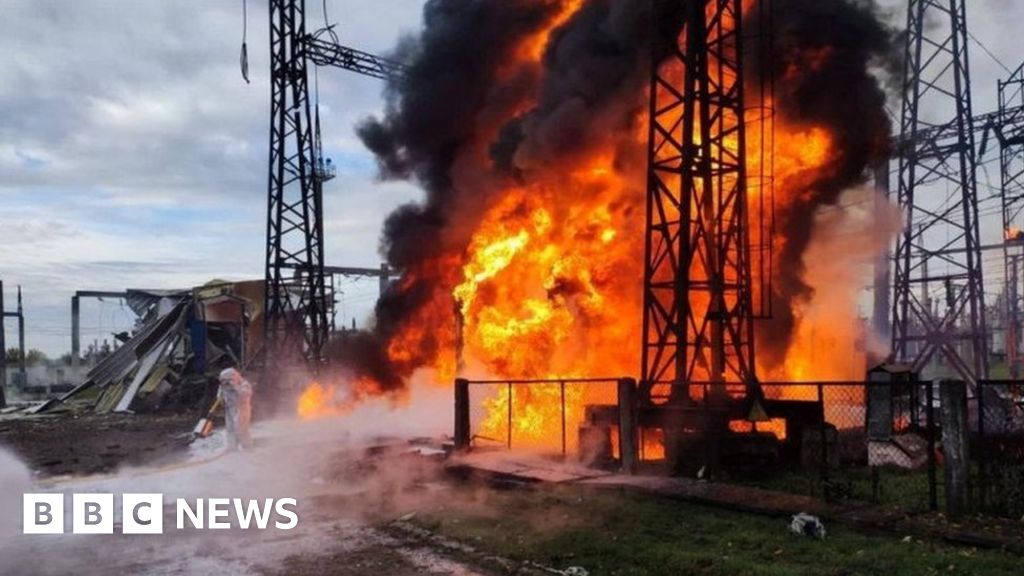
The Pakistan Afghanistan ceasefire is starting to look less like a breakthrough and more like a fragile pause with a short shelf life. Reports of cross-border attacks from both sides have quickly exposed the core problem that haunts nearly every truce in the region: agreements on paper move much faster than control on the ground. For civilians living near the frontier, that gap is not abstract. It means displacement, fear, and the constant risk that one incident turns into a wider military spiral. For policymakers, it is a warning that the border remains one of South Asia’s most combustible fault lines. What matters now is not just whether the ceasefire technically survives, but whether either government can enforce discipline, manage domestic pressure, and stop local violence from becoming a regional crisis.
- Cross-border attacks are undermining confidence in the Pakistan Afghanistan ceasefire almost immediately.
- Border security, militant activity, and mutual distrust remain the biggest obstacles to lasting de-escalation.
- Even limited incidents can trigger retaliation cycles that are politically hard to reverse.
- The real test is whether both governments can translate diplomatic language into operational control on the frontier.
Why the Pakistan Afghanistan ceasefire is already under pressure
Ceasefires fail when they are asked to do too much too quickly. That appears to be the danger here. A truce can reduce immediate violence, but it cannot by itself erase years of suspicion over border management, militant safe havens, armed infiltration, refugee flows, and disputed narratives about who fired first.
That is why early reports of new attacks matter so much. They do not just represent isolated security incidents. They attack the political credibility of the truce itself. Once each side starts accusing the other of violations, the conversation shifts away from de-escalation and toward blame. That shift is often the beginning of a dangerous feedback loop.
A ceasefire is only as strong as the command-and-control structures behind it. If local units, militias, or unaffiliated fighters can still shape events on the ground, the truce becomes reactive instead of stabilizing.
In practice, that means even a small clash can generate outsized consequences. Public opinion hardens. Military postures stiffen. Political leaders lose room to compromise. What looked like a tactical pause starts to resemble a countdown to the next confrontation.
What makes this border so difficult to stabilize
The frontier between Pakistan and Afghanistan has long been one of the hardest borders in the region to manage. Geography is part of the story: mountainous terrain, isolated crossings, and communities that straddle lines drawn by states but not always accepted socially or politically. But geography is only the starting point.
Militant networks complicate state control
One of the deepest challenges is the presence or perceived presence of militant actors who can operate across the border, exploit local terrain, and trigger retaliation. Governments may sign agreements, but irregular armed groups do not always follow state timelines. That disconnect is a recurring feature in border conflicts globally, and it is especially destabilizing here.
If one government believes fighters are using the other side’s territory for staging or refuge, every new incident becomes proof of bad faith. Whether those assessments are fully accurate or partly shaped by domestic politics, the result is the same: trust erodes fast.
Border narratives are politically loaded
Ceasefires do not happen in a vacuum. Leaders in both countries operate under intense internal pressure. Any sign of weakness at the border can be used by rivals, security hawks, or nationalist voices. That makes restraint politically expensive.
When a border incident occurs, governments face a narrow window to decide how to respond. De-escalation can look prudent to diplomats but indecisive to domestic audiences. Retaliation can look strong in the short term but make the next round of violence more likely. This is the central paradox of ceasefire politics.
Verification is often murky
Another reason the Pakistan Afghanistan ceasefire is vulnerable is the difficulty of verifying who initiated a clash. In volatile frontier zones, information arrives late, often incomplete, and usually filtered through security institutions with their own strategic interests. That creates a fog in which each side can reinforce its preferred version of events.
Without trusted monitoring mechanisms, every report becomes contested terrain. And once facts are disputed, accountability becomes harder to enforce.
Why this matters beyond the border
It would be a mistake to treat this as a localized security problem. Instability between Pakistan and Afghanistan carries wider consequences for the region, especially at a time when governments are trying to contain militancy, protect trade flows, and manage fragile internal political balances.
- Humanitarian risk: Border communities face immediate threats including displacement, school disruption, and restricted access to health services.
- Security spillover: Escalation can create openings for extremist groups that thrive in conditions of confusion and weakened coordination.
- Economic disruption: Tensions can slow cross-border movement, strain local commerce, and affect transport corridors that matter beyond the immediate conflict zone.
- Diplomatic fallout: Repeated violations reduce confidence in future mediation efforts and make outside partners more cautious.
For regional planners, this is the real alarm bell. A ceasefire breakdown rarely stays neatly contained. It alters security calculations, diverts state capacity, and raises the temperature across neighboring relationships.
The strategic problem hiding behind the headlines
There is a broader strategic issue underneath the latest flare-up: both governments may want reduced violence, but they may define stability differently. One side may prioritize immediate border deterrence. The other may focus on sovereignty, internal legitimacy, or limiting external pressure. Those goals can overlap at moments, but they do not always align.
That is where many ceasefires become brittle. They are built around a shared need to pause fighting, not around a shared framework for resolving the causes of fighting. The difference matters. A pause lowers temperatures. A framework changes incentives.
If the truce is not backed by clear rules for communication, accountability, and incident response, every violation becomes a political referendum on the entire relationship.
This is why border hotlines, joint contact channels, and rapid deconfliction mechanisms matter so much. They are not glamorous, but they are often the difference between a contained incident and an expanding crisis.
What both sides would need to do next
If the Pakistan Afghanistan ceasefire is to survive, the next phase must be operational, not rhetorical. Diplomatic statements can buy time, but only procedures can preserve it.
1. Build an incident response pipeline
Both sides need a defined chain for handling alleged violations: report, verify, communicate, and contain. In modern policy terms, the process should function almost like a secure workflow:
incident_detected -> command_review -> cross-border_contact -> temporary_hold -> joint_assessment -> public_statement
That kind of sequence reduces the chance that frontline confusion immediately escalates into state-level retaliation.
2. Separate militant activity from automatic state blame
This is politically difficult, but essential. If every violent event is instantly framed as state intent, leaders lose room to investigate and calibrate. That does not mean ignoring responsibility. It means distinguishing between direct state action, local unauthorized firing, and attacks by non-state actors.
Precision in attribution is a security tool, not a diplomatic luxury.
3. Control the information war
In any border confrontation, public narratives move almost as quickly as armed units. Officials need to avoid speculative claims before facts are established. Inflamed rhetoric may satisfy domestic audiences for a news cycle, but it narrows off-ramps and raises the cost of compromise.
A disciplined communications strategy should prioritize three things:
- confirmed facts
- measured language
- clear signals that channels for de-escalation remain open
4. Focus on civilian resilience
Ceasefires are often judged by elite diplomatic metrics while civilians absorb the real consequences. Governments should be evaluated partly on whether they protect schools, clinics, transport access, and emergency response capacities near the border. That is not secondary to security. It is a core measure of whether de-escalation is real.
Why skepticism is warranted
There is a temptation after any truce to treat diplomacy itself as proof of progress. That is usually too generous. The hard truth is that ceasefires in high-friction border zones are frequently tactical pauses, not strategic settlements. They can still be valuable – very valuable – but only if observers are honest about their limitations.
The warning signs are already visible: mutual accusations, renewed violence, and a trust deficit that predates the current arrangement by years. None of that means collapse is inevitable. It does mean optimism should be conditional.
The best reading of the moment is not that peace has failed, but that peace was never fully built. What exists right now is a narrow opening. Whether it widens or closes depends on choices made in the next days, not the promises made in the last round of talks.
What to watch now
The next signals will matter more than the initial announcement of the ceasefire itself. Analysts and policymakers should watch for a few concrete indicators:
- whether both governments continue direct communication after new incidents
- whether military responses stay limited or begin expanding in scope
- whether official rhetoric becomes more confrontational
- whether civilian displacement or trade disruption increases near key crossings
- whether responsibility is assigned with evidence or with political speed
If communication channels remain active and retaliation stays bounded, the truce may still hold in weakened form. If not, the region could slide back into a familiar and costly cycle: accusation, reprisal, denial, and deeper instability.
That is the real stakes story here. The Pakistan Afghanistan ceasefire was supposed to create breathing room. Instead, it is being stress-tested almost immediately by the same forces that made it necessary in the first place. The question now is not whether the border is tense. It clearly is. The question is whether either side can prove it has the discipline, leverage, and strategic patience to keep one violent incident from defining the entire relationship.
The information provided in this article is for general informational purposes only. While we strive for accuracy, we make no guarantees about the completeness or reliability of the content. Always verify important information through official or multiple sources before making decisions.