Phone Degrees Push College Forward
Phone Degrees Push College Forward
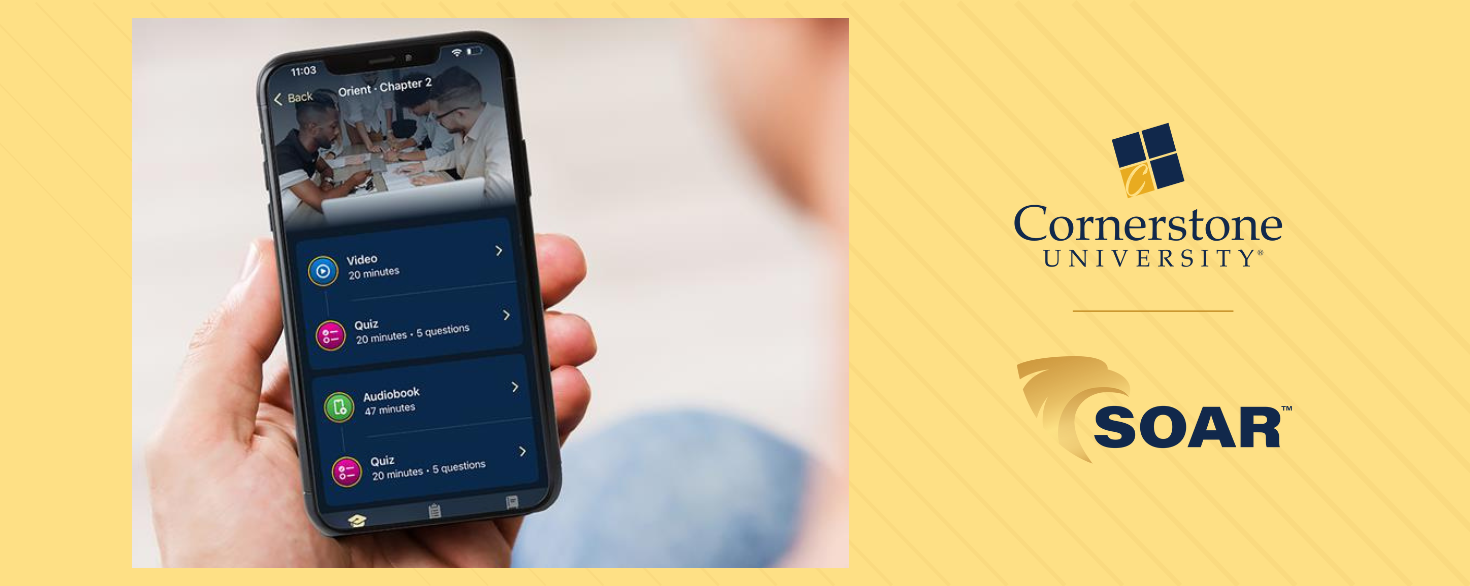
Higher education has spent years promising flexibility, but for millions of working adults, parents, and first-generation students, online college still often means owning a decent laptop, maintaining reliable broadband, and carving out hours of uninterrupted screen time. That is a luxury, not a baseline. A phone degree program changes that equation fast. When a university says students can complete bachelor’s and master’s degrees entirely on a smartphone, it is not just tweaking delivery – it is challenging one of higher education’s oldest assumptions: that serious learning requires traditional hardware, traditional schedules, and traditional access. The bigger story is not novelty. It is infrastructure, affordability, and whether colleges are finally building for the devices people actually use every day.
- Phone degree program models aim to remove laptop and broadband barriers for nontraditional students.
- Mobile-first education could expand access, but it also raises hard questions about quality, accreditation, and student outcomes.
- Universities that design courses for
mobile UXrather than simply shrinking desktop classes may gain a major competitive edge. - The strategy matters most for working adults, rural learners, and students balancing jobs, caregiving, or military service.
Why a phone degree program matters right now
There is a reason this idea lands with force. Smartphones are already the most widely available computing device in many households. For some students, a phone is not a backup device. It is the only device. That changes the stakes for course design, digital equity, and enrollment strategy.
Higher ed has long celebrated online learning as democratizing. But too often, the fine print includes hidden requirements: install software, upload files from a desktop, join long video calls, navigate clunky learning management systems, and complete assignments best handled with a keyboard and a large screen. In practice, that creates a two-tier system where access exists in theory but not always in execution.
Access is not just about putting coursework online. It is about making sure the coursework is actually usable on the device students already have.
A true mobile-first degree flips the model. Instead of asking students to adapt to institutional technology, the institution adapts to student reality. That is more than convenience. It is a strategic response to enrollment pressure, skepticism about tuition costs, and the demand for stackable, career-relevant credentials.
How a phone degree program succeeds or fails
The headline is catchy, but execution is everything. There is a massive difference between a university that allows some content to be viewed on a phone and one that can credibly deliver a full degree experience through a smartphone from enrollment to graduation.
Course design has to be rebuilt, not resized
Bad mobile learning is just desktop learning awkwardly compressed into a smaller rectangle. That does not work. Reading-heavy pages, long lecture recordings, complex tables, and multi-window workflows create friction fast.
A serious phone degree program needs course architecture built for short sessions, touch navigation, low bandwidth, and asynchronous progress. That typically means:
-
Shorter learning modules
-
Mobile-native quizzes and assessments
-
Audio-friendly and captioned content
-
Discussion tools optimized for quick participation
-
Assignments that do not assume access to full desktop software
If universities treat the smartphone as the primary classroom, they have to think like product teams, not just academic departments.
Student support becomes the real platform
Mobile access alone does not solve retention. Students pursuing degrees this way are often juggling the most complexity. They may be employed full time, raising children, serving in the military, or returning to school after years away.
That means advising, tutoring, financial aid communication, and tech support must also be mobile-accessible. A polished app experience means little if a student still has to print forms, call during office hours, or navigate broken portals to solve basic administrative problems.
The strongest programs will likely pair mobile delivery with aggressive support systems: live chat, text-based reminders, coaching, progress nudges, and simplified onboarding. In other words, the smartphone is only half the product. The service layer is the other half.
Assessment integrity still has to hold up
Any time education becomes radically more accessible, skeptics ask the same question: does easier access mean lower standards? That is not a trivial concern. Universities must prove that mobile-first does not mean academically diluted.
That requires careful assessment design. Not every discipline translates equally well to smartphone workflows. Programs heavy on writing, management, communications, or theory may fit more naturally than lab-intensive fields. Schools need to show that learning outcomes, accreditation requirements, and employer expectations remain intact.
The test for mobile education is simple: if the device changes, the standards should not.
The business case behind mobile-first college
There is also a clear market logic here. Traditional undergraduate pipelines are under pressure. Demographic shifts, rising tuition anxiety, and alternatives like certificates and employer training have forced colleges to look beyond the 18-to-22-year-old full-time residential student.
A phone-first degree is a direct pitch to underserved and often overlooked learners. It says: you do not need to pause your life, relocate, or build a home office to continue your education. That message is powerful because it aligns with the consumer expectations shaped by banking, telehealth, and remote work. People increasingly expect core services to be available from the device in their pocket.
From a business perspective, universities that can deliver this credibly may unlock:
-
New adult learner enrollment
-
Stronger reach in rural or low-bandwidth markets
-
Better international accessibility in mobile-first regions
-
Lower friction in student acquisition and onboarding
That does not automatically make the model cheap to build. Mobile-first design, support infrastructure, and instructional redesign require investment. But if done well, it can become a meaningful differentiator in a crowded online education market.
Where the hype can outrun reality
It is easy to frame smartphone degrees as the future and stop there. That would be a mistake. There are real constraints that deserve scrutiny.
Screen size changes cognition and workflow
Reading dense material, annotating complex texts, comparing sources, and drafting long-form academic work on a phone can be exhausting. Even if technically possible, it may not always be ideal. Universities should be honest about the trade-offs instead of pretending all devices offer identical learning experiences.
Not every student wants phone-only learning
Accessibility is about options, not ideology. Some students will thrive in a mobile-first environment. Others may still prefer or need tablets, laptops, campus labs, or hybrid support. The smartest institutions will present smartphone compatibility as empowerment, not restriction.
Digital equity is broader than device access
A phone may solve the hardware gap, but not every connectivity problem. Data caps, inconsistent service, shared family plans, notification overload, and app usability can all affect learning quality. A mobile degree has to account for those realities through offline-friendly design, low-bandwidth content, and streamlined interfaces.
Why this shift could reshape online learning design
The most interesting implication is not that a university can offer degrees on a phone. It is that mobile-first expectations could force the entire online learning sector to clean up its design habits.
For years, many institutions have tolerated bloated LMS experiences, confusing navigation, redundant clicks, and content libraries that feel built for administrators rather than students. A smartphone-first model exposes all of that. If a course is painful on mobile, it is often poorly designed in general.
That means the pressure created by a phone degree program could improve online education more broadly. Better chunking of lessons, clearer navigation, simpler assignment flows, and more intuitive support systems are not just mobile wins. They are learning wins.
Pro tip for universities exploring the model
Do not begin with marketing. Begin with workflow audits. Test every critical student action on a phone:
-
Apply for admission
-
Submit transcripts
-
Register for classes
-
Access readings
-
Participate in discussions
-
Upload assignments
-
Message an advisor
-
Resolve billing or aid issues
If any of those steps break down on iOS or Android, the mobile promise is incomplete.
What students should ask before enrolling
The concept is appealing, but students should still evaluate these programs with the same rigor they would bring to any degree decision.
Look past the device headline
Ask whether the degree is accredited, whether credits transfer, and whether the curriculum matches your career goals. A phone-compatible experience is useful. It is not, by itself, proof of value.
Check the workload reality
Even with mobile delivery, a degree remains a degree. Students should ask how writing-intensive the program is, what apps are required, whether optional desktop access is recommended, and how exams or capstones work.
Evaluate support like you would evaluate the curriculum
If your life is complex enough that a smartphone-first program is attractive, support quality matters even more. Ask about response times, tutoring access, advising availability, and whether assistance is available through text or app-based tools.
The bigger verdict on phone degree programs
This is one of those ideas that sounds gimmicky until you examine the market forces behind it. Then it starts to look less like a stunt and more like a logical next step in the evolution of online higher education.
The smartphone is already the default computing device for huge parts of everyday life. Education has been slower than banking, commerce, and media to fully accept that reality. Universities that embrace mobile-first design are not lowering the bar by definition. They are admitting that the old delivery model often excluded the very students online learning was supposed to serve.
The real innovation is not putting college on a phone. It is designing college around the lives students already lead.
That said, the institutions that win here will be the ones that treat mobile learning as a serious academic and product challenge, not a branding exercise. If they can maintain rigor, simplify support, and build genuinely usable experiences, a phone degree program could become one of the most consequential access innovations in modern higher ed. Not because it is flashy, but because it meets students where they are – literally and technologically.
The information provided in this article is for general informational purposes only. While we strive for accuracy, we make no guarantees about the completeness or reliability of the content. Always verify important information through official or multiple sources before making decisions.

