Pope Leo Reframes Catholic Power
Pope Leo Reframes Catholic Power
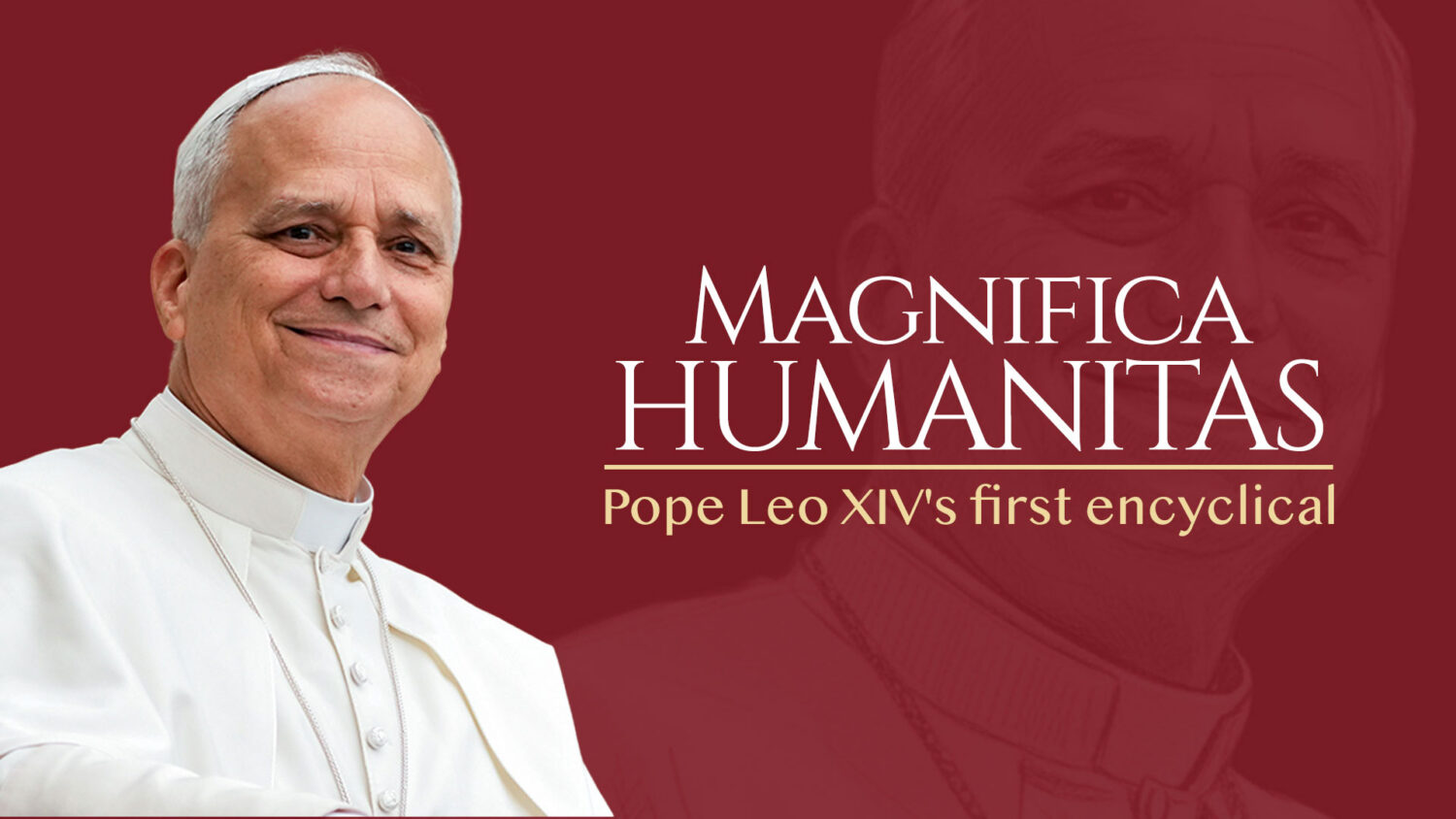
The Vatican does not release an encyclical unless it wants to move history a few inches. That is why the arrival of the Pope Leo encyclical matters far beyond Rome, beyond church doctrine, and even beyond the world’s 1.3 billion Catholics. At a moment when political institutions look brittle, moral authority is fragmented, and public trust is in retreat, papal teaching still has unusual reach. It can shape debates on war, migration, poverty, technology, climate, and the basic meaning of human dignity. Pope Leo’s text appears to do more than restate familiar principles. It looks like an attempt to define what authority should sound like in an era of confusion: firmer, more direct, and harder to ignore. For believers, policymakers, and anyone tracking global influence, this is not routine church paperwork. It is a strategic signal from one of the oldest power centers on earth.
- Pope Leo encyclical appears designed to reset the Vatican’s public voice on modern crises.
- The document likely blends moral clarity with a sharper view of political and social responsibility.
- Its influence could stretch from parish life to diplomacy, education, and international debate.
- The biggest story is not only what Pope Leo says, but how he is redefining papal authority.
Why the Pope Leo encyclical lands at a critical moment
Every papacy inherits unresolved tensions. Some are theological. Others are brutally practical: declining trust in institutions, ideological polarization, demographic shifts in the church, and a digital culture that rewards outrage over reflection. An encyclical is one of the strongest tools a pope has to answer all of that at once.
Unlike a speech or an airplane press conference, an encyclical is meant to endure. It is structured, deliberate, and aimed at setting priorities. That is why the Pope Leo encyclical should be read less as a news event and more as a blueprint. It tells bishops what deserves emphasis, signals to Catholic universities what questions should dominate, and gives diplomats and activists a clearer sense of where the Holy See intends to apply pressure.
If this document is being read as a major opening statement of Leo’s pontificate, that alone is revealing. New leaders often face a temptation to reassure every faction. An early encyclical suggests the opposite instinct: define the terms early, establish the center of gravity, and force the rest of the institution to respond.
Key insight: A papal encyclical is never just about theology. It is also an operating manual for influence.
What an encyclical actually does
For non-Catholic readers, the mechanics matter. An encyclical is a formal papal letter addressed primarily to bishops, but its real audience is much wider. It can shape sermons, seminary formation, school curricula, charitable work, and public policy arguments. In practical terms, it is one of the Vatican’s clearest ways to convert moral concern into institutional direction.
That makes the genre important. When a pope chooses this format, he is saying the subject is not temporary and not marginal. It deserves sustained teaching. It deserves hierarchy. And it deserves action.
The larger significance of Leo’s move is that he appears to be entering an already crowded moral battlefield. Governments claim urgency. Activist movements claim legitimacy. Social platforms claim attention. The papacy cannot out-shout those systems. But it can still do something few institutions can: speak in civilizational terms, with a time horizon longer than the next election cycle.
The opinion behind the document
Here is the clearest read: Pope Leo seems to be betting that the church gains more by sounding coherent than by sounding universally accommodating. That does not necessarily mean a hard ideological turn. It means a renewed confidence that Catholic social teaching can be applied to present crises without being diluted into generic humanitarian language.
That matters because modern Vatican communication often gets flattened into camps: progressive or conservative, pastoral or doctrinal, open or rigid. Those binaries are useful for headlines, but they often miss what a pope is trying to do. The stronger interpretation is that Leo wants to restore moral legibility. He wants the church to be understood not as a reactive institution, but as one with a framework.
That framework usually turns on a few durable themes: the dignity of the person, the obligations of power, the social consequences of economic systems, the demands of peace, and the limits of technocratic thinking. If Leo is elevating those themes in a more forceful register, he is not merely issuing another Vatican statement. He is trying to reclaim the terms of argument.
What gives an encyclical its force is not novelty alone. It is the ability to make old truths feel newly unavoidable.
Where Pope Leo may be drawing the hardest lines
Authority without nostalgia
One of the most difficult tasks for any pope is to speak with authority without sounding trapped in a vanished era. Too much nostalgia and the message feels detached from modern life. Too much adaptation and it risks becoming thin. Leo’s challenge is to show that the church can be ancient without being antiquarian.
If this encyclical succeeds, it will likely be because it does not confuse relevance with mimicry. The Vatican does not need to imitate political branding or internet rhetoric. It needs to offer a deeper grammar for public life: one that treats conscience, duty, community, and truth as more than slogans.
Social teaching with sharper edges
Catholic social teaching often earns broad applause in the abstract and quiet resistance in practice. Almost everyone likes solidarity until it requires sacrifice. Almost everyone likes dignity until it disrupts a preferred policy. A strong encyclical does not let readers stay comfortable.
That is where Leo could prove consequential. If he ties moral principle to concrete obligations, he increases the cost of selective listening. Political leaders, affluent Catholics, and institutional elites may find parts of the message easy to quote and harder to live.
Why this matters: The church’s global influence grows when its teaching creates friction with power, not when it simply decorates it.
A response to fractured modernity
The broader mood of the moment is fragmentation. Public life is atomized. Communities are weaker. Information is abundant but wisdom is scarce. Religion, for many, is either privatized or weaponized. In that environment, a papal encyclical can function as a counterproposal.
Its argument, at its strongest, is that human beings are not isolated consumers or ideological avatars. They are moral actors bound to one another. That claim may sound basic, but it runs directly against some of the most powerful assumptions of modern politics and economics.
How this could reshape the Vatican’s global posture
The Holy See is a spiritual authority, but it is also a diplomatic player with an unusually broad network. What the pope emphasizes can ripple outward into negotiations, peace messaging, humanitarian priorities, and interfaith dialogue.
If Leo’s encyclical is interpreted as a stronger declaration of principle, expect three likely effects.
- More disciplined messaging: Bishops and Vatican officials will have a clearer reference point for public statements.
- Higher expectations: Catholics will expect church institutions to align words with budgets, education, and advocacy.
- More scrutiny: Governments and critics will test whether Rome applies its moral standards consistently.
This is where things get interesting. A pope gains influence when he is seen as independent of partisan convenience. But that independence is hard to maintain. Every strong moral statement gets absorbed into local political fights. Leo’s success may depend on whether he can keep the encyclical above the immediate churn while still making it concrete enough to matter.
The real audience is larger than the church
It is tempting to treat papal documents as internal religious texts. That is too narrow. Encyclicals often become reference points for economists, diplomats, legal scholars, educators, nonprofit leaders, and activists. They enter public discourse because they offer a structured moral language at a time when much of public speech is reactive and transactional.
That broader audience matters especially now. On issues ranging from war to inequality to migration to the ethical limits of emerging technologies, secular institutions often struggle to articulate first principles. They can measure outcomes, but they are less comfortable discussing purpose. A pope can still speak in that register.
Even readers who disagree with Leo may find the document hard to dismiss if it clarifies what human flourishing requires and what systems tend to erode it. That is the enduring power of papal teaching: it can frame problems before policy experts finish naming them.
Editorial view: The significance of the Pope Leo encyclical is not that it will instantly change policy. It is that it may change the moral vocabulary around policy.
What to watch next
The first wave of coverage will focus on standout lines, ideological reactions, and symbolic contrasts with earlier papacies. That is normal, but it is not enough. The real test of this encyclical will come in the months ahead.
Watch the bishops
If bishops begin citing the document heavily in pastoral letters, homilies, and diocesan planning, Leo has succeeded in turning text into governance.
Watch Catholic institutions
Universities, charities, hospitals, and advocacy groups will reveal how operational the encyclical really is. A serious document should influence priorities, not just conferences and panel discussions.
Watch diplomacy
If Vatican diplomacy starts echoing the encyclical’s key themes in a more consistent way, that is a sign the text is functioning as a strategic anchor rather than a ceremonial release.
Watch resistance
The most revealing reaction may come from those who try to narrow, soften, or selectively quote the text. Resistance often identifies the document’s sharpest truths faster than praise does.
Final verdict on the Pope Leo encyclical
Pope Leo’s encyclical looks less like a gesture and more like a governing move. It arrives at a time when many institutions have lost the confidence to make comprehensive moral claims. The papacy still can. Whether one agrees with every conclusion is almost beside the point. What matters is that Leo appears to understand the moment as a crisis of meaning as much as a crisis of policy.
That is why this document deserves attention beyond religious circles. It is a sign that the Vatican intends to remain an active force in defining the moral architecture of public life. In an age of fragmented authority, that is a serious play for relevance.
If the encyclical holds up under scrutiny, Pope Leo may have accomplished something increasingly rare: he may have made authority sound demanding, coherent, and necessary again.
The information provided in this article is for general informational purposes only. While we strive for accuracy, we make no guarantees about the completeness or reliability of the content. Always verify important information through official or multiple sources before making decisions.