Protesters Block Orange Order March
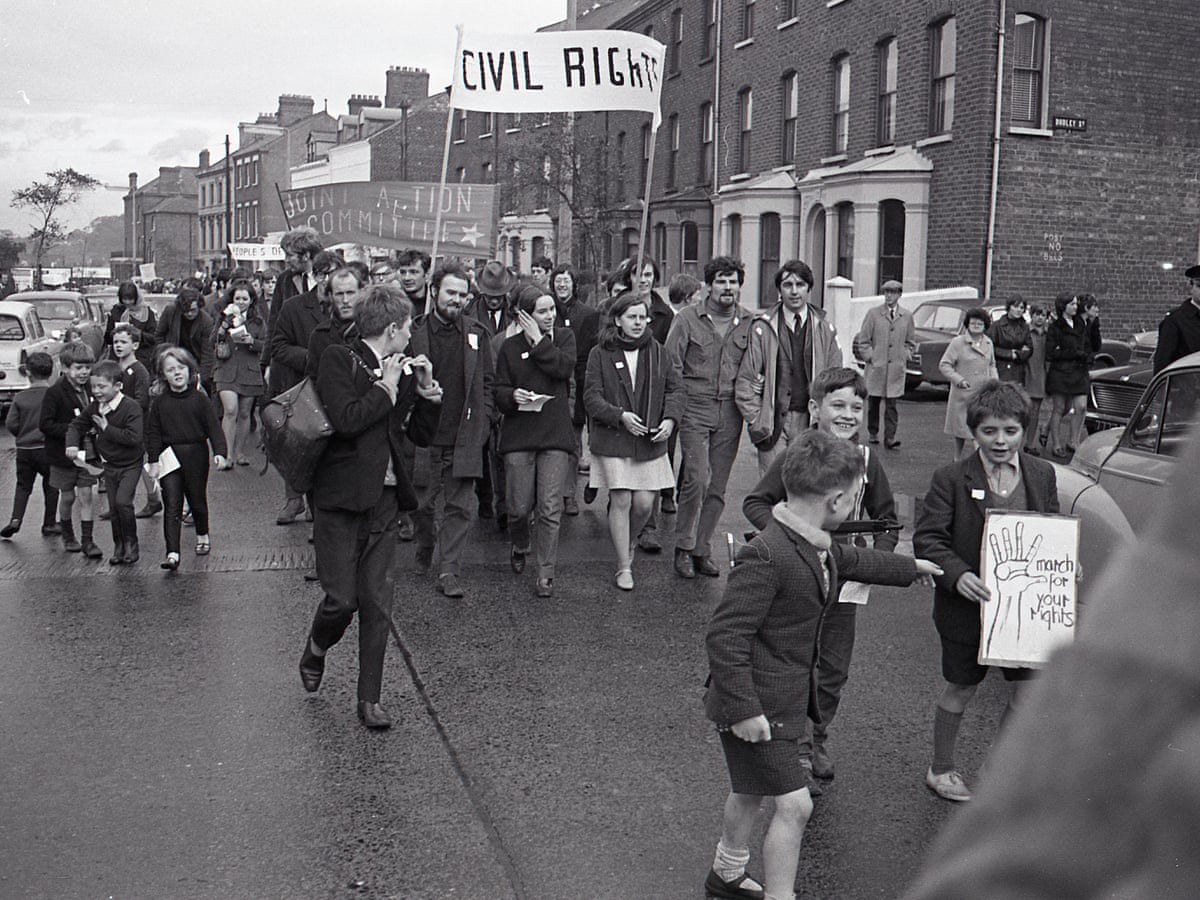
Protesters Block Orange Order March
Northern Ireland protests over an Orange Order march are not just another local dispute over a parade route. They are a reminder that the politics of memory still runs through streets, neighborhoods, police lines, and community boundaries. When protesters blocked the march, the confrontation exposed a familiar pain point: how does a society built on a peace agreement manage public expressions of identity when those expressions are experienced by others as intimidation? The answer is not as simple as permitting or banning a procession. It sits in the uneasy space between civil liberties, historical trauma, local consent, and the credibility of institutions tasked with keeping the peace.
- Northern Ireland protests around parades remain a sensitive test of power-sharing, policing, and community trust.
- The
Orange Ordermarch controversy reflects deeper disputes over territory, identity, and historical memory. - Authorities must balance the right to assemble with the need to prevent escalation in contested neighborhoods.
- The incident shows why symbolic politics can still carry real security and governance consequences.
Northern Ireland protests are about more than one march
On the surface, the scene is straightforward: protesters blocked an Orange Order march in Northern Ireland. But reducing the event to a clash between parade participants and counter-protesters misses the machinery underneath. Parades are public theater, and in Northern Ireland that theater is never neutral. Routes, flags, drums, banners, uniforms, and timing all communicate belonging. They can also communicate dominance.
The Orange Order is a Protestant fraternal organization with deep ties to unionist culture and commemorations of historical victories associated with Protestant identity. For supporters, its marches are expressions of heritage, faith, and civil rights. For many nationalist or Catholic communities, especially where parades pass close to their homes, they can feel like deliberate provocation. That gap in interpretation is the conflict.
Key insight: In divided societies, public space is not just where politics happens. Public space is the thing being contested.
This is why a blocked march can become national news. It is not merely about who got to walk down a road. It is about whether institutions can manage competing claims without making one community feel abandoned and the other feel censored.
The Orange Order march still tests the peace architecture
The Good Friday Agreement transformed Northern Ireland by creating a framework for power-sharing, demilitarization, and democratic dispute resolution. But peace agreements do not erase memory. They change the rules for how memory is contested. Marching disputes have long been among the most visible stress tests of that settlement.
The central challenge is that both sides can frame their position in rights-based language. Marchers may invoke freedom of assembly, religious expression, and cultural tradition. Protesters may invoke dignity, safety, and freedom from sectarian intimidation. Neither claim is automatically illegitimate. That is what makes these disputes so combustible.
Institutions such as the Parades Commission were created to impose conditions, assess risk, and prevent flashpoints from overwhelming local policing. Yet every restriction can be interpreted politically. If a march is rerouted, some unionists may see capitulation. If it proceeds through a contested area, nationalists may see the state protecting triumphalism. The result is a governance trap: even careful decisions can be perceived as partial.
Why the route matters
Parade routes are not logistical details. In Northern Ireland, they are symbolic maps. A street can signify a shared city, a community boundary, a historical grievance, or a line of control. The same road can mean celebration to one group and humiliation to another.
That is why the language of public order often feels inadequate. Police can separate crowds, enforce cordons, and manage arrests. But they cannot, by themselves, resolve the emotional geography that makes a route controversial in the first place.
Northern Ireland protests reveal the limits of policing
The Police Service of Northern Ireland, often referred to as PSNI, operates in one of the most politically scrutinized environments in Europe. Every operational choice can be read through the lens of identity. A heavy police presence may reassure one community while alarming another. A light-touch response may avoid escalation or be seen as weakness.
When protesters physically block a march, authorities face a tactical dilemma. Removing protesters may uphold a parade determination but risks images of force against local residents. Allowing the blockade may reduce immediate violence but risks encouraging future direct action. There is no frictionless option.
Editorial view: The most serious failure would be pretending this is only a policing problem. The street confrontation is the symptom. The unresolved political work happens before anyone assembles.
That political work includes dialogue, credible mediation, transparent decision-making, and sustained local engagement. It also requires leaders to resist the temptation to turn every parade dispute into a performance for their own base.
The social media accelerant
Modern protest dynamics add another layer. Short video clips can strip away context and travel faster than official explanations. A tense moment at a police line can become a rallying point within minutes. That matters because parading disputes depend heavily on perception. If one side believes the other has won a symbolic victory, pressure builds for a response.
This is where responsible political communication becomes essential. Leaders can de-escalate by acknowledging fear on both sides. Or they can inflame the situation by framing compromise as surrender. In a region where symbolic language carries weight, tone is not cosmetic. It is operational.
The Orange Order march controversy has wider political consequences
The blocked Orange Order march lands at a time when Northern Ireland politics remains shaped by constitutional uncertainty, post-Brexit trade arrangements, demographic change, and periodic instability in power-sharing institutions. Parading disputes may look local, but they connect to bigger questions: who belongs, who decides, and what kind of public culture a shared future requires.
For unionist communities, cultural confidence has been under pressure from changes in politics and identity. For nationalist communities, the demand is often for equal respect and freedom from displays they associate with past domination. The danger is that each side experiences the other side’s assertion of identity as an attack.
That dynamic is not unique to Northern Ireland, but Northern Ireland makes it unusually visible. Flags, murals, marches, commemorations, and language rights become proxies for power. When formal politics stalls, symbolic politics grows louder.
Why this matters beyond Northern Ireland
Governments everywhere are struggling with protests, heritage disputes, and contested public space. Northern Ireland offers a sharper lesson: technical legality is not enough. A parade can be lawful and still destabilizing. A protest can be understandable and still risky. Democratic governance requires more than asking whether an event is permitted. It requires asking whether institutions have earned enough trust to manage the consequences.
That lesson applies to cities managing religious processions, nationalist rallies, counter-protests, and demonstrations near vulnerable communities. The right to assemble is vital. So is the obligation to prevent public space from becoming a tool of coercion.
What officials should do next
The immediate priority is preventing retaliation or copycat confrontations. But the longer-term response should be more ambitious than crisis management. Authorities and community leaders need a durable process that reduces the stakes before march day arrives.
- Start earlier: Mediation should begin months before contentious parades, not in the final hours before a police operation.
- Make decisions legible: The criteria used by the
Parades Commissionand local authorities should be explained clearly to both communities. - Separate heritage from provocation: Cultural expression should be protected, but deliberate intimidation should not be romanticized as tradition.
- Invest in local consent: Neighborhood-level agreements often matter more than national speeches.
- Control escalation online: Public officials should correct misinformation quickly without sounding partisan.
There is also a responsibility on civic and religious leaders associated with parade culture. If the goal is genuine heritage, then engagement with affected residents should not be treated as weakness. It should be treated as proof that tradition can survive in a shared society.
The real story is fragile trust
The blocked march is a warning against complacency. Northern Ireland has changed dramatically since the worst years of conflict, but peace is not a finished product. It is maintained through routines, compromises, and institutions that must be renewed constantly. Parades expose whether that renewal is working.
There is a cynical reading of events like this: that nothing changes, that old divisions simply reappear in new footage. That reading is too easy. The more accurate view is that the region has built mechanisms to contain conflict, but those mechanisms still require political courage. They cannot run on autopilot.
The test now is whether leaders treat the latest Northern Ireland protests as an opportunity to score points or as evidence that deeper repair is needed. The street was blocked, but the more important question remains open: can public space become genuinely shared, or will it continue to operate as a battleground for memory?
That is why this moment matters. A march can end in a day. The trust damaged or rebuilt around it can shape politics for years.
The information provided in this article is for general informational purposes only. While we strive for accuracy, we make no guarantees about the completeness or reliability of the content. Always verify important information through official or multiple sources before making decisions.