Reeves Bets Big on UK Growth
Reeves Bets Big on UK Growth
The UK economy has run out of easy wins. Growth is weak, public services are stretched, borrowing costs remain uncomfortable, and business confidence still swings between caution and fatigue. That is the pressure sitting on Chancellor Rachel Reeves as she tries to define what a credible UK growth plan actually looks like in 2025. The stakes are bigger than one budget cycle. If Reeves cannot convince markets, companies, and households that the government has a workable UK growth plan, Labour risks looking pragmatic in tone but constrained in practice. If she can, the payoff is political and economic: more investment, more productivity, and a better chance of breaking the country out of its low-growth trap.
- Rachel Reeves is framing economic credibility and investment as the foundation of a new UK growth plan.
- The real test is whether reform, infrastructure, and business incentives can translate into measurable productivity gains.
- Markets want discipline, while voters want visible improvements in jobs, wages, and public services.
- Business leaders will judge the agenda less by speeches and more by planning reform, execution speed, and policy stability.
Why the UK growth plan matters right now
Reeves is not operating in a vacuum. She inherits an economy shaped by years of sluggish productivity, stop-start investment, Brexit friction, inflation aftershocks, and fragile consumer confidence. That means any UK growth plan has to do two things at once: signal stability and unlock expansion.
That balance is hard. Governments can promise growth, but growth does not appear because a minister repeats the word often enough. It usually comes from a less glamorous mix of planning reform, infrastructure delivery, skills policy, energy costs, and a tax environment that rewards long-term investment rather than short-term defensiveness.
The central question is simple: can Reeves make the UK feel investable again without spooking markets or overpromising to voters?
That is why her messaging matters. She is trying to present Labour as fiscally serious but not economically timid: pro-business without sounding captive to business, and pro-investment without appearing reckless on borrowing.
What Reeves is really trying to sell
At the surface level, the pitch is about growth. Underneath, it is about trust. Reeves knows that Britain has burned through a lot of credibility with both investors and the public. Companies have seen years of policy churn. Households have heard repeated promises about levelling up, productivity, wages, and renewal, only to face a more expensive and less predictable economy.
So the architecture of her case appears to rest on a few core ideas:
- Fiscal discipline remains non-negotiable.
- Private investment must be crowded in, not scared off.
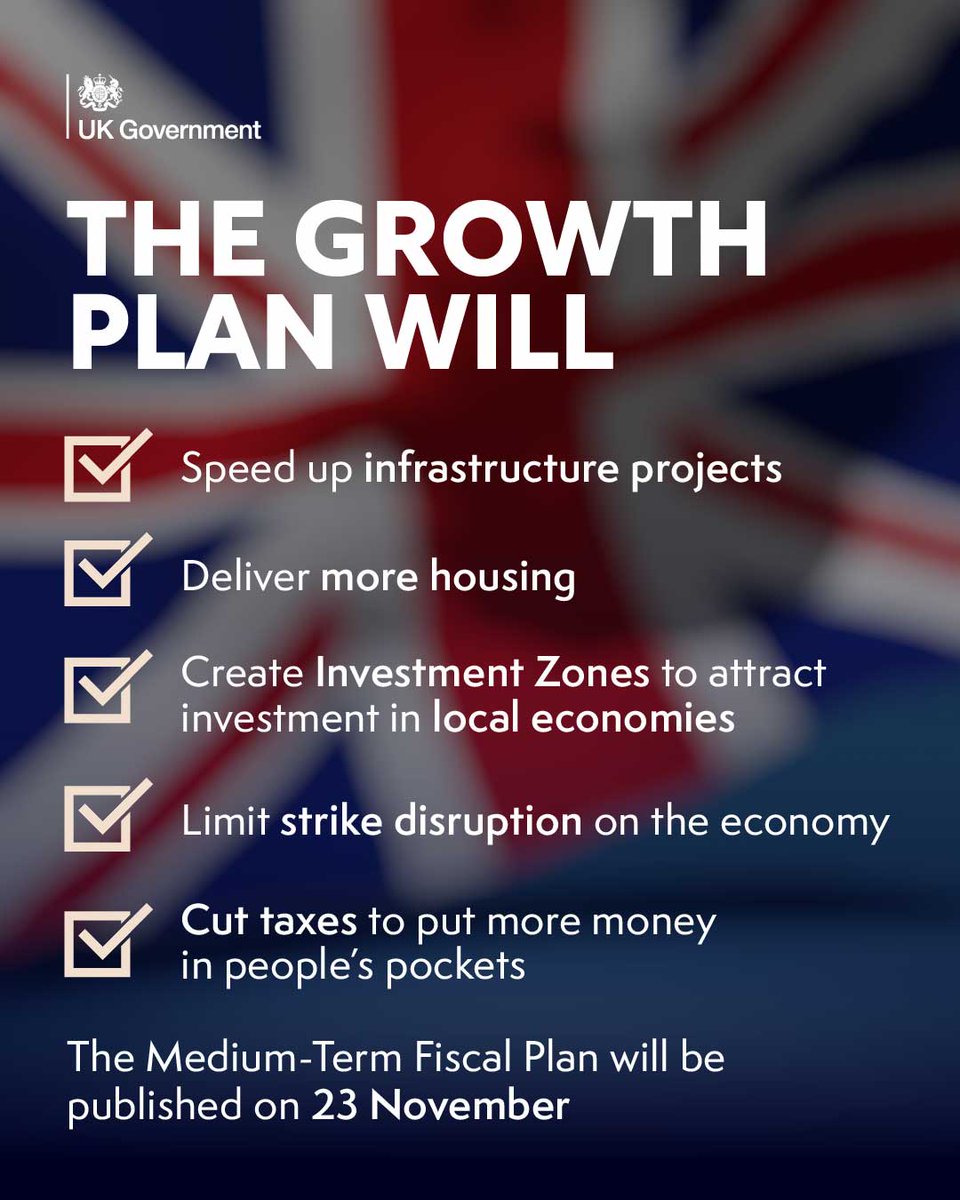
- Planning and infrastructure reform are essential if the UK wants faster development.
- Long-term growth has to be built, not announced.
This is politically smart because it addresses the biggest anxiety around Labour economic policy: whether ambition can survive contact with the Treasury spreadsheet. Reeves is attempting to answer that by presenting discipline not as a brake, but as the precondition for action.
The business case behind the UK growth plan
Investment is the missing link
The UK has long struggled with underinvestment compared with other major economies. That shows up in stagnant productivity, patchy transport systems, uneven regional performance, and a constant complaint from employers that the environment is too uncertain for major capital commitments.
If Reeves wants her UK growth plan to land, she has to improve the practical conditions for investment. That means companies need confidence that projects can move from announcement to approval to construction without years of friction.
Pro Tip: Investors pay close attention to policy consistency. A government that changes course every few months raises the effective cost of doing business, even if headline tax rates stay competitive.
Planning reform is where rhetoric meets reality
One of the fastest ways to test whether any growth strategy is serious is to ask what it does about planning. Britain has a reputation for making it painfully difficult to build: homes, transport links, energy infrastructure, and industrial sites all face delays that can kill momentum and inflate costs.
That is why planning reform is not a side issue. It is the operating system for growth. Without it, an economic strategy becomes a collection of speeches chasing projects that never arrive on time.
For business, the logic is blunt. If approvals are slow, land use is uncertain, and infrastructure pipelines remain clogged, investment goes elsewhere. Reeves can win points for ambition, but she will be judged on execution.
Public money is limited
This is the constraint that hangs over everything. Reeves cannot simply spend her way to a transformed economy. Debt costs matter. Market confidence matters. Fiscal rules matter. That leaves her with a narrower but potentially more durable route: use government to reduce friction, set priorities, and encourage private capital to move.
That is less dramatic than a giant spending spree, but it may be more credible. And right now, credibility is part of the product.
Where the political risk sits
Growth plans are attractive because they promise a route out of zero-sum politics. If the economy expands, governments can talk about better services, stronger wages, and improved living standards without framing every decision as a cut somewhere else. The danger is that growth takes time, while political impatience does not.
Reeves faces at least three risks.
- First, the timeline problem: structural reforms often take years before voters feel the benefit.
- Second, the expectation problem: if growth language gets too sweeping, any slowdown looks like failure.
- Third, the delivery problem: a credible plan can still unravel if Whitehall, local government, or regulators cannot move fast enough.
This is where modern economic politics gets messy. Voters do not experience GDP figures directly. They experience rent, mortgages, energy bills, commute times, pay packets, and whether their town feels like it is improving or drifting.
If Reeves wants the public to buy the growth story, the numbers will need to become visible in daily life.
Why markets may respond differently from voters
Markets often reward restraint, predictability, and institutional seriousness. Voters, by contrast, reward outcomes they can see. Reeves likely understands this split. A speech that reassures bond markets is not automatically a speech that excites households worried about living costs.
That means the UK growth plan has to perform on two frequencies at once:
- For markets: it must look disciplined, coherent, and costed.
- For business: it must look actionable and stable.
- For voters: it must look relevant to jobs, wages, housing, and services.
It is possible to satisfy one audience and lose another. In fact, that has been a recurring British policy problem. The challenge for Reeves is to connect macroeconomic credibility with a story ordinary people can actually feel.
What success would look like
Short-term signals
Early success would not necessarily mean an instant boom. It would more likely show up in smaller but meaningful indicators: improved business sentiment, fewer concerns about policy volatility, stronger investment pipelines, and visible momentum behind major projects.
Watch for whether companies begin talking less about uncertainty and more about opportunity. That shift matters.
Medium-term proof points
The stronger test is whether the UK starts to produce results in areas that have lagged for years:
- Higher business investment
- Faster delivery of housing and infrastructure
- Better regional growth performance
- Improved productivity
- Stronger real wage growth over time
If those indicators do not move, then even the most polished UK growth plan starts to look like a branding exercise.
The harder truth behind the optimism
There is a temptation in Westminster to treat growth as a switch that can be flipped by confidence alone. That is rarely how advanced economies work, especially ones dealing with deep structural frictions. Britain has strengths: a large services base, globally relevant finance, strong universities, creative industries, life sciences, and technology talent. But it also has chronic weaknesses that repeatedly suppress its upside.
Those weaknesses are not mysterious. They include infrastructure bottlenecks, regional inequality, planning drag, skill gaps, and a history of strategic inconsistency. Reeves appears to be arguing that a more stable and investment-friendly state can begin to unwind some of that damage. The hard part is proving the machinery of government can support the argument.
Why This Matters: If Labour can establish a reputation for economic competence tied to actual delivery, it changes more than one parliamentary term. It could reset how Britain thinks about industrial policy, state capacity, and the relationship between fiscal caution and long-term growth.
The editorial verdict
Reeves is making a rational bet. She knows the UK cannot tax, cut, or message its way out of stagnation without a serious effort to increase investment and productivity. She also knows any hint of fiscal adventurism would undermine the very confidence she is trying to build. So the pitch is deliberately calibrated: sober, pro-growth, and heavy on credibility.
That is the good news. The less comfortable truth is that Britain has heard versions of this before. The country does not suffer from a shortage of growth rhetoric. It suffers from a shortage of sustained execution.
So the real judgment is not whether the language sounds sensible. It mostly does. The judgment is whether this government can do the unglamorous work that growth actually requires: speed up planning, back infrastructure, maintain policy consistency, reduce investor friction, and stay patient long enough for results to compound.
If Reeves can pull that off, the UK growth plan could become more than a Treasury slogan. It could be the foundation for a more investable, more productive economy. If not, this will join a long list of British economic resets that sounded promising right up until reality arrived.
The information provided in this article is for general informational purposes only. While we strive for accuracy, we make no guarantees about the completeness or reliability of the content. Always verify important information through official or multiple sources before making decisions.