Russia Losses Raise Estonia Alarm

Russia Losses Raise Estonia Alarm
Heavy battlefield losses do not always weaken a state in the way outsiders expect. Sometimes they harden it, redirect it, and force smaller neighbors to prepare for a different kind of pressure. That is the uncomfortable message emerging from Estonia, where security officials are warning that Russia’s military setbacks in Ukraine do not automatically translate into reduced danger for the rest of Europe. If anything, the concern is that a bruised Kremlin may compensate with aggression below the threshold of full-scale war: sabotage, intimidation, cyber activity, border incidents, and pressure campaigns designed to test NATO’s resolve.
For policymakers and businesses watching Europe’s security map, the Estonia Russia pressure warning lands at a critical moment. The frontline may be in Ukraine, but the strategic consequences extend across the Baltic region, alliance planning, energy security, logistics, and digital infrastructure.
- Estonia is warning that Russian battlefield losses could shift, not reduce, Kremlin pressure.
- The Baltic region remains vulnerable to hybrid tactics such as cyber disruption, sabotage, and intimidation.
- NATO deterrence depends on showing that smaller provocations will also trigger a serious response.
- Businesses and governments should treat resilience, not just military power, as a core security priority.
Why the Estonia Russia pressure warning matters now
Estonia has spent years developing a reputation for taking Russian intent seriously before much of Europe catches up. That track record gives this latest Estonia Russia pressure warning extra weight. The core argument is straightforward: Russia can absorb enormous battlefield pain and still remain dangerous. In some cases, losses can even intensify the Kremlin’s incentive to prove relevance elsewhere.
This matters because many Western observers still default to a simple equation: more Russian losses equals less Russian threat. That reading is too neat. A military under strain may have fewer options for large-scale conventional operations, but it can still conduct actions that are cheaper, deniable, and politically disruptive. For a frontline NATO state like Estonia, those actions are not theoretical. They sit at the center of daily security planning.
Strategic weakness does not eliminate risk. It often changes the form that risk takes.
That distinction is essential. A degraded army may struggle to launch a broad new invasion, yet intelligence services, cyber units, propaganda networks, and covert operators can remain active. The Kremlin has long favored ambiguity when direct confrontation is costly. Europe’s challenge is recognizing that pressure can escalate without tanks crossing a border.
Russia’s battlefield losses do not create a safer neighborhood
The idea that losses in Ukraine could still produce danger beyond Ukraine may sound counterintuitive, but history supports it. States facing military embarrassment often search for symbolic wins, coercive leverage, or opportunities to expose alliance fatigue. For Russia, that could mean increasing pressure on countries seen as politically vocal, geographically exposed, or central to NATO credibility.
Attrition can fuel risk-taking
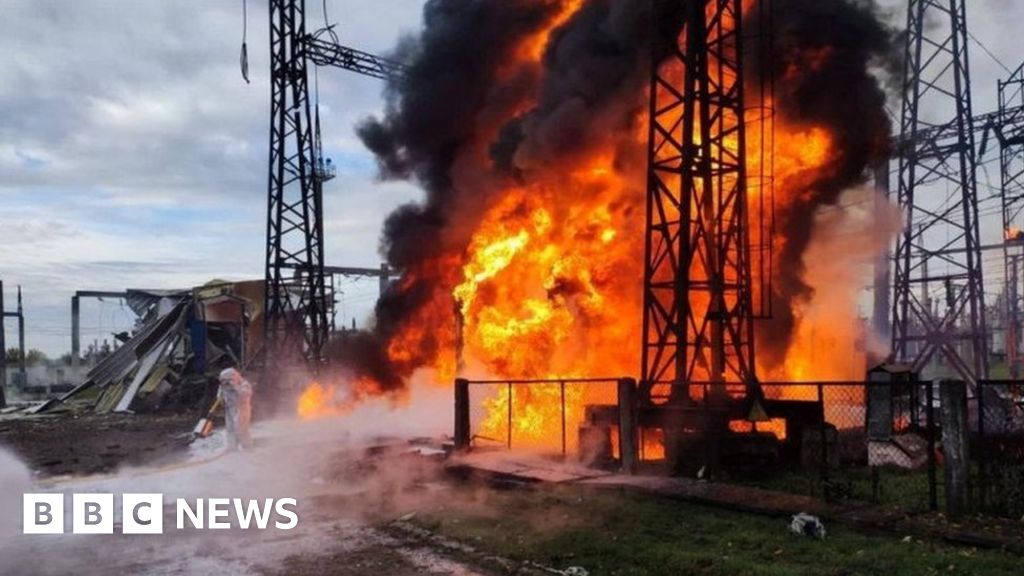
One lesson from prolonged wars is that attrition does not always produce restraint. Sometimes it produces improvisation. If Russian forces are under pressure on the battlefield, Moscow may double down on methods that cost less and create political friction inside Europe. That includes attacks on infrastructure, GPS interference, covert disruption, maritime pressure, and disinformation aimed at exploiting social divides.
For Estonia, Latvia, and Lithuania, this is not an abstract strategic concept. These countries have repeatedly argued that deterrence must cover the full spectrum of coercion, from military intimidation to cyberattacks against public systems and private networks.
Smaller states become pressure points
Estonia matters not because it is weak, but because it is strategically important. It sits on NATO’s eastern edge, borders Russia, and represents a test case for alliance credibility. If Moscow wants to probe the West without triggering an immediate major war, pressure on the Baltics can serve as both a signal and an experiment.
That is why the Estonia Russia pressure warning resonates well beyond Tallinn. It raises a question every European capital should be asking: if Russia cannot easily win by force in one theater, where else might it seek leverage at lower cost?
The real contest is hybrid pressure
The most likely near-term danger is not a dramatic replay of conventional invasion. It is the steady accumulation of hybrid actions designed to exhaust attention, complicate attribution, and make every response feel slightly disproportionate.
What hybrid pressure looks like in practice
- Cyber operations: targeting government systems, media outlets, logistics operators, and utilities.
- Sabotage and covert disruption: incidents affecting cables, rail lines, depots, ports, or communications infrastructure.
- Border manipulation: engineered incidents involving migration, detentions, or airspace and maritime violations.
- Information warfare: amplifying fear, polarization, and distrust in democratic institutions.
- Economic coercion: using trade, transport routes, or energy-linked dependencies as leverage where possible.
These methods work because they exploit a gap in democratic response systems. Governments are usually built to react clearly to war or clearly to peace. Hybrid pressure lives in the gray zone between those categories.
The Kremlin does not need to defeat NATO militarily to create strategic anxiety. It only needs to keep forcing difficult decisions at a relentless tempo.
Why Estonia’s view deserves close attention
Estonia’s security culture has been shaped by geography, history, and a sharper understanding of Russian state behavior than many larger powers were willing to embrace for years. That perspective has often looked alarmist right up until events proved it was not.
What makes the current Estonia Russia pressure warning especially significant is its emphasis on adaptation. The concern is not just what Russia has lost. It is what Russia may learn from those losses. Militaries under stress evolve. Intelligence agencies refine methods. Political systems built around confrontation seek new pressure points.
A digitally advanced state sees digital risk clearly
Estonia is also one of Europe’s most digitally integrated societies. That gives it unusual credibility when discussing non-kinetic threats. In a highly connected state, disruption to networks, public services, identity systems, and communications can create outsized societal effects. The lesson extends to the rest of Europe: resilience is now as important as firepower.
Technical planners increasingly think in terms of continuity, redundancy, and recovery. In practical terms, that means asking whether critical systems can keep operating if networks are degraded, data flows are interrupted, or trusted services are targeted.
Pro Tip: Organizations with exposure in Europe should review whether critical operations depend on a single vendor, a single data path, or a single cross-border logistics route. In security planning, concentration risk is strategic risk.
What NATO and Europe need to do next
If the Estonia Russia pressure warning is correct, then the policy response cannot stop at statements of concern. It has to focus on speed, resilience, and credibility.
1. Expand deterrence beyond conventional force
NATO’s military posture still matters enormously, but conventional troop presence alone is not enough. Alliance credibility depends on making clear that sustained hybrid attacks will also trigger collective consequences. The threshold for response must be politically understood before a crisis starts.
2. Harden critical infrastructure
Ports, rail corridors, telecom backbones, power systems, satellite-linked services, and subsea connections all require stronger protection. The practical security agenda is not glamorous, but it is decisive. Europe’s next big vulnerability may be logistical rather than purely military.
3. Shorten decision cycles
Hybrid operations work when they outpace bureaucracy. Governments need pre-agreed playbooks for attribution, public communication, sanctions, cyber response, and allied coordination. In technical terms, resilience improves when the incident response chain is already defined.
detect -> attribute -> communicate -> coordinate -> respond -> recover
4. Treat public trust as infrastructure
Disinformation is effective when institutions communicate slowly or inconsistently. Public trust is not a soft issue. It is a strategic asset. Governments that explain threats clearly and quickly are harder to destabilize.
What this means for business and technology leaders
Executives may be tempted to see the Estonia Russia pressure warning as a matter for diplomats and defense ministries. That would be a mistake. Modern pressure campaigns run directly through commercial systems: shipping, cloud services, telecom networks, software supply chains, industrial controls, and payment infrastructure.
If you operate in Europe, especially in logistics, energy, manufacturing, cloud computing, or communications, geopolitical risk is now operational risk. Boardrooms should be asking very practical questions:
- Do we know which assets are most exposed to regional disruption?
- Can our systems function if
GPS, network routing, or power availability is degraded? - Do we have alternate suppliers and transport corridors?
- Are our crisis communications plans built for cross-border incidents?
The companies that adapt fastest will not just be the most secure. They may also be the most competitive, because customers and governments increasingly value resilience as a procurement standard.
The bigger strategic lesson
The temptation in long wars is to read every Russian setback as evidence that the danger is receding. Estonia is effectively arguing the opposite: danger can mutate. A Russia under strain may be less capable in some respects and more unpredictable in others. That is not a contradiction. It is how pressured authoritarian systems often behave.
For Europe, the right response is not panic. It is clarity. Battlefield losses in Ukraine are real and consequential, but they do not automatically produce strategic calm across the continent. A wounded power with revisionist goals can still be a deeply disruptive one.
The question is no longer whether Europe understands the threat. The question is whether it can build systems fast enough to withstand the next version of it.
That is why the Estonia Russia pressure warning should not be dismissed as another regional alarm bell. It is a sharper diagnosis of where this confrontation may be heading next: toward a contest defined less by dramatic breakthroughs and more by continuous pressure on the edges of alliance unity, public patience, and infrastructure resilience.
And that may be the hardest kind of conflict to manage, because it rarely announces itself with a single decisive moment. It arrives as accumulated strain – technical, political, economic, and psychological – until a society realizes too late that the frontline was much broader than it first appeared.
The information provided in this article is for general informational purposes only. While we strive for accuracy, we make no guarantees about the completeness or reliability of the content. Always verify important information through official or multiple sources before making decisions.