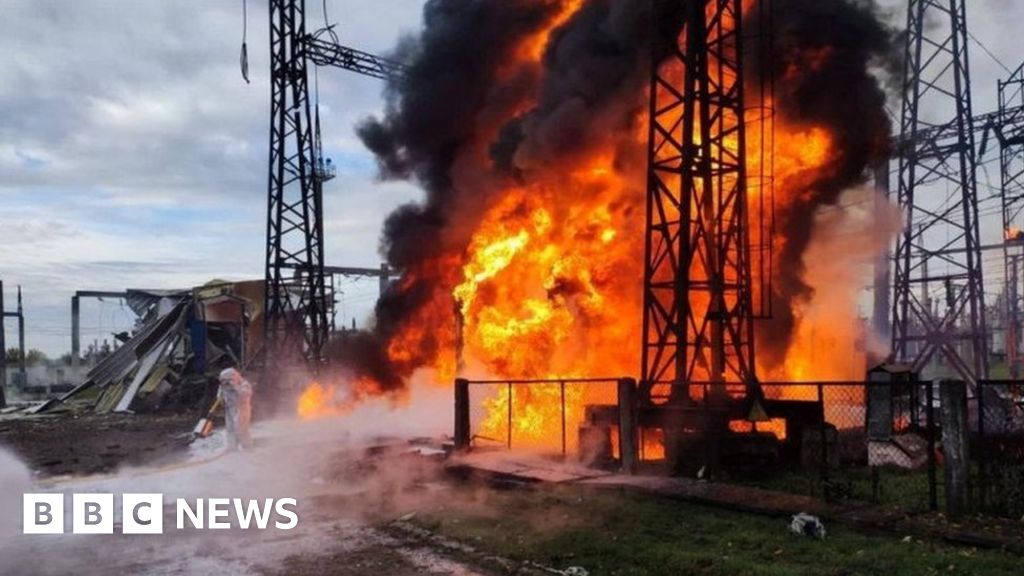
Russia Strikes Kyiv as War Machine Stalls
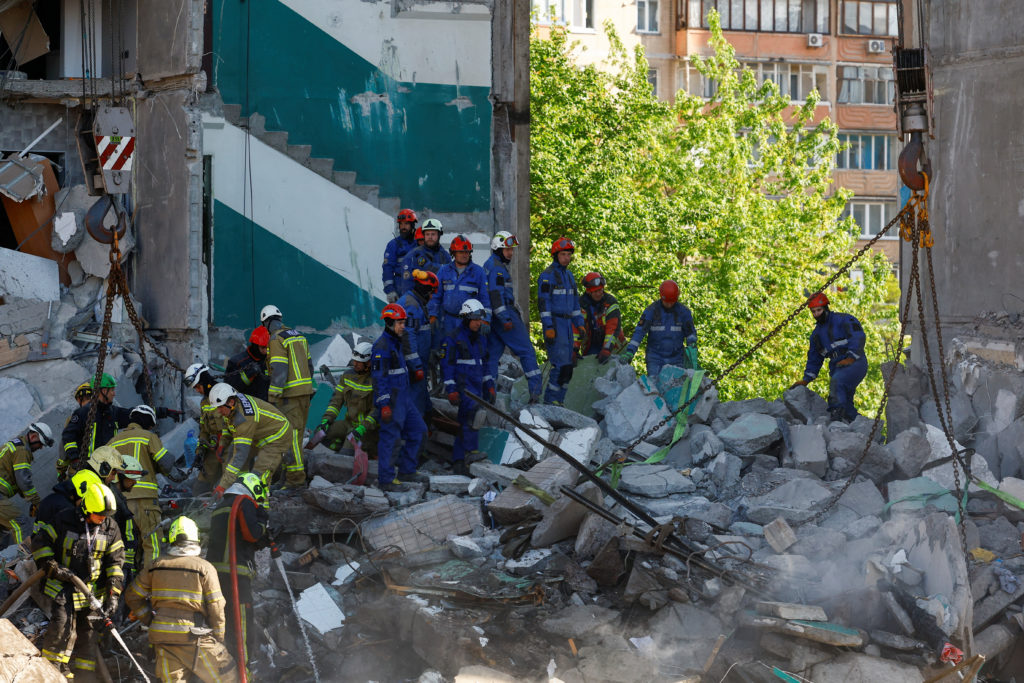
Russia Strikes Kyiv as War Machine Stalls
The Russia strikes Kyiv story is no longer just about missiles, drones, and air raid sirens. It is about what happens when a military campaign loses momentum on the ground and doubles down from the sky. That shift matters far beyond Ukraine. It affects regional security, energy markets, diplomatic leverage, and the calculus of every government watching whether attrition can substitute for strategy. When battlefield advances slow to a crawl, long-range strikes become more than a tactic: they become a message. For civilians in Kyiv, that message is immediate and terrifying. For policymakers, it raises a harder question: what does a near-stalled war machine do when it still has the capacity to inflict damage at scale?
- Russia strikes Kyiv as its broader war effort appears to be losing operational momentum.
- Heavy aerial attacks can signal both military intent and strategic frustration.
- Kyiv remains symbolically and politically central, making it a high-value target beyond battlefield logic.
- A stalled offensive does not mean a reduced threat: it can mean a more unpredictable and punishing phase of war.
Why Russia strikes Kyiv when its battlefield momentum is fading
At first glance, the contradiction looks obvious. If Russia’s war machine is grinding toward a near standstill, why intensify attacks on the capital? The answer is harsh but familiar in modern warfare: when territorial gains become harder, coercive strikes against cities can serve political, psychological, and military goals all at once.
Kyiv is not just another urban center. It is the seat of government, the symbol of national resilience, and a global media focal point. Striking it generates headlines, pressures air defense networks, tests civilian endurance, and signals that Russia can still escalate even without dramatic gains at the front.
When armies struggle to move the line, they often try to move the mood: at home, abroad, and inside the target country.
That does not mean these attacks replace battlefield success. It means they are being used to compensate for its absence. This distinction is critical. A military that is stalled can still be highly dangerous, especially if it shifts from maneuver warfare toward sustained bombardment and pressure campaigns.
The logic of a war machine nearing standstill
The phrase near standstill should not be mistaken for collapse. It usually points to a force facing mounting constraints: stretched logistics, equipment losses, command friction, fatigue, and the diminishing returns of repeated offensives. None of that removes destructive capacity. In many cases, it concentrates it.
Attrition changes the shape of escalation
As wars drag on, the toolkit changes. Instead of betting on rapid breakthroughs, militaries rely more heavily on drones, missiles, artillery, and infrastructure attacks. These methods can be cheaper politically than mass assaults and easier to repeat operationally, even when ground offensives are sputtering.
For Russia, this pattern aligns with a broader effort to keep pressure on Ukraine while avoiding any perception that the campaign has lost relevance or force. A stalled advance can become an argument for wider strikes, not fewer.
Symbolism matters as much as military effect
Kyiv carries outsize strategic weight because it embodies Ukrainian sovereignty. Even limited damage in or around the capital can be used to project reach and persistence. The military value of such attacks may vary, but the symbolic value is consistent.
This is why analysts often caution against reading aerial assaults purely through a tactical lens. The point is not always to seize ground tomorrow. Sometimes it is to shape negotiations, morale, media narratives, and international perceptions today.
What these attacks reveal about Russia’s current strategy
If the war machine is slowing, the attacks suggest a strategy built around endurance and disruption rather than decisive movement. That has several implications.
- First: Russia may be signaling that it can sustain pain-inflicting operations even without major territorial progress.
- Second: repeated strikes can force Ukraine to spend scarce air defense interceptors and constantly reposition assets.
- Third: attacks on major cities are meant to show both domestic and foreign audiences that Russia remains capable of setting the tempo of escalation.
This kind of strategy is ugly, costly, and deeply destabilizing. It can also be effective in narrow ways, especially if international support for Ukraine becomes fragmented or delayed. That is part of what makes this phase so dangerous. Stalemate at the front does not produce calm. It often produces adaptation.
The burden on air defense
One underappreciated dynamic in the Russia strikes Kyiv cycle is the economics of defense. Intercepting incoming drones and missiles is essential, but it is also expensive, logistically complex, and operationally exhausting. Every wave forces decisions about where to place systems, how to allocate munitions, and what risks to absorb elsewhere.
Over time, even successful defenses face strain. The objective of repeated attacks is not only to destroy targets. It is also to probe weaknesses, complicate planning, and wear down the protective architecture around key cities and infrastructure.
Why this matters beyond Kyiv
It is tempting to interpret each strike as a local event with immediate humanitarian consequences. Those consequences are real and should remain central. But the larger significance is geopolitical.
Ukraine’s capital functions as a strategic barometer. When Russia intensifies attacks there during a period of slowed battlefield momentum, it sends several messages outward: the conflict is far from frozen, escalation remains available, and pressure can be redistributed even when offensive options narrow.
That matters for European security planning, NATO posture, sanctions policy, reconstruction risk, and energy confidence. Markets do not just react to territorial maps. They react to signals about durability, escalation, and uncertainty.
A war does not need to be advancing quickly to destabilize a continent. It only needs to remain capable of surprise, disruption, and sustained coercion.
The civilian and political calculus
Large-scale strikes on a capital are never only about military infrastructure. They are about civilian psychology and political timing. The aim can include exhausting the public, disrupting daily life, and reinforcing the idea that no area is fully insulated from the conflict.
For Ukraine’s leadership, every attack sharpens the challenge of balancing resilience messaging with operational reality. Governments under bombardment must reassure the public without minimizing the threat. They must also maintain international attention in an environment where prolonged wars compete with every other global crisis for bandwidth.
Resilience is strategic, not just emotional
There is a tendency to treat resilience as a slogan. In wartime, it is a system. It includes air defense, emergency response, redundant power capacity, public communication, shelter readiness, and continuity of governance. Kyiv’s ability to absorb shocks and continue functioning is itself a strategic asset.
That is why attacks on the capital matter so much. They test not just buildings or infrastructure, but the coherence of the state’s defensive ecosystem.
What a near-stalled war machine can still do
The phrase war machine can sound abstract, but on the ground it boils down to capacity: launch systems, munitions, personnel, logistics, industrial replenishment, and command decisions. A machine that is no longer advancing effectively can still retain enough of those components to remain lethal for a long time.
That is the uncomfortable reality behind the current phase. Strategic exhaustion does not arrive as a clean endpoint. It arrives unevenly. One part of the system struggles while another continues operating with brutal efficiency.
- Ground offensives may slow because of attrition and defenses.
- Long-range strike capability may persist because it relies on different stockpiles and planning cycles.
- Political leadership may prefer visible attacks that project strength despite operational friction elsewhere.
This fragmentation is precisely what makes late-stage conflicts so hard to read. The map may move less, while the danger does not.
The likely next phase
No one should confuse a slowdown with de-escalation. If anything, this moment suggests a transition into a harder, more punitive contest shaped by persistence, pressure, and strategic signaling. Russia may continue leaning on drone and missile attacks to offset battlefield stagnation. Ukraine will continue relying on layered defense, rapid repair, and external military support to blunt that pressure.
The core uncertainty is not whether violence continues. It is whether either side can convert endurance into leverage. For Russia, repeated strikes on Kyiv may demonstrate reach but not necessarily progress. For Ukraine, survival and continuity remain powerful forms of resistance, but they require sustained support and resource depth.
Pro tip for reading wartime headlines
Do not measure momentum only by territory gained or lost in a given week. Watch for changes in targeting patterns, air defense pressure, infrastructure resilience, and political messaging. Those indicators often reveal more about strategic direction than a static frontline map.
The bottom line on Russia strikes Kyiv
The most important takeaway from the Russia strikes Kyiv moment is that stalled wars do not become less dangerous – they often become more diffuse, more punishing, and more difficult to deter. A military that cannot win quickly may try to make endurance itself the weapon.
That is why these attacks matter. They are not random outbursts against the backdrop of a slowing campaign. They are part of the logic of a conflict entering a grim new phase, where symbolic targets, civilian stress, and long-range coercion fill the space left by missing battlefield breakthroughs.
For Kyiv, the immediate challenge is survival and continuity. For the rest of the world, the lesson is sharper: strategic paralysis on the front line can coexist with escalating danger everywhere else.
The information provided in this article is for general informational purposes only. While we strive for accuracy, we make no guarantees about the completeness or reliability of the content. Always verify important information through official or multiple sources before making decisions.