San Diego Mosque Shooting Exposes the Cost of Islamophobia
San Diego Mosque Shooting Exposes the Cost of Islamophobia
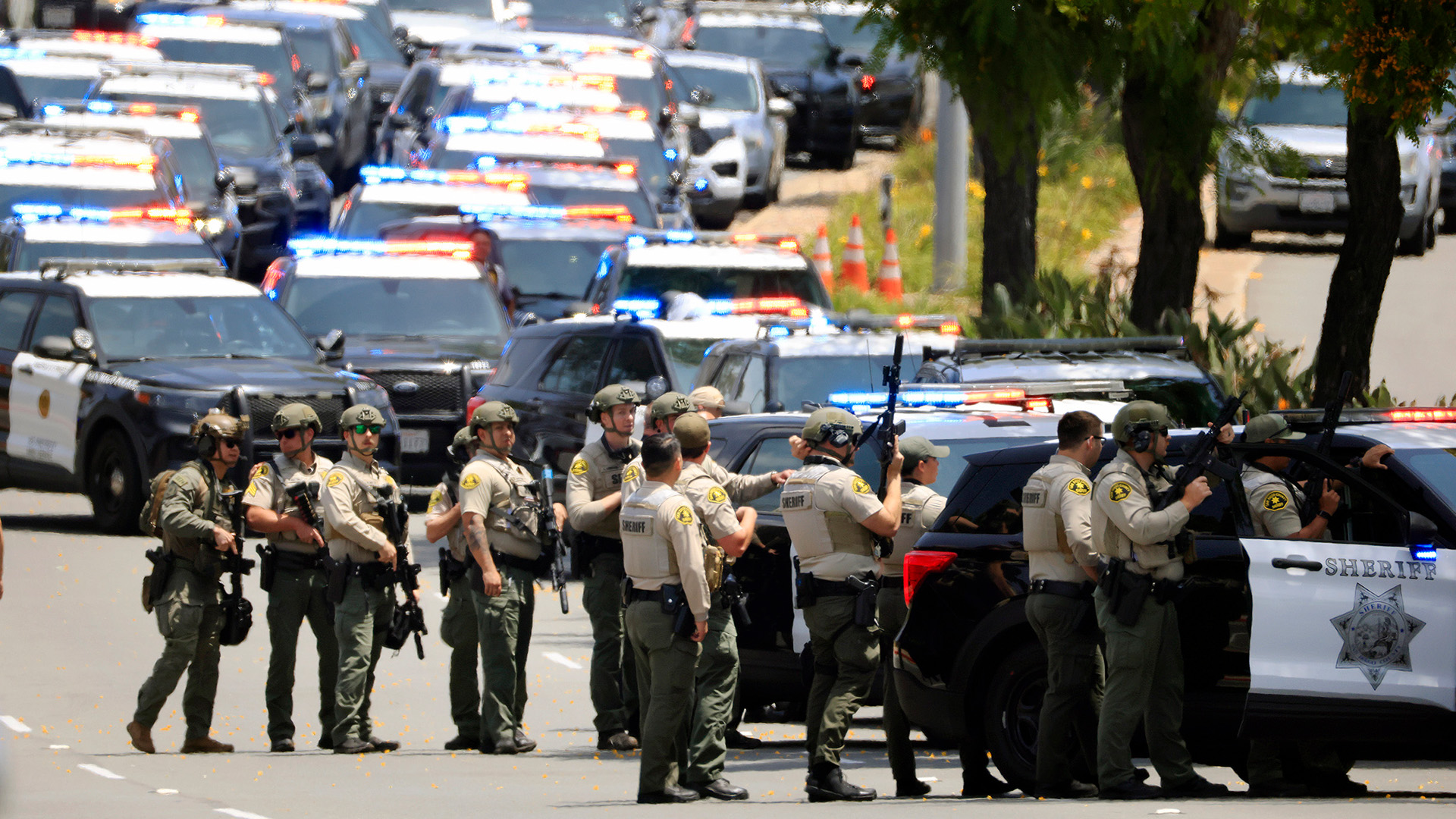
The San Diego mosque shooting is not just another grim headline in America’s cycle of hate-fueled violence. It is a brutal reminder that when anti-Muslim rhetoric is normalized, the distance between prejudice and bloodshed can become dangerously short. Communities that already live with harassment, suspicion, and political scapegoating are once again being forced to absorb trauma while also proving their right to safety.
This is the deeper crisis: violence against houses of worship does not happen in a vacuum. It emerges from an environment where bias is amplified, communities are dehumanized, and warning signs are too often ignored until lives are shattered. What happened in San Diego matters far beyond one city because it speaks to a broader failure – civic, political, and cultural – to confront Islamophobia before it metastasizes into action.
- The San Diego mosque shooting highlights how anti-Muslim hostility can turn into targeted violence.
- Houses of worship remain vulnerable because online radicalization and social polarization move faster than prevention.
- Muslim communities face both immediate trauma and long-term security, trust, and belonging challenges.
- Leaders will be judged not by condolences, but by whether they treat Islamophobia as a real public safety threat.
Why the San Diego mosque shooting matters beyond San Diego
Targeted attacks on religious spaces strike at something bigger than physical security. A mosque is not just a building. It is a community anchor, a place for prayer, family gathering, education, and mutual care. When violence enters that space, the intent is often larger than the immediate victims. The message is intimidation.
That is why the San Diego mosque shooting lands with such force. It does not merely injure individuals. It pressures an entire community to rethink everyday life: when to gather, how to worship, whether children are safe at events, and whether visibility itself has become a risk.
Hate crimes are never only about the moment of attack. They are about altering the behavior of everyone who sees themselves in the target.
This is also why these incidents resonate nationally. Muslim Americans in other cities will read the news and immediately conduct their own mental audits: security cameras, unlocked doors, social media threats, law enforcement responsiveness, emergency plans. Fear scales quickly, even when geography does not.
How Islamophobia moves from rhetoric to violence
One of the most persistent mistakes in public discourse is treating Islamophobia as if it were only a matter of offensive language or cultural ignorance. That framing is too narrow. Bigotry becomes dangerous when it is repeated often enough to sound normal, political enough to sound legitimate, and emotional enough to justify action in unstable minds.
The normalization problem
When Muslims are routinely discussed as threats rather than neighbors, suspicion hardens into a worldview. Public figures, fringe influencers, and online ecosystems can reinforce narratives that depict Islamic identity as foreign, dangerous, or incompatible with national belonging. Once those ideas settle in, an attack can be rationalized by perpetrators as defense rather than aggression.
This pattern is not new. It is visible across many forms of identity-based violence. First comes caricature. Then exclusion. Then harassment. Then someone decides violence is the logical final step.
The role of online acceleration
Digital platforms compress the radicalization timeline. A person no longer has to belong to an organized movement to absorb a steady flow of anti-Muslim conspiracy theories, inflammatory clips, and grievance-driven propaganda. Recommendation systems, repost culture, and closed-group reinforcement can create feedback loops where hostility feels validated.
Technical systems are not the sole cause, but they are often the amplifier. This matters because modern hate is rarely local in origin, even when the attack is. A suspect may be physically rooted in one city while ideologically connected to a borderless ecosystem of resentment.
Why warning signs are hard to act on
Threat detection remains uneven. Communities may notice troubling behavior before institutions do, yet many are unsure where to report concerns or whether authorities will respond seriously. At the same time, law enforcement agencies must distinguish protected speech from credible threats, which is legally and operationally difficult. That gap can leave vulnerable communities exposed.
Pro Tip: Faith institutions should maintain a clear internal incident log using standardized fields like date, time, location, description, and report status. Pattern recognition often depends on disciplined documentation.
What attacks on mosques do to communities
The visible damage after a shooting is only part of the story. The less visible damage often lasts longer.
Trauma becomes communal
Victims and witnesses bear the immediate burden, but trauma spreads through families, congregants, and peer networks. Children may associate prayer spaces with danger. Elders may become reluctant to attend services. Volunteers who once focused on outreach may shift to access control and emergency drills. The community’s energy is redirected from growth to defense.
Belonging starts to erode
Repeated attacks on minority religious spaces can create a corrosive civic message: your safety is conditional. Even when public officials condemn violence, communities notice whether those condemnations are followed by resources, prosecution, and preventive action. Symbolic solidarity matters, but operational solidarity matters more.
When a community has to choose between openness and survival, the broader society has already failed it.
Security becomes a tax on identity
There is also a practical burden. Faith centers may need upgraded lighting, monitored entrances, trained volunteers, communication protocols, and coordination with local agencies. None of that is free. For many congregations, basic worship begins to require a parallel security budget simply because they are visibly Muslim.
That is not resilience. It is an imposed cost.
What institutions should do after the San Diego mosque shooting
The public conversation after a tragedy often gets trapped between grief and outrage. Both are understandable, but neither is sufficient. The more useful question is what competent institutions do next.
Treat Islamophobia as a public safety issue
Too often, anti-Muslim hostility is siloed as a cultural or civil rights matter rather than integrated into mainstream threat prevention frameworks. That separation is outdated. If rhetoric and targeting patterns are contributing to violence risk, then Islamophobia belongs in serious public safety planning.
This means better hate crime tracking, more transparent reporting mechanisms, stronger local partnerships with community leaders, and faster pathways for sharing threat information without criminalizing communities themselves.
Support houses of worship with practical security planning
Security for vulnerable religious sites should not be improvised only after an attack. Municipal governments, nonprofits, and law enforcement should help institutions build layered plans that cover physical access, communication, volunteer training, and recovery procedures.
A basic preparedness framework might include:
- Access control: monitored entry points and visitor awareness procedures.
- Emergency communication: contact trees, alert systems, and multilingual instructions.
- Incident documentation: structured reporting for threats, vandalism, and harassment.
- Recovery planning: mental health support and continuity plans for services.
Even a lightweight operational checklist stored in a shared file like /security/emergency-plan can reduce confusion during a crisis.
Focus on prevention, not just response
There is always intense attention in the immediate aftermath of a shooting. The harder work is six months later, when headlines fade but risk remains. Prevention requires investing in local trust networks, credible reporting channels, and education that directly challenges anti-Muslim myths before they calcify into extremism.
The political test after the San Diego mosque shooting
Every hate-fueled attack becomes a test of whether leaders can speak with moral clarity without retreating into generic language. There is a difference between condemning violence in the abstract and naming the ideology that nourishes it.
If officials avoid the word Islamophobia, they risk flattening the event into a vague story about division. That may sound unifying, but it can also obscure the specific vulnerability of the targeted group. Precision matters because effective prevention depends on accurately describing the threat.
At the same time, responsible leadership should avoid reducing Muslim communities to victimhood alone. The story is also about endurance, civic participation, and the refusal of targeted communities to disappear from public life. That balance is important: acknowledge the danger without stripping people of agency.
Why this moment should reshape the conversation
The broader American debate about extremism often focuses on spectacular events while overlooking the climate that enables them. The San Diego mosque shooting should force a more mature conversation about how bias is cultivated, how institutions miss escalation points, and how minority communities are expected to carry the burden of adaptation.
There is also a media challenge here. Coverage must resist the tendency to isolate each attack as a singular tragedy disconnected from larger patterns. Pattern recognition is not politicization. It is basic honesty. When houses of worship are repeatedly targeted, when online hate ecosystems are well documented, and when communities describe the same fears over and over, the problem is structural.
The real scandal is not only that these attacks happen. It is that they remain so easy to predict and so hard to prevent.
That should change how newsrooms frame these stories, how policymakers allocate resources, and how platforms think about moderation and escalation risk. It should also change how the public interprets warning signs. Casual bigotry is not harmless background noise when it feeds a pipeline that can end in violence.
What comes next
In the days after the shooting, there will be memorials, statements, investigations, and calls for unity. Some of that is necessary. But the true measure of seriousness is whether this moment produces durable action. Will Muslim communities receive the support they need without being further surveilled? Will officials build better prevention systems? Will political actors stop treating anti-Muslim fear as a convenient mobilization tool?
Those are harder questions than who said the right thing at a press conference. They are also the only questions that matter if the goal is to prevent the next attack rather than merely narrate it.
The San Diego mosque shooting should not be filed away as another isolated outrage. It is a warning about what happens when a society underestimates the operational consequences of prejudice. Islamophobia is not just a social tension. It is a security issue, a civic issue, and a test of whether pluralism means anything when it is most under pressure.
If there is any path forward, it starts with refusing euphemism. Name the threat. Protect the vulnerable. Build systems that act before mourning becomes routine.
The information provided in this article is for general informational purposes only. While we strive for accuracy, we make no guarantees about the completeness or reliability of the content. Always verify important information through official or multiple sources before making decisions.