Saudi Arabia, Iran and the U.S. Redraw the Middle East
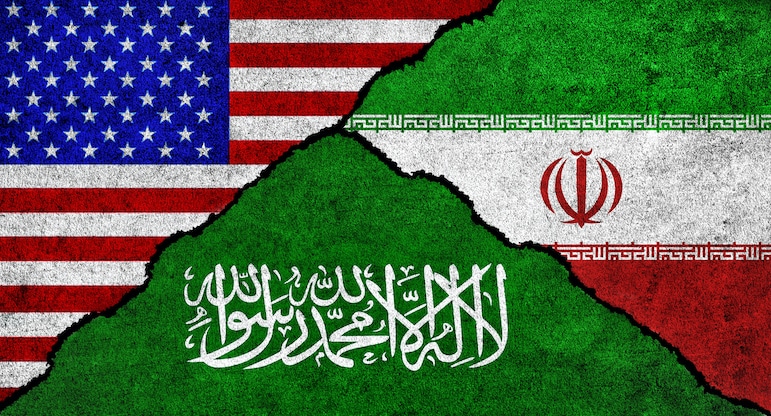
The U.S.-Saudi-Iran triangle is once again doing what it does best: forcing investors, diplomats, and defense planners to readjust in real time. What looks like another familiar burst of Middle East tension is actually something more consequential – a live test of how much leverage Washington still has, how far Riyadh is willing to hedge, and how much room Iran can create while sanctions, proxy conflict, and regional diplomacy collide. For businesses tracking oil, shipping, cyber risk, and defense spending, the stakes are not abstract. A single misread in this relationship can ripple through energy prices, alliance politics, and security planning far beyond the Gulf. The big question is no longer whether these powers will compete. They will. The question is whether competition is settling into a more controlled pattern or slipping back toward a cycle that markets and policymakers have spent years trying to escape.
- The U.S.-Saudi-Iran dynamic is shifting from pure confrontation toward a more tactical, interest-driven balance.
- Saudi Arabia is hedging harder, keeping U.S. security ties while expanding room to maneuver with regional rivals.
- Iran still gains leverage through ambiguity, proxy influence, and strategic patience.
- Energy markets, shipping routes, and defense procurement remain the fastest channels for spillover.
- The next phase will be defined less by headlines and more by whether de-escalation holds under pressure.
The U.S.-Saudi-Iran triangle is changing shape
For years, the script was straightforward: Washington backed Gulf allies, Riyadh countered Tehran, and Iran used asymmetry to punch above its weight. That framework still matters, but it no longer explains everything. The current U.S.-Saudi-Iran equation is being rewritten by exhaustion as much as ambition. Saudi leaders want more strategic flexibility. Iran wants breathing room under sanctions. The U.S. wants lower-cost stability without being dragged into every flare-up.
That creates a less predictable but potentially more durable regional order. It is not peace. It is managed competition. And that distinction matters because managed competition is where deals happen, threats get calibrated, and symbolic diplomacy can substitute for direct confrontation – until it cannot.
What looks like de-escalation in the Gulf is often just a temporary pause in a much longer contest for influence, access, and deterrence.
Why Saudi Arabia is hedging instead of choosing sides
Saudi Arabia’s strategy is increasingly built on optionality. The kingdom still relies on U.S. weapons systems, intelligence cooperation, and political backing, but it has learned a hard lesson: dependency is not the same as insurance. After years of missile and drone attacks, regional uncertainty, and uneven U.S. responses, Riyadh has concluded that its security cannot rest on a single patron.
That is why Saudi diplomacy now looks more pragmatic than ideological. It seeks better working relations with Iran when possible, while preserving its relationship with Washington and broadening economic partnerships with Asia. The logic is simple: if regional risk cannot be eliminated, it should at least be diversified.
Hedging is not neutrality
Saudi Arabia is not becoming neutral. It is becoming selective. That means engaging Iran to reduce immediate risk, continuing to buy advanced defense capabilities, and using economic power to position itself as indispensable to multiple blocs. In practice, this makes the kingdom harder to pressure and harder to predict.
For policymakers, the challenge is that a hedging Saudi Arabia can appear cooperative one week and independently transactional the next. That is not inconsistency. It is the strategy.
Iran still thrives on ambiguity in the U.S.-Saudi-Iran standoff
Iran’s playbook remains rooted in asymmetry. When conventional power is limited, leverage comes from uncertainty. Tehran can project influence through regional partners, threaten shipping lanes, test defenses, and signal resilience without crossing the threshold that would trigger full-scale retaliation. That makes the U.S.-Saudi-Iran triangle particularly difficult to manage: Iran does not need to win outright to shape outcomes.
Sanctions continue to constrain the Iranian economy, but they do not eliminate strategic flexibility. They often push Tehran toward exactly the tools that are hardest to deter: proxies, deniable operations, and calibrated escalation. In a region where perception can move markets faster than missile launches, ambiguity becomes a weapon.
Iran’s real advantage is not dominance. It is the ability to keep everyone else guessing long enough to change the political math.
The proxy layer remains the danger zone
The most volatile part of the equation is not direct state-to-state confrontation. It is the network around it. Proxy forces, militia channels, and maritime pressure points create a fog that makes accountability difficult and escalation easy. That fog also gives all three sides room to deny, delay, or disown responsibility when incidents occur.
This matters because modern regional crises rarely begin with a formal declaration. They begin with a drone, a shipment, a cyber intrusion, or a retaliatory strike that neither side intended to frame as war.
Why this matters for oil, trade, and defense planning
For global markets, the U.S.-Saudi-Iran relationship is not just a geopolitical storyline. It is an operational risk factor. Energy traders watch Gulf stability because even a brief disruption can move crude prices. Shipping firms track the same tensions because the region sits astride some of the world’s most consequential maritime routes. Defense contractors, meanwhile, see every wave of insecurity as a potential catalyst for higher procurement across missile defense, surveillance, and cyber systems.
The lesson is not that every diplomatic shift changes the market overnight. It is that the system remains fragile enough for headline risk to matter. A single incident can trigger insurance costs, rerouting decisions, and emergency policy talks. That is why the U.S.-Saudi-Iran dynamic remains one of the most important strategic variables in global business planning.
- Energy: Short disruptions can cause immediate price volatility even without sustained supply losses.
- Shipping: Route risk drives insurance premiums and logistical delays.
- Defense: Gulf states keep investing in layered missile defense and surveillance.
- Cybersecurity: State-linked digital attacks remain a low-cost pressure tool.
The U.S. wants stability without overcommitment
Washington’s dilemma is familiar but harder than it looks. The U.S. still wants a stable Gulf, but it wants that stability at a lower cost and with fewer entanglements. That means preserving deterrence without returning to the old model of open-ended regional policing. It also means accepting that partners like Saudi Arabia will sometimes act in ways that are aligned with U.S. interests but not controlled by U.S. strategy.
That is where things get messy. If Washington pushes too hard, it risks accelerating Saudi diversification and making diplomacy harder. If it pulls back too much, it invites adversaries to test the vacuum. The U.S. has to strike a balance between reassurance and restraint, which is a difficult diplomatic posture in a region that rewards clarity and punishes hesitation.
The credibility problem is real
Security partnerships run on perception. If allies doubt U.S. commitment, they hedge. If adversaries doubt U.S. resolve, they probe. That credibility cycle is central to the U.S.-Saudi-Iran story because each move by one actor changes the others’ expectations. The result is a strategic environment where symbolic gestures can matter almost as much as deployments.
In other words, the U.S. does not need to solve every crisis. But it does need to avoid looking surprised by them.
What comes next for the U.S.-Saudi-Iran relationship
The next phase is likely to be defined by incremental moves rather than sweeping breakthroughs. Expect more calibrated diplomacy, more quiet military signaling, and more efforts to contain escalation without resolving the underlying rivalry. That is not an especially inspiring forecast, but it is realistic.
There are three plausible trajectories. First, a fragile détente could hold if direct and proxy clashes stay contained. Second, a cycle of periodic flare-ups could continue, with each side avoiding full war but accepting regular friction. Third, a sudden trigger – perhaps in the Gulf, in Syria, or through maritime disruption – could snap the balance and force a much more aggressive response.
Right now, the middle path looks most likely. But the region has a habit of punishing overconfidence. If the past decade has proven anything, it is that temporary calm can disappear quickly when political incentives change.
How readers should interpret the shift
The best way to read the current U.S.-Saudi-Iran landscape is not as a neat diplomatic breakthrough or an inevitable march to conflict. It is a stress test of regional statecraft. Saudi Arabia is trying to maximize autonomy. Iran is trying to maximize leverage. The U.S. is trying to minimize cost while preserving influence. Those goals can overlap for a while, but they do not naturally converge.
That is why this moment matters. It reveals whether the Gulf is moving toward a more managed, multipolar order or simply pausing before the next crisis cycle. For governments, companies, and investors, the smart move is not to assume stability. It is to plan for volatility that is quieter, more distributed, and more strategic than the last round.
And that may be the real story here: the region is not becoming less important. It is becoming more sophisticated, more transactional, and harder to model. That makes the U.S.-Saudi-Iran triangle less explosive on paper – and potentially more consequential in practice.
The information provided in this article is for general informational purposes only. While we strive for accuracy, we make no guarantees about the completeness or reliability of the content. Always verify important information through official or multiple sources before making decisions.