Spirit Airlines Shutdown Shakes Budget Travel
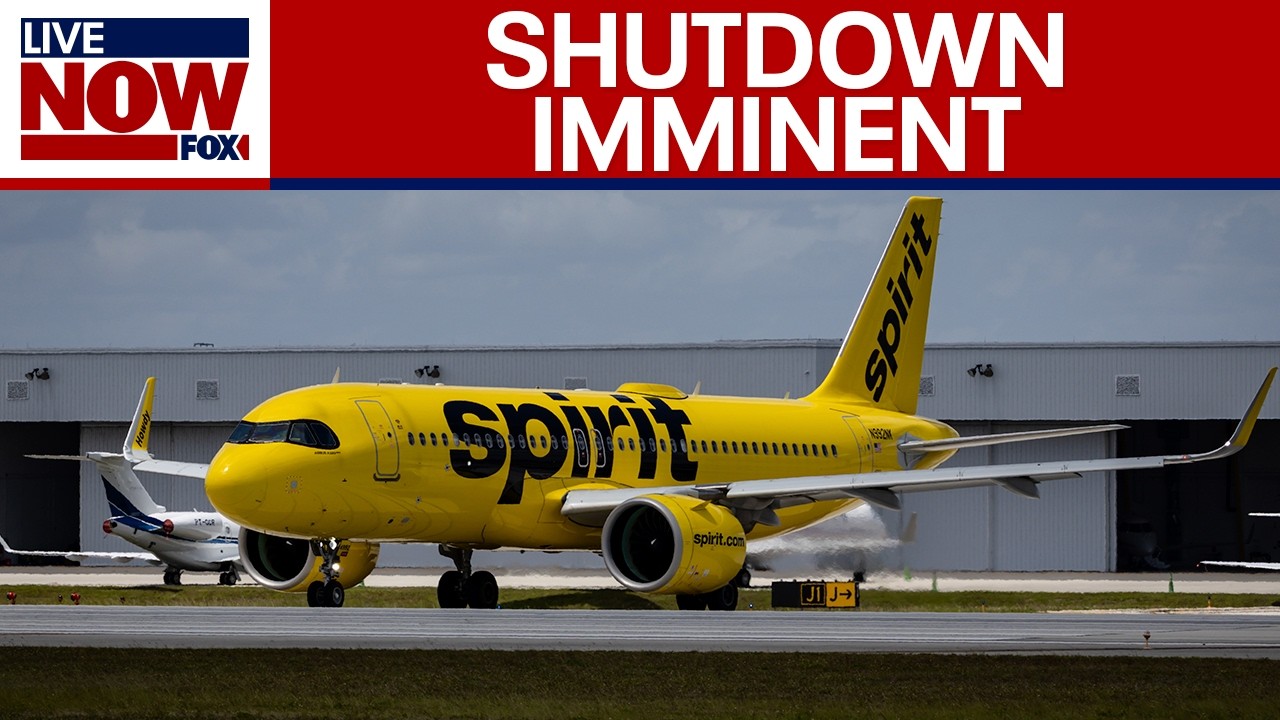
Spirit Airlines Shutdown Shakes Budget Travel
The Spirit Airlines shutdown is the kind of industry jolt that goes far beyond one brand going dark. For millions of travelers, Spirit represented a blunt but effective bargain: tolerate the fees, skip the frills, and get where you need to go cheaply. If that model disappears, the ripple effects will hit airfare pricing, route competition, airport traffic, and the fragile economics of low-cost flying. This is not just a story about a struggling airline. It is a stress test for the entire budget travel market, arriving at a moment when consumers are already squeezed by inflation, operational volatility, and shrinking patience for corporate turnarounds that never seem to land.
- Spirit Airlines shutdown signals serious trouble for the ultra-low-cost carrier model.
- Budget travelers could face fewer cheap fares and weaker competition on domestic routes.
- Airports, employees, creditors, and rival airlines all stand to be affected.
- The collapse would likely accelerate consolidation across the airline industry.
- What happens next matters well beyond one airline’s brand name.
Why the Spirit Airlines shutdown matters right now
Spirit was never built to be loved. It was built to be booked. Its business relied on ultra-low base fares, dense seating, aggressive ancillary fees, and a customer base willing to trade comfort for cost. That formula worked well enough to make Spirit a defining force in American air travel. It also pressured larger airlines to match low fares on key routes, even if they hated doing it.
That is why the Spirit Airlines shutdown matters so much. When a disruptive low-cost airline weakens or exits, the market does not just lose capacity. It loses pricing pressure. Travelers may not miss Spirit’s seat pitch or baggage policies, but they will absolutely notice what happens when fewer carriers fight over price-sensitive customers.
There is also a symbolic layer here. Spirit became shorthand for a rough-edged, fee-heavy, bare-bones flying experience. But behind the memes and complaints was a hard truth: it served a real demand. A lot of passengers do not want luxury. They want affordable mobility. If one of the most recognizable names in budget flying cannot sustain itself, the entire sector has to confront uncomfortable questions.
The deeper problem with ultra-low-cost airlines
Cheap fares are easy to advertise and hard to sustain
The ultra-low-cost model depends on a careful balancing act. Airlines sell attention-grabbing ticket prices, then recover margin through add-ons like carry-on bags, seat assignments, snacks, and same-day changes. In theory, this is elegant. In practice, it can become brittle fast when fuel costs rise, labor gets more expensive, demand softens, or customers revolt against friction-heavy experiences.
Spirit’s challenge was not simply that it charged for extras. It was that the broader market started changing around it. Legacy airlines got better at segmenting fares. Travelers became more selective about value versus discomfort. Operational disruptions became more damaging in an era of social media outrage. And debt-heavy balance sheets left little room for strategic mistakes.
Competition stopped being simple
Years ago, a low-cost airline could carve out share by undercutting incumbents. Now the battlefield is more complex. Major carriers have built fare classes that mimic budget pricing, while still leveraging loyalty programs, sprawling networks, and premium cabins to subsidize different traveler segments. That makes life much harder for an airline whose main advantage is price.
At the same time, leisure demand can be surprisingly fragile. Families may jump on low fares during boom periods, but they are also quick to pull back when household budgets tighten. The low end of the market is huge, but it is not always stable.
Key insight: Budget airlines do not just compete on price anymore. They compete against giant carriers that have learned how to weaponize flexibility, branding, and loyalty economics.
What likely pushed Spirit to the edge
Even without every internal number on the table, the likely pressure points are familiar. First, cost inflation. Airlines are extraordinarily sensitive to fuel, labor, aircraft financing, airport fees, and maintenance. Second, revenue quality. Selling seats cheaply only works if load factors stay high and ancillary spending remains strong. Third, strategic uncertainty. If a company spends too long in merger talks, turnaround planning, or survival mode, it can lose both investor trust and customer confidence.
There is also a brand problem that should not be underestimated. Spirit had high recognition, but recognition does not always convert to resilience. When consumers perceive an airline as stressful, unreliable, or difficult, they become more willing to pay slightly more elsewhere. That weakens the low-fare advantage over time.
And then there is the network issue. Carriers built around leisure-heavy or highly price-sensitive routes can be exposed quickly if demand shifts or competitors pile in. The wrong mix of routes, aircraft commitments, and debt can turn a difficult quarter into a crisis.
Who gets hit first if Spirit shuts down
Travelers lose a pressure valve
The most immediate impact is obvious: fewer cheap seats in the market. Even travelers who never flew Spirit benefited indirectly when it forced lower fares on rival airlines. Remove that force, and average domestic ticket prices on overlapping routes may rise.
This does not mean every route becomes expensive overnight. But it does mean the competitive floor changes. Consumers shopping for last-minute leisure trips, family visits, or quick domestic breaks may find fewer ultra-low options, especially from secondary airports where Spirit had meaningful presence.
Employees face a painful reset
Pilots, flight attendants, ground crews, call center teams, and corporate staff are often the human collateral in airline collapses. Some may get absorbed by competitors in a tight labor market. Others may face prolonged uncertainty, relocation pressure, or lost seniority. Airline shutdowns are never just balance-sheet events. They are labor shocks.
Airports and local economies take a hit
Secondary and regional airports often depend heavily on low-cost carriers to drive passenger volume. If Spirit exits key markets, airports could lose traffic, concession revenue, and connectivity. For cities that used low fares to stimulate tourism or support lower-income travelers, the pain can be especially sharp.
Why larger airlines may quietly benefit
There is a public version of airline competition and a private one. Publicly, carriers talk about serving customers and maintaining healthy competition. Privately, fewer rivals can mean cleaner pricing, stronger yields, and less pressure to match uneconomical fares.
If the Spirit Airlines shutdown becomes final, some competitors will move quickly to capture aircraft slots, gates, staff, and abandoned routes. Others may simply enjoy a more rational pricing environment. Either way, the industry often rewards consolidation more than consumers do.
What this means: When a disruptive discount airline exits, survivors do not need to copy its business model. They only need to inherit the demand it leaves behind.
What travelers should do next
If you are a frequent budget flyer, this is the moment to think less emotionally and more strategically. Airline failures create confusion, but they also create predictable patterns.
- Monitor booking flexibility: Favor tickets with clear refund, credit, or rebooking terms.
- Avoid over-optimizing for the absolute lowest fare: A slightly higher ticket on a more stable carrier can be worth it.
- Check airport alternatives: Nearby airports may become more important if route maps shrink.
- Use price alerts: Competitors often adjust fares rapidly after a major market disruption.
- Watch loyalty strategy: If one low-cost option disappears, your travel habits may need a new rewards ecosystem.
The strategic lesson for the airline industry
The downfall of a major budget carrier would reinforce a lesson that aviation keeps relearning: efficiency is not the same as resilience. The business can be optimized to an extraordinary degree, but when too many assumptions break at once, thin-margin models can unravel quickly.
That matters for executives and investors well beyond one airline. The next generation of successful carriers may need a more balanced playbook: disciplined cost control, yes, but also better customer trust, more flexible revenue streams, stronger operational buffers, and less dependence on edge-of-sustainability economics.
Brand reputation now carries more financial weight
For years, airlines could treat customer frustration as manageable noise if the fare was low enough. That logic is getting weaker. Travelers now compare not just price, but reliability, digital service quality, customer support responsiveness, and total trip friction. A model that works on spreadsheets can still fail in public if people no longer believe the trade-off is worth it.
Even technical choices matter here. Better disruption handling in mobile apps, cleaner ancillary pricing systems, smarter route planning platforms, and clearer self-service flows can all influence whether a budget airline feels efficient or exploitative.
Could another budget airline fill the gap?
Possibly, but not instantly. Replacing lost capacity is not as simple as launching a website and discounting a few routes. Airlines need aircraft, crews, gate access, regulatory approvals, airport relationships, and enough capital to survive the brutal early phase of scaling. The market may eventually rebalance, but travelers should not assume cheap alternatives will appear overnight.
And even if another low-cost carrier expands to capture Spirit’s former customers, the replacement might look different. It may emphasize a cleaner brand, more transparent pricing, or a hybrid model that blends low fares with more tolerable service. The era of pure ultra-low-cost extremism may not be over, but it is clearly under pressure.
Why this moment feels bigger than one bankruptcy story
The aviation industry has always been cyclical, theatrical, and brutally unforgiving. Yet the Spirit Airlines shutdown lands at a particularly revealing moment. Consumers want affordability but hate surprise fees. Investors want growth but punish instability. Regulators say they want competition but often oversee markets where only the largest players can reliably endure turbulence.
That tension is the real story. Spirit’s struggles expose the gap between what travelers need and what airline economics can sustainably deliver. Cheap travel still matters. Maybe more than ever. But making it consistently profitable, operationally reliable, and broadly acceptable to customers is a much harder problem than the old low-fare playbook suggested.
If Spirit truly disappears, the lesson will be uncomfortable and lasting. Budget travel is not dead, but its next chapter will likely be more disciplined, more tech-enabled, and less forgiving of airlines that confuse stripped-down service with durable strategy.
Bottom line: the Spirit Airlines shutdown is not just a collapse narrative. It is a market signal. And for travelers, competitors, and the broader airline business, it is a warning that low prices alone are no longer enough to keep an airline airborne.
The information provided in this article is for general informational purposes only. While we strive for accuracy, we make no guarantees about the completeness or reliability of the content. Always verify important information through official or multiple sources before making decisions.